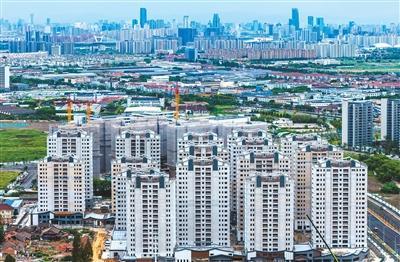
住宅建设

Search documents
聚焦“宜居”需求,日照市出台住宅品质提升设计导则
Qi Lu Wan Bao· 2026-01-08 10:13
Core Viewpoint - Rizhao City has officially issued the "Rizhao Residential Quality Improvement Design Guidelines (Trial)" which will be implemented for all new residential projects starting January 1, 2026, marking a significant step towards enhancing residential quality from mere availability to improved living standards [1] Group 1: Guidelines Overview - The guidelines consist of 11 chapters and 124 articles, reflecting the governance philosophy of responding to public needs and incorporating feedback from industry associations, relevant departments, enterprises, and experts [1] - The guidelines cover a comprehensive technical specification system across various fields including architecture, structure, plumbing, electrical systems, heating, accessibility, smart technology, outdoor facilities, landscaping, and construction [1] Group 2: Comfort and Safety Enhancements - The guidelines establish strict requirements for sound insulation, specifying that residential units near highways and railways must achieve a sound insulation rating of at least 35dB for living spaces, with partition walls constructed of at least 200mm thick concrete or equivalent soundproofing [2] - Residential units with underfloor heating and centralized air conditioning must have a minimum ceiling height of 3.15m to ensure spatial comfort [2] Group 3: Green and Smart Construction - The guidelines mandate that at least 50% of materials used in high-quality residential buildings must be green, encouraging compliance with three-star green building standards and ultra-low energy consumption certifications [3] - Smart features include contactless access systems at entrances, monitoring devices for elevators, and a comprehensive smart community service platform integrating various functionalities [3] Group 4: Accessibility and Human-Centric Design - The guidelines emphasize accessibility, requiring the installation of tactile paving and barrier-free entrances in community green spaces, as well as ensuring adequate space and safety features in residential units for elderly residents [3] - Specific design elements include a minimum width of 1.30m for indoor walkways and the installation of support handles in bathrooms, catering to the needs of older adults [3] Group 5: Implementation and Monitoring - To ensure effective implementation of the guidelines, the Rizhao Housing and Urban-Rural Development Bureau will enhance training and supervision throughout the planning, design, construction, and acceptance processes [4] - The guidelines will be integrated into a high-quality residential evaluation index system, serving as a critical basis for project assessments and promoting a transition from mere housing to desirable living environments [4]
英国住宅建设创五年来最快降速 工党住房目标面临严峻考验
Xin Lang Cai Jing· 2026-01-07 09:57
Core Viewpoint - The UK residential construction sector is experiencing its fastest decline since the first COVID-19 lockdown, indicating that the Labour government's goal to accelerate the construction industry is likely failing [1] Group 1: Construction Sector Performance - The S&P Global Construction Purchasing Managers' Index (PMI) rose slightly from 39.4 in November to 40.1 in December, but remains the second worst performance since May 2020 and below economists' expectations of 42.3 [1] - An index reading below 50 indicates that the industry is in a contraction phase [1] Group 2: Residential Construction Specifics - The residential construction sub-index fell from 35.4 to 33.5, marking the lowest point in over five and a half years, reminiscent of the pressures faced during COVID-19 restrictions [1] - The Labour Party had previously promised to build 1.5 million homes within five years to attract younger voters, but this target now appears increasingly unlikely to be met [1] Group 3: Government Response and Market Conditions - The government is attempting to stimulate construction by relaxing planning regulations; however, high interest rates and a sluggish housing market have derailed these plans [1]
UBS' John Lovallo on Trump's teased housing reform plans
Youtube· 2025-12-23 16:28
Core Insights - The new housing plan could have short-term, intermediate, and long-term impacts on affordability [1] - Short-term measures may include subsidizing mortgages and reducing G fees [2] - Intermediate strategies could involve encouraging younger individuals to enter trades through grants and scholarships [3] - Long-term solutions may require federal pressure on states to ease land restrictions, although local governance poses challenges [4][6] Short-term Measures - Utilizing Government-Sponsored Enterprises (GSEs) to subsidize mortgages and buy more mortgage-backed securities (MBS) [1] - Potential reduction of G fees by 60 basis points per loan [2] - Tariffs could be reduced, with an average of $9,300 per home, including $2,500 specifically on lumber [2] Intermediate Strategies - Encouraging workforce development in trades through grants and scholarships [3] - Potential for building on federal land, although infrastructure challenges exist [5] Long-term Solutions - Federal government could exert pressure on states to reduce land use restrictions [4] - Local and municipal decision-making complicates the implementation of these solutions [4][6] Affordability Impact - Lowering mortgage rates could improve housing affordability, as indicated by the National Association of Realtors affordability index [7] - Current mortgage rates compared to builder-subsidized rates show significant differences in affordability [8]



新建6幢多层和高层电梯住宅
Xin Lang Cai Jing· 2025-12-19 07:27
Core Viewpoint - The renovation project of the Fan Guo Nong community has successfully topped out two months ahead of schedule, marking a significant milestone in improving living conditions for residents in a historically dense area of Shanghai [1][2]. Group 1: Project Overview - The Fan Guo Nong renovation project is a key municipal initiative aimed at improving living conditions for 1,122 households, with the construction of six multi-story and high-rise elevator residential buildings, providing a total of 1,285 housing units [1]. - The project includes the development of approximately 790 underground parking spaces and 9,000 square meters of public facilities, such as a community health service center and a comprehensive service center for the elderly [1]. - The green space ratio of the community will increase to 37%, with enhanced living quality through features like double-layer hollow glass and smart door locks [1]. Group 2: Historical Context - The Fan Guo Nong community is located in a prime area of Shanghai, previously known for its high population density and substandard living conditions, with original housing units as small as 6.5 square meters [2]. - The community faced significant issues such as aging infrastructure and shared kitchen and bathroom facilities, leading to a pressing need for improved living conditions among residents [2]. Group 3: Renovation Strategies - The local government has implemented an "Eight Methods" strategy for the renovation, focusing on tailored solutions for each household and engaging residents in the decision-making process [3]. - The project has streamlined 97 original housing types into 8 basic and 47 detailed types, ensuring essential features like private kitchens and bathrooms are standard [3]. - A dynamic tracking service mechanism has been established to support elderly and disabled residents, ensuring personalized assistance during the transition [3]. Group 4: Construction Innovations - The construction team has adopted various smart building technologies, including real-time safety monitoring systems and noise-reducing construction methods [4]. - The project employs a segmented construction approach, allowing for simultaneous installation of utilities and early elevator integration, which helps to shorten the overall construction timeline while maintaining quality [4].
KB Home(KBH) - 2025 Q4 - Earnings Call Transcript
2025-12-18 23:00
Financial Data and Key Metrics Changes - Total revenues for fiscal 2025 were over $6.2 billion, with net income of nearly $430 million, resulting in a 10% increase in book value per share [4][24] - In Q4 2025, total revenues were just under $1.7 billion, with adjusted diluted earnings per share of $1.92, and a 15% decrease in housing revenues [5][21] - Housing gross profit margin was 17%, with adjusted housing gross profit margin at 17.8%, reflecting a 310 basis point decrease due to pricing pressure and higher land costs [22] Business Line Data and Key Metrics Changes - The company delivered 12,902 homes in fiscal 2025, with a decrease in housing revenues by 10% to $6.21 billion [24] - In Q4 2025, the company produced 3,619 home deliveries, with an average selling price declining 7% to $466,000 [21] - The cancellation rate was stable at 18%, supporting net orders at an average absorption pace of three per month per community [9] Market Data and Key Metrics Changes - The company owned or controlled approximately 65,000 lots at year-end, with 43% controlled [15] - The average cash down payment for buyers was 17%, equating to nearly $80,000, with an average household income of $130,000 and a FICO score of 743 [14] - The company plans to open between 35 and 40 new communities in Q1 2026, expecting to reach a peak community count during the spring selling season [11] Company Strategy and Development Direction - The company is focused on increasing the built-to-order (BTO) sales mix from 57% in Q4 2025 to historical levels of 70% or higher [12] - A disciplined approach to pricing is emphasized, avoiding inflated prices masked by heavy incentives, which is seen as a competitive advantage [6][7] - The company aims to enhance shareholder value through continued share repurchases and a healthy dividend yield of approximately 1.6% [28][29] Management's Comments on Operating Environment and Future Outlook - Management remains optimistic about the housing market, citing favorable demographics and structural undersupply as key demand drivers [5][6] - The company expects Q1 2026 to be the bottom for margins, with improvements anticipated as the year progresses [60] - Management highlighted the importance of maintaining high customer satisfaction and operational execution to drive results [14][18] Other Important Information - The company returned over $600 million in capital to shareholders in fiscal 2025, including approximately $540 million in share repurchases [17][29] - A new $1 billion share repurchase authorization was approved to support the capital return strategy [29] - The company invested $665 million in land acquisition and development in Q4 2025, with a focus on capital efficiency [17][28] Q&A Session Summary Question: Can you help understand the conservatism in the gross margin guide? - Management acknowledged the need to clear older inventory built at higher costs, impacting margins, and emphasized that the guidance is realistic rather than conservative [32][34] Question: Why exclude accelerated stock compensation from adjusted EPS? - The company aimed to provide a like-for-like number for better comparison, given the timing of the equity expense [36][37] Question: What are the finished and under-construction specs at the end of the quarter? - The company reported about 1,700 homes in inventory, with over 1,000 at or near the finished stage [40][41] Question: How does the new community facilitate the shift to BTO? - New communities allow for a stronger focus on BTO sales without competing with existing specs, enhancing the value proposition for customers [46] Question: What is the expectation for pricing in fiscal 2026? - The pricing expectation is driven by a mix of higher-end communities opening, rather than an assumption of price increases [72] Question: How will capital return to shareholders look beyond Q1? - The company plans to maintain a similar capital return strategy of $50 million to $100 million per quarter, evaluating opportunities as the year progresses [75]

Lennar(LEN) - 2025 Q4 - Earnings Call Transcript
2025-12-17 17:02
Financial Data and Key Metrics Changes - The company reported a gross margin of 17%, which is a decrease from previous expectations, reflecting ongoing pressure in the housing market [8][16][37] - The average sales price for homes was reported at $386,000, with expectations for the first quarter of 2026 to be between $365,000 and $375,000 [16][36] - The company ended the quarter with $3.4 billion in cash and total liquidity of $6.5 billion, indicating a strong balance sheet [32][33] Business Line Data and Key Metrics Changes - The company started 18,443 homes, delivered 23,034 homes, and sold just over 20,000 homes in the fourth quarter, exceeding delivery expectations [15][36] - Sales incentives remained flat at 14%, but the gross margin was reduced to 17%, slightly lower than expected [16][29] - The company achieved a sales pace of four homes per community per month, meeting its sales plan [25] Market Data and Key Metrics Changes - The housing market remains challenging, with consumer confidence impacted by economic uncertainties and a government shutdown [10][11] - The supply of owned home sites decreased year-over-year to 0.1 years, while controlled home sites increased to 98% from 82% [30] - The company reported a significant reduction in warranty spend by 45% year-over-year, indicating improved operational efficiency [29] Company Strategy and Development Direction - The company is focused on maintaining volume and even-flow production while managing an affordable cost structure [9][10] - A shift towards an asset-light model has been completed, with less than 5% of land on the balance sheet, reducing overall inventory from just under $20 billion to just under $12 billion [17][20] - The company aims to leverage its strong market position and efficient product offerings to accommodate pent-up demand as market conditions improve [9][19] Management's Comments on Operating Environment and Future Outlook - Management expressed optimism about future market conditions, anticipating that government actions may enhance affordability and activate demand [10][50] - The company is well-positioned to provide affordable housing solutions when demand is activated by lower interest rates or government-sponsored programs [9][10] - Management acknowledged the ongoing challenges in the housing market but remains committed to driving efficiencies and improving margins over time [9][56] Other Important Information - The company completed the Millrose transaction, resulting in a non-cash repurchase of 8 million shares [20][35] - The management team is transitioning leadership roles internally, indicating a strong internal talent pool to maintain operational continuity [21][24] Q&A Session Summary Question: What is contributing to the continued pressure on margin? - Management noted unexpected headwinds from the government shutdown impacting consumer confidence, which affected pricing stability [43][44] Question: Will government actions improve affordability in 2026? - Management believes that significant attention is being paid to affordability issues, and they expect some form of government action in 2026 [50][51] Question: How does the company envision recapturing margin as the market improves? - The company is focused on maintaining volume and leveraging operational efficiencies to improve margins as incentives decrease [56][57] Question: What is the strategy regarding supply and margin? - Management is committed to maintaining volume while navigating market conditions, with a focus on building efficiencies [82][86] Question: How will the company approach share repurchases in 2026? - Management is optimistic about the balance sheet and expects to continue returning cash to shareholders through repurchases and dividends [89][90]

Lennar(LEN) - 2025 Q4 - Earnings Call Transcript
2025-12-17 17:00
Financial Data and Key Metrics Changes - The company reported a gross margin of 17%, which is a decrease from previous expectations, attributed to market conditions and increased sales incentives [9][18] - The average sales price for homes was $386,000, with expectations for the first quarter of 2026 to be between $365,000 and $375,000 [18][34] - The company ended the quarter with $3.4 billion in cash and total liquidity of $6.5 billion, indicating a strong balance sheet [31][34] Business Line Data and Key Metrics Changes - The company started 18,443 homes, delivered 23,034 homes, and sold just over 20,000 homes, exceeding delivery expectations but only meeting the low end of sales expectations [17][18] - Sales incentives remained flat at 14%, contributing to a reduction in gross margin [18][29] - The company achieved a cycle time of 127 days for detached single-family homes, a reduction from 138 days a year ago [20][29] Market Data and Key Metrics Changes - The housing market remains challenging, with consumer confidence impacted by economic uncertainties and a government shutdown [11][12] - The supply of owned home sites decreased year-over-year to 0.1 years, while controlled home sites increased to 98% from 82% [30][32] - The company noted a significant supply shortage in the housing market, which has kept home prices high [13][14] Company Strategy and Development Direction - The company is focused on maintaining volume and even-flow production while managing costs to prepare for future market recovery [10][11] - An asset-light strategy has been implemented, reducing overall inventory from just under $20 billion to just under $12 billion [19][30] - The company aims to leverage its strong market position and efficient product offerings to meet pent-up demand as market conditions improve [10][25] Management's Comments on Operating Environment and Future Outlook - Management expressed optimism about future market conditions, anticipating that government actions may enhance affordability and stimulate demand [15][44] - The company is positioned to benefit from a potential recovery in the housing market, with expectations for margin improvement as incentives decrease [46][47] - Management acknowledged the ongoing challenges but emphasized the importance of operational efficiencies and technology investments to drive future growth [57][66] Other Important Information - The company completed the Millrose transaction, resulting in a non-cash repurchase of 8 million shares [21][33] - The leadership transition is underway as the co-CEO retires, with experienced professionals prepared to take on new roles [22][24] Q&A Session Summary Question: What is contributing to the continued pressure on margin? - Management noted unexpected headwinds from the government shutdown affecting consumer confidence, which impacted pricing stability [40][41] Question: Will government actions improve affordability in 2026? - Management believes that government focus on affordability is likely to result in actionable programs, although specifics remain uncertain [44][45] Question: How does the company envision recapturing margin as the market improves? - The company is focused on maintaining volume and leveraging operational efficiencies to improve margins as incentives decrease [46][47] Question: What are the expectations for share repurchases in 2026? - Management expressed enthusiasm for 2026, indicating that the asset-light model will allow for continued shareholder returns through repurchases and dividends [64][66]
Lennar Stock Falls on Earnings Miss, Forecast
Schaeffers Investment Research· 2025-12-17 16:05
Core Viewpoint - Lennar Corp's stock is experiencing a significant decline following mixed fiscal fourth-quarter results, with earnings missing analyst expectations while revenue exceeded them [1] Financial Performance - The company reported earnings of $2.03 per share, falling short of the analyst estimate of $2.30 [1] - Revenue for the quarter was $9.37 billion, surpassing expectations of $9.17 billion [1] Market Reaction - The stock is down 4.3% to $112.51, and year-to-date, it has decreased by 13.3% [1][2] - Emerging support at the $112 level is helping to limit further losses, similar to a previous instance in mid-November [2] Technical Indicators - The shares are currently below all key daily moving averages ranging from the 10-day to the 320-day trendlines [2] - The 14-day relative strength index (RSI) is at 23.5, indicating the stock is in "oversold" territory, suggesting a potential short-term bounce [3] - Short interest has increased by 75.3% in the last two weeks, now representing 16.8% of the stock's available float [3]
Toll Brothers Posts Sixth Straight Earnings Beat but Stock Drops on Tepid Growth
247Wallst· 2025-12-09 12:46
Core Viewpoint - Toll Brothers reported a fourth-quarter earnings beat but faced investor disappointment due to modest revenue growth and market expectations [1][2][5]. Financial Performance - The company posted EPS of $4.63, exceeding the consensus estimate of $4.38 by $0.25, representing a 5.8% surprise and marking the sixth consecutive quarter of exceeding analyst expectations [2][5]. - Revenue for the quarter was $3.26 billion, slightly above the estimate of $3.20 billion by 1.8%, but this figure declined 2.2% year over year from $3.33 billion in the previous fourth quarter [2][6]. Market Reaction - Despite the earnings beat, shares opened down approximately 4.3% to $130.38, indicating investor disappointment [1][5]. - The stock broke below its 50-day moving average of $135.01 but remained above the 200-day moving average of $120.27, showing volatility in after-hours trading [8]. Analyst Sentiment - Analyst sentiment remains moderately bullish, with ten analysts maintaining Buy or Strong Buy ratings compared to six Hold or Sell ratings, and an average price target of $152.40, suggesting a potential upside of 16.9% from current levels [9]. Future Outlook - The focus now shifts to forward guidance and order trends, which were not included in the preliminary data. The stock trades at a forward P/E ratio of 10.08, indicating a reasonable valuation for a profitable homebuilder [10]. - Investors are looking for evidence of revenue growth reacceleration to justify the current valuation [10][11].

这些新提法,写入“十五五”规划建议丨四组词汇,为“好房子”画像
Ren Min Ri Bao Hai Wai Ban· 2025-12-09 06:39
Core Viewpoint - The construction of "good houses" is a significant initiative to adapt to the new stage of housing development in China and to meet the people's expectations for a better life, while also serving as a crucial tool for building a new model of real estate development that effectively stimulates domestic demand and consumption [1][2]. Group 1: Housing Development Trends - The average living space for urban residents in China increased from 7.1 square meters in the 1990s to 41.76 square meters by 2020, with urban households averaging 36.52 square meters [2]. - The housing supply and demand dynamics have shifted from "whether there is housing" to "how good the housing is," reflecting a stronger desire for improved living quality among the populace [2]. Group 2: Market Opportunities - The demand for quality housing translates into significant growth and optimization potential in the market, as housing is a major consumer expenditure that can stimulate related sectors such as home decoration, furniture, and appliances [4]. - The application of new information technologies, construction techniques, and green low-carbon technologies in building "good houses" will drive the transformation of the real estate and construction industries, promoting sustainable and healthy development [4]. Group 3: Characteristics of "Good Houses" - "Good houses" are characterized by four key aspects: safety, comfort, green features, and intelligence [6]. - Safety is prioritized, ensuring that the structural integrity and facilities of the house meet national standards, with measures in place for risk monitoring and prevention [6]. - Comfort involves appropriate spatial dimensions, functional zoning, natural lighting, and ventilation, as well as the use of environmentally friendly materials [7]. - Green features focus on energy efficiency and environmental sustainability throughout the housing lifecycle, utilizing advanced green construction techniques [7]. - Intelligence in housing includes smart control systems that enhance convenience and efficiency for residents [8]. Group 4: Standards and Implementation - The construction of "good houses" requires adherence to high standards, effective design, quality materials, skilled construction, and proper maintenance [9]. - The implementation of the new "Residential Project Standards" since May 1, which includes raising building heights and improving sound insulation, reflects a commitment to meeting residents' needs [9][10]. - The design process must consider diverse regional characteristics and varied housing demands, leveraging data technology to ensure effective product positioning and design [10]. Group 5: Maintenance and Management - Effective maintenance throughout the housing lifecycle is essential, including establishing safety management systems and enhancing property services to address residents' concerns [11].