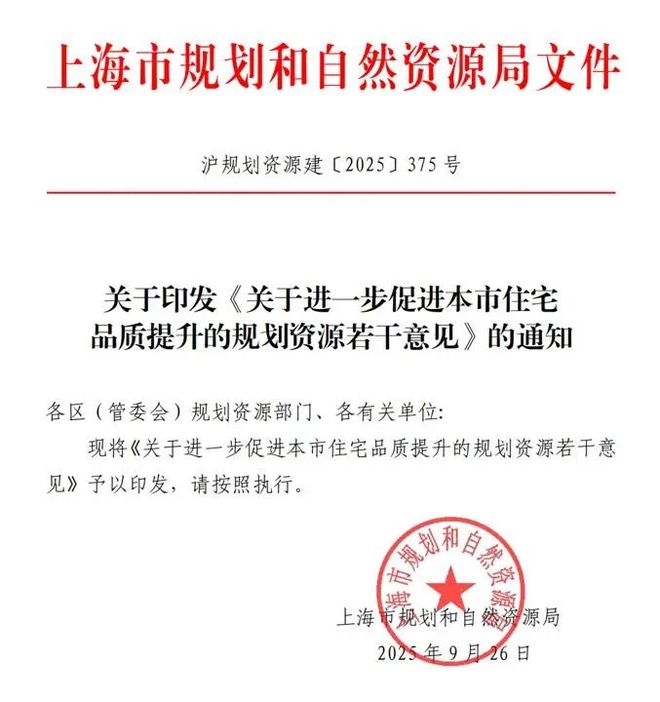
住宅品质提升

Search documents
竞价109轮!马年杭州宅地土拍强势开局
第一财经· 2026-03-06 09:30
Core Viewpoint - The first land auction in Hangzhou after the Spring Festival was highly competitive, with 12 developers participating and over 100 rounds of bidding, indicating a strong market demand for residential properties in the area [3][4]. Group 1: Auction Details - The auctioned land is located in the Chengdong New City area of Hangzhou, covering an area of 32,576 square meters with a floor area ratio of 2.2, allowing for a total buildable area of 71,667 square meters [3]. - The starting total price for the land was 213,394 million yuan, translating to an initial floor price of 29,776 yuan per square meter, which is nearly 10,000 yuan lower than similar plots sold last year in the same area, providing developers with a profit margin [3]. - The land was ultimately won by Poly Developments at a final floor price of 45,000 yuan per square meter, resulting in a premium rate of 51% [3][4]. Group 2: Market Analysis - Factors contributing to the auction's success include the land's advantageous location with views of the Grand Canal and proximity to the Metro Line 4, enhancing its appeal to potential buyers [4][5]. - The positive sales performance of a nearby project that launched in September last year has demonstrated the attractiveness of the Chengdong New City area to homebuyers [5]. - Poly Developments has been actively investing in Hangzhou, launching several projects since 2025, and the strong start to the land market with over 50% premium rates signals a positive market outlook, with core areas still favored by leading real estate companies [5].


杭州2025年房地产市场分析报告
Sou Hu Cai Jing· 2026-01-23 22:09
Policy Environment - The central government maintains a "stop decline and stabilize" policy for 2025, focusing on urban renewal, activating demand, and optimizing supply structures [8][10] - In Hangzhou, 2025 policies primarily aim to stimulate demand through credit optimization and subsidies, with a significant emphasis on home purchase subsidies [10][21] - The overall purchasing restrictions in Hangzhou are at their most relaxed level in history, with no limits on purchases, sales, prices, or loans [21] Land Market - The land market in Hangzhou shows a "hot first, cold later" trend, with a 15% year-on-year increase in transaction area and a 5% rise in floor prices [32][38] - The supply of land is expected to decrease by 36% compared to 2024, with a completion rate of 90% for the actual land sold [30][32] - Five districts in Hangzhou saw an increase in land transaction volume, while six districts experienced a rise in floor prices, indicating a competitive land market [34] Residential Market - The new housing market in Hangzhou has seen a continuous decline in supply and demand for four consecutive years, with average transaction prices rising to 34,500 yuan per square meter [10] - The secondary housing market is dominated by first-time buyers, with 66% of transactions occurring for properties priced under 3 million yuan [10] - Future trends indicate a continued focus on high-quality land and a gradual transition to a stock market era, with an emphasis on improving product quality [10][32] Future Trends - The policies are expected to remain loose, with a focus on high-quality land and a significant increase in the quality of new housing products [10][32] - The market is gradually transitioning towards a stock era, with ongoing emphasis on affordable housing and low-cost products in the secondary market [10][32]

上海2025年房地产市场分析报告
Sou Hu Cai Jing· 2026-01-23 14:52
Policy Environment - In 2025, Shanghai will continue to implement policies aimed at stimulating the real estate market, including the relaxation of purchase restrictions and the enhancement of public housing fund loan limits [8][11] - The "Good House" regulations introduced in September 2025 will encourage improvements in housing quality and optimize residential standards [13] Land Market - The land market is expected to show a "rise then fall" trend, with high premium transactions for quality plots in core areas, such as the Xuhui Hengfu plot reaching a floor price of 200,000 yuan per square meter [19][20] - The overall land supply in 2025 is projected to be similar to 2024, with a slight increase in core urban area land supply [25][29] Residential Market - The new housing market is experiencing a contraction in supply and demand, with transaction prices averaging 80,600 yuan per square meter, and a notable focus on mid-range units priced between 3 million to 7 million yuan [11][12] - The second-hand housing market is characterized by a significant price-volume trade-off, with total transactions reaching 253,800 units, and nearly 70% of transactions involving units under 90 square meters [11][12] Market Dynamics - The competitive landscape among real estate companies is dominated by major state-owned enterprises, with China Resources, Poly, and China Merchants ranking as the top three in sales volume [11][12] - The influx of external capital continues, indicating sustained interest in Shanghai's real estate market despite the overall cooling trend [20][22]
鼓励建设风雨连廊、架空层便民空间,武汉出台9项举措提升住宅品质
Chang Jiang Ri Bao· 2026-01-21 14:28
Core Viewpoint - The article discusses the implementation of a series of measures in Wuhan aimed at enhancing residential quality, transitioning from merely having housing to providing high-quality living spaces through improved planning, design, materials, construction, and services [1][4]. Group 1: Policy Initiatives - The "Opinions" document outlines nine specific initiatives to promote residential quality improvement, focusing on urban renewal and the enhancement of supporting facilities [1]. - New projects that include municipal and public service facilities for free transfer will receive building area incentives [1]. - The policy encourages the development of public spaces and facilities in residential areas, facilitating the upgrade of old residential communities to "good communities" [1]. Group 2: Residential Space Design - The policy promotes flexible and multifunctional living spaces, allowing for certain balcony areas to be excluded from the floor area ratio calculations [2]. - It supports the installation of outdoor equipment platforms and air conditioning units without counting their area towards the floor area ratio, providing more design flexibility [2]. - Rooftop space utilization is encouraged, with specific structures not counted towards building height if they meet certain criteria [2]. Group 3: Sustainability and Quality Control - The "Opinions" advocate for the use of green building materials and technologies, including high-durability concrete and high-performance windows, with certain exterior finishes exempt from floor area calculations [2]. - The policy promotes prefabricated construction and smart building practices to enhance construction precision and quality [2]. - A comprehensive quality assurance system is to be established, ensuring strict adherence to quality control measures throughout the building lifecycle [2]. Group 4: Property Services - Property companies are encouraged to develop smart service platforms utilizing IoT and AI technologies to enhance service efficiency and safety [3]. - The policy supports the integration of property services with lifestyle services, extending into areas such as elderly care, childcare, and housekeeping to meet diverse resident needs [3].
聚焦“宜居”需求,日照市出台住宅品质提升设计导则
Qi Lu Wan Bao· 2026-01-08 10:13
Core Viewpoint - Rizhao City has officially issued the "Rizhao Residential Quality Improvement Design Guidelines (Trial)" which will be implemented for all new residential projects starting January 1, 2026, marking a significant step towards enhancing residential quality from mere availability to improved living standards [1] Group 1: Guidelines Overview - The guidelines consist of 11 chapters and 124 articles, reflecting the governance philosophy of responding to public needs and incorporating feedback from industry associations, relevant departments, enterprises, and experts [1] - The guidelines cover a comprehensive technical specification system across various fields including architecture, structure, plumbing, electrical systems, heating, accessibility, smart technology, outdoor facilities, landscaping, and construction [1] Group 2: Comfort and Safety Enhancements - The guidelines establish strict requirements for sound insulation, specifying that residential units near highways and railways must achieve a sound insulation rating of at least 35dB for living spaces, with partition walls constructed of at least 200mm thick concrete or equivalent soundproofing [2] - Residential units with underfloor heating and centralized air conditioning must have a minimum ceiling height of 3.15m to ensure spatial comfort [2] Group 3: Green and Smart Construction - The guidelines mandate that at least 50% of materials used in high-quality residential buildings must be green, encouraging compliance with three-star green building standards and ultra-low energy consumption certifications [3] - Smart features include contactless access systems at entrances, monitoring devices for elevators, and a comprehensive smart community service platform integrating various functionalities [3] Group 4: Accessibility and Human-Centric Design - The guidelines emphasize accessibility, requiring the installation of tactile paving and barrier-free entrances in community green spaces, as well as ensuring adequate space and safety features in residential units for elderly residents [3] - Specific design elements include a minimum width of 1.30m for indoor walkways and the installation of support handles in bathrooms, catering to the needs of older adults [3] Group 5: Implementation and Monitoring - To ensure effective implementation of the guidelines, the Rizhao Housing and Urban-Rural Development Bureau will enhance training and supervision throughout the planning, design, construction, and acceptance processes [4] - The guidelines will be integrated into a high-quality residential evaluation index system, serving as a critical basis for project assessments and promoting a transition from mere housing to desirable living environments [4]
2025年,杭州的好房子遍地开花
Sou Hu Cai Jing· 2025-12-31 00:16
Core Viewpoint - The concept of "good houses" has emerged as a key term in Hangzhou's real estate market by 2025, driven by the cancellation of price limits, new quality regulations, and increased market competition, which has activated demand for self-use and improvement [6]. Group 1: Quality Standards and Regulations - The term "good houses" was first included in the government work report in March 2025, leading to public attention and the issuance of new quality improvement guidelines for residential properties in Hangzhou [7]. - New standards for residential quality have been established, including minimum floor heights of 3 meters, with some projects exceeding 3.5 meters, significantly enhancing living conditions [7][8]. - The thickness of partition walls has been increased to a minimum of 240 mm, and floor slabs to 120 mm, aimed at improving sound insulation and addressing long-standing noise issues [8]. Group 2: Market Dynamics Post-Price Limit Cancellation - The cancellation of price limits has allowed developers to regain pricing power, leading to a focus on quality to achieve higher premiums, thus enhancing the overall product offerings in the market [9]. - New luxury projects have emerged, such as the first unlimited-price project in the Hangzhou Olympic Sports Center area, featuring high-end amenities and luxurious materials, with prices reaching approximately 87,000 yuan per square meter [9][10]. - The introduction of innovative designs, such as elevated ground levels and enhanced soundproofing systems, has become a trend among new developments, improving the overall living experience [10]. Group 3: Impact on Affordable Housing - The quality of affordable housing has significantly improved compared to previous years, with new projects offering luxurious amenities at lower prices than during the price limit era [11]. - Developments like Yuhang District's first unlimited-price project have introduced high-quality features typically found in luxury homes, enhancing the appeal of affordable options [11][12]. - The competitive market environment has led to decreased prices and improved product quality for first-time homebuyers, resulting in a greater sense of value and satisfaction [12].

上海房产新规引争议!刚需选房难、房东怕贬值,不同人该咋应对?
Sou Hu Cai Jing· 2025-10-12 05:21
Core Insights - The new regulations in Shanghai aim to enhance residential quality, creating both opportunities and challenges for homebuyers and property owners [1][28] Group 1: Impact on First-Time Buyers - The new regulations provide benefits for first-time buyers by allowing access to higher quality housing options, with improved space and amenities [3][5] - Small apartments under 80 square meters can now have balconies up to 8 square meters, effectively increasing usable space without impacting the floor area ratio [5][9] - Public space requirements have been adjusted to enhance community living, such as utilizing ground-level areas for public purposes, which improves living conditions [7][19] Group 2: Opportunities for Upgraders - The regulations favor upgrade buyers by offering additional space and improved quality, such as larger balconies that can be counted as half the floor area ratio [13][15] - High-quality exterior materials are now incentivized, as they do not count towards the floor area ratio, enhancing property value and longevity [17][30] - Community amenities are emphasized, with requirements for public spaces that cater to families, such as libraries and children's play areas [19][32] Group 3: Challenges for Existing Property Owners - Owners of second-hand properties face potential depreciation as their homes may be viewed as outdated compared to new builds under the new regulations [21][23] - Owners of recently purchased properties may need to lower prices by 8%-10% to attract buyers, as their homes are now considered "old equipment" [23][25] - Older properties without modern amenities may struggle to sell, especially if they lack desirable features like elevators or updated public spaces [25][27] Group 4: Market Dynamics - The new regulations shift the focus from merely location-based value to a combination of location and quality, indicating a market trend towards quality premium properties [34][36] - The second-hand market is expected to see a divide, with newer, quality properties retaining value while older, lower-quality homes may depreciate [34][36] - Buyers are encouraged to prioritize comfort and long-term value over speculative price increases, reflecting a shift in market mentality [36]
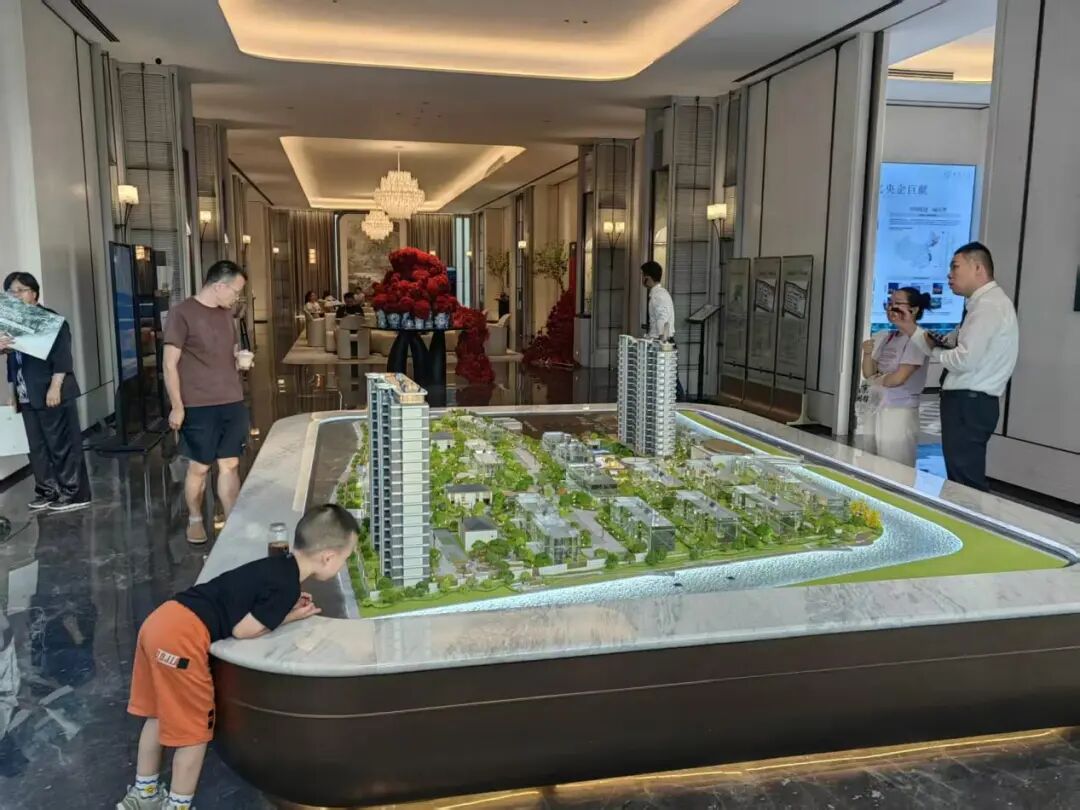
实探假期上海楼市:“好房子”成最大卖点
Shang Hai Zheng Quan Bao· 2025-10-08 04:45
Core Insights - The new regulations in Shanghai are reshaping the residential market by emphasizing quality and innovative design features, such as larger balconies and improved building materials [8][9]. Group 1: Market Trends - The introduction of new regulations has led to a noticeable shift in the new housing market, with sales personnel categorizing their projects as "good houses" [8]. - Sales strategies are adapting to focus on differentiation, with developers creating larger, more luxurious units to attract buyers [4][9]. Group 2: Consumer Behavior - During the National Day holiday, foot traffic in sales offices decreased compared to previous weekends, likely due to many potential buyers traveling [2][6]. - Buyers are increasingly looking for properties that offer modern amenities and improved living conditions, reflecting a shift in consumer preferences towards quality over quantity [6][9]. Group 3: Regulatory Impact - The new regulations specify that balcony areas cannot exceed 10% of the total unit area, promoting better utilization of space and enhancing privacy for residents [8][9]. - Developers are encouraged to use high-quality materials for building facades, which may enhance the overall market value of their properties [9].
上海“好房子”新规出炉,旧楼盘压力大了
3 6 Ke· 2025-09-29 04:29
Core Viewpoint - The new regulations in Shanghai aim to enhance the livability and space efficiency of residential properties, addressing long-standing issues related to balcony usage, building aesthetics, and community space, ultimately improving the overall housing experience for residents [4][16]. Group 1: Balcony Regulations - The new policy treats both enclosed and open balconies equally, eliminating the previous "gift discrimination" where enclosed balconies were fully counted in the floor area ratio, thus allowing developers to increase usable space [4]. - The regulations allow larger balconies for big units, with a maximum balcony area of 16 square meters, where 8 square meters will not count towards the floor area ratio, significantly improving the livability of larger apartments [5]. - A new type of open balcony with protective structures is permitted, which does not count towards the floor area ratio, providing additional space for drying clothes and enjoying views [6]. Group 2: Building Aesthetics - The new rules state that exterior finishes will not count towards the floor area ratio, allowing developers to enhance the visual appeal of buildings without sacrificing usable space [10]. - This change is expected to lead to higher-quality materials being used in new developments, creating a noticeable difference in aesthetics compared to older buildings that still use basic finishes [11]. Group 3: Community Space Enhancements - The regulations allow for parking garages to be built above ground level, improving the view and living conditions for first-floor residents by raising the living space above potential dampness and noise [13]. - New provisions for open corridors and weather-protected walkways will not count towards the floor area ratio, enhancing community spaces and providing better access during rainy seasons [15]. - Adjustments to building height limits will allow for more varied and appealing skylines, improving views for residents in prime locations [16].
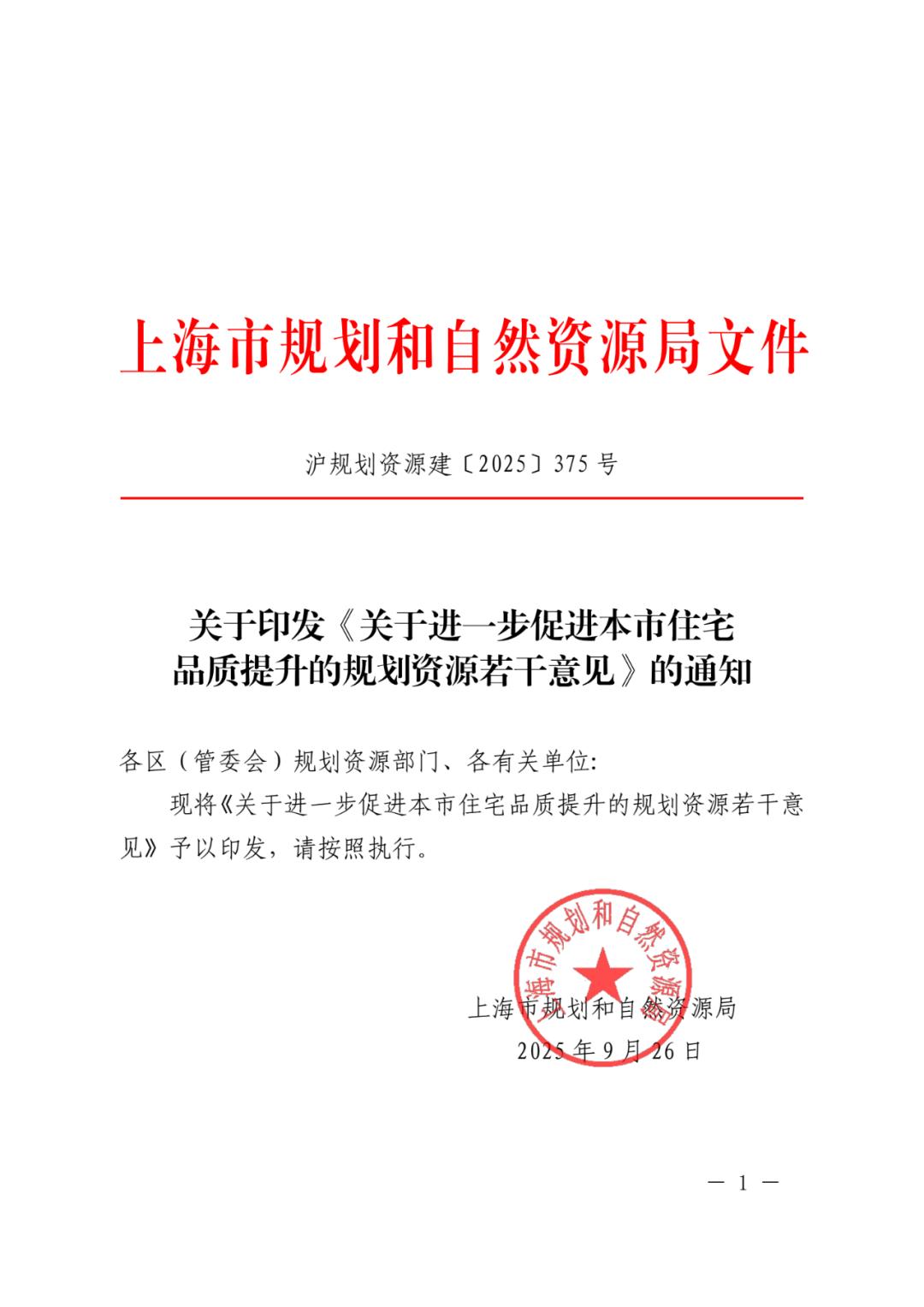
上海“好房子”新规落地 阳台或变“大”近一半
Zhong Guo Jing Ying Bao· 2025-09-29 03:17
Core Viewpoint - Shanghai's new regulations aim to enhance residential quality by allowing buyers to obtain larger balcony spaces for free, reflecting a significant shift in urban planning and residential design [1][4]. Group 1: Policy Changes - The Shanghai Municipal Planning and Natural Resources Bureau released a document with 5 categories and 17 specific measures to improve residential quality [1]. - The new regulations focus on optimizing living and working balcony spaces, considering factors like climate, lighting comfort, and overall architectural aesthetics [4]. Group 2: Balcony Area Regulations - Under the new rules, balconies (including enclosed ones) can be counted as half of their horizontal projection area towards the floor area ratio, provided they meet specific conditions [5]. - For example, in a 120 square meter unit, the maximum balcony area has increased from 8 square meters (counting as 4 square meters) to 12 square meters (counting as 6 square meters), providing buyers with an additional 2 square meters of free space [5]. Group 3: Developer Obligations - The regulations stipulate that real estate developers must include clauses in sales contracts to prevent unauthorized structural changes and misleading advertising practices [5].