增强现实(AR)

Search documents
打破行业「不可能三角」,AR+AI眼镜何以成为下一代翻译硬件?
36氪· 2025-06-27 00:09
Core Viewpoint - The article discusses the advancements in AR glasses, particularly the Leion Hey2 model, which combines optical technology, AI, and supply chain improvements to provide real-time translation, marking a potential "iPhone moment" for the AR industry [1]. Group 1: Market Context and Demand - Language barriers remain a significant challenge in global business and cultural exchange, with the translation pen market reaching hundreds of millions of dollars in 2023 [2]. - The AR glasses market is expected to see substantial growth, with global shipments projected to reach 553,000 units in 2024 and 2.956 million units by 2028, reflecting a compound annual growth rate of 50% [9]. Group 2: Technological Advancements - The Leion Hey2 AR glasses utilize a combination of augmented reality and AI to provide real-time translation, projecting translated text onto the lenses for seamless communication [5]. - The device features a significant improvement in battery life, achieving over 8 hours of continuous use, and can extend to 96 hours with a portable charging case [17]. - The Leion Hey2 employs advanced optical technologies, including single-lens dual-eye diffraction waveguide and Micro-LED display, achieving a peak brightness of 2500 nits, addressing previous issues of visibility in bright conditions [17]. Group 3: Competitive Landscape - The AR glasses industry is experiencing intense competition, with a growing number of brands and innovations, leading to a projected market of 286,000 units in China by 2024 [28]. - The supply chain advancements in China have significantly reduced production costs by over 30%, enabling more affordable pricing for AR glasses [25]. - The Leion Hey2 has been recognized for its innovative features, winning the UNESCO "Top Ten Global Technology Innovation Award" and participating in international exhibitions [23].


一副Leion Hey2眼镜=全球“无障碍通行证”,北京AR企业变革千亿美元市场
Jin Tou Wang· 2025-06-25 09:19
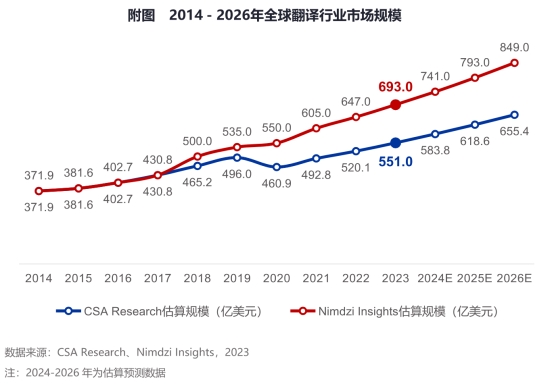
Industry Overview - The global language services market is experiencing unprecedented growth opportunities, with the translation industry market size estimated at approximately $69.3 billion in 2023 and projected to reach $84.9 billion by 2026 according to Nimdzi Insights [1] - CSA forecasts the market size for the same years to be $55.1 billion and $65.54 billion respectively [1] Company Profile - Liangliang Vision, a leading AR company from Beijing, has established a significant presence in the Chinese AR industry over its 11 years of technological accumulation [3] - The company has maintained the top position in shipment volume in the enterprise market for several consecutive years, serving notable clients such as China Southern Airlines and China Petroleum [3] - Liangliang Vision's industrial inspection solution was recognized alongside ChatGPT in the Harvard Business Review's 2024 Technology Trends list, highlighting its technical strength [3] Product Launch - The launch of the revolutionary Leion Hey2 AR translation glasses was showcased at a unique product release event in Seoul, South Korea, featuring a "live testing" format [3][4] - The Leion Hey2 glasses weigh only 49 grams and utilize advanced waveguide technology, achieving a lens thickness of just 0.4 mm, which is half the thickness of a credit card [4] - The glasses support real-time translation in over 100 languages with a latency of less than 0.5 seconds and a single charge lasting up to 8 hours, extendable to 96 hours with a charging case [4] User Experience - The Leion Hey2 transforms traditional translation device usage by employing a 360° sound source localization system and neural network noise reduction algorithms, maintaining a 98% recognition accuracy even in noisy environments [4] - The design allows users to naturally focus on conversation partners while translation subtitles appear 2-3 meters away, eliminating the need to look down at devices [4] Market Strategy - Liangliang Vision's strategic market positioning is evident from the success of its first consumer-grade AR subtitle glasses, Leion Hey, which sold over 30,000 units and achieved an average daily usage time of 150 minutes [6] - The Leion Hey product received the UNESCO "Global Top Ten Technology Innovation Award," establishing a strong foundation for the promotion of Leion Hey2 [6][8] Application Scenarios - Leion Hey2 addresses various cross-language communication needs across business meetings, travel, and international education, effectively serving as a "global barrier-free pass" [8][9] Future Outlook - The market response to Leion Hey2 has been enthusiastic, with over 10,000 units pre-ordered within two hours of the launch event, indicating strong market recognition [11] - Industry analysts predict that AR translation devices may become a phenomenon similar to smartphones within the next three years, driven by advancements in 5G networks and AI technology [11] - Liangliang Vision aims to become a foundational provider of global cross-language services, with its innovations reflecting the broader trend of Chinese companies transitioning from followers to leaders in the global AR industry [11]
赛道Hyper | Rokid AR Spatial:再攻消费级AR市场
Hua Er Jie Jian Wen· 2025-06-07 02:44
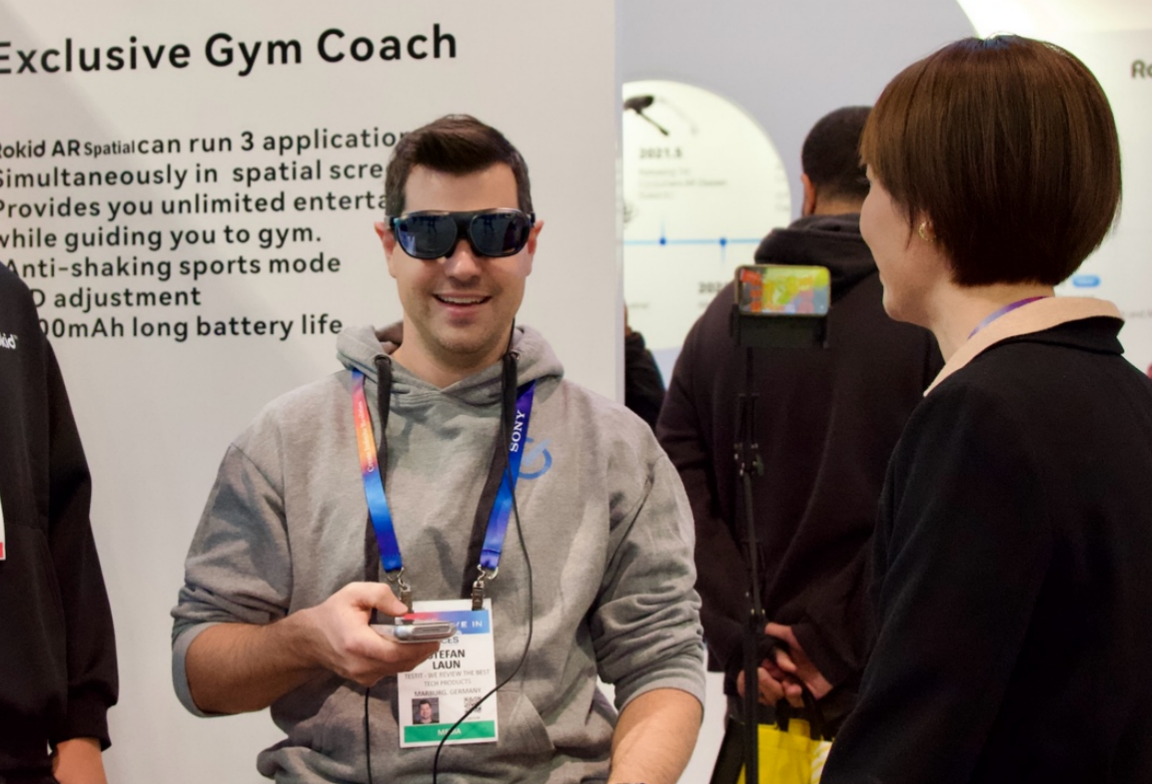
Core Insights - Rokid's AR Spatial glasses will launch globally on June 15 via AliExpress, marking a significant step in the company's strategy to penetrate the consumer market with a competitive price point of $518 after subsidies, compared to Apple's Vision Pro priced at $3,499 [1][2] - The glasses feature the world's first intelligent refractive and interpupillary distance adjustment system, allowing for dynamic adjustments without the need for custom lenses, thus targeting a broader consumer base [3][4] - Rokid aims to leverage its existing industrial AR expertise while transitioning to the consumer market, with 80% of its current revenue still derived from industrial-grade AR devices [2][7] Product Features - The AR Spatial glasses are designed for comfort and extended wear, supporting multi-window operations, 3D content viewing, and integration for both entertainment and work [3] - The glasses utilize advanced MEMS sensors for real-time eye parameter monitoring, achieving a dynamic adjustment range of ±600 degrees for refractive power and 55-75mm for interpupillary distance [3] - The optical module, developed in collaboration with Lens Technology, boasts a thickness of just 1.2mm, with a light transmittance of 85%, and supports dual 1920×1080 resolution at a refresh rate of 120Hz [4][5] Competitive Positioning - Rokid's AR Spatial is positioned as a cost-effective alternative to Apple's Vision Pro, with a price point at approximately 15% of Vision Pro's cost, aiming to capture a significant share of the consumer AR market [1][6] - The glasses are designed to integrate seamlessly with Alibaba's ecosystem, including applications like DingTalk and Taobao, which may enhance brand recognition and user engagement [6][7] - Despite its advantages, Rokid faces challenges in ecosystem scale and application availability compared to Apple, which has a more extensive app ecosystem and developer support [7] Market Outlook - The global smart glasses market is projected to reach 12.05 million units by 2025, with AR glasses expected to account for over 30% of this market, indicating a growing opportunity for Rokid [6] - Rokid's strategic partnerships and cost reductions in manufacturing could enhance its competitive edge in the price-sensitive consumer market [7] - If Rokid can successfully expand its developer ecosystem and reduce hardware costs, it may become the first Chinese AR brand to achieve annual sales exceeding one million units [7]
Rokid要借速卖通跳板全球突围
Hua Er Jie Jian Wen· 2025-06-06 11:57
Core Insights - Rokid has launched its overseas version of AR glasses, Rokid AR Spatial, on AliExpress, aiming to expand its international market presence [3][4] - The product features a unique intelligent refractive and interpupillary distance adjustment system, making it lightweight and comfortable for prolonged use [3] - Rokid AR Spatial is positioned as a competitor to Apple's Vision Pro, with a significantly lower price point of $648, potentially dropping to around $500 with promotional subsidies [9] Company Strategy - Rokid's international business head, Shao Huaqiang, emphasized the importance of a successful launch in overseas markets, with AliExpress chosen for its logistics efficiency and customer service capabilities [5][6] - The partnership with AliExpress is part of a broader strategy to leverage the platform's "100 Billion Subsidy" initiative, which has previously resulted in significant sales growth for participating brands [5][6] - Rokid aims to enhance its brand presence in the global market, having transitioned from B2B to B2C sales in 2023, with plans to expand into offline channels later this year [7] Market Context - The AR glasses market is experiencing rapid growth, with a projected increase in global shipments from 500,000 units in 2023 to 800,000 units in 2024, representing a 63% year-on-year growth [12] - The competitive landscape includes major players like Apple and Meta, with Rokid positioning itself as a viable alternative to the high-priced Apple Vision Pro [8][9] - The AR sector is attracting significant investment, with expectations for continued growth driven by advancements in technology and consumer interest in augmented reality applications [12][13]
2025年中国AR眼镜产业十大创新企业:Xreal、雷鸟创新、灵伴科技、光粒科技、星纪魅族……
Qian Zhan Wang· 2025-06-03 01:20
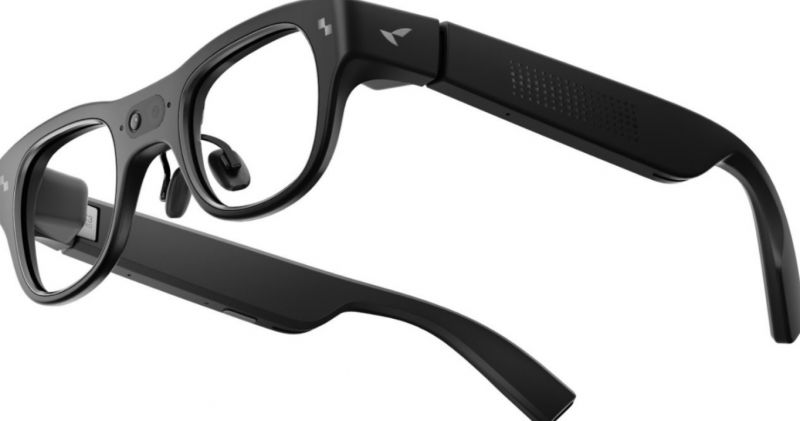
Core Insights - The AR industry is increasingly recognized as a key area for strategic development in the digital economy, with significant government support in China [2][4]. - AR glasses are positioned as a crucial component of the AR technology landscape, with policies evolving from the "13th Five-Year Plan" to the "14th Five-Year Plan," highlighting the industry's importance [2][4]. - The competitive landscape in the AR sector is diverse, with major players categorized into three groups: international tech giants, domestic smartphone manufacturers, and emerging AR companies [4][5]. Industry Overview - The Chinese government views AR as a vital part of its strategic emerging industries, with ongoing support and investment [2]. - The "14th Five-Year Plan" explicitly includes VR/AR as one of the seven key industries in the digital economy, indicating a strong commitment to the sector's growth [2]. - Future plans, such as the "15th Five-Year Plan," are expected to continue prioritizing VR/AR technologies, focusing on domestic technical support and development [2]. Competitive Landscape - International tech giants like Microsoft, Meta, Apple, Samsung, and Google leverage their technological expertise and brand influence to invest heavily in AR research and development [4][5]. - Domestic smartphone manufacturers, including Huawei and Xiaomi, integrate AR technology into their products, benefiting from established user bases and supply chains [4][5]. - Emerging AR companies such as Xreal, Rokid, and Thunder Innovation adopt unique technological advantages and innovative strategies to carve out market positions [4][5]. Market Dynamics - Chinese AR companies are rapidly capturing the consumer market by overcoming key technological challenges, particularly in waveguide technology [7][9]. - According to IDC data, in 2023, Xreal, Rokid, and Thunder Innovation held global market shares of 45%, 14%, and 13%, respectively, while foreign brands dominate high-end and professional segments [7][9]. - The integration of AI and innovative application scenarios is driving the growth of consumer-grade AR products in China [9]. Key Players - Xreal, founded in 2018, leads the global AR market with a 47.2% share as of 2024, focusing on consumer-grade AR glasses [15][17]. - Thunder Innovation, established in 2021, is notable for its unique optical solutions and has developed the world's first mass-produced full-color Micro LED waveguide AR glasses [19][21]. - Rokid, founded in 2014, specializes in human-computer interaction technologies and has a diverse range of AR products applied across various industries [22][23]. - INMO, established in 2020, focuses on smart glasses and has made significant advancements in AR and AI technologies [24][25]. - Starry Meizu, founded in 2021, has quickly gained market share with its AR glasses, achieving a 41.5% market share in the 2000-2999 yuan price segment [26][27]. Technological Trends - The AR glasses market is evolving with advancements in optical and micro-display technologies, including optical see-through and video see-through methods [43][45]. - Optical waveguide technology is becoming a key focus, enabling clearer imaging and larger fields of view, which are essential for consumer adoption [49][50]. - The integration of AI with AR is anticipated to transform user experiences, with predictions that AR glasses could eventually replace smartphones within the next decade [50].


AR眼镜价格比买手机还贵!自建生态成本过高困境待破,雷鸟创新还需求解
Hua Xia Shi Bao· 2025-05-29 01:06
Core Viewpoint - The AR industry faces significant challenges in achieving widespread adoption, with current AR device shipments projected to be only 0.06% of smartphone shipments in 2024, highlighting the struggle for AR to move beyond being a niche market [2] Group 1: Industry Challenges - The lack of a robust native ecosystem for AR devices has been a major barrier to consumer adoption, with many users finding limited functionality beyond gaming [4][8] - High costs associated with building a self-sustaining ecosystem deter many startups from pursuing this route, as establishing even a small ecosystem can require hundreds of millions in investment [5] - Current AR device shipments are projected at 731 million units globally in 2024, with AR devices accounting for only 10.7% of this market, indicating a cold and niche market for AR glasses [6] Group 2: Strategic Partnerships - Companies like Thunder Innovation and INMO are leveraging existing mobile ecosystems to enhance the functionality of their AR devices, integrating popular applications to lower the entry barrier for users transitioning from smartphones to AR glasses [3][6] - Thunder Innovation's new AR glasses, the RayNeo X3 Pro, feature the "RayNeo AR Application Virtual Machine," allowing seamless integration with Android applications, while INMO AIR3 has partnered with Tencent's application market to expand its content ecosystem [3][6] Group 3: Market Dynamics - The AR market in China shows a clear concentration of market share, with Thunder Innovation holding a 50% share, followed by competitors like XREAL and Starry Meizu with significantly lower shares [6] - Despite current reliance on mobile ecosystems, companies express confidence that AR glasses will eventually develop their own ecosystems, with new applications emerging beyond those available on smartphones [7] Group 4: Consumer Sentiment and Pricing - Consumer feedback indicates ongoing hardware issues with AR devices, such as short battery life and slow startup times, which hinder broader adoption [8] - Pricing remains a significant barrier, with new products from Thunder Innovation priced between 1,499 to 8,999 yuan, even after government subsidies [8] - Industry leaders predict that AR will reach a pivotal moment similar to the iPhone's launch within the next 2-3 years, potentially leading to a significant increase in adoption rates [8]
深度解构 | 谷歌与XREAL联手背后:中国AR企业如何改写全球XR游戏规则?
Huan Qiu Wang· 2025-05-26 08:42
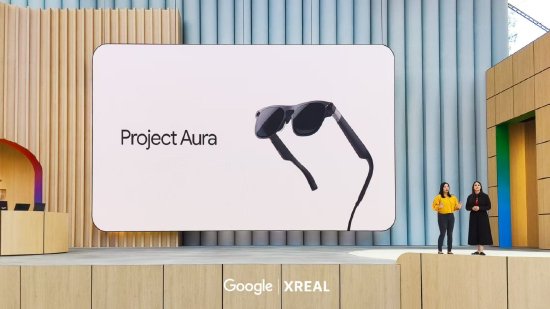
Core Insights - The core theme of the Google I/O developer conference is AI, showcasing how it reshapes productivity, creativity, and daily experiences, while a strategic topic of spatial computing emerges [1] - The official launch of the Android XR platform signifies Google's critical move in the next-generation human-computer interaction battlefield, with the introduction of Project Aura AR glasses in collaboration with Chinese startup XREAL [3][5] - The global tech industry is undergoing a transformative change comparable to the rise of smartphones, with major products like Apple's VisionPro and Meta's Orion marking the opening of a trillion-dollar spatial computing market [3] Company Developments - Google aims to break hardware manufacturers' ecological barriers through the standardization of the Android XR platform, transitioning AR devices from niche products to mainstream consumer goods [3][5] - The partnership with XREAL reflects a strategic choice, as XREAL's technology path and industry representation align with Google's vision for the AR market [5][6] - XREAL's Project Aura utilizes an optical see-through (OST) solution, offering lower latency and a more natural virtual-physical integration experience, which is seen as the ultimate form of consumer-grade AR [6] Technological Innovations - XREAL's advancements in optical module development and proprietary chip design, including the X1 spatial computing chip, enhance performance and reduce power consumption, establishing a competitive edge in the AR market [9][10] - The integration of Gemini AI into AR devices signifies a shift from simple display terminals to intelligent partners capable of real-time environment perception and content generation [6][12] - The collaboration between XREAL's X1 chip and Google's Gemini AI creates a new computing architecture that combines edge computing with cloud support, aligning with global trends in data privacy and reducing reliance on single cloud service providers [12] Industry Dynamics - The announcement of Project Aura represents a significant moment for the domestic AR industry, highlighting a global competition for technological standards [11] - XREAL's role in establishing key standards within the Android XR platform indicates a shift from being a participant to a standard-setter in the XR industry [11] - The Chinese XR industry is encouraged to pursue a three-dimensional development path focusing on core technology, application scenarios, and ecological cooperation to enhance competitiveness [13][14]

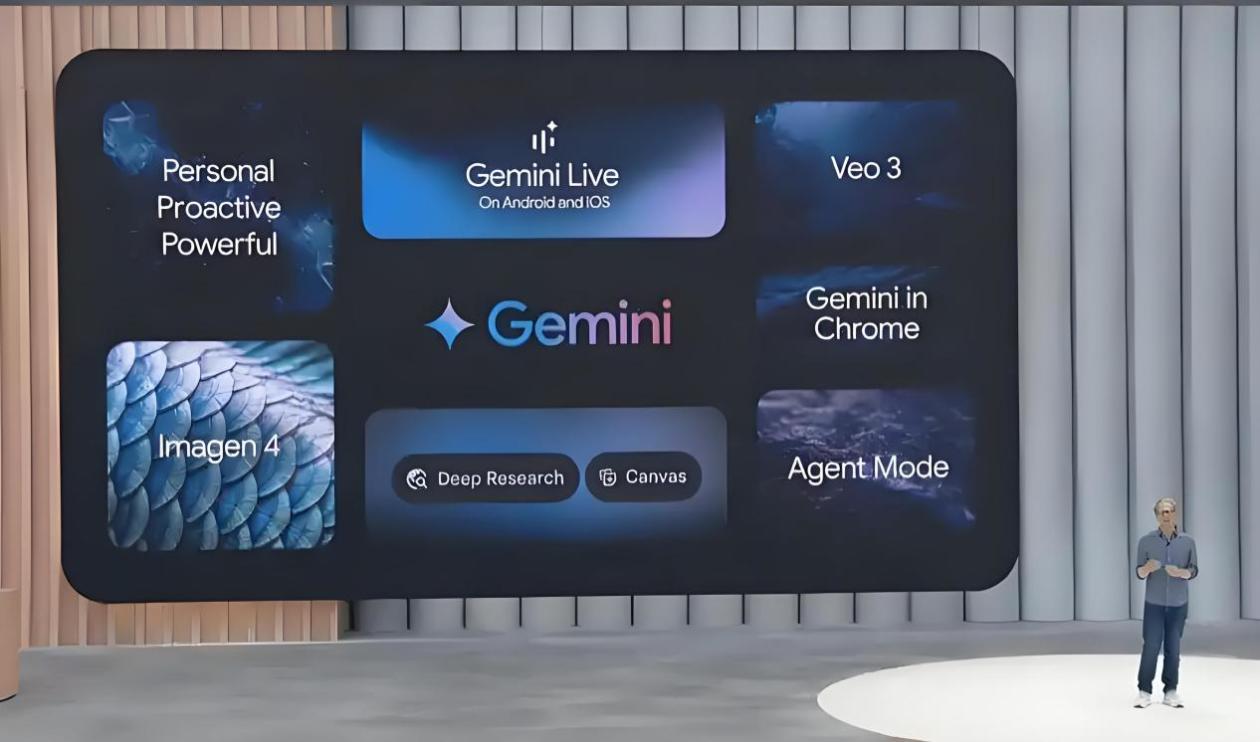
Google联合XREAL推出全球首款基于Android XR的旗舰眼镜
Xin Lang Ke Ji· 2025-05-20 23:57
Group 1 - Google announced a strategic partnership with Chinese AR company XREAL to launch the new generation AR glasses, Project Aura, designed specifically for the Android XR platform [1][3] - Project Aura represents a significant step in Google's XR platform ecosystem strategy and elevates XREAL's position in the global AR market, featuring lightweight design, wide field of view, cinema-level immersive experience, and integration with Gemini AI [3][4] - The collaboration combines the technological strengths of Google, XREAL, and Qualcomm, forming a "golden triangle" that covers platform, hardware, and chip, establishing a solid foundation for the Android XR ecosystem [3] Group 2 - Google’s VP of Android XR, Shahram Izadi, expressed excitement about XREAL joining the Android XR family and emphasized the importance of Project Aura in advancing spatial experiences into a more intuitive and accessible OST era [4] - XREAL's founder and CEO, Xu Chi, highlighted the company's commitment to pushing the boundaries of AR hardware, merging performance, comfort, and design aesthetics, and believes that the collaboration with Google will elevate their vision to new heights [4]