工业设备

Search documents
股市必读:迈得医疗(688310)1月6日主力资金净流出86.51万元
Sou Hu Cai Jing· 2026-01-06 20:32
Summary of Key Points Core Viewpoint - The company, Maide Medical (688310), has initiated a share buyback program, reflecting its strategy to enhance shareholder value and manage capital effectively [1]. Trading Information - On January 6, 2026, Maide Medical's stock closed at 15.9 yuan, experiencing a slight decline of 0.25% with a turnover rate of 1.91% and a trading volume of 31,800 shares, resulting in a total transaction value of 50.42 million yuan [1]. - The net outflow of main funds was 865,100 yuan, while speculative funds saw a net inflow of 1,532,600 yuan, and retail investors had a net outflow of 667,500 yuan on the same day [2]. Company Announcements - On January 5, 2026, Maide Medical conducted its first share buyback, acquiring 127,283 shares, which represents 0.0766% of the total share capital. The buyback price ranged from 15.69 yuan to 15.80 yuan per share, with a total expenditure of 2,004,504.07 yuan (excluding transaction fees) [1]. - This buyback is part of a plan approved by the shareholders on December 30, 2025, with funding sourced from either excess raised funds or the company's own funds. The buyback aims to reduce registered capital, with a planned duration of 12 months and a total buyback amount between 20 million yuan and 40 million yuan, while the maximum buyback price is set at 24 yuan per share [1].

Taylor Devices Q2 Earnings Soar Y/Y on Aerospace Demand
ZACKS· 2026-01-06 18:46
Core Insights - Taylor Devices, Inc. (TAYD) shares have increased by 7.2% since the earnings report for the quarter ended November 30, 2025, outperforming the S&P 500 index, which grew by 0.5% during the same period [1] - The stock has seen a significant rise of 39.3% over the past month compared to the S&P 500's 0.2% growth, indicating strong investor optimism [1] Financial Performance - For the fiscal second quarter, earnings per share rose to 64 cents, up from 34 cents in the prior-year quarter [2] - Net sales reached $11.6 million, a 36% increase from $8.5 million in the same period last year [2] - Net income nearly doubled, increasing by 90% to $2 million from $1.1 million [2] - Gross profit for the quarter was $5.5 million, up from $3.9 million a year earlier, with gross margin expanding to 47% from 45% [2] Revenue Drivers and Customer Segments - The increase in quarterly revenues was primarily driven by a 91% year-over-year boost in short-duration, non-long-term projects, while long-term project revenues rose by 7% [3] - Domestic sales surged by 45%, while international sales declined by 30%, attributed to normal fluctuations in structural project activity [3] - Sales in the aerospace/defense sector jumped by 58%, and industrial customer sales rose by 29% [3] Customer Composition - Aerospace/defense accounted for 69% of sales in the quarter, up from 59% a year ago, while structural sales comprised 21% and industrial customers made up 10% [4] - The total backlog at the end of the quarter was $25.1 million across 134 open sales orders, down from $34.5 million a year earlier [4] Expense Trends and Operating Performance - Research and development (R&D) spending rose to $0.2 million, an increase of 108% from $0.1 million a year ago, representing 1.8% of quarterly net revenues compared to 1.2% previously [5] - Selling, general and administrative (SG&A) expenses amounted to $3 million, a 6% year-over-year increase, but declined as a percentage of revenue to 26% from 33% [6] - Operating income doubled to $2.2 million, up from $0.9 million in the same period a year ago, driven by higher revenue and improved gross margins [7] Management Commentary - Management noted that quarterly gains were due to favorable backlog conversion into revenues, particularly for short-term projects [8] - The decline in international sales reflects natural variability in demand across regions [8] Future Outlook - The company invested $1.5 million in capital expenditures during the six-month period and plans an additional $1.7 million over the next twelve months to expand manufacturing capacity [9] - The growth in short-duration project revenues provided a temporary lift, while the mix of customer segments tilted more heavily toward aerospace/defense [10] - The backlog decline indicates successful project conversion but may require replenishment to sustain growth [10]



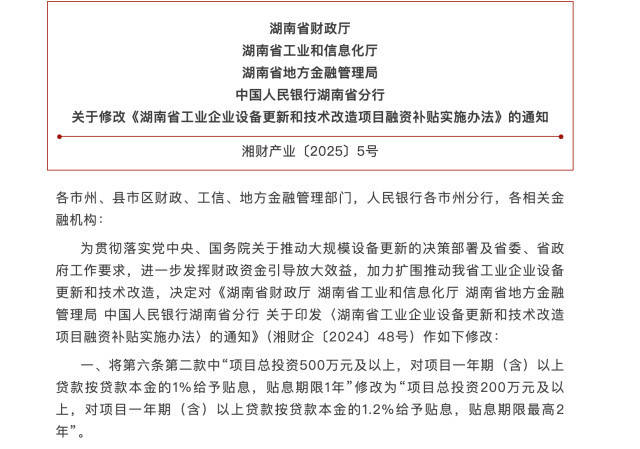
门槛降至200万元、补贴最高至1.5%!湖南加码支持工业设备更新
Sou Hu Cai Jing· 2026-01-06 00:37
Core Viewpoint - The recent modification of the "Implementation Measures for Financing Subsidies for Equipment Renewal and Technological Transformation Projects of Industrial Enterprises in Hunan Province" aims to better align with national policy directions and support industrial enterprises in upgrading equipment and technology [1] Group 1: Policy Changes - The total investment application threshold for projects has been reduced from 5 million yuan to 2 million yuan [1] - The base subsidy ratio has been increased from 1% to 1.2%, with the maximum interest subsidy period extended to 2 years [1] - The revised policy is designed to enhance the attractiveness of provincial policies and support more small and medium-sized enterprises in reducing financing costs [1] Group 2: Incentives for Key Projects - The revised measures include additional incentives for key projects, with an extra 0.2 percentage points added to the interest subsidy for projects undergoing digital and intelligent transformation [1] - Projects that align with the national guidelines for key industrial sectors can receive an additional 0.1 percentage points, leading to a maximum interest subsidy ratio of 1.5% for eligible projects [1] Group 3: Impact of Previous Implementation - Since the introduction of the "Implementation Measures," a total of 229 projects have received support, with financing subsidies amounting to 65.31 million yuan and total project investments reaching 32.564 billion yuan [2] - Upon completion, these projects are expected to generate approximately 45.795 billion yuan in new sales revenue and 3.554 billion yuan in new profits [2]
外贸发展韧性如何延续?丨落实会议部署 问答中国经济
Zheng Quan Shi Bao· 2025-12-30 06:34
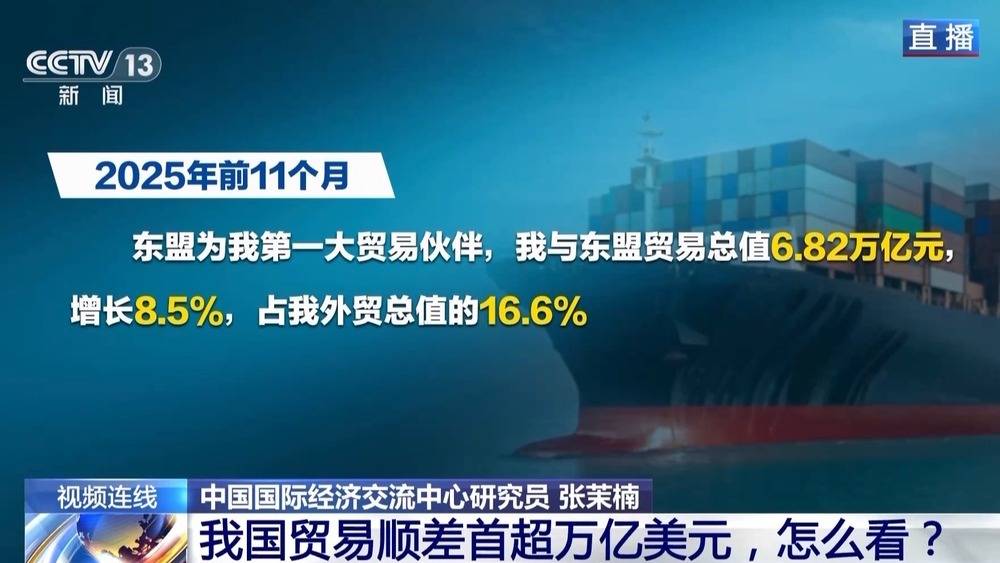
Core Viewpoint - China's merchandise trade exports have shown a surprising year-on-year growth of 6.2% in the first 11 months of this year, exceeding initial expectations despite high tariffs imposed by certain countries, reflecting the resilience brought by the long-term transformation and upgrading of the manufacturing sector and diversification of trade partners [1][2]. Group 1: Export Growth and Structure - The export structure of China has improved, with intermediate goods and capital goods showing significant growth rates of 9.7% and 6% respectively in the first 10 months, contributing 5.6 percentage points to overall export growth [1]. - Intermediate goods accounted for 47.4% of total exports in the first three quarters, an increase of 2 percentage points compared to the end of last year, indicating a shift towards a more favorable export structure [1]. Group 2: Trade Partner Diversification - Exports to the U.S. have decreased by 18.3%, but exports to non-U.S. markets such as Africa, ASEAN, India, the EU, the UK, Latin America, and Australia have maintained high growth, effectively offsetting the decline in exports to the U.S. [2]. - The long-term advantages of manufacturing transformation and market diversification are expected to continue, with a generally optimistic outlook for foreign trade in the coming year [2]. Group 3: Future Strategies - Continued promotion of manufacturing transformation and upgrading is essential, with a focus on integrating technological and industrial innovation to enhance the self-sufficiency of the industrial chain [3]. - The service sector's export potential is significant, with service trade exports growing by 14.3% in the first 10 months, including a 52.5% increase in travel service exports [3]. Group 4: Multilateral Trade System - China has actively supported the multilateral trade system, proposing measures to stabilize and develop the World Trade Organization (WTO) framework, which has garnered widespread support [4]. - Plans for gradual institutional opening and the signing of more regional and bilateral trade agreements are underway, aimed at promoting the free flow of goods, services, and investments [4].
44项新国标驱动工业设备更新,加快制造业高端化绿色化转型
Xin Jing Bao· 2025-12-26 07:20
Core Viewpoint - The industrial sector is a key focus for large-scale equipment upgrades and consumer product replacement initiatives, driven by national policies aimed at enhancing manufacturing capabilities and promoting sustainable development [1][2]. Group 1: Standards and Regulations - The Ministry of Industry and Information Technology (MIIT) has completed the revision of 44 important national standards to accelerate the high-end, intelligent, and green development of the manufacturing industry [1]. - The MIIT, along with six other departments, will issue an implementation plan in March 2024 to guide the replacement of outdated equipment and the adoption of advanced technologies through standardized measures [1]. Group 2: Focus Areas of Standard Development - The MIIT is focusing on three main areas for standard development: - Strengthening product quality and safety standards, with the release of 24 mandatory national standards, including those for elevator wire ropes and electrical devices in explosive environments [1]. - Accelerating the upgrade of energy consumption and emission standards to promote technological transformation and equipment updates in industries [2]. - Increasing the supply of recycling and circular economy standards, including guidelines for the reuse of retired photovoltaic components and the recycling of vehicle batteries [2]. Group 3: Impact on Industry - The ongoing "Two New" policy is accelerating the implementation of equipment updates in the industrial sector, which is expected to stimulate investment growth, promote industrial upgrades, and unleash domestic demand potential [2]. - The MIIT aims to continue implementing high standards to drive the renewal of industrial equipment and the replacement of consumer products [2].
博盈特焊:截至2025年9月30日,公司在境外的营业收入占比约为54.28%
Zheng Quan Ri Bao Wang· 2025-12-17 07:14
Core Viewpoint - The company, Bointech Welding (301468), anticipates that by September 30, 2025, approximately 54.28% of its revenue will come from overseas markets, indicating a strong focus on international expansion [1] Group 1: International Revenue and Market Expansion - As of September 30, 2025, the company's overseas revenue is projected to be around 54.28% [1] - The company primarily exports its products to regions including Asia, North America, South America, and Europe [1] - The main strategy for expanding into overseas markets relies on business negotiations [1] Group 2: Company Strengths and Industry Position - The company is one of the earliest domestic enterprises engaged in industrial equipment anti-corrosion and wear-resistant welding [1] - It has established a strong brand image in the industry due to its deep technical expertise, excellent manufacturing processes, and high product quality [1] - The company has gained customer trust and recognition across various aspects such as technical strength, product quality, production scale, application cases, product pricing, and industry reputation [1]
终于,荷兰不愿看到的局面出现了,中企开始“打包甩卖”欧洲资产
Sou Hu Cai Jing· 2025-12-13 12:20
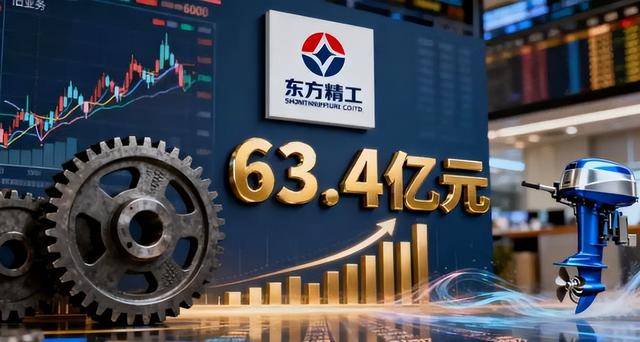
Core Viewpoint - The sale of Fosber Group by Dongfang Precision, which generated a 76.4% increase in net profit, reflects a strategic retreat driven by rising geopolitical risks rather than mere financial calculations [1][3][31]. Group 1: Company Actions - Dongfang Precision sold Fosber Group, including over 200 industrial 4.0 patents, to American company Bofeng for 6.3 billion RMB, despite it contributing two-thirds of the company's revenue [3][5]. - The decision to sell was made despite Fosber being a stable and profitable business, indicating a shift from profit focus to risk management [7][9]. - The funds from the sale will be reinvested into domestic sectors critical for China's technological advancement, such as AI and marine engines [28][29]. Group 2: Industry Context - The sale is part of a broader trend where 81% of Chinese companies are considering reducing or withdrawing investments in Europe due to increasing regulatory pressures and geopolitical tensions [16][20]. - The Dutch government's actions against Nexperia, a semiconductor company, exemplify the risks faced by Chinese firms in Europe, where national security concerns are being used to justify stringent regulations [11][13]. - Other companies, like Ningbo Huaxiang, have also sold subsidiaries at symbolic prices to avoid larger losses, indicating a growing fear among businesses regarding the stability of their investments in Europe [18][20]. Group 3: Future Implications - The withdrawal of Chinese companies from Europe may lead to significant job losses and a hollowing out of industries, particularly in the automotive supply chain, which relies heavily on Chinese components [24][26]. - The trend suggests a shift towards a new era of business where security considerations take precedence over traditional profit motives, potentially leading to a prolonged technological downturn in Europe [20][33]. - The strategic retreat of Chinese firms highlights the urgent need for Europe to reassess its approach to foreign investment and technology partnerships [22][31].

Nordson(NDSN) - 2025 Q4 - Earnings Call Transcript
2025-12-11 14:30
Financial Data and Key Metrics Changes - Sales for Q4 2025 were $752 million, up 1% from $744 million in Q4 2024, with organic sales decreasing by 1% [10] - Adjusted earnings per share grew 9% year-over-year to $3.03, exceeding the midpoint of quarterly guidance [12] - Full year sales reached a record $2.8 billion, up 4% from the previous year, with adjusted diluted earnings per share of $10.24, also up 5% [18][19] Business Line Data and Key Metrics Changes - Industrial Precision Solutions (IPS) sales decreased 2% to $362 million, with organic sales down nearly 4% [13] - Medical and Fluid Solutions sales increased 10% to $220 million, with organic sales volume up 7% [14] - Advanced Technology Solutions (ATS) sales decreased 4% to $171 million, with organic sales down approximately 5% [17] Market Data and Key Metrics Changes - The company reported a 5% year-over-year increase in backlog, reaching approximately $600 million [26] - Currency translation positively impacted sales by 2% during the quarter [10] - The company noted stabilization in demand for automotive and polymer processing end markets [24] Company Strategy and Development Direction - The Ascend strategy has been pivotal in achieving record sales and EBITDA, with a focus on operational excellence and strategic M&A [6][8] - The company aims for average annual revenue growth of 6%-8% and adjusted EPS growth of 10%-12% from 2025 to 2029 [23] - The company is positioned to capitalize on profitable growth opportunities as key market headwinds have subsided [22] Management's Comments on Operating Environment and Future Outlook - Management expressed confidence in the ability to convert market opportunities into bottom-line results, anticipating a strong start to fiscal 2026 [22][26] - The company highlighted that customer destocking in the medical segment is behind them, with expectations for mid-single-digit organic growth [24] - Management acknowledged the importance of planning for both upside and downside scenarios in guidance, reflecting a cautious yet optimistic outlook [44][45] Other Important Information - The company generated record cash flow of $194 million in Q4, with a conversion rate of 128% to net income [5] - Free cash flow for the full year was a record $661 million, enabling share repurchases and dividend increases [21] - The company ended the year with a leverage ratio of 2.1 times, near the low end of its targeted range [20] Q&A Session Summary Question: Insights on ATS segment and semiconductor applications - Management noted that strength remains concentrated in semiconductor applications for AI and cloud computing, with automotive stabilizing [29][30] Question: Margin trajectory for 2026 - Management indicated that margins in IPS and ATS are expected to be sustainable, with upper 30s% margins in the medical segment being achievable [31][32] Question: Polymer processing outlook - Management stated that polymer processing has troughed, with expectations for improvement in order entry and backlog [33][52] Question: Guidance rationale - Management explained that guidance reflects a range of potential outcomes, planning for both upside and downside scenarios [44][45] Question: Backlog trends - Management confirmed that backlog is down sequentially, which is typical for Q1, but up 5% year-over-year [55]

贸易顺差首超万亿美元 中国外贸韧性源自哪
Sou Hu Cai Jing· 2025-12-10 02:37
Core Insights - China's trade surplus has exceeded $1 trillion for the first time in the first 11 months of the year, with private enterprises accounting for 57.1% of the total foreign trade value [1] Group 1: Trade Resilience - China's position as the largest trading and manufacturing nation globally is a key factor in its trade resilience, supported by a comprehensive industrial structure and supply chain [2][4] - The diversification of trade, particularly with emerging markets, has contributed significantly to trade growth, with notable increases in trade with ASEAN and the EU [2][4] Group 2: Trade Structure Optimization - The trade structure is continuously optimizing, moving towards high-end industrial chains, with industrial products like integrated circuits, machinery, and automobiles being the main drivers of trade growth [4] - Despite a decline in exports to the U.S., China's overall trade surplus has increased, indicating a strengthening of trade relationships with other countries [5] Group 3: China-EU Trade Dynamics - There has been a significant shift in the trade structure between China and the EU, with a 14.8% increase in exports to the EU in November, and a projected trade deficit for the EU with China exceeding €350 billion [6] - The similarity in the top traded products between China and the EU suggests a shift from vertical to horizontal division of labor, which may lead to increased trade tensions [6] Group 4: Future Trade Strategies - China aims to balance trade relations with the EU by increasing imports of services and agricultural products, as well as enhancing investments in the EU [7] - Future macroeconomic adjustments will focus on counter-cyclical and cross-cyclical measures, utilizing structural policy tools for more precise market support [8]
中国 7.8%、全球 6.5% 增速:工业售后市场,OEM 不可错失的盈利高地
科尔尼管理咨询· 2025-12-04 09:38
Core Insights - The aftermarket service sector is expected to grow faster than overall product sales and GDP growth due to customers delaying new equipment purchases and focusing on enhancing existing equipment performance [1][2][4] - Original Equipment Manufacturers (OEMs) have opportunities to improve profit margins through strategies such as expanding networks, managing complexity, developing supplier solutions, and optimizing pricing [1][4] Group 1: Market Trends - The global industrial service market is projected to grow at a compound annual growth rate (CAGR) of 6.5% from 2024 to 2030, driven by demand for maintenance, spare parts, and other value-added services [2] - In the North American machinery and new equipment market, the CAGR is expected to be only 1.12% from 2025 to 2029, indicating a stagnation in new equipment sales [2] - The Chinese aftermarket service market is anticipated to grow at a CAGR of 7.8% from 2025 to 2030, surpassing the global average, fueled by industrial upgrades and smart manufacturing [4] Group 2: Profitability and Pricing Strategies - Aftermarket services typically yield higher profit margins, with an average EBITDA margin of 27% compared to just 11% for new equipment sales, highlighting the importance of aftermarket services for OEM growth [4] - Companies often face pitfalls such as inconsistent cross-channel pricing and immature cross-selling strategies, leading to significant value loss, including profit losses of 10% or more [5] Group 3: Pricing Optimization Steps - Five key elements are essential for optimizing aftermarket service pricing capabilities, including price strategy, price setting, price execution, price monitoring, and enabling factors [6][15] - A clear pricing strategy should be established to optimize part pricing, taking into account the unique value propositions of parts and tailoring prices to different customer segments [8] - Price execution is crucial for adapting to market changes, requiring improved governance processes and enhanced contract management capabilities [12] Group 4: Additional Growth Opportunities - OEMs can enhance profitability and customer loyalty by unlocking growth potential in the aftermarket service sector through continuous evaluation and refinement of pricing strategies [17] - Bundling products or services can maximize customer value and increase sales, while upselling higher-value parts can help OEMs capture market share without sacrificing profit margins [17]