
Cement

Search documents
X @Bloomberg
Bloomberg· 2026-01-26 19:41
Colombia’s largest cement maker is eying a return to Venezuela after US forces removed President Nicolas Maduro, and is optimistic it may regain assets that were expropriated decades ago https://t.co/9YRZSXhcGt ...
Sensex slips below 82K amid widespread sell-off
Rediff· 2026-01-23 12:23
Market Overview - Equity benchmark indices Sensex and Nifty ended nearly 1 percent lower, with the Sensex closing at 81,537.70 after a drop of 769.67 points, or 0.94 percent [4] - The Nifty settled at 25,048.65, down 241.25 points, or 0.95 percent [6] - The rupee depreciated to a record low against the US dollar, contributing to the market's decline [4] Market Sentiment - Investors are shifting towards safe-haven assets due to widespread sell-offs and foreign capital outflows, leading to a cautious market sentiment [4][12] - The upcoming Union Budget and the US Fed's interest rate decision are influencing investor positioning, with expectations remaining muted [14] Sector Performance - Realty and PSU bank stocks underperformed due to execution-related delays and profit booking [13] - The BSE smallcap gauge fell by 2.19 percent, while the midcap index decreased by 1.56 percent [9] Stock Performance - Major laggards included Adani Ports, IndiGo, Axis Bank, and Reliance Industries [8][9] - Gainers included Tech Mahindra, Hindustan Unilever, and Tata Consultancy Services [8][9] Foreign Investment Activity - Foreign institutional investors (FIIs) sold equities worth Rs 2,549.80 crore, while domestic institutional investors (DIIs) purchased stocks worth Rs 4,222.98 crore [10]

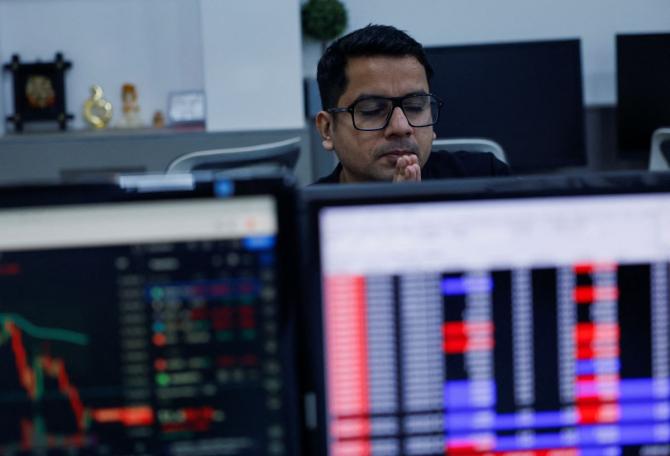
Thailand’s oldest cement firm turns to 3D printing to revolutionize its business
Yahoo Finance· 2026-01-21 22:00
Company Overview - Siam Cement Group (SCG) is Thailand's oldest cement firm, founded in 1913, and has grown to become the largest building materials company in Thailand with a projected revenue of $14.5 billion for 2024 [6][7] - SCG operates in three core businesses: cement and building materials, chemicals, and packaging, and has expanded its operations to other parts of Southeast Asia, including Malaysia and Vietnam [6][7] Technological Innovation - SCG has introduced 3D printing technology in construction, aiming to bring new construction materials to Southeast Asia, with notable projects including the world's first 3D printed medical center in Saraburi, Thailand [2][4] - The 3D printing process allows for unique architectural designs and shorter construction times by eliminating the need for traditional molds or formwork, enabling freeform architecture [3][4] Industry Challenges - The construction industry in Thailand faces challenges due to an aging population and a shrinking workforce, leading to a reliance on foreign workers from neighboring countries like Cambodia and Myanmar, with over 1.2 million Cambodian workers in Thailand's construction sector [5] - Despite the advantages of 3D printing, current limitations restrict the height of 3D printed buildings to one or two stories due to material constraints related to structural loads and stability [5]
Sensex sinks below 82K; Nifty ended down 75 points
Rediff· 2026-01-21 11:50
Market Overview - Indian equity markets experienced losses for the third consecutive session due to heightened geopolitical tensions, weak global peers, and persistent foreign fund outflows [3][9] - The 30-share BSE Sensex closed at 81,909.63, down 270.84 points or 0.33 percent, while the NSE Nifty declined 75 points or 0.30 percent to 25,157.50 [4][5] Stock Performance - Major laggards included ICICI Bank, Trent, Bharat Electronics, Axis Bank, HDFC Bank, Larsen & Toubro, State Bank of India, and Maruti [6][7] - Gainers in the market were Eternal, UltraTech Cement, InterGlobe Aviation, and Reliance Industries [7][8] Investor Activity - Foreign institutional investors sold equities worth ₹2,938.33 crore, while domestic institutional investors purchased stocks worth ₹3,665.69 crore [8] Market Sentiment - Analysts noted that domestic markets were affected by global risk factors, leading to volatility, although some value buying helped recover early losses [10] - The weakening rupee and uncertainties regarding trade ties are expected to prolong market volatility [10]
中国基础材料监测 - 2026 年 1 月:大宗商品高价压制需求-China Basic Materials Monitor_ January 2026_ suppressing demand under high commodity prices
2026-01-20 03:19
Summary of China Basic Materials Monitor - January 2026 Industry Overview - The report focuses on the **China Basic Materials** industry, highlighting the impact of high commodity prices on demand and supply dynamics across various sectors. Key Points Demand Trends - End-user orderbooks are mostly in line with past seasonal trends as of mid-January, with **solar and machinery** sectors showing weakness while **battery** demand remains strong [1] - The surge in metal prices has led to notable changes in downstream demand across sectors such as **consumer electronics**, **hardware manufacturing**, **copper cables**, and **aluminum** in industrial and construction areas, resulting in weaker or delayed orderbooks and rising metal inventories [1] - High-frequency data indicates that in the first two weeks of January, Chinese demand is down **1-9% year-over-year (YoY)** for cement and construction steel, and **3-10% YoY** for aluminum and copper, while flat steel demand is up **3% YoY** [1] Supply Dynamics - Supply conditions remain heterogeneous, with consistent feedback on **cement capacity** cleaning up and ongoing capacity discipline in **coal**, but lackluster control in **steel production** [1] - Margin and pricing for **steel**, **copper**, **aluminum**, and **lithium** have improved, while **cement** and **coal** prices have remained stable [1] Sector-Specific Insights - **Cement**: Demand is lower, with a **1-9% YoY** decline noted [1] - **Aluminum and Copper**: Demand has deteriorated significantly amid high prices, with a **3-10% YoY** decline reported [1] - **Steel**: Margins have improved, but production control remains weak [1] - **Battery Materials**: Strong demand persists, leading to price hikes in solar modules, AC, LFP cathodes, and battery cells [1] Producer Feedback - A proprietary survey indicates a mixed month-over-month (MoM) trend in forward orderbooks, with **19%** of respondents reporting a pickup in January for downstream sectors and **6%** for basic materials [2] Additional Observations - The report notes that in regions with strong demand or better supply structures, price hikes have begun in specific materials, indicating a potential shift in market dynamics [1] - The overall sentiment reflects caution due to high commodity prices suppressing demand, particularly in sectors sensitive to price fluctuations [1] Conclusion - The China Basic Materials industry is currently experiencing a complex interplay of high commodity prices affecting demand and supply across various sectors. While some areas like battery materials show resilience, others like aluminum and copper are facing significant demand challenges. The mixed feedback from producers suggests a cautious outlook moving forward, with potential opportunities in regions with strong demand dynamics.
我省淘汰水泥熟料生产线35条
Xin Lang Cai Jing· 2026-01-16 17:04
Core Viewpoint - The Anhui Province is implementing a series of measures to optimize the building materials industry, aiming for significant growth and environmental improvements by 2027 [1] Group 1: Industry Measures - Since the beginning of the 14th Five-Year Plan, Anhui Province has eliminated 35 cement clinker production lines with a daily capacity of less than 4,500 tons, resulting in a 30% reduction in the number of production lines [1] - The building materials industry is a traditional sector with competitive advantages in Anhui, comprising two trillion-level sub-industries: cement and glass [1] Group 2: Future Goals - The recently issued "Implementation Plan for the Optimization and Upgrading of the Building Materials Industry in Anhui Province" aims for the industry revenue to reach 270 billion yuan by 2027 [1] - The plan includes the establishment of 20 advanced intelligent factories and 50 provincial-level green factories, along with the completion of ultra-low emission transformations in the cement and flat glass sectors, and the complete exit of backward production capacity [1]
Sensex drops 245 points on persistent foreign fund outflows
Rediff· 2026-01-14 11:39
Market Performance - Equity benchmark indices Sensex and Nifty declined, with Sensex dropping 244.98 points (0.29%) to 83,382.71 and Nifty falling 66.70 points (0.26%) to 25,665.60, extending previous losses due to weakness in IT, consumption, and select banking stocks [1][4] - The BSE Sensex experienced a larger intraday drop of 442.49 points (0.52%) during the trading session [4] Sector Performance - Major laggards included Tata Consultancy Services, Asian Paints, Maruti, Sun Pharma, Hindustan Unilever, ICICI Bank, Kotak Mahindra Bank, Tech Mahindra, HDFC Bank, and Larsen & Toubro [4] - Conversely, Tata Steel, NTPC, Axis Bank, and UltraTech Cement were among the gainers [6] Investor Activity - Foreign institutional investors sold equities worth ₹1,499.81 crore, while domestic institutional investors purchased stocks worth ₹1,181.78 crore [6] Geopolitical and Economic Factors - Escalating geopolitical tensions and persistent foreign fund outflows contributed to market weakness, alongside fresh tariff-related uncertainties that unsettled investors [1][3] Global Market Context - In Asian markets, South Korea's Kospi, Japan's Nikkei 225, and Hong Kong's Hang Seng indices closed higher, while Shanghai's SSE Composite index ended lower [6] - Brent crude oil prices decreased by 0.99% to $64.82 per barrel [7]

Motilal Oswal sees 8% YoY growth in Nifty Q3 earnings; SBI, Eternal among 5 top ideas
The Economic Times· 2026-01-08 09:49
Core Insights - The overall earnings momentum in Q3FY26 is expected to be driven by significant growth in sectors such as oil & gas and financials, with profits projected to increase by 25% YoY and 26% YoY, respectively [1][12] - The Nifty 50 is anticipated to deliver an 8% year-on-year growth in earnings, while the broader MOFSL universe is expected to see a 25% YoY increase in earnings [12] Earnings Growth Projections - Excluding financials, earnings for the MOFSL universe and the Nifty 50 are expected to grow 19% and 9% YoY, respectively [1] - Earnings growth for the MOFSL universe, excluding metals and oil & gas, is projected at 14% YoY, while for the Nifty 50, it is estimated at 11% YoY [1] - Automobiles are projected to deliver a 25% YoY increase in earnings, while metals are expected to grow by 15% [2] - Telecom profits are expected to increase 2.6 times over a low base in Q3FY25, and technology sector earnings are likely to rise by 8% [2] Sector Contributions - Key contributors to earnings growth include real estate (64% YoY), cement (66%), capital goods (24%), and NBFC non-lending firms (31%), which together are expected to account for nearly 77% of the incremental YoY earnings accretion during the quarter [3] - In contrast, earnings from banks are expected to grow modestly, with private banks at 4% YoY and public sector banks at 3% YoY [6] - The infrastructure and media sectors are projected to drag overall earnings, with profits estimated to decline by 3% and 7% YoY, respectively [6] FY26 Outlook - For FY26, MOFSL expects Nifty companies' earnings to grow by 8% YoY, and excluding financials, a 7% YoY increase is anticipated [7] - The broader MOFSL universe is projected to record a 14% YoY increase in profits for the full financial year, with a 17% YoY rise expected when excluding financials [8] - EPS estimates for FY26 and FY27 have been trimmed by 2.2% and 1.1%, respectively, with FY26 EPS expected to grow 9% YoY to Rs 1,084 [8][9] Market Outlook - MOFSL remains 'Overweight' on sectors such as autos, diversified financials, industrials, and technology, while being 'Underweight' on oil & gas, metals, and consumer staples [10] - The brokerage notes that multiple levers are in place to propel Indian equity markets in 2026, despite challenges from geopolitical and global trade factors [11][12]

甘肃上峰水泥股份有限公司 2026年第一次临时股东会决议公告
Zhong Guo Zheng Quan Bao - Zhong Zheng Wang· 2026-01-07 23:01
Meeting Overview - The meeting was held on January 7, 2026, at 14:30 in Hangzhou, Zhejiang Province, with both on-site and online voting options available [4][5]. - The meeting was convened by the 11th Board of Directors of Gansu Shanfeng Cement Co., Ltd. [5]. - The meeting was legally valid and complied with relevant laws and regulations [6]. Attendance - A total of 279 shareholders attended the meeting, representing 576,235,568 shares, which is 60.4396% of the total voting shares [7]. - Among them, 3 shareholders attended in person, representing 543,242,933 shares (56.9791%), while 276 participated via online voting, representing 32,992,635 shares (3.4605%) [7]. Voting Results - The proposal to elect a new director was approved with 575,989,668 votes in favor, accounting for 99.9573% of the valid votes cast [9]. - The minority shareholders voted with 32,746,735 shares in favor, representing 99.2547% of the minority shareholders' valid votes [10]. Legal Opinion - The meeting was witnessed by lawyers from Guohao Law Firm (Hangzhou), who confirmed that the meeting's procedures and voting results were in compliance with applicable laws and regulations [12]. Documents for Reference - The resolutions from the 2026 First Extraordinary General Meeting and the legal opinion from Guohao Law Firm (Hangzhou) are available for review [13].

证券代码:000672 证券简称:上峰水泥 公告编号:2026-001
Zhong Guo Zheng Quan Bao - Zhong Zheng Wang· 2026-01-06 23:49
Core Viewpoint - Gansu Shanfeng Cement Co., Ltd. plans to invest 90 million yuan in a private equity fund, Suzhou Ruicun Venture Capital Partnership, focusing on semiconductor materials and related sectors to enhance its sustainable competitive advantage [2][19]. Group 1: Investment Overview - The company will invest 90 million yuan through its wholly-owned subsidiary, Ningbo Shangrong Logistics Co., Ltd., in collaboration with Suzhou Industrial Park Lanpu Venture Capital Management Partnership [2]. - The total subscription amount for the Suzhou Ruicun Fund is 173 million yuan, with Ningbo Shangrong holding a 52.02% stake [2]. - The investment direction of the fund includes hard technology fields such as semiconductor materials, equipment, and components [2]. Group 2: Partner Information - The partner, Suzhou Industrial Park Lanpu Venture Capital Management Partnership, was established on April 8, 2016, with a registered capital of 25 million yuan [3]. - Lanpu Venture Capital specializes in equity investments in the semiconductor and integrated circuit industries, focusing on early-stage investments [3][4]. Group 3: Fund Structure and Management - The fund has a 7-year operational period, with a 4-year investment phase and a 3-year exit phase, extendable under certain conditions [5]. - The fund will operate independently with its own accounting and management structure, overseen by an investment decision committee [9][10]. Group 4: Financial Implications - The investment aligns with the company's strategic focus on semiconductor and new materials, contributing positively to its industrial structure optimization and transformation [19]. - The funding will come from the company's own resources, ensuring no adverse impact on its financial and operational status [19].