磷石膏

Search documents
粤桂股份推进9亿定增延伸产业链 两大募投项目建设进度均超75%
Chang Jiang Shang Bao· 2026-02-26 00:03
Core Viewpoint - Yuegui Co., Ltd. is benefiting from rising mineral prices, leading to a significant recovery in performance and is actively pursuing refinancing to accelerate industrial transformation and upgrades [1]. Group 1: Fundraising and Investment Projects - The company plans to issue up to 156 million shares to specific investors, raising a total of no more than 900 million yuan, which will be allocated to three major projects, including a 100,000 tons/year refined wet phosphoric acid project [2][3]. - The total investment for the three projects is approximately 1.077 billion yuan, 866 million yuan, and 317 million yuan, with the company intending to invest 600 million yuan, 200 million yuan, and 100 million yuan from the raised funds respectively [2]. Group 2: Project Details and Expected Outcomes - The refined wet phosphoric acid project aims to produce 36,200 tons/year of purified phosphoric acid, 5,000 tons/year of sodium fluorosilicate, and other products, with an expected profit of 154 million yuan and a net profit of 115 million yuan after tax [3]. - The Xiaotai quartz sand project is expected to achieve an annual output of 4.2 million tons, generating an estimated revenue of 279 million yuan and a profit of approximately 96.79 million yuan [3]. - The grinding system project will upgrade existing equipment but will not add new capacity or directly generate economic benefits [3]. Group 3: Financial Performance and Projections - Yuegui Co., Ltd. anticipates a net profit attributable to shareholders of 443 million to 503 million yuan in 2025, representing a year-on-year increase of 59.03% to 80.57% [6]. - The company reported fluctuating performance in recent years, with revenues of 2.705 billion yuan, 3.36 billion yuan, and 2.796 billion yuan from 2022 to 2024, and net profits of 295 million yuan, 66.32 million yuan, and 279 million yuan during the same period [5]. - The company has maintained a good relationship with banks and has signed a long-term loan agreement to cover the remaining funding gap for the investment projects [7].

两部门协力推进固废综合治理
Zhong Guo Hua Gong Bao· 2026-01-16 02:16
Group 1 - The first comprehensive action plan for solid waste management in China has been released, aiming to establish a systematic approach to address solid waste issues [1] - The Ministry of Ecology and Environment (MEE) plans to reduce both the generation and accumulation of industrial solid waste, targeting a "double reduction" goal [1] - In 2022, large-scale utilization projects for coal gangue and fly ash in nine provinces of the Yellow River basin reached 128, with over 100 million tons utilized [1] - In the Yangtze River basin, 24 large-scale projects for phosphogypsum utilization were conducted, with over 2.9 million tons utilized [1] Group 2 - The MEE will promote the closure and ecological restoration of tailings and slag sites that meet environmental standards, aiming to remediate over 60% of historical solid waste storage sites by 2030 [2] - The Ministry of Industry and Information Technology (MIIT) reported that the comprehensive utilization rate of major industrial solid waste in China has reached 57% [2] Group 3 - The MIIT emphasizes reducing the intensity of industrial solid waste generation through green design and manufacturing practices, particularly in key industries such as steel and petrochemicals [3] - The MIIT aims to enhance the comprehensive utilization of industrial solid waste and recycled resources, focusing on typical categories like smelting slag and phosphogypsum [3] - The MIIT will continue to implement industry standards and encourage technological innovation and quality control in sectors like scrap steel, copper, aluminum, paper, plastic, and used tires [3]
工信部:抓好工业固体废物综合利用工作要着力推动“一降一升”
Xin Lang Cai Jing· 2026-01-13 06:23
Core Viewpoint - The Chinese government is enhancing the comprehensive utilization of industrial solid waste as part of its solid waste management strategy, focusing on reducing waste generation and improving recycling rates [1][2]. Group 1: Waste Reduction - The initiative aims to lower the intensity of industrial solid waste generation through green design and manufacturing practices [1]. - Key industries such as steel, non-ferrous metals, and petrochemicals will be targeted for waste reduction efforts, promoting "waste-free" transformation in industrial parks and enterprises [1]. Group 2: Waste Utilization Improvement - The plan emphasizes increasing the comprehensive utilization of industrial solid waste and recycled resources, particularly focusing on typical categories like smelting slag, phosphogypsum, and red mud [2]. - The Ministry of Industry and Information Technology (MIIT) is pushing for technological advancements and industrialization in waste utilization, with a reported comprehensive utilization rate of 57% for major industrial solid waste in China [2].
到2027年,这些地区要完成存量磷石膏库整治
Zhong Guo Hua Gong Bao· 2026-01-06 11:26
Core Viewpoint - The State Council has issued the "Solid Waste Comprehensive Governance Action Plan," aiming for significant improvements in solid waste management by 2030, including a target of 4.5 billion tons of annual comprehensive utilization of major solid waste and 510 million tons of annual recycling of main renewable resources [1][4]. Group 1: Overall Requirements - The plan emphasizes a systematic approach to solid waste management, focusing on reduction, resource utilization, and harmless treatment, with a goal to effectively control historical solid waste stockpiles and curb illegal disposal practices by 2030 [4][3]. Group 2: Source Control and Reduction - The plan mandates strict source reduction of industrial solid waste, promoting green design and improved production processes to lower waste generation intensity [5][6]. - It also calls for the implementation of source control measures for urban solid waste, including the classification and reduction of construction waste [6][5]. Group 3: Standardized Collection, Transportation, and Storage - The plan requires the establishment of a standardized management system for industrial solid waste, including classification and tracking to prevent mixing and illegal disposal [7][6]. - It emphasizes the need for improved collection and transportation systems for urban solid waste, integrating recycling networks with waste collection points [7][6]. Group 4: Resource Utilization Enhancement - The plan aims to enhance the comprehensive utilization of major solid waste, including mining waste and construction debris, and to promote the recycling of agricultural waste [8][9]. - It encourages the development of a circular economy by improving the recycling of renewable resources and promoting the use of recycled materials in production [8][9]. Group 5: Increasing Harmless Treatment Capacity - The plan focuses on improving the harmless treatment of industrial solid waste and optimizing the structure of waste disposal methods, including the construction of incineration facilities [9][10]. - It also explores large-scale disposal channels for industrial solid waste, ensuring compliance with environmental standards [9][10]. Group 6: Implementation of Key Area Special Rectification - The plan outlines specific rectification efforts in areas such as illegal disposal, environmental hazards from landfills, and historical solid waste sites, aiming for the remediation of over 60% of historical waste sites by 2030 [10][11]. - It includes targeted actions for the comprehensive management of phosphogypsum, with specific timelines for remediation in various provinces by 2027 [12][11]. Group 7: Regulatory and Technical Framework - The plan emphasizes the need to improve legal frameworks and standards related to solid waste management, including the revision of existing laws and the establishment of new regulations [14][15]. - It also highlights the importance of technological innovation in solid waste recycling and pollution control [14][15]. Group 8: Policy Support - The plan calls for enhanced land use policies to support solid waste management projects and encourages financial support for resource recycling initiatives [15][16]. - It promotes the establishment of a reasonable pricing mechanism for waste management services to incentivize recycling and waste reduction [16][15]. Group 9: Strengthening Implementation Assurance - The plan stresses the importance of organizational leadership and accountability at all levels of government to ensure effective implementation of solid waste management strategies [17][16]. - It encourages public education and international cooperation to foster a culture of waste reduction and recycling [17][16].
国务院:到2027年 云南、湖北、贵州、四川、安徽、重庆等地区完成存量磷石膏库整治
Mei Ri Jing Ji Xin Wen· 2026-01-04 09:23
Group 1 - The State Council has issued the "Comprehensive Action Plan for Solid Waste Management," focusing on the comprehensive treatment of phosphogypsum [1] - The plan emphasizes a "one library, one strategy" approach to identify and rectify environmental risks associated with phosphogypsum storage [1] - It aims to enhance environmental management in the storage, transportation, and utilization of phosphogypsum, enforcing strict pollution control standards [1] Group 2 - The plan includes legal measures to seriously address environmental violations related to phosphogypsum [1] - By 2027, regions such as Yunnan, Hubei, Guizhou, Sichuan, Anhui, and Chongqing are expected to complete the remediation of existing phosphogypsum storage sites [1]
贵州:“富矿精开”推进新兴工业化向“绿”生“金”
Zhong Guo Xin Wen Wang· 2025-12-31 00:42
Core Insights - Guizhou Province is making significant advancements in the production of phosphorus-based materials, particularly in the production of phosphorus pentachloride, achieving a purity level of over 99% [1] - The region is leveraging its rich mineral resources to establish itself as a key player in the deep processing of resources and the development of new energy materials [1][5] - The Guizhou Phosphate Group is focusing on technological innovation to address the global challenge of phosphogypsum waste management, transforming it from a waste product into a valuable resource [2] Group 1: Phosphorus Industry Developments - Guizhou Province's Qiannan Prefecture has the largest open-pit phosphate mine in Asia, with proven phosphate reserves of 2.508 billion tons [1] - The Qiannan region's phosphate chemical industry park has surpassed a total output value of 68 billion yuan, contributing significantly to national food security by supplying over 15% of the country's phosphate fertilizer [1] - The Guizhou Phosphate Group ranks first in China and among the top three globally in phosphate mining, fertilizer production, and wet-process phosphoric acid production [3] Group 2: Coal Industry Transformation - Liupanshui City, known as "Jiangnan Coal City," is transitioning from a coal-dependent economy to one that maximizes resource value, with a focus on deep processing [3][4] - The city has a coal resource reserve of 25.636 billion tons and is expanding its coking capacity to 10.8 million tons annually, with plans to reach 21.8 million tons by the end of the 14th Five-Year Plan [3][5] - The Guizhou Energy Group is implementing advanced technologies for resource recycling, including the establishment of the first LNG production facility from coking gas in Southwest China [3] Group 3: Strategic Resource Utilization - The "Rich Mine Precision Development" strategy is being implemented in Tianzhu County, which has the largest sedimentary barite deposit in China, with proven reserves of 243 million tons [4][5] - The county aims to build the largest barite deep processing base in China by the end of the 14th Five-Year Plan, focusing on a modern industrial system centered around barium chemicals [5] - Guizhou Province is enhancing the value of its mineral resources, transitioning from traditional phosphate and coal products to high-value products such as battery materials and fine phosphorus chemicals [5]
固体废物综合治理行动怎么干?专家提出处置“四原则”
Di Yi Cai Jing· 2025-12-24 03:34
Group 1 - The core viewpoint emphasizes the need for a comprehensive governance strategy and supporting policy system for solid waste management to curb the growth of solid waste in China [1] - The State Council has initiated a solid waste comprehensive governance action plan, focusing on enhancing infrastructure for harmless storage, transportation, and disposal, while promoting resource utilization and circular economy development [1][2] - Solid waste, heavy metal pollution, and new pollutants management are crucial for advancing the construction of a beautiful China, with current challenges including a lack of scientific assessment indicators and insufficient policy support [1][2] Group 2 - China's solid waste generation exceeds 11 billion tons annually, with over 33 billion tons of industrial solid waste stored historically, posing ecological risks [2] - Recent investigations revealed over 20 environmental violations related to solid waste in 109 cities, primarily concerning illegal dumping of construction waste [2] - The need for a strategic plan for solid waste governance is highlighted, as the current economic development stage presents new challenges and changes in solid waste disposal [4][5] Group 3 - The growth rate of hazardous waste generation has slowed since 2019, indicating a shift in the solid waste disposal industry that necessitates a reform in management practices [5] - The demand for recycled building materials has decreased, suggesting that the management of large solid waste types should adapt to market supply and demand changes [5] - Effective management of solid waste requires a coordinated approach, including national and local planning, and the establishment of a comprehensive regulatory framework [6]

硫酸磷肥行业多举措调控保供稳价
Zhong Guo Hua Gong Bao· 2025-12-22 03:04
Core Viewpoint - The meeting held by the China Sulfuric Acid Industry Association and the China Phosphate Fertilizer Industry Association focuses on stabilizing supply and prices in the sulfuric acid and phosphate fertilizer industries to ensure stable fertilizer supply and pricing before the spring farming season, thereby reinforcing the agricultural input security for national food safety [1][2]. Group 1: Current Market Situation - Global sulfur resource supply is tight, leading to a significant price increase, with imported sulfur prices rising over 230% this year, reaching over 4100 yuan/ton at one point [1]. - As of December 11, the average domestic sulfur price hit a yearly high, with solid sulfur averaging 3936.88 yuan/ton (up 169.59% year-on-year) and liquid sulfur at 3992.75 yuan/ton (up 161.61% year-on-year) [1]. Group 2: Regulatory Measures - Export control measures require sulfuric acid exporters to prioritize domestic market needs and reduce export volumes, with any necessary exports priced no lower than domestic prices [2]. - Price control measures set December 11 prices as a baseline, prohibiting smelting acid producers from raising prices arbitrarily to ensure market stability [2]. - Sulfur companies are encouraged to establish an independent pricing system based on the domestic market to avoid significant fluctuations tied to international market prices [2]. Group 3: Industry Responsibilities - The sulfuric acid and phosphate fertilizer industries are urged to recognize the importance of food security and fertilizer supply, enhancing their sense of responsibility and prioritizing supply stabilization efforts [2]. - The China Sulfuric Acid Industry Association and the China Phosphate Fertilizer Industry Association are tasked with industry self-regulation, monitoring, and implementing supply stabilization measures, including promoting long-term purchase agreements between upstream and downstream companies [2]. Group 4: Technological Development - To alleviate sulfur resource supply pressure, the meeting discussed promoting phosphogypsum-based sulfuric acid production technology and coordinating supportive policies [3]. - Approximately 90 million tons of phosphogypsum are produced annually in China, with 1 ton of phosphogypsum capable of producing 0.45 tons of sulfuric acid, which could significantly supplement domestic sulfur supply if scaled effectively [3]. - Leading companies like Guizhou Phosphate Group and Yunnan Yuntianhua Co., Ltd. are advancing the application of phosphogypsum-based sulfuric acid technology, with some projects already operating stably for years [3].

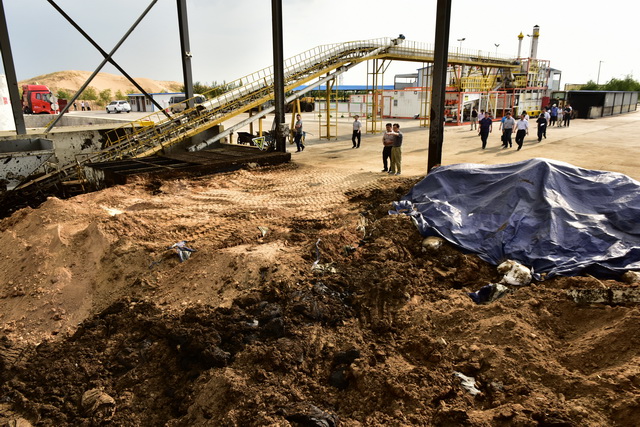
磷石膏绿色转型之路怎么走?
Zhong Guo Hua Gong Bao· 2025-12-05 05:43
Core Viewpoint - The green transformation of the phosphogypsum industry focuses on comprehensive utilization as a core challenge, with discussions at the 19th Gypsum Industry Technology Exchange Conference exploring new development paths that balance ecological, economic, and social benefits [1] Group 1: Demand and Supply Imbalance - Phosphogypsum is a byproduct of sulfuric acid wet-process phosphoric acid production, with approximately 4 to 5 tons generated for every ton of phosphoric acid produced [2] - In 2024, China's phosphogypsum production is expected to reach about 86 million tons, a year-on-year increase of 6.2%, with future annual production projected to remain above 80 million tons [2] - 80% of phosphogypsum is produced in Hubei, Yunnan, and Guizhou, with Hubei being the largest contributor [2] - The industry faces challenges due to land resource constraints and environmental pollution risks, leading to a comprehensive utilization rate of less than 50% [2] Group 2: Multi-faceted Solutions - China is accelerating the resolution of the "world-class challenge" of phosphogypsum utilization under the dual drivers of carbon neutrality goals and circular economy strategies [3] - The comprehensive utilization of phosphogypsum has developed a diversified approach, with cement retarders and gypsum building materials accounting for 31% and 28% of total utilization, respectively [3] - Ecological restoration utilization accounts for 22%, while mining filling utilization is 8%, and road construction materials utilization is 5%, which has increased by nearly 1 million tons compared to the previous year [3] Group 3: Regional Utilization Strategies - Different provinces are focusing on differentiated utilization strategies based on their specific conditions, with Hubei emphasizing gypsum building materials and road base materials [4] - Yunnan focuses on ecological restoration, while Guizhou is concentrating on mining filling and gypsum building materials, with a significant project expected to consume nearly 600,000 tons of phosphogypsum in 2024 [3][4] Group 4: Industry Development Potential - Despite market demand contraction, the gypsum industry has significant development potential, with urban renewal and the renovation of old neighborhoods creating new opportunities for green low-carbon gypsum building materials [4] - The high-value utilization of industrial byproduct gypsum in non-building material fields is also experiencing rapid growth, providing differentiated development paths for the industry [4] Group 5: Collaborative Efforts for Green Transformation - The gypsum industry is seen as a key support for "waste-free cities" and green buildings, with suggestions for strengthening collaborative efforts in key technologies and expanding into high-value product areas [5] - Recommendations include promoting collaboration between gypsum building material companies and phosphate fertilizer companies, enhancing funding and technology connections, and fostering clean production and intelligent transformation [6]
新洋丰:产业链一体化助力内外双收
市值风云· 2025-11-20 10:06
Core Viewpoint - The article highlights the resilience of Xinyangfeng (000902.SZ) in the fertilizer industry, particularly in the face of challenges such as demand weakness and cost pressures, while also noting its strategic shift towards lithium battery production [4][6]. Group 1: Company Performance - In the first three quarters of 2025, Xinyangfeng achieved a revenue of 13.475 billion yuan, representing a year-on-year growth of 8.96% [8][9]. - The net profit attributable to shareholders reached 1.374 billion yuan, showing a significant increase of 23.43% compared to the previous year [8][9]. - The company indicated that the delayed autumn fertilizer sales would positively impact the fourth quarter's performance, suggesting strong future earnings [11]. Group 2: Industry Position - Xinyangfeng is a leading player in the phosphate fertilizer sector, with a production capacity of 10.28 million tons per year, maintaining the top position in the industry [12]. - The company specializes in a range of products including conventional and new-type compound fertilizers, monoammonium phosphate, iron phosphate, and phosphogypsum [12]. - Xinyangfeng has consistently ranked first in compound fertilizer production and sales nationwide, and is among the top three producers of monoammonium phosphate [12].