Internet Technology

Search documents
*ST绿康(002868.SZ):拟设立全资子公司福建浦城云腾网络技术有限责任公司
Ge Long Hui A P P· 2025-12-17 11:27
格隆汇12月17日丨*ST绿康(002868.SZ)公布,公司基于战略规划及未来经营发展的需要,拟投资设立全 资子公司福建浦城云腾网络技术有限责任公司(简称"云腾网络",暂定名,最终名称以工商注册为 准),公司以自有资金等方式出资,注册资金为100万元人民币,公司持有云腾网络100%的股权。同时 公司授权管理层及其授权人士办理本次设立全资子公司工商注册登记等相关事宜。 ...

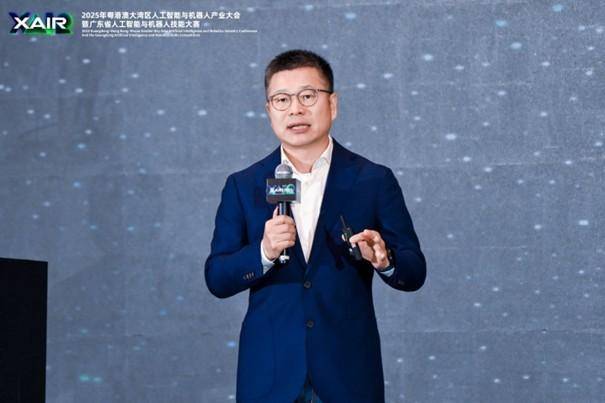
腾讯集团副总裁李强:过去一年AI大模型投入超千亿
Sou Hu Cai Jing· 2025-12-13 14:10
Group 1 - The core viewpoint of the article highlights Tencent's significant investment in AI and robotics, exceeding 100 billion yuan in the past year, as stated by Tencent's Vice President Li Qiang at the 2025 Guangdong-Hong Kong-Macao Greater Bay Area AI and Robotics Industry Conference [1][3] - Tencent's investment in embodied intelligence dates back to 2018 with the establishment of the Robotics X laboratory, focusing on core robotic technology development [3] - Tencent has developed various robotic prototypes, including a balance bike, a quadruped robotic dog named Max, and a prototype elder care robot called "Xiao Wu," along with the launch of the Tairos modular embodied intelligence software platform in July [3] Group 2 - Tencent has served 220,000 enterprises and 130 million individual consumers in the Greater Bay Area, collaborating with over 40 embodied intelligence companies nationwide, with more than 20 based in Guangdong [3] - Since 2018, Tencent's R&D investment has exceeded 400 billion yuan, with over 15,000 AI invention patents, ranking first globally [3] - In the past year, Tencent's strategic capital expenditure surpassed 100 billion yuan, focusing on large model training, computing infrastructure, and data center construction [3] Group 3 - Tencent's self-developed Hunyuan large model has released over 30 new models in the past year, achieving top rankings in various international model competitions [4] - The Hunyuan image model 3.0 ranks first in the text-to-image category, while the Hunyuan 3D model leads in both text-to-3D and image-to-3D tasks, with over 3 million downloads of the open-source model [4]


Disney Calls on Google to Stop Using Its Content in AI Tools
PYMNTS.com· 2025-12-12 14:28
Core Viewpoint - Disney has sent a cease-and-desist letter to Google, alleging copyright infringement related to the use of its content in AI tools [1][2] Group 1: Disney's Allegations - Disney claims that Google has utilized its content to train AI models and has distributed copies of its work to consumers [2] - The company demands that Google cease using its content in AI tools and prevent the generation of images featuring Disney-owned characters [2] Group 2: Google's Response - A Google spokesperson stated that the company maintains a beneficial relationship with Disney and uses public data from the open web for AI development [3] - Google has implemented copyright controls like Google-extended and Content ID for YouTube to give copyright holders control over their content [3] Group 3: Disney's Investment in AI - On the same day as the cease-and-desist letter, Disney announced a $1 billion investment in OpenAI and a three-year licensing agreement for the Sora video model [3] - The agreement allows Sora users to create short clips featuring Disney characters within a controlled environment, prohibiting actor likenesses and restricting certain themes [4] Group 4: Legal Challenges Faced by Google - Google has faced other legal challenges regarding the use of copyrighted content in its AI tools, including a lawsuit from Penske Media for unauthorized use of journalism [5] - The Independent Publishers Association filed an antitrust complaint against Google, alleging that AI-generated summaries disadvantage original content by positioning them at the top of search results [6]



中国互联网:从豆包到 Dola,中国 AI 助手聊天工具的全球化愿景-China Internet Global Aspiration of China AI Assistant Chat From Doubao To Dola
2025-12-02 02:08
Summary of Key Points from the Conference Call Industry Overview - The focus is on the **China Internet and AI industry**, particularly the competitive landscape of AI chatbots and their global aspirations. Core Insights and Arguments 1. **AI Adoption and Competition**: The rapid adoption of AI is expected to intensify competition among Chinese AI players in 2026, covering areas from AI cloud infrastructure to chatbots and applications [1][3] 2. **Global Market Penetration**: Chinese Internet and AI companies are increasingly looking to penetrate global markets to export AI technology and explore monetization opportunities, as direct-to-consumer monetization in China is challenging [1][5] 3. **ByteDance's Position**: ByteDance's AI assistant, Dola, along with Doubao, has achieved a combined total of approximately **250 million MAUs**, ranking it as the **3 AI chat globally** [1][3][11] 4. **Dola's Growth in Emerging Markets**: Dola has shown significant growth in emerging markets, with MAUs in Indonesia rising from **7.8 million** in July 2025 to **17.4 million** in November 2025, and in the Philippines from **9 million** to **12.5 million** in the same period [4][31] 5. **Competitive Landscape in China**: In China, Doubao leads with **197 million MAUs** and **54 million DAUs** as of October, followed by DeepSeek and Tencent's Yuanbao [2][8] Additional Important Insights 1. **Challenges in Monetization**: Many AI chatbots face difficulties in charging subscription fees directly from consumers, prompting a shift towards global markets [5][48] 2. **Potential Threats to Local Services**: If Dola becomes a dominant AI gateway in emerging markets, it could challenge the relevance of local e-commerce platforms like Shopee and superapps like Grab [5][48] 3. **Dola's Compliance Issues**: Dola, which was previously known as Cici, faces compliance challenges due to its need to access local content and understand cultural nuances, leading it to utilize widely accepted overseas models like GPT and Gemini instead of Doubao's LLM [47][45] 4. **Future Monitoring**: Continuous monitoring of the progress of Doubao and Dola is essential to assess their impact on the competitive landscape in both China and global markets, particularly regarding their potential challenges to major players like Alibaba, Tencent, and Baidu [49]
Kyivstar and Ukrainian Ministry of Digital Transformation Select Google Gemma as the Foundation for Ukraine’s National LLM
Globenewswire· 2025-12-01 10:00
Core Insights - VEON Ltd. announces the development of Ukraine's national large language model (LLM) in collaboration with Kyivstar and the WINWIN AI Center of Excellence, utilizing Google Gemma as the foundational model [1][2][3] Group 1: Project Overview - The Ukrainian LLM aims to encompass various Ukrainian dialects, terminology, and historical context while ensuring sensitive national data is securely processed within Ukraine [2] - Google was chosen for this initiative to strengthen technological ties between Ukraine and the United States, particularly following Kyivstar's Nasdaq listing in August 2025 [3] - The project is expected to enhance digital services across public and private sectors in Ukraine, with applications in areas such as education, finance, and healthcare [5] Group 2: Technical Development - Kyivstar will lead the operational development of the LLM, focusing on training the model with unique Ukrainian data to minimize linguistic and ethical risks [4] - The initiative will first optimize Google Gemma for the Ukrainian language, refining its tokenizer and training it on curated datasets [6] - Dedicated benchmarks will guide the model's fine-tuning and adaptation for specific applications [6] Group 3: Strategic Importance - This initiative is part of VEON's broader strategy to address the AI language gap in its markets, following similar projects in Kazakhstan and Pakistan [7] - The investment in the Ukrainian LLM is part of a larger commitment by Kyivstar and VEON to invest USD 1 billion in Ukraine from 2023 to 2027, focusing on infrastructure and technological development [8]

预测下一个像素还需要几年?谷歌:五年够了
机器之心· 2025-11-26 07:07
Core Insights - The article discusses the potential of next-pixel prediction in image recognition and generation, highlighting its scalability challenges compared to natural language processing tasks [6][21]. - It emphasizes that while next-pixel prediction is a promising approach, it requires significantly more computational resources than language models, with a token-per-parameter ratio that is 10-20 times higher [6][15][26]. Group 1: Next-Pixel Prediction - Next-pixel prediction can be learned in an end-to-end manner without the need for labeled data, making it a form of unsupervised learning [3][4]. - The study indicates that achieving optimal performance in next-pixel prediction requires a higher token-parameter ratio compared to text token learning, with a minimum of 400 for pixel models versus 20 for language models [6][15]. - The research identifies three core questions regarding the evaluation of model performance, the consistency of scaling laws with downstream tasks, and the variation of scaling trends across different image resolutions [7][8]. Group 2: Experimental Findings - Experiments conducted at a fixed resolution of 32×32 pixels reveal that the optimal scaling strategy is highly dependent on the target task, with image generation requiring a larger token-parameter ratio than classification tasks [18][22]. - As image resolution increases, the model size must grow faster than the data size to maintain optimal scaling, indicating that computational capacity is the primary bottleneck rather than data availability [18][26]. - The study shows that while the scaling trends for next-pixel prediction can be predicted using established frameworks from language models, the optimal scaling strategies differ significantly between tasks [21][22]. Group 3: Future Outlook - The article predicts that next-pixel modeling will become feasible within the next five years due to the rapid growth of training computational power, which is expected to increase by four to five times annually [8][26]. - It concludes that despite the current challenges, the path towards pixel-level modeling remains viable and could achieve competitive performance in the future [26].
Alibaba's AI Boom Doubles David Tepper's Bet Into A Billion‑Dollar Fortune
Benzinga· 2025-11-24 17:41
Alibaba Group Holding Ltd's (NYSE:BABA) (NYSE:BABAF) AI breakout isn't just powering an 80% year-to-date rally — it's rewriting one billionaire's P&L in real time. As Qwen stormed past 10 million downloads in its first week, igniting a sharp rerating in China tech, billionaire David Tepper's long-held Alibaba position suddenly flipped into one of the biggest mark-to-market wins of the quarter.Track BABA stock here.His 6.45 million–share stake, built at an average cost of $81 per share, carried a cost basis ...


Buy These 5 Dividend Growth Stocks as Wall Street Rebounds
ZACKS· 2025-11-24 13:56
Core Insights - Wall Street experienced a rebound on November 21, 2025, with all three major stock indices rising nearly 1% due to investor optimism about a potential rate cut in December following dovish comments from John Williams, president of the Federal Reserve Bank of New York [1] Market Conditions - Despite the rebound, concerns over overvalued AI stocks persist, which could lead to a sell-off in the broader market at any time [2] Investment Strategy - In the current unstable environment, equity investors are advised to avoid high-priced stocks and consider dividend-growth stocks, as these companies typically exhibit strong financial health and provide a defensive hedge against economic uncertainty [3][5] - Dividend-growth stocks are characterized by a history of increasing dividends, which offers downside protection and potential for capital appreciation [5][6] Selected Dividend Growth Stocks - Five dividend growth stocks identified as solid choices include: - **Cardinal Health (CAH)**: Expected fiscal 2026 revenue growth of 16.2%, long-term earnings growth rate of 13.9%, and an annual dividend yield of 0.98% [12][13] - **Barrick Mining (B)**: Projected 2025 revenue growth of 21.5%, long-term earnings growth rate of 38.4%, and an annual dividend yield of 1.64% [14] - **NetEase (NTES)**: Anticipated 2025 revenue growth of 10.4%, long-term earnings growth rate of 9.9%, and an annual dividend yield of 1.70% [15] - **Lam Research (LRCX)**: Expected fiscal 2026 revenue growth of 14.1%, long-term earnings growth rate of 20.3%, and an annual dividend yield of 0.73% [16] - **Enersys (ENS)**: Projected fiscal 2026 revenue growth of 4%, long-term earnings growth rate of 15%, and an annual dividend yield of 0.76% [17] Selection Criteria - The selection of these stocks is based on criteria such as multi-year growth in dividends, sales, earnings per share (EPS), and undervaluation metrics [10][11] - Stocks selected have shown historical growth in dividends, sales, and EPS, indicating strong fundamentals and potential for sustained dividend payments [8][9]




LLM 没意思,小扎决策太拉垮,图灵奖大佬 LeCun 离职做 AMI
AI前线· 2025-11-20 06:30
Core Insights - Yann LeCun, a Turing Award winner and a key figure in deep learning, announced his departure from Meta to start a new company focused on Advanced Machine Intelligence (AMI) research, aiming to revolutionize AI by creating systems that understand the physical world, possess persistent memory, reason, and plan complex actions [2][4][11]. Departure Reasons & Timeline - LeCun's departure from Meta was confirmed after rumors circulated, with the initial report coming from the Financial Times on November 11, indicating his plans to start a new venture [10][11]. - Following the announcement, Meta's market value dropped approximately 1.5% in pre-market trading, equating to a loss of about $44.97 billion (approximately 320.03 billion RMB) [11]. - The decision to leave was influenced by long-standing conflicts over AI development strategies within Meta, particularly as the focus shifted towards generative AI (GenAI) products, sidelining LeCun's foundational research efforts [11][12]. Research Philosophy & Future Vision - LeCun emphasized the importance of long-term foundational research, which he felt was being undermined by Meta's shift towards rapid product development under the leadership of younger executives like Alexandr Wang [12][13]. - He expressed skepticism towards large language models (LLMs), viewing them as nearing the end of their innovative potential and advocating for a focus on world models and self-supervised learning to achieve true artificial general intelligence (AGI) [14][15]. - LeCun's vision for AMI includes four key capabilities: understanding the physical world, possessing persistent memory, true reasoning ability, and the capacity to plan actions rather than merely predicting sequences [16][15]. Industry Context & Future Outlook - The article suggests a growing recognition in the industry that larger models are not always better, with a potential shift towards smaller, more specialized models that can effectively address specific tasks [18]. - Delangue, co-founder of Hugging Face, echoed LeCun's sentiments, indicating that the current focus on massive models may lead to a bubble, while the true potential of AI remains largely untapped [18][15]. - Meta acknowledged LeCun's contributions over the past 12 years and expressed a desire to continue benefiting from his research through a partnership with his new company [22].


Fastly, Inc. (FSLY) Presents at Global Technology, Internet, Media & Telecommunications Conference 2025 Transcript
Seeking Alpha· 2025-11-19 18:03
Core Insights - The company has undergone significant evolution since its IPO in 2018, transitioning from a focus primarily on CDN to a broader platform strategy that includes security solutions [1] Business Evolution - The adoption of a platform strategy has been a key part of the company's evolution, moving beyond CDN services to integrate security offerings through acquisitions like Signal Sciences [1] - The long-term strategy emphasizes providing a unified platform that meets customer needs at the edge, which enhances customer value and operational efficiency [1] Customer Feedback - Customers have expressed that having all necessary services on a single platform is incredibly valuable, as it simplifies their operations and support [1] - The unified support model is particularly meaningful for customers, contributing to a better overall experience [1] Operational Efficiency - The platform strategy not only adds value for customers but also reduces the company's cost of sales, thereby improving overall business efficiency [1]