智能穿戴设备

Search documents
Meta发布首款带显示的AI眼镜
第一财经· 2025-09-18 07:09
Core Viewpoint - Meta has launched its first AI glasses with a display that can provide real-time translation and support 3K video recording, marking a significant advancement in consumer wearable devices and reflecting a systematic layout in hardware, technology, and supply chain strategies [3][4]. Group 1: Product Launch and Market Impact - Meta introduced several new products, including the Ray-Ban Meta Display AI glasses and two non-display AI glasses, along with a muscle electrical activity wristband based on sEMG technology [3]. - According to Sigmaintell, global AI smart glasses sales are expected to reach 5.7 million units by 2025, representing a year-on-year growth of over 200%, with Meta projected to capture over 65% of the market share due to the new product launch [3]. Group 2: AI Capabilities and Content Creation - The breakthrough in AI capabilities was a key highlight at Meta's event, with Zuckerberg emphasizing that AI can significantly reduce the time required to create immersive 3D content, which has been a limiting factor for the metaverse ecosystem [4]. - The upcoming "Meta Horizon Engine" aims to integrate various generative AI tools to enhance content creation for users, making it easier to create and interact in virtual spaces [4][6]. Group 3: Market Trends and Performance - IDC's report indicates that the global smart glasses market is expected to ship 2.555 million units in Q2 2025, with a year-on-year increase of 54.9%, while the audio and audio-capturing glasses market is projected to grow by 256.8% [6]. - In China, the smart glasses market is anticipated to reach 664,000 units in Q2 2025, with audio and audio-capturing glasses experiencing a growth of 256.6% [7]. - Following the announcement, the AI glasses sector in the domestic A-share market saw a rise, with stocks of companies like Wavelength Optoelectronics and Tengjing Technology increasing by over 10% [7].


Meta发布首款带显示的AI眼镜,新引擎催生更多AI创作内容
Di Yi Cai Jing· 2025-09-18 04:38
Group 1 - Meta has launched its first AI glasses with a display that can provide real-time translation and support 3K video recording, marking a significant advancement in consumer wearable devices [3] - The new Horizon Engine aims to enhance the speed of virtual content creation using AI tools, which will eventually support content integration into glasses [3][4] - According to Sigmaintell, global AI smart glasses sales are expected to reach 5.7 million units by 2025, with Meta projected to capture over 65% of the market share due to the new product launches [3] Group 2 - The Horizon Engine is designed to improve the performance of the metaverse, allowing for faster loading times and better rendering effects, making it easier to create immersive virtual spaces [6] - Meta's Horizon Studio has released several generative AI tools over the past year to assist creators, and the new engine will integrate these tools for enhanced utility [4] - IDC reports that the global smart glasses market is expected to see a shipment of 2.555 million units by Q2 2025, with a year-on-year growth of 54.9% [6] Group 3 - Following the announcement, the AI glasses sector in the domestic A-share market saw a rise in stock prices, with several companies experiencing increases of over 10% [7]
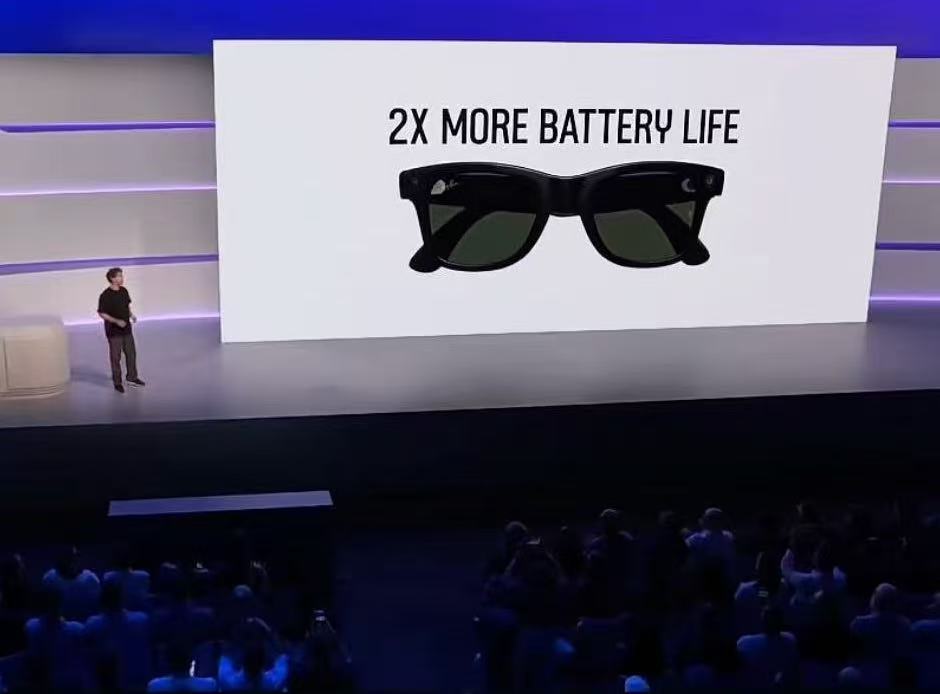
直击Meta Connect大会:AI智能眼镜矩阵升级,手势控制+内置屏幕眼镜售价799美元
Xuan Gu Bao· 2025-09-18 03:30
Core Insights - Meta Connect showcased multiple new smart glasses, including the first Ray-Ban Display with a built-in screen, Oakley Meta Vanguard for athletes, and the next generation Ray-Ban Meta smart glasses [1] Product Launches - Meta introduced the Ray-Ban Display, priced at $799, featuring a small digital display on the right lens for notifications and basic tasks, with a 20-degree field of view, 600x600 pixel resolution, 90Hz refresh rate, and peak brightness of 5000 nits [2] - The Oakley Meta Vanguard, aimed at athletes, is priced at $499 and integrates with Garmin and Strava for real-time training data, boasting a 9-hour battery life and a camera module capable of 3K video recording [9] - The third generation Ray-Ban Meta smart glasses have improved battery life and camera features, priced at $379, which is higher than the previous generation's $299 [9] Innovative Features - The Ray-Ban Display will come with a neural wristband for gesture control, allowing users to navigate music and adjust volume through finger movements, with a potential typing speed of 30 words per minute using muscle signals [4] - A new feature called "Conversation Focus" allows the glasses to automatically recognize when the wearer is in conversation and pause notifications [10] Challenges and Competition - During the AI demonstration, the technology faced multiple failures, highlighting challenges in real-time AI interaction and contrasting with Meta's ambitions for a "super intelligent interface" [12][14] - Meta is reportedly in a talent acquisition race in Silicon Valley to enhance its AI capabilities, aiming to catch up with competitors like OpenAI and Alphabet [14] Industry Engagement - Director James Cameron discussed the advancements in 3D content on the Meta Quest platform, emphasizing the superior brightness and field of view compared to traditional cinema [15]
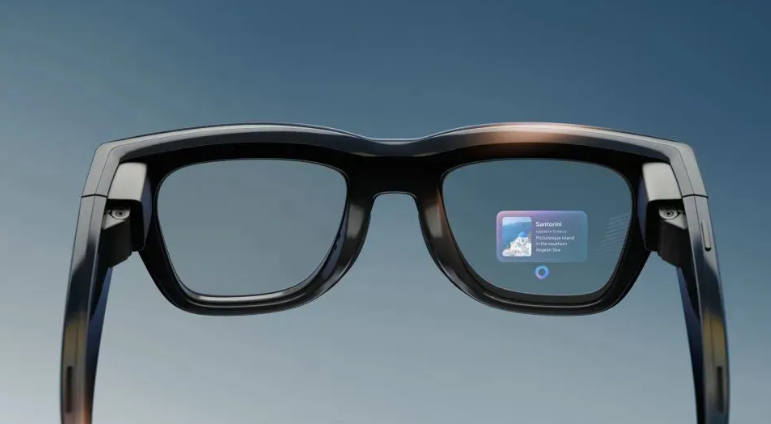
带屏AI眼镜登场,Meta“眼镜全家桶”炸街了
Hu Xiu· 2025-09-18 03:22
Group 1 - Meta is currently defining the AI glasses sector, with Meta Ray-Ban being the only product that has successfully transitioned from concept to market [1][4] - The Meta Connect 2025 event took place on September 18, where the highlight was the launch of the "mass production version Orion" [2][3] - The event featured not only the Meta Ray-Ban Display but also updates on Oakley and Ray-Ban product lines, along with advancements in the Quest ecosystem [3] Group 2 - The Meta Ray-Ban Display is a significant product, as it represents a tangible AR glasses offering rather than a concept device [5][6] - The display features a right-eye full-color single display with a resolution of 600x600 pixels, a 20-degree field of view, a refresh rate of 90Hz, and peak brightness of around 5000 nits [12] - The glasses include a UV detection feature that automatically adjusts the display based on environmental conditions [12] Group 3 - The Meta Ray-Ban Display is powered by the Qualcomm Snapdragon AR1 Gen 1 chip, maintaining the same processing capabilities as previous models [13] - The product incorporates a gesture wristband that detects muscle signals for advanced gesture controls, allowing users to navigate music and adjust volume [14] - A new feature under development will support EMG-based handwriting capabilities [15] Group 4 - The glasses enable users to view and respond to messages from WhatsApp, Messenger, and Instagram, and support real-time video calls [18] - A real-time transcription and translation feature is included, making it suitable for travel scenarios [19] - The Meta Ray-Ban Display will retail starting at $799 and is set to launch on September 30 [22] Group 5 - The third generation of Ray-Ban Meta glasses offers double the battery life of its predecessor and supports high-resolution photo and video recording [26][28] - The Oakley Meta Vanguard was introduced as a high-end sports AI glasses product, featuring significant hardware upgrades and a focus on sports applications [29][31] - The Oakley Meta Vanguard will be priced starting at $499 and is available for pre-order [37] Group 6 - Although no new Quest products were announced, Meta highlighted the performance of Quest in 3D content, with James Cameron discussing the upcoming 3D release of "Avatar 3" [40][41] - Meta aims to enhance the 3D content creation process for filmmakers, promoting a broader adoption of 3D technology [43] - The launch of the Meta Ray-Ban Display completes the full range of Meta's AI/AR glasses offerings [44]

AI眼镜迎来“iPhone时刻”!Meta引领AI眼镜爆发元年,产业链全线受益
Jin Rong Jie· 2025-09-18 02:34
Group 1 - Meta Connect 2025 will be held on September 17-18, where Zuckerberg will present the latest information on AI glasses and the vision for AI and the metaverse [1] - Two new smart glasses are expected to be unveiled, one with a display for maps and real-time translation, priced at $800, and another sports model designed in collaboration with Oakley [1] - The smart glasses, codenamed "Hypernova" (or possibly named Celeste), will integrate a micro-display and neural interface wristband, supporting real-time translation and navigation [1] Group 2 - The year 2025 is anticipated to be the "explosion year" for AI glasses, with a report from Counterpoint indicating a 110% year-on-year increase in global smart glasses shipments in the first half of 2025, with AI glasses accounting for 78% of that [1] - Meta's market share in the global smart glasses market is projected to rise to 73% in the first half of 2025, driven by strong demand and production capacity expansion from its main partner, Luxottica [1] - In China, the "Artificial Intelligence +" action plan aims for over 70% penetration of smart terminals by 2027, with AI glasses identified as a key development area [2] - The integration of AI large models with AR technology is transforming glasses from "auxiliary tools" to "smart partners," enhancing their application in payment, navigation, and multilingual translation [2] - The global AI glasses market is expected to expand significantly, with sales projected to reach 2.34 million units in 2024 and 5.5 million units in 2025, representing a 135% year-on-year growth [2] - The domestic AI glasses industry is accelerating its layout, forming a complete ecosystem with global competitiveness in manufacturing, optical components, and chips [2]
带屏 AI 眼镜登场,Meta「眼镜全家桶」炸街了
3 6 Ke· 2025-09-18 02:29
Core Insights - Meta has defined the AI glasses sector with the launch of the mass-produced Orion, marking a significant milestone in the industry [1][4] - The Meta Ray-Ban Display is the first commercially available AR glasses from Meta, showcasing a leap from concept to market-ready product [4][11] Product Launch - The Meta Ray-Ban Display features a right-eye full-color single display with a resolution of 600x600 pixels, a 20-degree field of view, and a refresh rate of 90Hz [7] - The glasses include a UV detection feature that automatically adjusts the display brightness based on environmental conditions [7] - The device is powered by the Qualcomm Snapdragon AR1 Gen 1 chip, maintaining similar computational capabilities as previous models [7] - A gesture wristband is included, allowing users to control functions through muscle signals, enabling actions like music navigation and volume adjustment [7][9] - The Meta Ray-Ban Display is priced at $799 and will be available for purchase starting September 30 [11] Additional Features - The glasses support real-time video calls and messaging through platforms like WhatsApp, Messenger, and Instagram, enhancing user interaction [9] - A real-time transcription and translation feature is integrated, making it suitable for travel scenarios [12] Other Product Updates - The third generation of Ray-Ban Meta glasses offers double the battery life of its predecessor and improved camera specifications, including a 12MP camera capable of 3024x4032 pixel photos [17][18] - The Oakley Meta Vanguard, a high-end sports AI glasses model, supports 3K video recording and integrates with Garmin and Strava for enhanced sports tracking [22][25] Industry Vision - Meta's overarching goal in the AR space is to create exceptional eyewear that enhances personal intelligence and information accessibility [31]
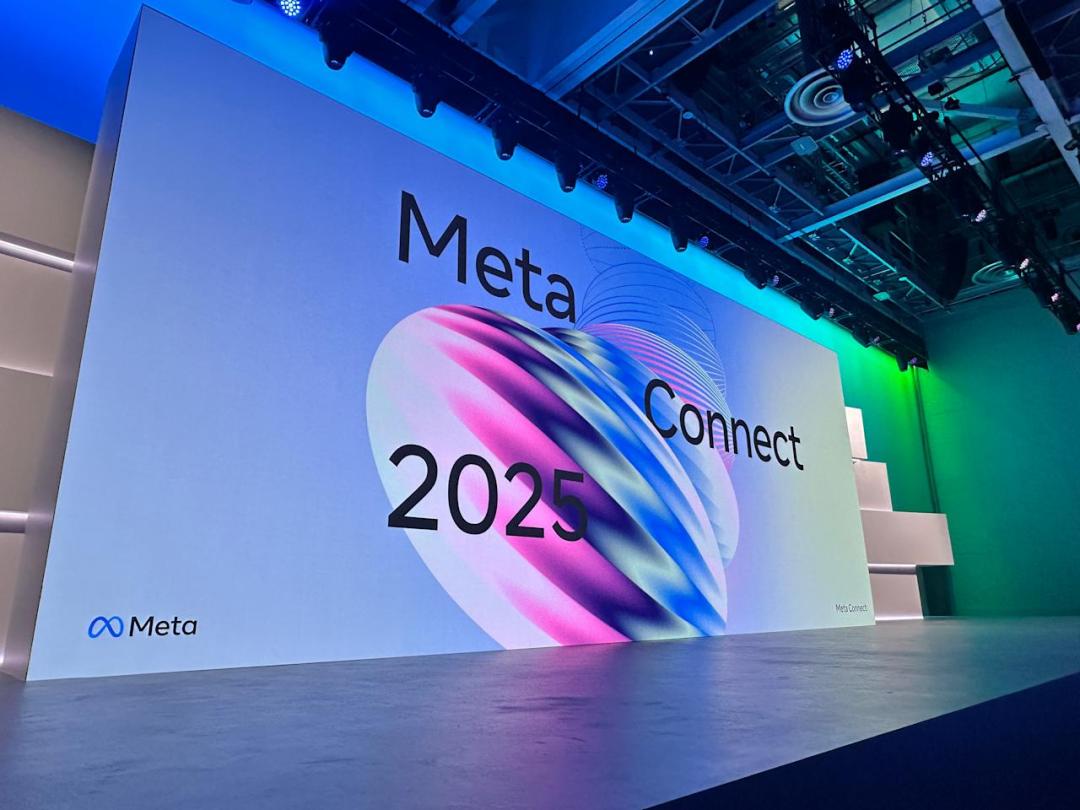
加码可穿戴硬件!Meta(META.US)三个月内再推Oakley智能眼镜新品
智通财经网· 2025-09-18 02:08
Core Insights - Meta has launched the new Oakley Meta Vanguard smart glasses aimed at sports enthusiasts, priced at $499, with a release date of October 21 [1] - The glasses feature a large integrated front lens, capable of 3K resolution video recording, and a 12MP camera with a 122-degree wide angle [1] - The product includes programmable buttons for custom AI commands via the Meta AI app, ensuring comfort for athletes wearing helmets [1] Group 1 - The Oakley Meta Vanguard smart glasses have a maximum battery life of 9 hours on a single charge, with a music playback time of 6 hours, and the charging case provides an additional 36 hours of battery life [1] - The glasses utilize an open speaker design, with a 6 decibel increase in volume compared to the previous model, and feature a five-microphone array to reduce wind noise during calls and voice commands [2] - The glasses achieve an IP67 rating for dust and water resistance, making them suitable for high-intensity training, and incorporate Oakley PRIZMTM lens technology to block sunlight and wind [2] Group 2 - The Oakley Meta Vanguard smart glasses can connect with Garmin smartwatches to display real-time data such as heart rate and pace during activities like running and cycling [2] - The glasses also integrate with the Strava platform, allowing users to overlay performance metrics on videos and photos for sharing within the Strava community [2] - Meta plans to release the glasses in various markets, including the US, Canada, and several European countries, with additional launches planned for Mexico, India, Brazil, and the UAE later this year [2][3] Group 3 - The launch of the Oakley Meta Vanguard comes just three months after the introduction of the Oakley Meta HSTN, which was marketed as Meta's first product for both athletes and sports enthusiasts [3] - In addition to the Oakley series, Meta unveiled two new Ray-Ban smart glasses, one featuring a built-in display for apps and navigation, and another with doubled battery life and 3K video recording capabilities [3]
港股概念追踪|Meta全新款AI智能眼镜将登场 产业链受益“后智能时代”(附概念股)
智通财经网· 2025-09-18 00:26
Group 1: Meta's Smart Glasses Launch - Meta is set to launch its first consumer smart glasses with a built-in display, potentially named "Celeste," priced at $800, which may deter some buyers [1] - The glasses will feature a small digital display on the right lens for notifications and will include functionalities like AI assistants, cameras, and live streaming to social media platforms [1] - The second-generation Ray-Ban smart glasses start at $379, indicating a range of pricing for consumers [1] Group 2: Industry Growth and Market Potential - Analysts predict a robust growth trajectory for the AI glasses industry, with Ray-Ban Meta glasses experiencing over 200% growth in the first half of the year [2] - Xiaomi aims for a shipment target of 500,000 units for its AI glasses, reflecting the competitive landscape and product pipeline in the market [2] - The global shipment of smart glasses is expected to reach 13-15 million units by 2026, driven by advancements in technology and increased consumer interest [1] Group 3: Related Companies and Developments - 康耐特光学 is positioned to benefit from the AI glasses industry upgrade, focusing on high-performance integrated solutions and strategic partnerships [3] - 蓝思科技 is set to supply key components for the next-generation Ray-Ban AI glasses, which will include AR display features [3] - TCL Electronics is launching its AI shooting glasses, priced at 1,799 yuan, indicating a diversification of product offerings in the smart glasses market [3] Group 4: Other Major Players - Xiaomi has introduced its AI glasses as part of a broader ecosystem, emphasizing personal AI capabilities and first-person perspective features [4] - 百度 has launched the "Baidu AI Glasses," claiming it to be the world's first native AI glasses equipped with a Chinese large model [4] - 阿里巴巴 has unveiled its self-developed "Quark AI Glasses," designed as an all-weather personal assistant, integrating deeply with its ecosystem [4]
AI眼镜热度攀升 多家公司积极布局
Zheng Quan Shi Bao· 2025-09-17 18:05
Group 1: Market Overview - The AI glasses market is experiencing significant growth, driven by technological advancements and expanding application scenarios, particularly due to the integration of AI models and augmented reality (AR) technology [2] - IDC predicts that global smart glasses shipments will reach 14.518 million units by 2025, representing a year-on-year growth of 42.5%, with China's market expected to contribute significantly with a shipment of 2.907 million units, growing by 121.1% [2] Group 2: Company Developments - Companies like WaveOptics, Yongxin Optical, and Kosen Technology saw their stock prices surge, with some reaching the daily limit, indicating strong market interest in AI glasses [1] - Haopeng Technology focuses on semi-solid batteries tailored for AI wearable devices, boasting a volume energy density of 950Wh/L, which meets the demands for lightweight and long-lasting AI/AR/VR devices [3] - Zhongke Chuangda launched TurboX AI glasses globally, built on Qualcomm's Wear 5100+MCU platform, showcasing innovation in the sector [4] - Lingyi Zhizao specializes in core components and technology development for AR, VR, MR, and AI glasses, indicating a focus on the smart wearable device market [5] Group 3: Investment Trends - Leveraged funds are increasingly investing in high-growth stocks within the AI glasses sector, with 41 stocks predicted to have a net profit growth rate exceeding 20% by 2027 [6] - Specific stocks like Xiechuang Data are forecasted to have a net profit growth rate exceeding 30% from 2026 to 2027, with over 900 million yuan in net purchases since September [6] - Other companies such as Beijing Junzheng, Chip Origin, and Xinwangda have also seen net purchases exceeding 500 million yuan since September, reflecting strong investor confidence [7]
国泰海通|中小与股权研究:Rokid Glasses光波导智能眼镜正式开售
国泰海通证券研究· 2025-09-17 12:48
Core Viewpoint - Rokid Glasses, an all-functional AI smart glasses, will officially launch on September 1, 2025, with a price of 3,299 yuan, showcasing a unique integration of voice, photography, and display capabilities [2][3]. Product Overview - Rokid Glasses features a lightweight design of approximately 49 grams, utilizing a single optical machine with dual display technology and a diffraction waveguide solution, achieving a maximum brightness of 1500 nits for clear visibility outdoors [3]. - The device is powered by the Qualcomm AR1 chip and NXP RT600 dual-chip architecture, balancing high performance with low power consumption [3]. - It includes a 210 mAh battery, supporting various functionalities such as 6 hours of music playback, 4 hours of voice calls, 2 hours in always-on mode, and 30 minutes of intensive photography [3]. Design Philosophy - The glasses support voice control, real-time translation, and navigation prompts, with a dual-direction real-time translation feature that syncs with mobile screens, enhancing cross-language communication [2]. - Equipped with four-array microphones, it can achieve precise voice capture and positioning, distinguishing it from competitors [2]. Product Combination - Rokid Glasses stands out in the market due to its comprehensive functionality, combining voice, photography, and display capabilities, making it one of the most complete AI smart glasses available [2][3]. - The product's pre-sale performance is notable, with over 40,000 units sold within five days, indicating a strong consumer demand for display-enabled smart glasses [3]. Future Outlook - The adoption of waveguide technology has significantly improved the display quality and lightweight design, positioning Rokid Glasses as a leader in the industry [3]. - However, challenges remain in the AR glasses market, particularly regarding the high BOM costs associated with MicroLED and waveguide technologies, which can account for up to 50% of the total cost [4]. - Current diffraction waveguide technology still faces issues such as rainbow patterns and light leakage, limiting its application to basic functions like translation and notifications [4].