
城市轨道交通

Search documents
深圳地铁回应“站名标识错误”:连夜整改,已完成全线更新
Nan Fang Du Shi Bao· 2025-11-12 07:27
Core Points - Shenzhen Metro responded quickly to a public complaint regarding an incorrect station name displayed on the train's screen, changing "Xili People's Court" to "Xili People's Tribunal" [1] - The company emphasized the importance of accurate public signage to avoid misleading passengers and initiated a comprehensive update of the display information across all trains [1] - Shenzhen Metro expressed gratitude for public oversight and committed to enhancing the review and management of station names and signage to improve passenger experience [1] Company Response - Shenzhen Metro launched an immediate investigation and rectification process upon receiving feedback about the incorrect station name [1] - The technical team conducted software testing and updated the display information across the entire line promptly [1] - The company highlighted its commitment to ensuring the accuracy and authority of public information [1]
10月城轨客运量同比增长1.8% 多地“双节”客流创历史新高
Zhong Guo Jing Ying Bao· 2025-11-08 11:23
Core Insights - The total passenger volume for urban rail transit in 54 cities (excluding Hong Kong, Macau, and Taiwan) reached 2.82 billion trips in October 2025, reflecting a month-on-month increase of 130 million trips (4.8%) and a year-on-year increase of 50 million trips (1.8%) [1] - The average passenger intensity for urban rail transit in October was 0.804 million trips per kilometer per day, showing a month-on-month growth of 0.6% but a year-on-year decline of 5.7% [1] - The passenger intensity has been declining year-on-year for eight consecutive months, with specific declines recorded from March to September 2025 [1] Passenger Volume and City Performance - A total of 333 urban rail transit lines were operational across the country, with a total operating mileage of 11,330.5 kilometers and 3.76 million train trips, marking a year-on-year growth of 7.74% [2] - The cities with the highest year-on-year passenger volume growth in October were Tianshui (272.73%), Taiyuan (120.23%), and Huai'an (18.38%), primarily due to the opening of new rail lines [2] - Conversely, the cities with the largest declines in passenger volume were Huangshi (-9.35%), Jiaxing (-5.77%), and Changsha (-5.62%) [2] Holiday Traffic Highlights - During the National Day and Mid-Autumn Festival holiday (October 1-8), several cities recorded historic highs in rail transit passenger volumes [2] - Nanchang's metro reported a peak passenger volume of 2.6996 million on National Day, the highest in the country, while Changsha's metro reached 3.5119 million on October 3, marking the holiday peak [2] Performance of Major Cities - Among the four first-tier cities, Guangzhou and Shenzhen experienced positive year-on-year growth in passenger volume, with increases of 4.78% and 1.61%, respectively, while Beijing and Shanghai saw slight declines of 1.95% and 3.22% [3] - In terms of passenger intensity, Wenshan had the lowest at 0.01 million trips per kilometer per day, while Shenzhen had the highest at 1.43 million trips per kilometer per day [3]
北京“地下中轴线”全线贯通
Xin Hua She· 2025-11-08 07:22
Core Points - The Beijing Subway Line 8's Dahongmen Station officially opened on November 8, enabling bidirectional transfer with Line 10, marking the full connectivity of this north-south "underground central axis" line [1][2] Group 1: Infrastructure and Connectivity - Beijing Subway Line 8 is a key line in the city's rail transit network, stretching from Zhuxinzhuang Station in Changping District to Yinhai Station in Daxing District, with a total of 35 stations [2] - The line passes through significant areas such as Olympic Park, Shichahai, Qianmen, and Tianqiao, aligning closely with the city's central axis [2] - The opening of Dahongmen Station resolves the operational bottleneck of transferring to Line 10, providing efficient travel options for passengers between central Beijing and southern districts like Fengtai and Daxing [2] Group 2: Service Enhancements - The station features clear directional signage, a well-organized ticket gate layout, and comprehensive customer service and accessibility facilities, indicating an upgrade in operational services [4] - Initial operations include a "Light Up New Coordinates" event, offering exclusive service desks and free postcards as souvenirs for passengers [4] - Currently, three additional subway lines (Line 17 mid-section, Line 6 south extension, and Line 18) are undergoing closed-loop simulation operations, with plans to exceed 900 kilometers of operational rail transit upon their opening [4]

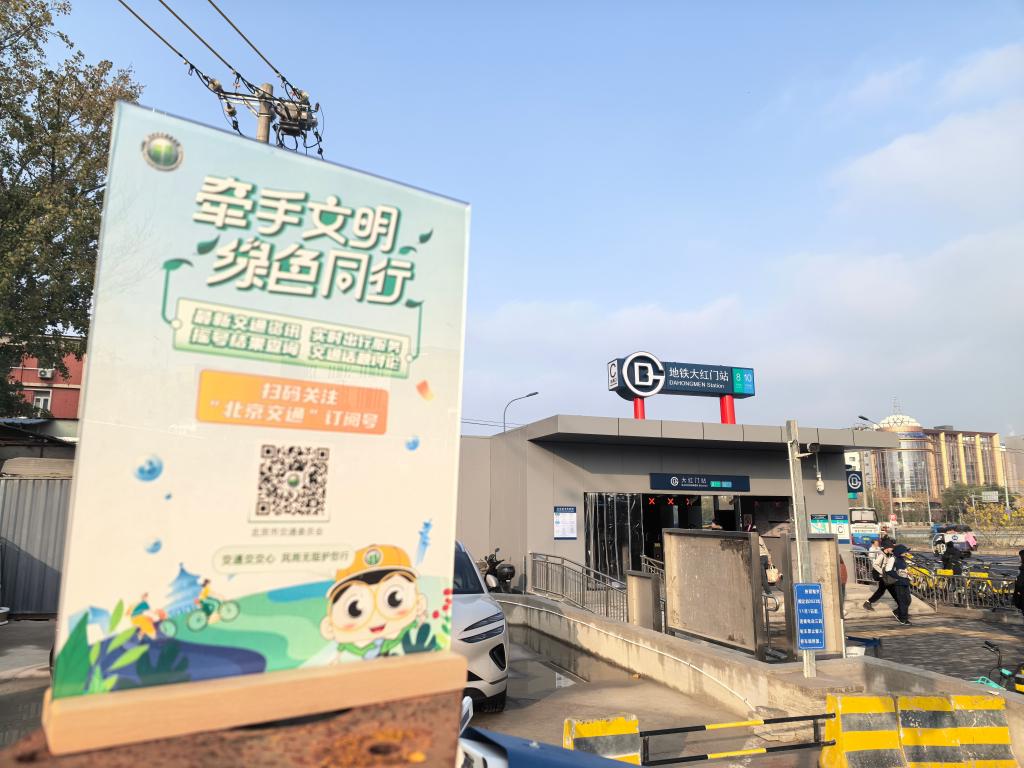
北京地铁8号线大红门站今日开通,实现与10号线换乘
Xin Jing Bao· 2025-11-08 03:27
Core Points - The Beijing Subway Line 8's Dahongmen Station officially opened on November 8, providing a transfer point to Line 10 [1] - The station features two transfer passages, one being a shorter dual-direction passage in the hall and the other a longer passage utilizing the existing Line 10's C exit [1] - A practical experience of the shorter route indicates that the transfer takes only 2 minutes [1]
延迟开通7年后,北京地铁8号线大红门站今起开通并实现换乘
Xin Jing Bao· 2025-11-08 01:52
Core Points - The Beijing Subway Line 8's Dahongmen Station officially opened on November 8, 2023, after a 7-year delay, allowing for a transfer to Line 10 with a minimum transfer time of two minutes [1][3]. Group 1: Opening and Infrastructure - The Dahongmen Station was part of the Line 8 southern section that opened in late 2018, but the station itself remained closed until now, causing inconvenience for local commuters [1]. - The opening of Dahongmen Station fulfills the requirements of the 2025 Beijing Rail Transit Construction Plan and important livelihood projects [1]. - Modifications were made to the station to facilitate the opening, including the completion of fire safety inspections for the transfer passage and entrance renovations [1][2]. Group 2: Passenger Experience and Benefits - The station's C entrance has been redesigned to improve passenger flow, moving security checks above ground and adjusting ticket barriers to ground level [2][3]. - Two transfer passages have been established: one in the station hall with a transfer time of about two minutes, and another in the existing Line 10 C entrance, which takes approximately three and a half minutes to walk [3]. - Local commuters expressed satisfaction with the opening, estimating that it could save them at least 10 minutes on their daily commute [4]. Group 3: Future Expectations - The opening is expected to significantly benefit passengers needing to transfer, especially since Line 8 connects various tourist attractions and Line 10 is one of the busiest lines in Beijing [5]. - Predictions indicate that the transfer passenger flow at Dahongmen Station will increase significantly during weekday peak hours [5].
限行首日,广州地铁线网客流破千万人次!9日部分车次有调整
Nan Fang Du Shi Bao· 2025-11-07 15:07
Core Points - Guangzhou has implemented a vehicle restriction policy to ensure the smooth opening of the 15th National Games, starting from November 6 [1] - On the first day of the restriction, the Guangzhou metro network recorded over 10 million passengers, with a total of 10.31 million trips [1] - The highest passenger volume this year was recorded on September 30, reaching 11.68 million, an increase of 8.4% compared to the same period last year [1] - During the National Games (November 6 to 20), metro passenger volume is expected to increase, with average weekday ridership projected to exceed 10.2 million and weekend ridership over 9.3 million [1] - To manage the increased passenger flow, several metro lines will adjust their schedules, including extending peak hours and increasing train frequency [1] Transportation Management - On the opening day of the National Games (November 9), specific metro stations will be closed, including Huangcun Station on Line 4 and the Tianhe Park to Suyuan section of Line 21 [2] - The E2 entrance of Dongxiaonan Station officially opened on November 6, increasing accessibility for residents in the area [2][3] - The construction of the E2 entrance faced delays due to previous challenges, but efforts were made to expedite its completion [3] Event Impact - The 138th Canton Fair concluded on November 4, with the metro transporting 210 million passengers during the event, averaging 10.0038 million daily, a 3.9% increase from the previous session [3] - Key stations near the exhibition center, such as Pazhou and New Port East, experienced significant passenger traffic, with total entry and exit figures reaching over 100,000 for each station [3]
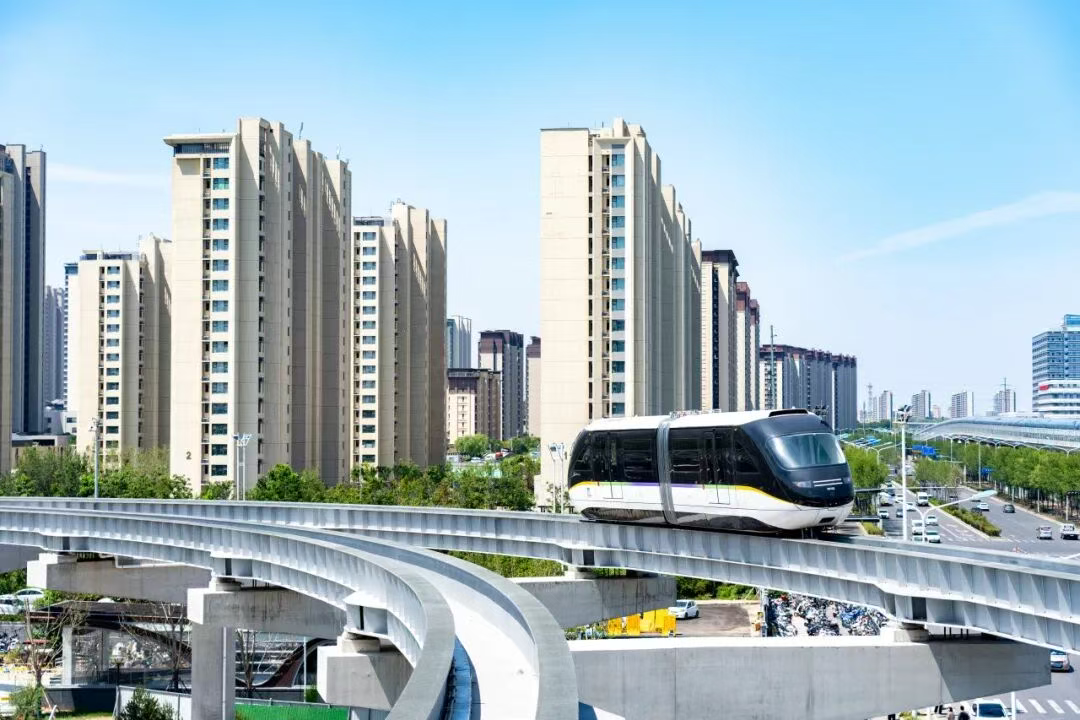
壹探轨道|济南高新东区云巴年底开通运营,提前了解“宝宝巴士”
Qi Lu Wan Bao· 2025-11-07 15:02
Core Points - The Jinan High-tech East District Yunba is set to commence operations by the end of the year, offering an innovative solution for urban short-distance transportation with its unique aerial track design and highly intelligent technology [1][3] Group 1: Technology and Design - The Yunba utilizes fully automated driverless technology and operates on dedicated elevated tracks, effectively avoiding ground traffic congestion [3] - It features an integrated design for tracks and bridges, equipped with lateral stability devices to ensure smooth and safe operation [3] - The system employs rubber wheel technology and noise reduction techniques to achieve low noise levels, along with an energy recovery system to enhance energy efficiency [3] Group 2: Connectivity and Capacity - The Yunba will connect with existing Jinan Metro Line 2 and the upcoming Lines 4 and 8, with a total of five transfer stations planned [5] - Each train car has a maximum passenger capacity of 140, making it suitable for medium-density passenger flow areas [5] Group 3: Economic and Developmental Impact - The Yunba is characterized by a short construction period and low investment costs, effectively addressing the "last mile" issue in high-capacity rail transit [5] - The completion and operation of the Yunba will enhance Jinan's multi-level public transportation system, providing citizens with more convenient and efficient travel options, and positively contributing to regional coordinated development [7]
交通运输部:10月城市轨道交通客运量环比增加1.3亿人次
Zheng Quan Shi Bao Wang· 2025-11-07 09:08
Core Insights - The Ministry of Transport reported an increase in urban rail transit passenger volume in October 2025, with a month-on-month rise of 130 million passengers, representing a growth of 4.8% [1] - Year-on-year, the passenger volume increased by 50 million, showing a growth of 1.8% [1] Summary by Categories Operational Data - In October 2025, 54 cities across 31 provinces (including autonomous regions and municipalities) and the Xinjiang Production and Construction Corps operated 333 urban rail transit lines [1] - The total operational mileage reached 11,330.5 kilometers, with 3.76 million train trips completed [1] Passenger Volume - The total passenger volume for October was 2.82 billion, with an entry volume of 1.68 billion [1] - The average passenger intensity for the total operational mileage was 0.804 million passengers per kilometer per day, reflecting a month-on-month increase of 0.6% but a year-on-year decrease of 5.7% [1]
一批国家标准批准发布!
中国能源报· 2025-11-07 07:18
Emerging Fields - A total of 167 national standards have been approved in emerging fields, including rare earth permanent magnet materials, fine ceramics, and carbon fiber composite materials, promoting the iteration and transformation of new material technologies [1] - Four national standards related to intelligent computing have been released, covering terminology, reference architecture, and testing methods, laying a foundation for AI-enabled industrial upgrades [1] - Fourteen national standards concerning semiconductor equipment and materials have been published, focusing on electronic components and integrated circuit packaging testing, supporting the healthy development of the semiconductor industry [1] Transportation and Green Low-Carbon - Three national standards have been released for urban rail transit vehicle alarm information and signal systems, enhancing public rail transit safety [2] - Thirty national standards have been published for unmanned aerial vehicle registration, road traffic signs, gas vehicles, container repairs, and urban rail transit screen doors, contributing to the safety of transportation [2] - Twenty-two national standards related to kitchen waste treatment equipment, waste incineration equipment, oilfield energy consumption testing, lighting facility economic operation, and greenhouse gas management systems have been established to improve the green low-carbon standard system [2] - A total of 199 national standards for wind power generation systems, CNC plate rolling machines, and reciprocating internal combustion engines have been released, accelerating the upgrade of high-end equipment technology and product quality in the manufacturing sector [2] Safety Production - Twenty-two national standards have been published for gas transmission and distribution equipment safety, pressure pipeline specifications, and small amusement facility safety, reinforcing the safe operation of infrastructure and public places [2] - Mandatory national standards for fireworks safety and quality have been established to enhance safety performance requirements for fireworks products [2] - Eleven mandatory national standards for key fire-fighting products, including automatic sprinkler systems and foam extinguishing agents, have been updated to improve performance and reliability [2] Economic and Trade Services - Three national standards for cross-border e-commerce and e-commerce platform transaction information have been released to guide risk prevention and independent site construction for e-commerce platforms [3] - Five national standards related to logistics documents, logistics service contracts, and multimodal transport capacity evaluation have been published to enhance the standardization of logistics and multimodal transport [3] - National standards for the Chinese translation of geographical names from Sweden, Finland, Norway, Denmark, and Thailand have been established to support economic and cultural exchanges with Nordic and ASEAN countries [3] Agriculture and Rural Areas - Thirty national standards for feed, pesticides, animal health, fertilizers, and soil conditioners have been published to ensure agricultural production safety [3] - Forty-six national standards for grain, oil, tobacco, and biomass materials have been released to support high-quality agricultural product supply [3] - Seven national standards related to water-saving irrigation and agricultural product trading have been established to enhance the standardization level of agricultural production [3] Daily Life - Ten national standards for smart home appliances, including application scenarios and lithium-ion batteries, have been published to promote the intelligence, greenness, and safety of home appliance products [4] - Thirteen national standards for textiles, clothing, and footwear products have been released to guide enterprises in standardizing production and enhancing consumer experience [4] - Six national standards related to the elimination of iodine deficiency diseases have been established to strengthen healthcare service guarantees [4]

涉稀土永磁、集成电路等,一批国家标准发布
Shang Hai Zheng Quan Bao· 2025-11-07 05:04
Summary of Key Points Core Viewpoint - The National Market Regulation Administration has approved a series of important national standards aimed at enhancing quality of life, ensuring safety, and promoting sustainable development across various sectors. Emerging Fields - A total of 167 national standards have been released for new materials such as rare earth permanent magnet materials, fine ceramics, and carbon fiber composites, facilitating technology iteration and industry standardization [1] - Four national standards related to intelligent computing have been established, focusing on terminology, reference architecture, and testing methods to support AI-driven industrial upgrades [1] - Fourteen national standards concerning semiconductor equipment and materials have been introduced, which include electronic components and integrated circuit packaging testing, promoting healthy development in the semiconductor industry [1] Transportation and Green Low-Carbon - Three national standards for urban rail transit vehicles have been published to enhance public transportation safety [2] - Thirty national standards have been released for unmanned aerial vehicles, road traffic signs, and gas vehicles, contributing to the safety of transportation systems [2] - Twenty-two national standards related to waste treatment and greenhouse gas management have been established to improve the green low-carbon standard system [2] - A total of 199 national standards for high-end equipment technology upgrades have been introduced, promoting sustainable development in manufacturing [2] Safety Production - Twenty-two national standards for gas distribution equipment and pressure pipelines have been published to ensure the safety and stability of infrastructure [2] - Mandatory national standards for fireworks safety and quality have been established to enhance product safety requirements [2] - Eleven mandatory national standards for key fire safety products have been updated to improve performance and reliability in fire prevention [2] Economic and Trade Services - Three national standards for cross-border e-commerce and transaction information have been released to guide risk prevention and management for e-commerce platforms [3] - Five logistics and multimodal transport national standards have been introduced to enhance the standardization of logistics documentation and service contracts [3] - National standards for the Chinese translation of geographical names from Nordic and ASEAN countries have been published to support economic and cultural exchanges [3] Agriculture and Rural Development - Thirty national standards for feed, pesticides, and animal health have been established to ensure agricultural production safety [3] - Forty-six national standards for grain, tobacco, and biomass materials have been released to support high-quality agricultural product supply [3] - Seven national standards related to water conservation and agricultural trade have been introduced to enhance standardization in agriculture [3] Daily Life - Ten national standards for smart home appliances have been published to promote the intelligence, greenness, and safety of household products [3] - Thirteen national standards for textiles and footwear have been established to guide production and enhance consumer experience [3] - Six national standards related to health care, including iodine deficiency elimination, have been released to strengthen medical service guarantees [3] Additional Standards - The National Market Regulation Administration has also published standards related to smart manufacturing, semiconductor equipment, and enterprise safety management [4]