宠物食品

Search documents
中宠股份:目前已在全球范围建成超22间现代化工厂
Zheng Quan Ri Bao· 2025-11-10 08:41
Group 1 - The company, Zhongchong Co., Ltd., is focused on global supply chain layout and has established over 22 modern factories worldwide [2] - All domestic factories are concentrated in Yantai, Shandong Province, with no current plans for establishing factories in other regions of China [2]

猪价磨底关注产能去化进展,双十一国货宠食品牌销售表现良好:农林牧渔周观点(2025.11.3-2025.11.9)-20251110
Shenwan Hongyuan Securities· 2025-11-10 08:16
Investment Rating - The report maintains a positive outlook on the pig farming industry, suggesting a left-side layout opportunity as the industry enters a phase of accelerated capacity reduction driven by both fundamental and policy factors [2][3]. Core Insights - The report indicates that the pig farming industry is experiencing a bottoming out of prices, with a notable increase in the utilization rate of breeding facilities, leading to a potential acceleration in capacity reduction. The current pig cycle is nearing its downward tail, making it an opportune time for left-side investments [2][3]. - The pet food market is showing strong performance from domestic brands during the Double Eleven sales event, indicating a growing market for domestic pet food products. The report emphasizes the importance of monitoring the performance of leading companies in this sector [2][3]. - The white feather broiler chicken market is witnessing stable chick prices and a slight recovery in chicken meat prices, suggesting a focus on leading companies for long-term value amidst a backdrop of abundant supply [2][3]. Summary by Sections Agricultural Stock Market Performance - The Shenwan Agricultural, Forestry, Animal Husbandry, and Fishery Index rose by 0.8%, mirroring the performance of the Shanghai and Shenzhen 300 Index. The top five gainers included Pingtan Development (25.7%), Green Kang Bio (11.7%), and Huazi Industry (11.3%) [3]. Pig Farming - The report notes a decline in pig prices, with the average selling price of external three yuan pigs at 11.9 yuan/kg, down 3.6% week-on-week. The average loss for self-breeding sows was -41.1 yuan/head, marking the sixth consecutive week of losses [2][3]. - The report highlights that the number of breeding sows has decreased by 0.77% month-on-month, indicating a proactive capacity reduction in response to ongoing losses [2][3]. Pet Food - The Double Eleven sales event revealed that domestic brands dominated the pet food market, with significant representation in the top-selling brands. The report suggests that the domestic pet food market remains a high-growth sector despite short-term export challenges [2][3]. Broiler Chicken Farming - The average selling price of white feather broiler chicks was 3.45 yuan/chick, with a week-on-week increase of 1.47%. The average selling price of broiler chickens was 3.49 yuan/kg, reflecting a slight recovery [2][3].


农林牧渔周观点:猪价磨底关注产能去化进展,“双十一”国货宠食品牌销售表现良好-20251110
Shenwan Hongyuan Securities· 2025-11-10 08:13
Investment Rating - The report maintains an "Overweight" rating for the agricultural sector, indicating a positive outlook for the industry compared to the overall market performance [46]. Core Insights - The report highlights that the pig farming industry is experiencing a bottoming out of prices, driven by both fundamental and policy factors, which may accelerate capacity reduction [2][3]. - The report emphasizes the importance of focusing on left-side investment opportunities in the pig farming sector as the current pig cycle approaches its downward tail [2][3]. - The domestic pet food market is identified as a high-growth area, with strong performance from local brands during the "Double Eleven" sales event, suggesting a positive growth trajectory for leading companies in this segment [2][3]. Summary by Sections Agricultural Stock Market Performance - The Shenwan Agricultural Index rose by 0.8%, mirroring the performance of the CSI 300 Index [3]. - The top five gainers included Pingtan Development (25.7%), Green Kang Biotechnology (11.7%), and Huazi Industrial (11.3%) [3][10]. Pig Farming - Pig prices are stabilizing, with a national average selling price of 11.9 CNY/kg as of November 9, reflecting a week-on-week decrease of 3.6% [2]. - The average weight of pigs sold is at a three-year high of 128.3 kg, indicating a potential for improved profitability as the industry undergoes capacity reduction [2][3]. Pet Food - Domestic pet food brands performed exceptionally well during the "Double Eleven" sales, with top brands being predominantly local [2]. - The report suggests that the pet food market remains a high-growth area, with recommendations to focus on leading companies like Guobao Pet and Zhongchong Co [2][3]. Chicken Farming - The price of white feather broiler chicks remains stable, with an average selling price of 3.45 CNY/chick, indicating a reasonable profit margin in the industry [2]. - The report notes that the supply of broiler chickens is expected to remain ample throughout 2025, emphasizing the importance of focusing on leading companies for long-term value [2].
中宠股份:国内工厂全部集中在山东烟台地区,目前暂无在国内其他地区建厂的计划
Mei Ri Jing Ji Xin Wen· 2025-11-10 07:14
Core Viewpoint - The company is focused on global supply chain development and currently has no plans to establish additional factories in regions outside of Yantai, Shandong, despite investor suggestions to set up a processing plant in Hainan to leverage the advantages of the Hainan Free Trade Port [2]. Group 1 - The company has established over 22 modern factories globally [2]. - All domestic factories are concentrated in Yantai, Shandong [2]. - There are currently no plans for the company to build factories in other domestic regions [2].
外资宠物专家交流
2025-11-10 03:34
Summary of Conference Call Records Company Overview - **Company**: Purina - **Industry**: Pet Food - **Market Presence**: Established in China for nearly 30 years, with three main brands: Pro Plan, Purina Professional, and Dog Chow [2][12] Key Financials - **2024 Sales**: Total sales reached 1.03 billion CNY, with online sales accounting for 80% and offline for 20% [3][4] - **Brand Contributions**: Pro Plan contributed approximately 800 million CNY, while the remaining 200 million CNY came from Dog Chow, Purina, and other brands [5] - **Growth Rate**: 2024 saw a growth rate exceeding 30%, but 2025 is expected to experience flat or negative growth [7][42] Strategic Adjustments - **Leadership Change**: New CEO Beik replaced Chen Xiaodong, with a shift in reporting structure directly to Purina headquarters [12] - **Focus Shift**: The company is transitioning from an online-centric strategy to emphasize offline channels and value chain stability [8][31] - **Future Growth Plans**: Aiming for double-digit growth over the next five years while avoiding rapid expansion that could disrupt pricing [7][42] Sales Channel Insights - **Offline Sales**: Approximately 200 million CNY from offline channels, with 130-150 million CNY from stores and hospitals, and 60-70 million CNY from breeding facilities [14] - **Online Sales**: Sales from major platforms include JD.com (300 million CNY), Tmall (over 100 million CNY), Pinduoduo (200-300 million CNY), and Douyin (30-50 million CNY) [15] - **Channel Strategy**: Emphasis on training store personnel and providing professional knowledge to enhance sales effectiveness [19] Market Positioning - **Brand Positioning**: Pro Plan targets high-end consumers with prices around 40-50 CNY per kg, while Purina focuses on value for breeding households and government units at 20-25 CNY per kg [2] - **Consumer Education**: The company aims to educate consumers on appropriate pet food choices through various marketing activities and partnerships with stores [39][40] Challenges and Competition - **Market Competition**: Facing competition from domestic brands, but positioning against premium brands like Royal Canin [25][36] - **Online vs. Offline Dynamics**: The shift back to offline is driven by the need for stable pricing and consumer experience, as online shopping has led to price confusion and high return rates [37][31] Future Outlook - **2026 Growth Projection**: Expected growth of 13-15%, with a focus on maintaining a stable value chain rather than aggressive online expansion [42] - **Long-term Strategy**: Plans to introduce new functional pet food products and expand SKU offerings from 4 to 8 [6] Additional Insights - **Pricing Strategy**: Annual price adjustments typically range from 5% to 8% to maintain value chain stability [23] - **Government Channel**: Significant revenue from government contracts, approximately 30 million CNY annually [29] - **Cultural Differences**: The company operates under a performance-based model, contrasting with domestic brands that may use different distribution strategies [41]
乖宝宠物20251107
2025-11-10 03:34
Summary of the Conference Call for Guibao Pet (乖宝宠物) Company Overview - Guibao Pet focuses on the pet food industry, particularly in the production of dried meat products and its own brands, including Maifudi (麦富迪) and Fuleijiate (弗利加特) [2][17]. Key Points Industry and Market Dynamics - The pet food industry is experiencing challenges due to international circumstances, with an expected growth rate of approximately 5% for 2025, which is lower than the growth rate in the first half of the year [2][25]. - The company is shifting its focus towards domestic brand development and does not plan to expand its OEM (Original Equipment Manufacturer) business [2][9]. Financial Performance - The gross margin for the OEM business has declined by over 2 percentage points due to currency fluctuations and customer price reductions, with no significant improvement expected in Q4 [2][7][10]. - The company aims for a revenue target of 10 billion by 2027, with a net profit margin of 10% as a condition for unlocking stock incentives [3][32]. Brand Performance - Maifudi accounts for approximately 80% of the company's revenue, while Fuleijiate contributes around 20%. Fuleijiate is expected to grow over 100% in 2024, but growth is anticipated to slow down thereafter [2][16][17]. - Maifudi aims for growth of 35%-40% in 2025, which is 1-2 times the industry average growth rate of about 15% [2][16][21]. Sales Channels - Online sales are primarily through direct sales, accounting for 90% of revenue, with Tmall and Douyin (TikTok) being the main platforms, where Douyin is expected to surpass Tmall by 2026 [2][27][28]. - The company has added offline channels for brand promotion, including Sam's Club and Costco, but these are not expected to significantly boost sales [29][30]. Challenges and Risks - The company faces risks in the U.S. market due to customer loss primarily attributed to tariff policies, with the worst-case scenario being a complete loss of U.S. business [2][24]. - The OEM business is projected to grow only in single digits for 2025, with a significant decline in the U.S. market share expected [2][25]. Product Development and Strategy - The company emphasizes a high-end product strategy, focusing on brands like Fuleijiate and BUF, with a commitment to scientific feeding principles [2][31][33]. - New product launches, such as Shuran and high-fresh meat products, have received positive market feedback, although the latter is still in its early stages [19][22]. Future Outlook - The company is committed to increasing the proportion of its own brands, which will enhance profitability despite not focusing on immediate profit margin improvements [32][34]. - The overall strategy is to balance revenue growth with maintaining a healthy profit margin, ensuring sustainable development without sacrificing profitability for growth [32]. Additional Insights - The company’s production capacity utilization is currently above 80%, with all factories operating at near full capacity during peak sales periods [6]. - The gross margin for the OEM business is expected to remain under pressure due to uncontrollable factors such as currency fluctuations and raw material prices [10][24]. This summary encapsulates the key insights from the conference call, highlighting the company's strategic direction, financial performance, market challenges, and future outlook in the pet food industry.
宠物经济系列论坛
2025-11-10 03:34
Summary of Conference Call on Royal Pet Food Industry Overview - The pet food industry in China is experiencing significant growth, with Royal Pet Food projected to achieve sales of over 2 billion yuan in 2024, primarily through online channels, which account for approximately 70% of sales [1][10][28]. - The growth rate from 2015 to 2019 was maintained at over 25%, but has since slowed to above 15%, with expectations of continued double-digit growth in the coming years [1][5][6]. Company Performance - Royal Pet Food's sales through hospital channels contribute approximately 400-500 million yuan, while pet store sales are about twice that amount, with 80% of pet store sales coming from online [1][10][28]. - Prescription food sold through hospitals has a profit margin of around 50%, while daily food sold through pet stores has a profit margin of 20-30% [1][14][49]. - The company has implemented price control measures, raising retail prices to 120-130% of wholesale prices, which has restored confidence in offline recommendations and driven sales growth [1][16][18]. Market Competition - The market is highly competitive, with new brands such as Mars, Pro Plan, and Wagg entering the hospital channel, particularly focusing on prescription and wet food markets [1][19][20]. - Despite the influx of new brands, Royal Pet Food maintains a dominant position in the prescription and wet food categories across the country [1][20]. Sales Channels and Strategies - The company emphasizes the importance of offline channels, utilizing a strategy of "humane business practices" and "education-driven business" to enhance nutritional awareness and increase order rates [1][45][46]. - Online sales have shown significant growth, with a 36% increase in August 2025 and a 27% increase in September 2025 [4][32]. - The company plans to focus on key sales periods and specific stores for marketing investments, maintaining a marketing expense ratio of about 10% for both online and offline channels [26]. Future Outlook - For 2025, the overall growth rate is expected to be around 15%, with hospital channels projected to grow by approximately 20% [1][29][33]. - The company anticipates that the growth rate for the hospital channel will slow to between 10% and 20% in 2026 due to market conditions and previous pricing issues [33]. Additional Insights - Royal Pet Food's market coverage has expanded significantly since 2019, with a focus on key cities and a stable team of experienced personnel [22]. - The company faces challenges related to supply chain and logistics, as products are imported from overseas, leading to longer transportation times and reduced shelf life [42]. - The company prioritizes cash flow, profit, and operational goals, avoiding short-term revenue gains at the expense of profitability [25]. This summary encapsulates the key points discussed in the conference call regarding Royal Pet Food's performance, market dynamics, and strategic outlook in the pet food industry in China.
本届进博会美国企业参展面积超过5万平方米 连续七年位列第一 “期待和决心”:中国就是“确定性”
Jie Fang Ri Bao· 2025-11-08 02:08
Core Insights - The participation of American companies at the China International Import Expo (CIIE) reflects a strong commitment to the Chinese market, with over 50,000 square meters of exhibition space, marking the seventh consecutive year of leading participation [1][2] - American businesses view the CIIE as a platform for certainty amidst global trade uncertainties, emphasizing the importance of the Chinese market as a growth engine [1][3] Group 1: Market Participation - The American Food and Agriculture Pavilion, organized by the Shanghai American Chamber of Commerce and the U.S. Department of Agriculture, features 19 exhibitors and spans 350 square meters, both record numbers for the event [1][2] - Dynamite, a U.S. pet food brand, signed agreements totaling $5.8 million during the expo, showcasing the potential for significant business transactions [2] Group 2: Market Dynamics - The CIIE provides certainty in three dimensions: the vast Chinese consumer market, the efficiency of the expo as a platform, and the consistent open signals from China, evidenced by the eight-year history of the event [3] - American companies are actively seeking new opportunities in China, with expectations for increased transaction volumes compared to previous years, which were $500 million and $700 million in the last two years [2] Group 3: Company Initiatives - Nike announced the opening of its first creative production center outside the U.S. in Shanghai, aimed at enhancing connections with Chinese consumers and supporting local sports culture [6] - Estée Lauder introduced over ten new products at the expo and secured a procurement intention order worth $480 million on the opening day, indicating strong market interest [6][7] Group 4: Long-term Commitment - American companies are not only focused on immediate sales but are also making long-term strategic investments in the Chinese market, recognizing its purchasing power and growing innovation capabilities [7]


中宠股份:控股股东一致行动人通怡春晓19号完成减持1.50%股份
Xin Lang Cai Jing· 2025-11-07 12:30
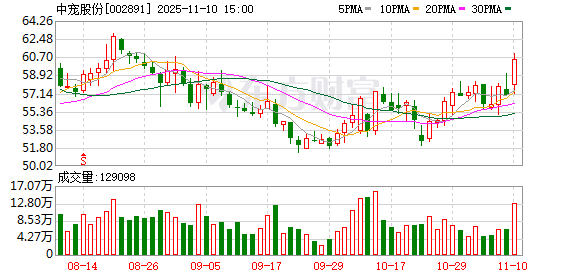
Group 1 - The controlling shareholder of Zhongchong Co., Ltd. announced a reduction of 4.56 million shares, accounting for 1.50% of the total share capital [1] - The shares were sold through centralized bidding and block trading, with average prices of 58.37 yuan and 55.59 yuan respectively [1] - Following the reduction, the shareholder's holding ratio has decreased to 0% [1]
佩蒂股份:预计明年原材料价格比较稳定
Zheng Quan Ri Bao Zhi Sheng· 2025-11-07 11:06
Core Viewpoint - Petty Co. announced on November 7 that overall raw material prices have remained stable this year, with prices of poultry and meat by-products decreasing compared to the same period last year, positively impacting the cost of main grains and snacks [1] Group 1: Raw Material Prices - The company indicated that raw material prices are expected to remain stable next year based on current market information and supplier pricing [1] - The prices of poultry and meat by-products have decreased compared to last year, contributing to improved cost conditions for main grains and snacks [1] Group 2: Supplier Relationships - Petty Co. has established long-term partnerships with key suppliers, including annual framework agreements to lock in supply and price ranges [1] Group 3: Cost Optimization Strategies - The company is optimizing costs through various dimensions, including product structure, customer structure, target markets, procurement locations, and strategic reserves [1] - Efforts are being made to control costs and potentially offset some tariff impacts, while closely monitoring external variables such as exchange rate fluctuations and international logistics [1]