Autos

Search documents
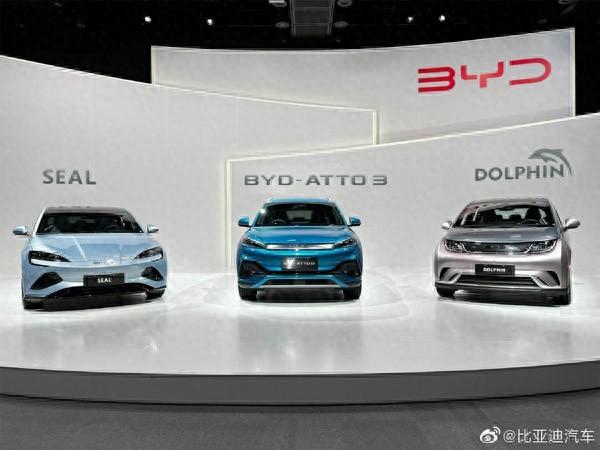
仅为丰田1/10!日本大幅削减比亚迪购车补贴
Guan Cha Zhe Wang· 2026-03-30 06:42
Core Viewpoint - The Japanese Ministry of Economy, Trade and Industry has significantly reduced the subsidy for BYD's electric vehicles, dropping it to 150,000 yen (approximately 936 USD or 6,486.15 RMB), which is more than a 50% cut from previous levels [1][5]. Group 1: Subsidy Changes - The revised subsidy scheme will take effect in April 2023, with the new rules applying to affected models starting January 2027 [1][5]. - Previously, BYD's subsidies ranged from 350,000 to 400,000 yen (approximately 1,510 to 1,730 RMB), but the new amount places BYD at the lowest subsidy level among Japanese car dealers [3][7]. - In contrast, Toyota's bZ4X, which uses domestically produced batteries, maintains the highest subsidy of 1,300,000 yen (approximately 59,200 RMB), about ten times that of BYD [3][7]. Group 2: Industry Reactions - BYD's Japan representative expressed disappointment over the subsidy cuts, indicating that it would negatively impact consumers [3][7]. - The Japanese government justified the subsidy reductions by stating that BYD's models received lower comprehensive evaluation scores [3][7]. - Concerns have been raised regarding the fairness of the evaluation process, with BYD's president claiming that the company received an unjust score despite its efforts in establishing fast-charging infrastructure [4][9]. Group 3: Broader Implications - Analysts suggest that the subsidy adjustments may be a result of the US-Japan tariff agreement, aimed at ensuring fair competition conditions [4][9]. - The Ministry of Economy, Trade and Industry acknowledged that the adjustments were based on the consensus reached in the US-Japan tariff agreement [4][9]. - There are allegations of preferential treatment towards certain automakers, as the evaluation criteria have not changed, raising questions about transparency [5][9].


When Will Elon Musk's Tesla And SpaceX Merge? Here's What Prediction Market Is Saying
Benzinga· 2026-03-30 06:00
Group 1: SpaceX IPO - SpaceX plans to raise $75 billion from its IPO, valuing the company at approximately $1.75 trillion [1] - The company is still targeting a June listing for its confidential filing [1] Group 2: Tesla-SpaceX Merger Buzz - There is speculation about a potential merger between Tesla Inc. and SpaceX, although no official information has been released [2] - Gary Black, managing director of The Future Fund LLC, has expressed concerns regarding the merger [2] Group 3: Dilution Concerns - Black warned that a merger could lead to a "20-25% reduction" in Tesla's stock value if it acquires SpaceX [3] - Tesla's current market cap is $1.5 trillion with a 100x EV/EBITDA, while SpaceX also has a market cap of $1.5 trillion but with a 200x EV/EBITDA [3] Group 4: Betting Market Insights - Data from Kalshi indicates that over $42,000 has been wagered on the timing of a potential merger between Tesla and SpaceX [3] - The probability of a merger occurring before March 1, 2027, is currently at 22%, a decrease of 5% [4] - The highest probability assigned for the merger before May 1, 2027, is 26%, down by 8% [4]

Volkswagen (OTCPK:VLKA.F) Earnings Call Presentation
2026-03-30 06:00
Roadshow presentation March 2026 Disclaimer The following presentations as well as remarks/comments and explanations in this context contain forward-looking statements on the business development of the Volkswagen Group. These statements are based on assumptions relating to the development of the economic, political and legal environment in individual countries, economic regions and markets, and in particular for the automotive industry, which we have made on the basis of the information available to us and ...
中国汽车行业-石油冲击:本次与过往有何不同-China Auto Industry_ The oil shock - how will this time differ from the pas
2026-03-30 05:15
Summary of the China Auto Industry Conference Call Industry Overview - The report focuses on the **China Auto Industry**, particularly the impact of rising oil prices on the market dynamics and the performance of electric vehicles (NEVs) compared to internal combustion engine (ICE) vehicles [2][5][27]. Key Points Total Cost of Ownership (TCO) - **NEVs are more attractive than ICE vehicles**: The TCO for NEVs is significantly lower due to favorable trade-in subsidies and purchase tax incentives (5% for NEVs vs. 10% for ICE) [2][12]. - **Annual operation costs**: BEV/PHEV operation costs are approximately **40-70% lower** than ICE vehicles. Over three years, BEVs or PHEVs are **10-25% cheaper** than ICE on a TCO basis [7][12]. Oil Price Impact - **Stock performance correlation**: The initial impact of oil price hikes leads consumers to prefer NEVs over ICE vehicles, which is expected to positively influence stock performance for NEV manufacturers [5][27]. - **Historical performance**: During past oil price surges, EV stocks, particularly BYD, have outperformed the broader auto sector [27][30]. NEV Market Dynamics - **Growth in NEV penetration**: NEV market share in China has surged from **6% in 2020 to 51% in 2025**, indicating a strong shift in consumer preference towards electric vehicles [27][28]. - **Key players**: Companies like **BYD, Geely, XPeng, Leapmotor, and Nio** are highlighted as having competitive product portfolios and growing international footprints, making them attractive investment opportunities [5][27]. Export Opportunities - **Overseas market growth**: Chinese OEMs are expected to see overseas markets account for **30-60% of revenue** in 2026, up from **15-30%** in volume, driven by higher average selling prices (ASPs) and margins outside China [5][32]. - **Export strategies**: Chinese manufacturers are establishing production capabilities in markets with significant demand, such as Brazil and the EU, to mitigate tariffs and enhance market access [31][35]. Buyer Sentiment - **JPM's China Auto Buyer Sentiment Index**: The index has shown a rebound, particularly for BYD and Geely, indicating a recovery in consumer interest. The index has improved for four consecutive weeks, suggesting a potential "recovery trade" opportunity [5][40]. - **Comparative sentiment**: While BYD and Geely have seen significant improvements, other brands like XPeng and Nio have experienced a slight decline in sentiment, possibly due to competitive pressures [40]. Regulatory Environment - **Oil pricing mechanisms**: China's oil prices are influenced by global market dynamics and domestic regulatory frameworks, with the National Development and Reform Commission (NDRC) adjusting prices based on international benchmarks [15][16]. Conclusion - The China Auto Industry is poised for growth, particularly in the NEV segment, as rising oil prices shift consumer preferences. Key players are expected to benefit from both domestic and international market dynamics, with a focus on TCO advantages and expanding overseas operations [5][27][32].


中国股票策略:无序抛售信号显现;均衡配置仍是当前最优选择-China Equity Strategy_ Signs of disorderly selling_; A balanced portfolio the most viable option for now
2026-03-30 05:15
Summary of Key Points from the Conference Call Industry Overview - The report focuses on the **China Equity Strategy**, particularly the performance of the **Hang Seng Index (HSI)** and **CSI 300** amidst recent market volatility, with both indices down nearly **4%** on a specific Monday, marking one of the worst trading days in the last decade [2][3]. Core Insights and Arguments - **Market Sentiment**: Current market conditions show signs of disorderly selling, but the overall sentiment is not characterized by extreme pessimism. Investors are more inclined towards inaction and uncertainty [2][3]. - **Balanced Portfolio Recommendation**: Given the geopolitical uncertainties, a balanced portfolio is recommended, including stocks that can provide insulation from recent Middle East events [2][4]. - **Indicators of Market Bottoming**: Six key indicators have been identified to signal disorderly selling and potential market bottoming, including: 1. VHSI reaching **35 or above** 2. Low trading turnover on A-shares and high short selling in H-shares 3. MSCI China valuation below **9.5x** (currently at **11x**) 4. Sharp depreciation of the CNY against USD 5. Decline in Chinese government bond yields 6. High number of stocks with negative returns [3][4]. Stock Recommendations - **Preferred Stocks**: A list of stocks that could provide insulation from high oil prices includes sectors such as renewable energy, shipbuilding, oil and gas, and certain chemicals. Notable companies include: - **PetroChina Co., Ltd.** (Market Cap: **$317.4 billion**, Buy rating) - **CNOOC Limited** (Market Cap: **$190.1 billion**, Buy rating) - **Contemporary Amperex Technology Co., Ltd.** (Market Cap: **$269.3 billion**, Buy rating) [4][55]. - **A-shares vs H-shares**: A-shares are preferred over H-shares due to factors such as potential government fund purchases, lower correlation with global indices, and ample liquidity [5]. Additional Important Insights - **Market Resilience**: Despite recent volatility, the HSI remains the third-most-resilient among major global indices [9]. - **Short Selling Trends**: Short selling in the HK market is elevated at **22.8%**, indicating investor caution but not at historical extremes [11][22]. - **Government Support**: Potential government support is seen as a stabilizing factor for A-shares, which are less correlated with global market movements [48]. - **Valuation Context**: Current valuations have normalized but are not considered extremely cheap compared to historical data [26][52]. Risks and Considerations - **Market Risks**: Risks facing China's equities include a potential hard landing in the property market, capital outflows due to currency depreciation, and slow structural reforms. Inadequate government policies could lead to market shocks [58]. This summary encapsulates the key points discussed in the conference call, providing insights into the current state of the China equity market, stock recommendations, and potential risks.
中国股票策略:2025 年 4 月行情重演,还是步入滞胀新周期?-China Equity Strategy_ A replay of April 2025 or a new cycle into stagflation_
2026-03-30 05:15
Summary of Key Points from the Conference Call Industry Overview - The report focuses on the A-share market in China, analyzing its performance in the context of macroeconomic factors and geopolitical risks [2][18][38]. Core Insights and Arguments 1. **Geopolitical Risks and Oil Prices**: - Recent geopolitical tensions, particularly involving Iran, have led to significant volatility in Brent crude prices, which surged from $73.2/bbl to $119.5/bbl within a week, settling at $100/bbl, 41% higher than pre-conflict levels [18][20]. - China's low reliance on oil and gas (27.2% of total energy consumption) suggests limited impact from oil price shocks on its macroeconomy [20][38]. 2. **A-Share Market Resilience**: - The A-share market has shown resilience, with implied volatility lower than that of major overseas markets during recent geopolitical tensions [38]. - Historical data indicates that major A-share indices are not significantly affected by short-term oil price spikes, with only a few sectors showing correlation with oil prices [28][31]. 3. **Earnings Growth Projections**: - A-share earnings growth is projected to accelerate to 8% in 2026, supported by a recovery in PPI growth and improved margins in non-financial sectors [3][43][54]. - Recent consensus estimates for earnings have been revised upwards, indicating a potential for robust growth similar to previous years with strong fundamentals [61]. 4. **Market Liquidity and Valuation Recovery**: - Despite recent market corrections, liquidity indicators such as daily turnover and margin financing remain elevated, suggesting potential buying opportunities [65][68]. - The A-share market is expected to recover in terms of valuations, driven by macroeconomic stimulus, technological innovation, and capital market reforms [4][43]. 5. **Sector-Specific Insights**: - Top A-share picks under UBS-S coverage include companies like PetroChina, Sungrow, and NAURA Technology, with significant upside potential [5]. - The balance of margin financing has stabilized, indicating that leveraged funds have not exited the market despite volatility [68]. Additional Important Content - **Consumer and Economic Data**: - Economic indicators during the Chinese New Year showed positive trends, with retail sales and tourism increasing, suggesting a rebound in consumer sentiment [56][57]. - China's exports grew by 21.8% YoY in January-February, significantly exceeding market expectations [57]. - **Investment Channels**: - The report highlights the growing importance of ETFs and insurance products as channels for household investments in the A-share market, with substantial growth in A-share sector and thematic ETFs [83][84]. - **Long-term Outlook**: - The report suggests that if China's market volatility decreases, it could attract more long-term investments, enhancing the appeal of the A-share market [85]. This summary encapsulates the key points discussed in the conference call, providing insights into the current state and future outlook of the A-share market in China.





中国 电动车:专家电话会议预计未来数月市场动能将恢复-China Auto_EV_ Expert call_ EVs should regain market momentum in months ahead
2026-03-30 05:15
Summary of Key Points from the Expert Call on China's Auto/EV Market Industry Overview - **Industry**: Electric Vehicles (EVs) in China - **Expert**: Mr. Liu Qing, former general manager of an auto sales company in Suzhou Core Insights 1. **Market Recovery Drivers**: The recovery in the EV market is primarily driven by subsidies, technological upgrades, and rising fuel prices [1][3] 2. **Future Trends**: In 2026, higher-priced models with feature upgrades are expected to dominate the market, with a potential acceleration in EV penetration due to fuel price uncertainties [1][2] 3. **New Model Launches**: The slow pace of new model launches in 2026 is attributed to existing inventory levels, with OEMs focusing on clearing inventory before introducing new products [1][10] 4. **Market Leaders**: BYD and Geely are anticipated to experience healthy growth as EV penetration increases [1][9] Market Dynamics 1. **Order Trends**: There has been a sequential improvement in order trends since late February 2026, suggesting better opportunities for EV players to regain market share [2] 2. **Government Subsidies**: Post-Chinese New Year (CNY) holidays, national and local government subsidies have been implemented, significantly boosting orders for vehicles priced around CNY100k [3] 3. **Battery Technology**: The introduction of BYD's blade battery 2.0 has led to increased customer interest and store traffic, indicating a positive response to technological advancements [4] 4. **Smart Driving Features**: The launch of new smart driving technologies by OEMs has also contributed to increased customer engagement and test drives [5] Market Projections 1. **NEV Shipments**: NEV shipments are expected to recover to 90% of last year's levels by March 2026, with further improvements anticipated in April 2026 [9] 2. **Market Share Growth**: NEVs are projected to increase their market share in the CNY100-200k segment from 45% to 55%, and by 6-7% in the above-CNY300k market [9] 3. **EV Penetration Increase**: If fuel prices continue to rise, NEV penetration could increase by 5-8% in 2026 [9] OEM Strategies 1. **Inventory Management**: OEMs are currently managing inventory levels, with an average of nearly two months of inventory at dealers, which will prolong the inventory clearance period [10] 2. **Promotional Strategies**: Promotions such as zero-interest fiscal plans and subsidies for insurance and trade-ins are crucial for clearing inventory [11] 3. **Competitive Landscape**: BYD is expected to maintain its market-leading position due to its advanced battery technology, while Geely is also positioned for growth by enhancing its product offerings [12][13] Conclusion - The expert call highlighted a cautiously optimistic outlook for the EV market in China, driven by government support, technological advancements, and strategic inventory management by OEMs. The competitive landscape is evolving, with key players like BYD and Geely poised for growth amidst changing market dynamics.
全球汽~1
2026-03-30 05:15
Summary of Key Points from the Conference Call Industry Overview: Global Autos - Rising oil prices have a historically strong negative correlation with auto sales, approximately -0.7 during major oil shocks, affecting consumer confidence and delaying vehicle purchases [1] - Oil prices have increased from about US$60/bbl to above US$100/bbl, with future trajectories uncertain due to geopolitical tensions [1] - Higher gasoline prices lead consumers to prefer more fuel-efficient vehicles, with sedans performing better during high oil price periods compared to larger vehicles like SUVs [1] Regional Insights United States - Higher oil prices have a more pronounced impact on U.S. auto sales compared to China, as retail prices adjust quickly to global oil movements [2] - Regulatory changes have led U.S. automakers to focus on larger internal combustion engine (ICE) vehicles, potentially delaying the adoption of battery electric vehicles (BEVs) [2] - The recent rise in gasoline prices may influence consumer decisions regarding larger vehicles like Stellantis' RAM Hemi V8 pickup [2] Europe - BEV sales in Europe increased by 20.6% year-over-year in February 2026, driven primarily by state incentives rather than the ongoing conflict [3][12] - Rising fuel prices may increase consideration for BEVs, but the main growth driver is attributed to incentives and aggressive discounting by manufacturers [3][12] - If gasoline prices remain high, the cost savings from BEV operation will become more significant, influencing consumer purchase decisions [13] China - Chinese automakers with strong EV and hybrid offerings are well-positioned to benefit from sustained high oil prices, with BYD and Geely highlighted as key players [6] - Fuel-efficient vehicle sales in China show a strong correlation with gasoline prices, with BEVs, PHEVs, and HEVs performing well [1] India - India's auto market is complex due to its high dependence on crude imports and politically administered fuel pricing, leading to a lagged response to global oil prices [7][8] - The current oil spike is shifting demand towards CNG and EVs, as consumers anticipate future fuel price increases [9] Japan - The correlation between oil prices and automobile demand in Japan is modest, with a stronger negative correlation for registered cars compared to Kei-cars [14][15] - Japanese automakers, particularly Toyota, are well-positioned to benefit from shifts towards smaller, fuel-efficient vehicles due to their extensive model portfolios [16][17] Investment Implications - Overall auto sales may face pressure if oil prices remain high, but this could accelerate EV adoption and hybrid penetration [4] - Chinese EV makers and Japanese OEMs with strong hybrid lineups are expected to gain market share, while U.S. automakers with a focus on larger vehicles face downside risks [4][6] - Margin pressures are anticipated as traditional OEMs earn lower profitability on smaller vehicles and face challenges with EV margins [4] Additional Considerations - The geopolitical situation and rising costs of raw materials and components, such as semiconductors, may further complicate the automotive landscape in 2026 [18]



全球汽车- 能源冲击下电气化复兴:高盛电动车情绪图谱发布-Global Automobiles_ The Resurgence of Electrification Amidst Energy Shocks; Introducing GS Electric Vehicle Sentiment Map
Goldman Sachs· 2026-03-30 05:15
Investment Rating - The report maintains a bullish investment rating on BYD, Toyota, Kia, and GM, while holding a bearish stance on Mitsubishi Motors [4][12][20]. Core Insights - The report highlights a resurgence in interest for Battery Electric Vehicles (BEVs) driven by rising crude oil prices and energy security concerns, particularly in emerging markets [1]. - Chinese BEV manufacturers are leveraging their cost advantages to command price premiums in overseas markets, with retail prices stabilizing while maintaining a significant margin buffer [2][15]. - The GS Electric Vehicle Sentiment Map is introduced to monitor key metrics across eight global regions, aiming to identify shifts in pricing power and market dynamics [3][38]. Summary by Sections Electric Vehicle Sentiment Map - The GS Electric Vehicle Sentiment Map will track BEV pricing, tariffs, market share, and the number of active Chinese brands to detect shifts in subsidy policies and competitive momentum [3][38]. Market Dynamics - The report notes that the market share of Chinese manufacturers is increasing, with retail prices in overseas markets generally higher than domestic prices, indicating strong profitability potential [15][27]. - In Thailand, demand is observed to be strong ahead of the EV3.5 policy, while overall demand in Indonesia remains sluggish [10][40]. Regional Insights - In the U.S., BEV growth is slowing due to subsidy cuts, while in Canada, tariff reductions on Chinese-made BEVs are expected to impact market dynamics positively [20][42]. - The report emphasizes that traditional automakers are increasingly adopting Chinese-sourced components to remain competitive against the backdrop of rising Chinese BEV market share [28][49]. Pricing Strategies - Chinese manufacturers have room for aggressive pricing strategies, with adjusted prices in overseas markets remaining higher than domestic prices, allowing for potential market share expansion [15][27]. - Recent price increases by Chinese manufacturers in Thailand raise questions about sustainability amid sluggish overall demand [16][51]. Tariff Policies - The report discusses the impact of changing tariff policies, particularly in Canada, where a significant reduction in tariffs for Chinese BEVs is noted, enhancing their competitive position [58][62].


禾赛- 在实体人工智能领域展现强劲野心
2026-03-30 05:15
Summary of Hesai Group Conference Call Company Overview - **Company**: Hesai Group - **Industry**: Robotics and LiDAR technology Key Financial Highlights - **2025 Revenue**: Increased by 46% YoY to RMB 3,028 million, aligning with expectations [1] - **Net Margin**: Positive net margin of 14% [1] - **2026 LiDAR Shipments Guidance**: Expected to reach 3–3.5 million units, up from 1.6 million units in 2025 [1] Quarterly Performance - **4Q2025 LiDAR Shipments**: Rose 184% YoY (ADAS +185% YoY; robotics +179% YoY) [2] - **4Q2025 Revenue Growth**: Increased by only 39% YoY, indicating a lag compared to shipment growth [2] - **1Q2026 Revenue Growth Guidance**: Expected to decelerate to 24–33% YoY [2] Pricing and Competition - **ADAS LiDAR Pricing**: Followed standard annual decline for auto OEMs, with ATX products priced at approximately USD 150 per unit [2] Innovations and Product Development - **Physical AI Ambitions**: Hesai plans to launch two innovative products: an "eye" for enhanced perception and "muscles" for precise motion control in robotics [3] - **Innovation Recognition**: The company is credited for its technological intuition and innovation capabilities, exemplified by the establishment of Sharpa, a start-up focused on robotic dexterous hands [3] Investment Implications - **Price Target Revision**: DCF-based price target revised down to USD 32 (previously USD 33) and HKD 249 (previously HKD 253) [4] - **Long-term Growth Potential**: Despite near-term slow-down, long-term revenue growth expectations have been raised [4] - **Valuation Metrics**: New target price implies a 36x forward PE at the end of 2026 [4] Financial Forecasts - **Projected EPS**: Expected to increase from RMB 2.92 in 2025 to RMB 3.46 in 2026 and RMB 6.08 in 2027 [4] - **Revenue Growth CAGR**: Anticipated growth from RMB 3,028 million in 2025 to RMB 5,526 million in 2027 [4] Risks - **Downside Risks**: Include potential serious car accidents due to LiDAR failures, escalated sanctions from the US government, loss of market share at key clients, and slower-than-expected profitability improvements [48] Market Performance - **Current Price**: HSAI.US closed at USD 20.24, with a target price indicating a potential upside of 58% [6] - **Market Capitalization**: Approximately USD 3,181 million [6] This summary encapsulates the key points from the conference call regarding Hesai Group's financial performance, product innovations, market outlook, and associated risks.