
日产艾睿雅

Search documents
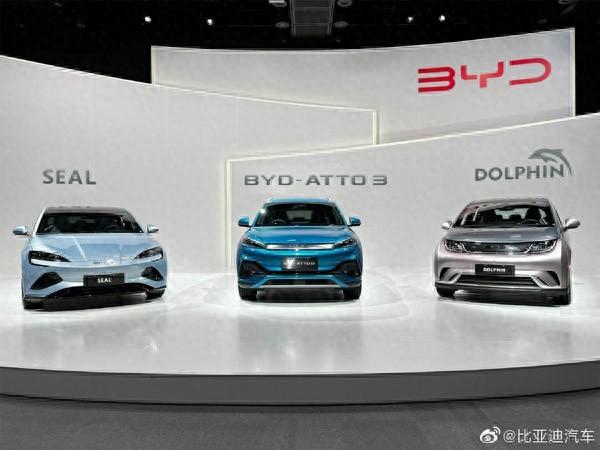
仅为丰田1/10!日本大幅削减比亚迪购车补贴
Guan Cha Zhe Wang· 2026-03-30 06:42
Core Viewpoint - The Japanese Ministry of Economy, Trade and Industry has significantly reduced the subsidy for BYD's electric vehicles, dropping it to 150,000 yen (approximately 936 USD or 6,486.15 RMB), which is more than a 50% cut from previous levels [1][5]. Group 1: Subsidy Changes - The revised subsidy scheme will take effect in April 2023, with the new rules applying to affected models starting January 2027 [1][5]. - Previously, BYD's subsidies ranged from 350,000 to 400,000 yen (approximately 1,510 to 1,730 RMB), but the new amount places BYD at the lowest subsidy level among Japanese car dealers [3][7]. - In contrast, Toyota's bZ4X, which uses domestically produced batteries, maintains the highest subsidy of 1,300,000 yen (approximately 59,200 RMB), about ten times that of BYD [3][7]. Group 2: Industry Reactions - BYD's Japan representative expressed disappointment over the subsidy cuts, indicating that it would negatively impact consumers [3][7]. - The Japanese government justified the subsidy reductions by stating that BYD's models received lower comprehensive evaluation scores [3][7]. - Concerns have been raised regarding the fairness of the evaluation process, with BYD's president claiming that the company received an unjust score despite its efforts in establishing fast-charging infrastructure [4][9]. Group 3: Broader Implications - Analysts suggest that the subsidy adjustments may be a result of the US-Japan tariff agreement, aimed at ensuring fair competition conditions [4][9]. - The Ministry of Economy, Trade and Industry acknowledged that the adjustments were based on the consensus reached in the US-Japan tariff agreement [4][9]. - There are allegations of preferential treatment towards certain automakers, as the evaluation criteria have not changed, raising questions about transparency [5][9].


日本车没打算退场
3 6 Ke· 2025-10-30 02:45
Core Viewpoint - The Japanese automotive industry is undergoing a significant transformation, driven by the rise of Chinese brands and the shift towards new mobility solutions, with the 2023 Tokyo Motor Show rebranded as the "Japan Mobility Show" reflecting this change [1][4][20]. Industry Transformation - The Japanese automotive sector is transitioning from traditional manufacturing to creating new lifestyles, with a focus on electric vehicles and mobility solutions [1][4]. - The Tokyo Motor Show has shifted its focus to local market needs, showcasing vehicles that may not resonate with international consumers but reflect Japanese consumer preferences [9][22]. Financial Performance - In the first fiscal quarter of 2025, major Japanese automakers reported varying degrees of profit decline, with Toyota's operating profit down 11% and net profit down 37%, while Honda and Nissan experienced both revenue and profit declines [13][15]. - Despite Toyota's strong revenue, the overall financial performance of Japanese automakers indicates a need for adaptation in a rapidly changing market [13][15]. Competitive Landscape - The presence of Chinese electric vehicle manufacturers, such as BYD, has intensified competition, prompting Japanese automakers to innovate and adapt their strategies [7][11]. - Japanese automakers are beginning to incorporate more local elements into their products to better compete in the Chinese market, indicating a shift in strategy [15][20]. Consumer Preferences - Japanese consumers exhibit a strong brand loyalty, which influences their purchasing decisions, contrasting with the more fickle nature of Chinese consumers [24][26]. - The success of Japanese brands in their domestic market is attributed to their deep-rooted brand recognition and customer service, which remains a competitive advantage [24][26]. Future Outlook - The year 2025 is seen as a pivotal point for Japanese automakers, as they must navigate the challenges posed by both domestic and international markets while embracing electric vehicle technology [20][22]. - Collaboration with Chinese partners may become essential for Japanese automakers to leverage local market insights and technological advancements [17][20].



一个普通人离汽车专业赛道有多远?
晚点LatePost· 2025-10-19 14:35
Core Viewpoint - The article discusses the evolution of automotive sports in China, highlighting the increasing accessibility for enthusiasts and the strategic investments made by Lynk & Co to integrate motorsport culture into their brand identity [3][4][5][6]. Group 1: Historical Context - The first notable automotive event in China occurred in 1985, with a very low car ownership rate, where only 2 cars existed for every 1200 people [3]. - Initially, automotive racing was dominated by global brands, with no Chinese representation, and the audience primarily viewed it as a spectacle rather than a sport [3][4]. - By 2016, the automotive sports culture in China had developed significantly, with Lynk & Co being established to capitalize on this growing interest [6]. Group 2: Lynk & Co's Motorsport Strategy - Lynk & Co has made substantial investments in motorsport, establishing international racing teams and participating in events like the WTCR, where they achieved significant success [8][10]. - The brand has focused on creating a community for automotive enthusiasts through initiatives like the Lynk & Co Performance Car Club, which offers driving experiences and training [12][14]. - The company aims to bridge the gap between amateur enthusiasts and professional racing through structured training programs and events [16][18]. Group 3: Technological Advancements - Lynk & Co leverages its racing experience to enhance the performance of its production vehicles, with models like the Lynk & Co 03 TCR benefiting from data and technology developed on the racetrack [19][20]. - The integration of racing technology into consumer vehicles is exemplified by the Lynk & Co 03 family, which has seen over 450,000 units sold since its launch [21][24]. Group 4: Long-term Vision - The company’s approach reflects a long-term commitment to building a motorsport culture in China, despite the immediate challenges and slower returns associated with such investments [25][26]. - Lynk & Co's strategy is influenced by the belief that strong automotive nations are also racing nations, as emphasized by the founder's passion for motorsport [28][31]. - The brand aims to create a unique identity through sustained investment in motorsport, which is expected to yield long-term brand loyalty and recognition [32][34].
