
BEV

Search documents
全球汽~1
2026-03-30 05:15
26 March 2026 Global Autos Global Autos: High oil prices reshape demand (over time) — Boost for Chinese EVs and Japanese hybrids, Headwinds for U.S. gas- guzzlers Masahiro Akita +81 3 6777 6998 masahiro.akita@bernsteinsg.com Venugopal Garre +65 6326 7643 venugopal.garre@bernsteinsg.com Stephen Reitman +44 20 7762 5535 stephen.reitman@bernsteinsg.com Harry Martin, CFA +44 20 7676 8965 harry.martin@bernsteinsg.com While rising oil prices cool appetite for cars overall ... Auto sales have typically exhibited a ...




未知机构:中信汽车欧洲油电价格差异更新260323VS1月德-20260323
未知机构· 2026-03-23 02:05
Summary of Key Points from the Conference Call Industry Overview - The report focuses on the automotive industry in Europe, particularly the impact of rising fuel prices on the cost competitiveness of electric vehicles (EVs) and plug-in hybrid electric vehicles (PHEVs) [1] Core Insights and Arguments - Fuel prices in Germany, Austria, Belgium, and Spain have increased significantly, with respective rises of 15.3%, 17.9%, 15.8%, and 19.5% as of January [1] - The oil-to-electricity cost ratio in Germany is projected to be 1.5 by March 2026, indicating that the operating cost of gasoline vehicles will be 50% higher than that of electric vehicles [1] - Other European countries show varying oil-to-electricity cost ratios, with Denmark at 2.7, Belgium at 2.1, and Austria at 1.8, suggesting a growing economic advantage for BEVs and PHEVs [1] - The increasing oil prices are expected to boost the sales of PHEVs, which are seen as more fuel-efficient alternatives [1] Additional Important Insights - The sustained high prices of crude oil are anticipated to enhance the competitiveness of both pure electric and PHEV models globally [1] - Chinese automotive companies are expected to leverage their technological advantages to increase their global market share [1] - Recommended companies for investment include BYD, Geely Automobile, Chery Automobile, Great Wall Motors, Xpeng Motors, and Leap Motor, indicating a focus on firms that are well-positioned to benefit from these market dynamics [1]



X @Tesla Owners Silicon Valley
Tesla Owners Silicon Valley· 2026-03-20 18:05
BREAKING: Tesla goes from last to first in the UK BEV market in just 23 days. 🇬🇧Now the top-selling brand, surpassing Ford. https://t.co/DQY674MwVd ...

X @Elon Musk
Elon Musk· 2026-03-20 12:22
RT Roland Pircher (@piloly)Tesla surpassed Ford in BEV sales in the UK and is now the top-selling BEV brand for the quarter. 🇬🇧From last place to first place within 23 days. https://t.co/QFoTomJlnx ...
X @Elon Musk
Elon Musk· 2026-03-12 09:51
RT Tesla Singapore (@tesla_singapore)The leading BEV-only brand in Singapore in 2026 (January to February 2026)📷 natfl.x https://t.co/DSWDrSvRK6 ...
花旗:料大宗商品价格上升利好基础物料 车企及二线电池商承压
智通财经网· 2026-02-09 03:58
Group 1 - Commodity prices have significantly increased and are stabilizing at higher levels, benefiting the basic materials sector, particularly aluminum, copper, and lithium suppliers [1] - Companies such as China Aluminum (02600), China Hongqiao (01378), and Zijin Mining (02899) are rated "Buy," along with pure copper firms like Minmetals Resources (01208), Luoyang Molybdenum (03993), and Jiangxi Copper (00358) [1] - Gold jewelry manufacturers will benefit from rising gold prices, while the increase in copper prices will expand the profit margins of copper-clad laminate (CCL) producers like Kingboard Laminates (01888) [1] Group 2 - Automotive manufacturers will face pressure due to rising material costs, with expected increases of approximately RMB 6,565 for BEVs and RMB 4,310 for PHEVs [1] - Smaller companies like Xpeng Motors (09868) and GAC Group (02238) are more vulnerable due to lower average selling prices, while larger firms like BYD (01211) and Geely (00175) can pass on over 50% of cost increases to upstream suppliers [1] - The battery industry’s second-tier companies are expected to face short-term pressure, while CATL (03750) has pricing power and is more defensive due to the expected resumption of its Jiangxi lithium mica mine in Q2 [2] Group 3 - Sales of energy storage systems are anticipated to experience margin compression, particularly in Q2, initiating a 90-day negative catalyst observation for the industry [2] - In the solar industry, component manufacturers are more susceptible to rising silver costs, which account for about 30% of their production costs, potentially compressing profit margins [2] - Among Chinese power equipment manufacturers, Pinggao Electric (600312.SH) is most sensitive to increases in copper and aluminum costs [2]
NOA将不再是BEV专属?
Zhong Guo Qi Che Bao Wang· 2026-01-23 06:53
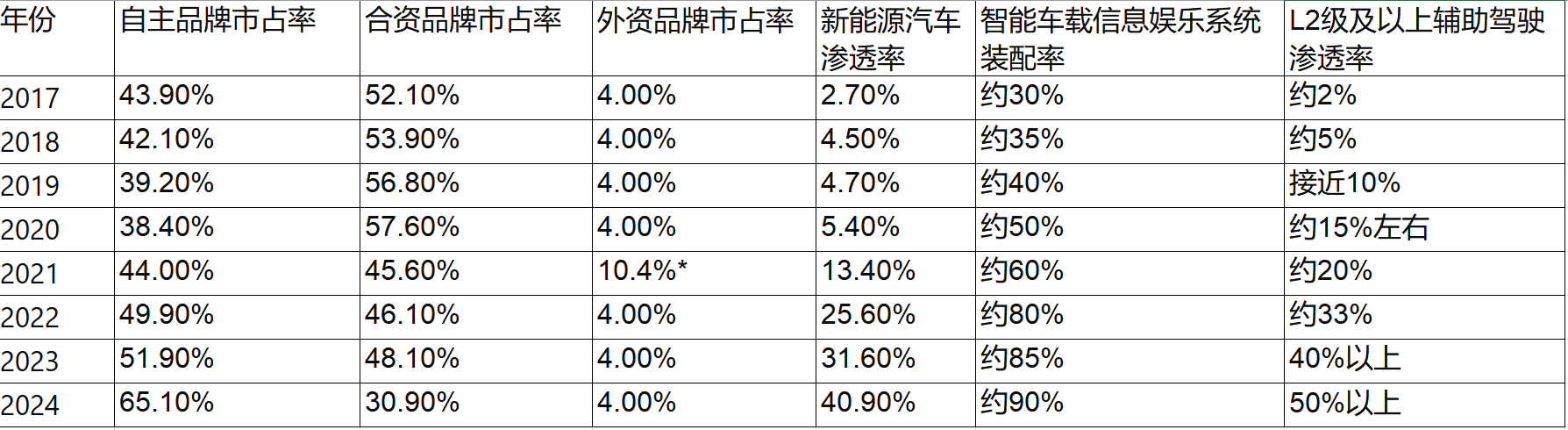
Core Insights - Goldman Sachs' report titled "2026 Outlook: Navigating Divergence" highlights 2026 as a pivotal year for the adoption of Battery Electric Vehicles (BEVs) and Navigation on Autopilot (NOA), suggesting that these technologies may develop into separate standards [1] - The report indicates a slowdown in BEV sales in Europe and the U.S., with consumers showing interest in advanced NOA but being cautious about purchasing BEVs [1][7] - In China, the integration of NOA in vehicles has led to a significant increase in sales, showcasing the advantages of BEVs in utilizing NOA, while traditional fuel vehicles are losing market share [1][5] Group 1: Market Trends - The market share of domestic brands in China has risen from 43.9% in 2017 to 51.9% in 2023, with the penetration rate of new energy vehicles increasing from 2.7% to 31.6% during the same period [3] - The report notes that the global electricity consumption of BEVs is expected to grow from 0.7% in 2024 to 2.5% by 2030, despite a stabilization in new BEV sales [7] - The competition landscape is shifting as NOA enhances the recognition and purchase intent for domestic brands, narrowing the gap with joint venture brands [5][6] Group 2: Technological Developments - Many automotive companies are focusing on applying NOA in hybrid models, although Goldman Sachs expresses skepticism about the medium-term effectiveness of this strategy [13] - The report lists various global automakers' progress in developing electronic and electrical architectures and end-to-end autonomous driving technologies, with companies like Tesla and BYD having completed their developments [14] - Traditional fuel vehicle manufacturers are exploring NOA applications in hybrid vehicles, but face challenges due to the inherent complexities of integrating NOA into their existing systems [15][16] Group 3: Future Outlook - The report suggests that by 2026, NOA may not solely rely on BEVs for growth, as traditional vehicles could also play a role in developing their own systems [19] - Concerns are raised about whether hybrid vehicles will be able to catch up with BEVs in terms of NOA capabilities, especially as BEVs are already testing Level 3 autonomous driving [19] - The future of NOA in traditional vehicles will depend on their ability to attract consumers and demonstrate value, as the market for traditional fuel vehicles remains substantial [19]

欧洲电动车销量月报(2025年12月):2025年欧洲9国BEV同比+31%,2026年多国补贴将延续或重启
Zhong Guo Neng Yuan Wang· 2026-01-23 00:53
Core Viewpoint - The report from Zhonghang Securities indicates a strong recovery in the sales of new energy vehicles (NEVs) in nine European countries, projecting sales of 2.885 million units in 2025, a year-on-year increase of 32.6%, with a penetration rate of 29.0%, up by 6.7 percentage points [1][2]. Summary by Sections Overall Market Outlook - In 2025, NEV sales in nine European countries are expected to reach 2.885 million units, representing a 32.6% increase year-on-year, with a penetration rate of 29.0%, up 6.7 percentage points [2]. - The sales of Battery Electric Vehicles (BEVs) are projected at 1.892 million units, a year-on-year increase of 30.6%, while Plug-in Hybrid Electric Vehicles (PHEVs) are expected to reach 992,000 units, up 36.6% year-on-year [2]. Country-Specific Insights - **Germany**: The BEV sales are projected at 545,000 units, a 43.2% increase year-on-year, and PHEV sales at 311,000 units, up 62.3%. Germany will restart EV subsidies in January 2026, including Chinese brands [2][3]. - **United Kingdom**: BEV sales are expected to be 473,000 units, a 23.9% increase, and PHEV sales at 225,000 units, up 34.7%. EV subsidies will resume from July 2025 [2][3]. - **France**: BEV sales are projected at 326,000 units, a 12.1% increase, with December sales reaching 42,000 units, up 37.7%. Subsidies will continue into 2026 with increased standards [3]. - **Italy**: BEV sales are expected to be 95,000 units, a 44.2% increase, and PHEV sales at 99,000 units, up 89.4%. EV subsidies will be effective from October 22, 2025 [3]. - **Spain**: BEV sales are projected at 102,000 units, a 77.2% increase, and PHEV sales at 124,000 units, up 111.7%. The MOVES III subsidy plan will drive sales [3]. Investment Recommendations - The report suggests that the EU's proposal to adjust the 2035 emission reduction targets will not hinder the long-term trend of electrification in Europe. Instead, it will promote sales of small electric vehicles [4]. - Investment recommendations include: - **Lithium Batteries**: Recommended companies include CATL, Yiwei Lithium Energy, and Xinwangda [4]. - **Lithium Materials**: Recommended companies include Hunan Youneng and Tianci Materials [4]. - **Lithium Battery Structural Components**: Recommended companies include Minglida and Minth Group [4]. - **Power/Drive Systems**: Recommended companies include Weimaisi and Fute Technology [4]. - **Automotive Safety Components**: Beneficiary companies include Zhongrong Electric and Zhejiang Rongtai [4]. - **Charging Stations and Modules**: Recommended companies include Youyou Green Energy and Tonghe Technology [4].






法国、意大利补贴落地后BEV高速增长 | 投研报告
Zhong Guo Neng Yuan Wang· 2025-12-26 02:05
Core Insights - The report highlights a sustained high growth in electric vehicle (EV) sales across nine European countries in November 2025, with a total of 281,000 new energy vehicles sold, representing a year-on-year increase of 38.6% and a penetration rate of 34.3%, up by 9.0 percentage points [1][2]. Group 1: Sales Performance - In November 2025, battery electric vehicle (BEV) sales reached 190,000 units, marking a year-on-year increase of 40.5%, while plug-in hybrid electric vehicle (PHEV) sales totaled 91,000 units, up by 35.0% [1][2]. - Germany's BEV sales were 56,000 units, a significant year-on-year increase of 58.5%, and PHEV sales were 32,000 units, up by 57.4% [2][3]. - France's BEV sales reached 34,000 units, reflecting a year-on-year growth of 47.5%, with a penetration rate of 25.8%, an increase of 8.4 percentage points [3]. Group 2: Market Drivers - The implementation of subsidies in France and Italy has led to a rapid increase in BEV sales, with Italy experiencing a remarkable year-on-year growth of 131.4% in BEV sales, totaling 15,000 units [3]. - The UK has restarted EV subsidies and is under pressure from zero-emission vehicle (ZEV) targets, which is expected to sustain growth in EV sales in the coming months [2][3]. - Norway is anticipated to see a surge in electric vehicle purchases as the year-end approaches, driven by consumer demand [1][2]. Group 3: Future Outlook - The European Commission's proposal to adjust the 2035 emission reduction targets is not expected to hinder the long-term trend of electrification in Europe; instead, it may promote sales of small electric vehicles [4]. - New generations of pure electric models are set to be launched by various automakers from late 2025 to the first half of 2026, which is likely to boost the European EV market [4]. Group 4: Investment Recommendations - Investment recommendations include companies involved in lithium batteries, lithium materials, battery structural components, power/electric drive systems, automotive safety components, and charging infrastructure [4]. - Specific companies recommended for investment in lithium batteries include CATL, EVE Energy, and Xinwangda, while lithium material companies include Hunan Youneng and Tianci Materials [4].



中国汽车流通协会乘用车市场信息联席分会场
中国汽车流通协会· 2025-09-18 03:55
Investment Rating - The report provides a positive investment rating for the industry, indicating a growth potential in the upcoming years [5][10][22]. Core Insights - The industry is projected to experience significant growth, with a compound annual growth rate (CAGR) of approximately 10.5% from 2021 to 2025 [8][18]. - The market for electric vehicles (EVs) is expected to expand, with battery electric vehicles (BEVs) showing a notable increase in sales, projected to reach 80.2 million units by 2025 [10][11]. - The report highlights a shift towards hybrid and electric vehicles, with plug-in hybrid electric vehicles (PHEVs) and extended-range electric vehicles (EREVs) also gaining traction [10][11]. Summary by Sections Market Overview - The total market size for the industry is expected to reach approximately $1,814 billion by 2025, with a growth rate of 12.4% [5][6]. - The market for SUVs and MPVs is projected to grow significantly, with SUVs expected to dominate the market share [5][6]. Sales Projections - Sales of BEVs are anticipated to grow by 35.9% year-on-year, reaching 80.2 million units by 2025 [10][11]. - The report indicates that the sales of EREVs will also see a substantial increase, with a projected growth of 21.0% [10][11]. Regional Insights - The Asia-Pacific region is expected to lead the market, accounting for over 50% of the total sales by 2025 [10][11]. - North America and Europe are also projected to show significant growth, driven by increasing consumer demand for electric vehicles [10][11]. Competitive Landscape - The report identifies key players in the industry, highlighting their market shares and growth strategies [10][11]. - It emphasizes the importance of innovation and technology in maintaining competitive advantages within the market [10][11].