
文化娱乐

Search documents
中证香港300通信服务指数报1613.72点,前十大权重包含快手-W等
Jin Rong Jie· 2025-08-14 07:43
Core Viewpoint - The China Securities Hong Kong 300 Communication Services Index has shown significant growth, with a 35.47% increase year-to-date, indicating a strong performance in the communication services sector in Hong Kong [1][2]. Group 1: Index Performance - The China Securities Hong Kong 300 Communication Services Index reported a value of 1613.72 points, with a monthly increase of 8.87% and a quarterly increase of 19.14% [1]. - The index is designed to reflect the overall performance of different industries in the Hong Kong market, based on the China Securities industry classification standards [1]. Group 2: Index Composition - The top ten holdings of the index include Tencent Holdings (15.4%), NetEase-S (14.3%), China Mobile (13.8%), Baidu Group-SW (13.04%), Kuaishou-W (11.78%), Cheung Kong (7.32%), China Telecom (4.52%), China Unicom (3.28%), Bilibili-W (2.89%), and China Tower (2.88%) [1]. - The index is fully composed of stocks listed on the Hong Kong Stock Exchange, with a 100% allocation [1]. Group 3: Industry Breakdown - The industry composition of the index shows that digital media accounts for 46.81%, telecommunications services for 30.27%, cultural entertainment for 16.22%, communication technology services for 2.88%, data centers for 1.97%, communication equipment for 1.06%, and marketing and advertising for 0.79% [2]. - The index samples are adjusted biannually, with changes implemented on the next trading day following the second Friday of June and December [2].





消费场景持续上新 夜间“黄金4小时”创造暑期经济新增量
Xin Hua She· 2025-08-14 03:36
Core Insights - The night economy is becoming a new engine for summer economic growth, with a focus on enhancing nighttime dining, cultural, and entertainment sectors [1] - There is a significant increase in the number of night economy-related businesses, with over 1.65 million existing nationwide, and 168,600 new registrations this year [1] - The nighttime opening rate of 5A scenic spots has risen from 23% in 2020 to 63% in 2024, indicating a growing trend in nighttime tourism [1] - Search and review volumes for "night tours" have surged by approximately 100% since July, with "scenic night tours" searches increasing nearly 230% month-over-month [1] - Experts suggest that developing the night economy is an effective way to promote the integration of commerce, tourism, culture, and sports [1] Industry Developments - Various regions are implementing policies to support the night economy, aiming to diversify nighttime consumption scenarios such as night markets and performances [1] - Nearly 40% of national-level tourist resorts have developed nighttime products, including events, indoor leisure, and outdoor entertainment [1] - There is a concerted effort to enhance the quality of nighttime products, expand the night economy space, and improve urban public service levels [1]
大麦娱乐(1060.HK):三丽鸥中国区业绩亮眼 看好阿里鱼业绩继续高增
Ge Long Hui· 2025-08-14 02:54
Core Viewpoint - The company is optimistic about the strong performance of its IP licensing business, highlighted by the successful collaboration between Alibaba Fish and Sanrio, with steady progress in online and offline activities [1] Group 1: Financial Performance - Sanrio's Q1 FY2026 (April to June 2025) report shows that the China region achieved revenue of 376 million RMB, a year-on-year increase of 120%, with licensing revenue reaching 251 million RMB, up 158% [1] Group 2: Future Projections - The company expects net profit attributable to shareholders for FY2026-2028 to be 964 million, 1.178 billion, and 1.409 billion RMB, representing year-on-year growth of 165.21%, 22.12%, and 19.62% respectively [1] - The closing price on August 11, 2025, corresponds to a PE ratio of 32.98, 27.00, and 22.58 for the respective years [1] Group 3: Strategic Partnerships - The strong performance of Sanrio in China and its emphasis on the significant contribution of China to its growth indicate a solid and positive partnership, which is expected to be based on long-term operations and steady development [1] - Marketing activities planned by Alibaba Fish for Sanrio are anticipated to provide experience for the development and operation of other collaborative IPs in China, potentially leading to more new IP signings [1]
夏日消费文化体验齐掀热浪
Sou Hu Cai Jing· 2025-08-14 02:48
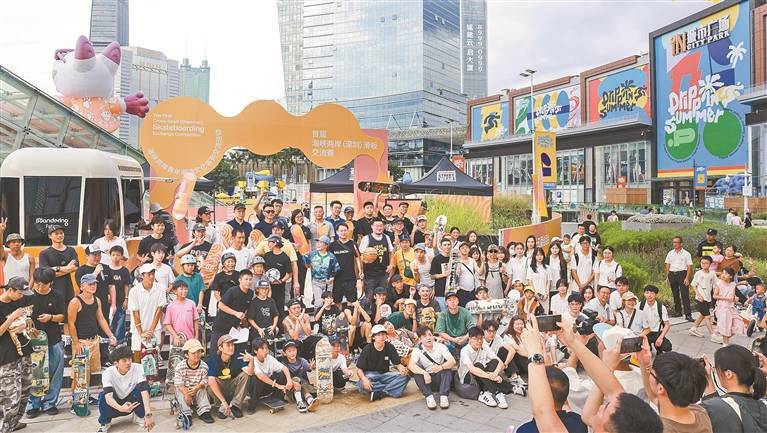
Core Viewpoint - The article highlights the vibrant summer activities in the Futian district of Shenzhen, focusing on the "Drippin, Summer" urban theme IP that combines cultural, commercial, and youthful elements to enhance consumer engagement and cultural experiences during the summer season [2] Group 1: Event Overview - The "Drippin, Summer" urban theme IP runs from July 18 to August 31, featuring three core elements: trendy sports, summer water activities, and live music [2] - Over 10 diverse interactive events are planned, including a summer water festival, water gun battles, outdoor music parties, tipsy night theater, and limited-time art installations [2] Group 2: Community and Brand Engagement - The initiative integrates local trendy sports communities and merchants to promote a trendy lifestyle, creating a space that combines culture, commerce, and youth [2] - The events aim to establish Shenzhen as a dual hub for summer consumption and cultural experiences [2]

21社论丨加大支持服务业发展力度,全方位扩大国内需求
21世纪经济报道· 2025-08-14 02:29
Core Viewpoint - The article discusses the implementation of a loan interest subsidy policy aimed at service industry operators, which is expected to stimulate consumption and support economic growth in China [1][2]. Group 1: Policy Overview - The loan interest subsidy policy targets service industry operators in eight key consumption sectors, including catering, health, elderly care, childcare, housekeeping, cultural entertainment, tourism, and sports [1]. - The subsidy rate is set at 1% for a duration of one year, with a maximum loan amount of 1 million yuan per entity and a maximum subsidy of 10,000 yuan per entity [1]. Group 2: Short-term Effects - The policy alleviates financial pressure on service industry operators, particularly small and micro enterprises, by reducing financing costs [2]. - It is expected to boost consumer confidence and market vitality, especially in the cultural tourism and sports sectors, by allowing operators to enhance service quality and improve the consumer environment [2]. - The policy plays a significant role in stabilizing and growing the employment market, as the service industry is a major employer [2]. Group 3: Long-term Effects - The policy promotes structural optimization and upgrading of the service industry by encouraging innovation in service consumption formats and expanding quality service supply [3]. - It enhances the innovation capability and competitiveness of the service industry, particularly in the health sector, by fostering developments in AI and precision health management services [3]. - The policy supports the cultivation of new growth points and business models in the service industry, such as the integration of tourism with accommodation and wellness services [3]. Group 4: Economic Impact - The policy facilitates a virtuous cycle in the macro economy by promoting a positive interaction between service consumption and investment [4]. - It contributes to industrial structure optimization and economic transformation, particularly in public services like health and elderly care, which also aids in regional coordination and urban-rural integration [5]. Group 5: Implementation Considerations - Effective implementation of the policy requires attention to precision and effectiveness, addressing the diverse needs of different service sectors, and ensuring long-term funding support [5]. - Local governments are encouraged to develop specific implementation guidelines to ensure the policy is effectively executed [5].

最高1万元!这些贷款贴息,怎么申领?
Jin Rong Shi Bao· 2025-08-14 02:27
Core Points - The Ministry of Finance and nine other departments have jointly issued the "Implementation Plan for Loan Interest Subsidy Policy for Service Industry Operating Entities" [1] - The policy is applicable for loan contracts signed between March 16, 2025, and December 31, 2025, with funds disbursed to operating entities [1] Group 1: Eligibility and Conditions - To qualify for the loan interest subsidy, the loan funds must be used for operational activities [2] - The eligible sectors include eight categories: catering, accommodation, health, elderly care, childcare, housekeeping, cultural entertainment, tourism, and sports [2] - The subsidy can last for up to one year, with the actual duration based on the loan term if it is less than one year [2] Group 2: Application Process - Borrowing entities do not need to apply for the subsidy; they only need to follow the standard loan process with banks [3] - Once the bank receives the subsidy funds from the government, it will return the corresponding subsidy amount to the operating entity for interest already paid [3] Group 3: Subsidy Details - The subsidy rate is set at 1%, with a maximum loan amount of 1 million yuan per entity, allowing for a maximum subsidy of 10,000 yuan [4] - The example provided illustrates that a restaurant obtaining a 900,000 yuan loan can receive a total subsidy of 9,000 yuan, with specific disbursement timelines [4] Group 4: Participating Banks - A total of 21 national banks are designated as the lending institutions for this subsidy program [5] - The list includes major banks such as the Agricultural Bank of China, Industrial and Commercial Bank of China, and China Construction Bank among others [5]
《服务业经营主体贷款贴息政策实施方案》热点问题解答
Jin Rong Shi Bao· 2025-08-14 01:35
什么时间能享受到政策? 在2025年3月16日《提振消费专项行动方案》公开时至2025年12月31日期间签订贷款合同且相关贷 款资金发放至经营主体的,按照贷款本金对经营主体进行贴息。 需要符合哪些条件才能申请? 服务业经营主体贷款贴息的条件,核心是要将贷款资金用于经营活动。 对于餐饮住宿、健康、养老、托育、家政、文化娱乐、旅游、体育八类消费领域服务业经营主体而 言,从今年3月16日到年底的时间里,只要与银行签订了贷款合同,而且已经收到贷款资金的这些经营 主体,都可以享受最长1年的贴息,贷款期限不足1年的,按照实际期限来进行贴息。 经办银行收到财政贴息资金以后,对经营主体已经支付的利息,一次性向经营主体返还对应的贴息 资金。 对于经营主体未来需支付的利息,贷款经办银行在后续按期收取时,直接扣除对应的贴息资金。 最高能享受多少贴息? 贴息比例为1个百分点,可以贴息1年,上述八类主要消费领域的服务业经营主体单户享受贴息的贷 款规模最高是100万元,单户享受贴息最高1万元。 同一笔贷款不得重复享受中央财政其他贴息政策;已享受地方财政相关贴息政策的,此次贴息不得 超出扣除已有贴息后的实际利率水平。 贷款经办银行有哪些? ...
加大服务消费领域信贷投放力度 多部门详解贷款贴息政策
Zhong Guo Zheng Quan Bao· 2025-08-14 00:38
Core Viewpoint - The introduction of personal consumption loan interest subsidy policies and service industry loan interest subsidy policies aims to stimulate consumer demand and support service sector financing, reflecting a shift in fiscal and financial policy focus towards improving people's livelihoods and promoting consumption [1][4]. Group 1: Personal Consumption Loan Subsidy Policy - The subsidy is available for individuals with genuine consumption behavior, applicable to both small daily expenses and larger purchases such as vehicles, home renovations, and electronics [2]. - Each individual can receive a maximum subsidy of 500 yuan per loan, and multiple consumptions can be combined for additional subsidies [2]. - The application process is streamlined, with the burden on borrowers minimized as the loan processing institutions handle the necessary calculations and applications for subsidy funds [3]. Group 2: Service Industry Loan Subsidy Policy - The subsidy is targeted at service industry entities, particularly in sectors like dining, health, and tourism, provided that the loan funds are used for operational activities [2]. - From March 16 to the end of the year, eligible businesses can receive subsidies for up to one year, with the duration adjusted based on the actual loan term [2]. - Financial institutions are encouraged to increase credit support for key service sectors, enhancing the development of related industries and expanding high-quality consumption supply [4]. Group 3: Implementation and Oversight - The management of subsidy funds will adhere to principles of safety and designated use, with central and local financial departments responsible for auditing and disbursing funds [5]. - A comprehensive oversight mechanism will be established to ensure compliance and effective use of funds, with regular checks on loan processing institutions [5][6]. - Financial regulatory bodies will guide banks in managing loans and preventing misuse of subsidy funds, ensuring that the benefits reach eligible businesses [6].
消费贷款领域又一“国补”落地 以“真金白银”助力居民更好消费
Zhong Guo Qing Nian Bao· 2025-08-13 23:57
Core Points - The Chinese government has introduced a new subsidy policy for personal consumption loans and loans to service industry operators, marking the first time such a policy has been implemented at the central level [1][2] - The subsidy rate for both policies is set at 1 percentage point, with a one-year implementation period [1][2] - The policies aim to support genuine consumer borrowing needs and improve service supply capabilities in key consumption sectors [2][3] Summary by Category Personal Consumption Loans - The subsidy applies to personal consumption loans used for specific categories, including daily expenses under 50,000 yuan and larger purchases like home appliances and vehicles [1][2] - Borrowers can receive a maximum subsidy of 1,000 yuan for loans under 50,000 yuan and up to 3,000 yuan for loans above that amount when combining multiple loans [2] - The core requirement for receiving the subsidy is that the loan must be used for actual consumption [2] Service Industry Loans - The subsidy for service industry loans focuses on eight key sectors, including dining, health, and tourism, and requires that the loan funds be used for legitimate business activities [1][3] - The policy aims to enhance consumption infrastructure and service capabilities rather than for investment or speculative activities [2][3] - The Ministry of Commerce will oversee the implementation and ensure that the benefits reach eligible service operators [3]
多部门详解贷款贴息政策 加大服务消费领域 信贷投放力度
Zhong Guo Zheng Quan Bao· 2025-08-13 23:19
Core Viewpoint - The introduction of personal consumption loan interest subsidy policies and service industry loan interest subsidy policies aims to stimulate consumer demand and support service sector financing, reflecting a shift in fiscal and financial policy focus towards improving people's livelihoods and promoting consumption [1][4]. Group 1: Personal Consumption Loan Subsidy Policy - The subsidy is available for individuals with genuine consumption behavior, applicable to both small daily expenses and larger purchases such as vehicles, home renovations, and electronics [2]. - Each individual can receive a maximum subsidy of 500 yuan per loan, and multiple consumptions can be combined for additional subsidies [2]. - The application process is streamlined, with the burden on borrowers minimized as the loan processing institutions handle the subsidy calculations and applications [3]. Group 2: Service Industry Loan Subsidy Policy - The subsidy for service industry entities is contingent on using loan funds for operational activities, specifically targeting eight sectors including hospitality, healthcare, and entertainment [2]. - From March 16 to the end of the year, eligible businesses that have signed loan contracts and received funds can benefit from a subsidy for up to one year [2]. - Financial institutions are encouraged to increase credit support for key service sectors, enhancing the development of related industries and expanding high-quality consumption supply [4]. Group 3: Implementation and Oversight - The management of subsidy funds will adhere to principles of safety and designated use, with central and local financial departments responsible for auditing and disbursing funds [5]. - A comprehensive oversight mechanism will be established to ensure compliance and effective use of funds, with multiple departments involved in monitoring the implementation of the policies [6]. - Financial regulatory authorities will guide banks in managing loans and preventing misuse of subsidy funds, ensuring that the benefits reach eligible businesses [6].