
私募股权投资

Search documents
信宸资本完成新一期人民币并购基金募集 规模超45亿元
Zheng Quan Shi Bao Wang· 2025-08-06 01:16
Group 1 - The core viewpoint of the article is that Xincheng Capital, a private equity investment platform under CITIC Capital, has successfully raised a new RMB merger and acquisition fund exceeding 4.5 billion yuan [1] - The newly raised fund will work in conjunction with the previously raised Chuanxi Gongying Fund, which also has a scale of 4.5 billion yuan, continuing the investment strategy focused on controlling mergers and acquisitions [1] - Xincheng Capital will continue to pay attention to investment opportunities in high-growth companies within the ecosystem of its invested enterprises [1]
英国并购战愈演愈烈,思百吉同意KKK更高报价
Hua Er Jie Jian Wen· 2025-08-05 09:21
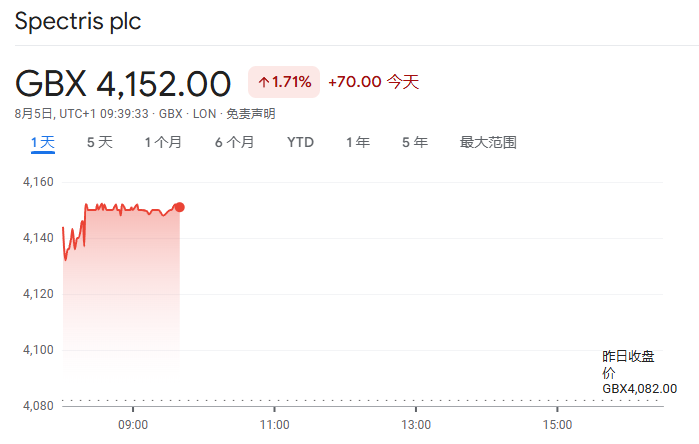
Group 1 - KKR is acquiring UK instrument giant Spectris for £4.2 billion, with a total enterprise value of £4.8 billion (approximately $6.4 billion) [1] - Spectris accepted KKR's offer of £41.75 per share, withdrawing support for Advent's previous offer of £41 per share [1] - Following the announcement, Spectris's stock rose by 1.7% in early trading [1] Group 2 - The acquisition battle for Spectris reflects a broader trend of increasing merger and acquisition activity in the European market, signaling positive changes [3] - The competition between private equity firms for Spectris has been ongoing for over a month, starting with Advent's initial bid in June [4] - The interest in high-quality UK assets is driven by relatively low valuation levels and a stable market environment, attracting international buyers [4] Group 3 - Despite challenges from U.S. tariff policies earlier in the year, the pace of acquisitions for UK companies has noticeably accelerated [4] - According to Dealogic, the global M&A market has rebounded strongly, with total transaction value reaching $2.6 trillion in the first seven months of the year, the highest since the peak during the pandemic in 2021 [4]


我,42岁,在一级市场轮回
Hu Xiu· 2025-08-05 06:05
Core Insights - The article discusses the career journey of a former investment professional who transitioned from a large investment firm to a full-time financial advisor (FA) after experiencing challenges in the investment landscape [1][2][3]. Group 1: Career Transition - The individual has over ten years of experience in various roles, including research and development, marketing, and investment, which culminated in a shift to a full-time FA role due to a lack of suitable opportunities in traditional investment firms [2][4]. - The decision to become an FA was influenced by the current contraction in the investment sector, making it difficult to find appropriate positions that matched the individual's experience and expectations [3][4]. Group 2: Investment Philosophy - The individual expresses a strong preference for engaging with founders and leveraging industry knowledge to support startups, emphasizing the importance of meaningful work over mere financial gain [5][6]. - Despite the challenges faced in the investment market, the individual believes that opportunities still exist, and the key is to be prepared to seize them when they arise [6][11]. Group 3: Current Activities and Success - In the current FA role, the individual has successfully completed one project and anticipates two more deals by the end of the year, indicating a positive start in this new phase of their career [8]. - The individual has built a proprietary database of information from industry contacts, which aids in identifying investment opportunities that align with current market demands [9][10]. Group 4: Advice for Industry Peers - The individual advises others in the investment sector to maintain a broader perspective and continuously seek knowledge and insights, as the market operates in cycles and opportunities will eventually present themselves [11].
湖北省绿新领航股权投资基金完成备案 | 企查查LP周报(07.28-08.03)
Sou Hu Cai Jing· 2025-08-04 07:45
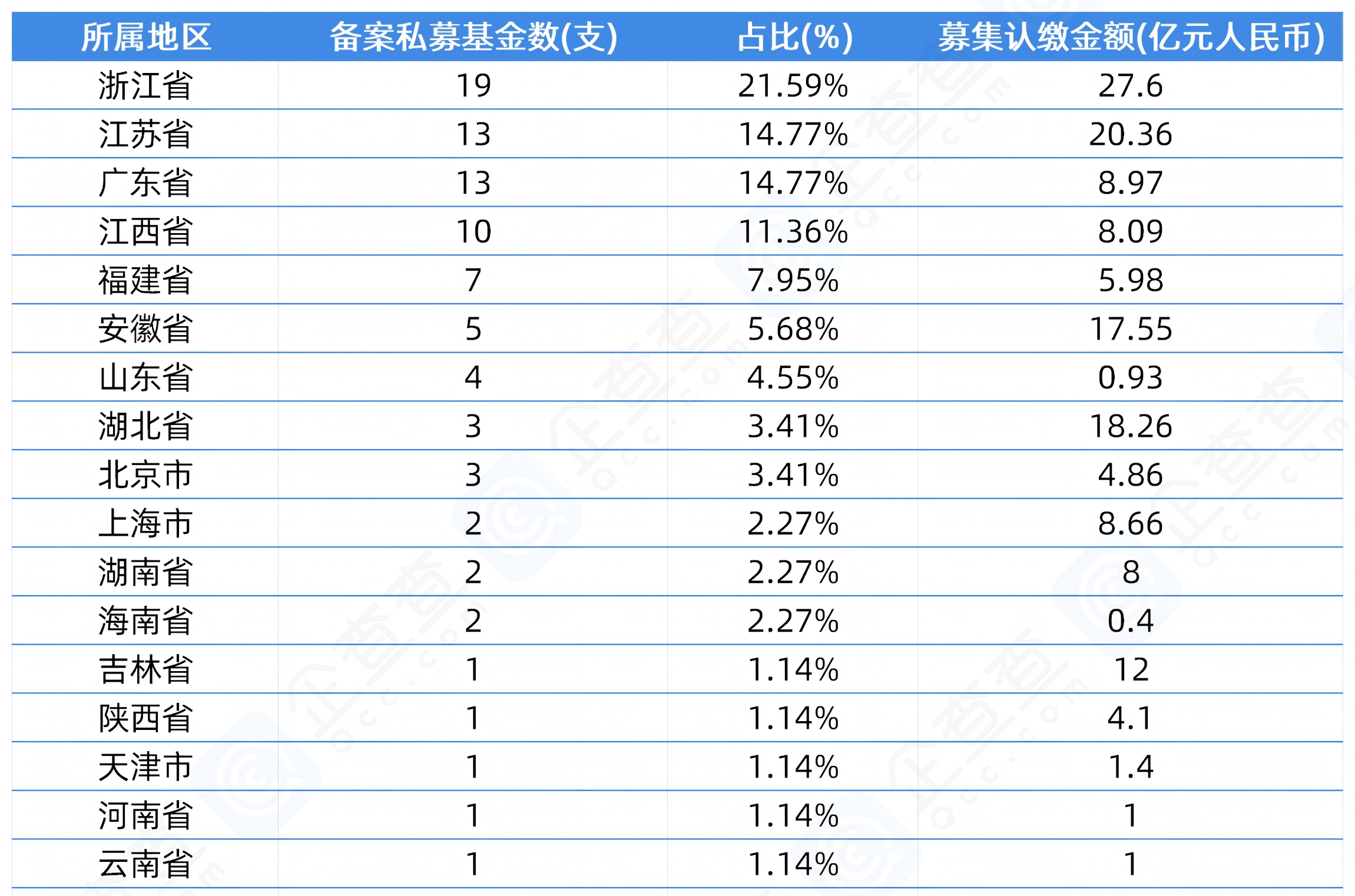
Core Insights - A total of 88 new private equity and venture capital funds were registered in China, with a cumulative subscription amount of 14.92 billion RMB [1] - The highest number of new funds was registered in Zhejiang Province, accounting for 21.59% of the total, while the highest cumulative fundraising amounts were from Zhejiang and Jiangsu provinces, at 18.50% and 13.65% respectively [1] - The largest fund, the Hubei Green New Pioneer Equity Investment Fund, has a scale of 1.5 billion RMB and focuses on ecological protection and high-quality development in the Yangtze River Economic Belt [1] Fund Registration Overview - New registered funds by region: - Zhejiang Province: 19 funds - Jiangsu Province: 13 funds - Guangdong Province: 13 funds - Other provinces include Jiangxi (10), Fujian (7), and others [3] - Cumulative subscription amounts by region show that Zhejiang and Jiangsu provinces lead in total amounts raised [4] Limited Partner (LP) Contributions - A total of 171 LP investment firms were involved in the new funds, with the highest contributions from government-backed funds, totaling 10.01 billion RMB, which is 76.29% of the total [4] - The distribution of LP contributions by region indicates that Zhejiang and Jiangsu provinces are the most significant contributors, with 16.96% and 12.87% respectively [4][8]
360亿,KKR又买了
投资界· 2025-08-04 07:28
Core Viewpoint - KKR has announced a strategic partnership with Harley-Davidson's financial services company HDFS, with a transaction value of $5 billion (approximately 36 billion RMB) [4][5]. Group 1: KKR and Harley-Davidson - KKR has a historical connection with Harley-Davidson, having previously shown interest in acquiring the company about a decade ago [4]. - The acquisition of HDFS is part of Harley-Davidson's strategy to divest non-core assets amid declining sales and market challenges, particularly among younger consumers [9][10]. - Harley-Davidson's overall revenue decreased by 19% to $130.7 million in Q2, with motorcycle shipments down 28% year-over-year [9][10]. Group 2: Financial Performance and Market Context - KKR's management fee income grew by 17% to $887 million in the last quarter, with adjusted net income reaching $1.1 billion, slightly exceeding market expectations [11]. - KKR raised $28 billion (over 200 billion RMB) in the last three months, increasing its total assets under management to $686 billion, aiming for $1 trillion by 2029 [11][12]. - KKR's private equity portfolio shows that about 60% of its investments are valued at over 1.5 times their cost, indicating strong performance in its investment strategy [12].


谁又募到钱了
投资界· 2025-08-03 07:38
Fundraising Activities - Zhongke Chuangxing announced the first closing of its fund with a scale of 2.617 billion yuan, focusing on hard technology projects in various industries including artificial intelligence [5] - KKR successfully raised 28 billion USD, increasing its assets under management (AUM) by 14% to 686 billion USD, with a target of reaching 1 trillion USD AUM by 2029 [9] - China Chengtong signed a framework cooperation agreement with Jiangsu Province to establish a 10 billion yuan fund, targeting strategic emerging industries [11] - Coller Capital announced a record fundraising of 6.8 billion USD for its second credit opportunities fund, showcasing its strong position in the private secondary market [14] - BlueFive Capital completed fundraising for its 2 billion USD private equity fund, focusing on sectors like healthcare and technology in the GCC region [16] - Changjiang Industrial Group established a 5 billion yuan fund focusing on specialized vehicles and high-end manufacturing [18] - Suzhou Taikang Investment Fund was registered with a total contribution of 3.1 billion yuan, marking the establishment of a new RMB fund in Suzhou [20] - Yuanhe Puhua launched its first private equity fund in Shanghai, focusing on the integrated circuit industry [22][23] - Dongfang Jiafu established a 1.6 billion yuan fund in Ordos, focusing on advanced manufacturing and information technology [25] - Kewai Fund announced the establishment of a 1 billion yuan smart energy fund, supported by Total Energy [27] Investment Strategies - KKR's new fundraising efforts are part of a broader trend of significant dollar fundraising among VC firms, indicating a shift in the domestic dollar fund ecosystem [7] - Blackstone announced an investment of over 25 billion USD in Pennsylvania's digital and energy infrastructure, aiming to stimulate an additional 60 billion USD in investments [13] - The establishment of AIC pilot funds by Shenzhen Investment Control Capital aims to connect financial resources with the real economy, supporting high-quality development in Shenzhen [34] Sector Focus - The funds established by various companies are primarily targeting sectors such as artificial intelligence, advanced manufacturing, new materials, and digital infrastructure, reflecting a strategic focus on innovation and technology [5][11][25][34] - The collaboration between Renault and Chinese private equity firms aims to explore investment opportunities in the electric vehicle sector, emphasizing technology innovation and industry capital empowerment [43]


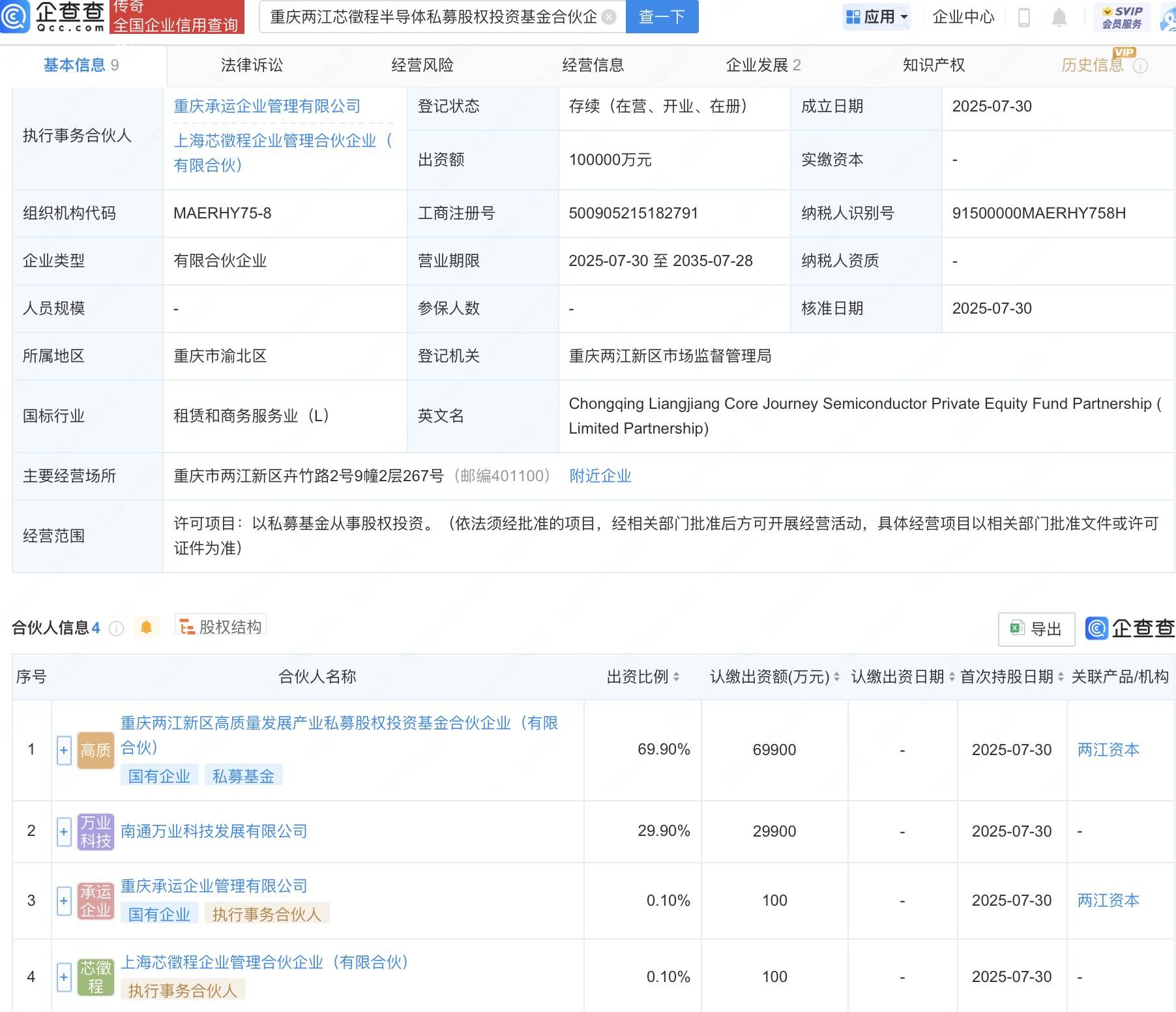
重庆两江芯徵程半导体私募股权投资基金成立
Sou Hu Cai Jing· 2025-08-01 06:58
Group 1 - Chongqing Liangjiang Xincheng Semiconductor Private Equity Investment Fund Partnership (Limited Partnership) has been established with a capital contribution of 1 billion RMB, focusing on equity investment through private equity funds [1][2] - The fund is co-invested by Chongqing Liangjiang New Area High-Quality Development Industry Private Equity Investment Fund Partnership (Limited Partnership) and others [1][2] - The fund's business scope includes engaging in equity investment as a private equity fund, subject to relevant approvals [2] Group 2 - The fund is registered in Yubei District, Chongqing, with a business duration from July 30, 2025, to January 2035 [2] - The main partners include Chongqing Liangjiang New Area High-Quality Development Industry Private Equity Investment Fund Partnership (69.90% stake), Nantong Wanye Technology Development Co., Ltd. (29.90% stake), and Chongqing Chengyun Enterprise Management Co., Ltd. (0.10% stake) [2] - The fund is classified under the national standard industry of leasing and business services [2]
梦网云科技集团股份有限公司关于与专业投资机构共同投资的公告
Zhong Guo Zheng Quan Bao - Zhong Zheng Wang· 2025-07-31 23:13
Overview - The company is entering into a partnership to establish a private equity investment fund aimed at diversifying its investment channels and obtaining long-term returns [3][47]. Investment Details - The company, as a limited partner, will contribute RMB 50 million, representing a 3.2468% stake in the total committed capital of RMB 1.54 billion from all partners [3][33]. - The target fundraising size for the fund is RMB 2 billion, with the total committed capital currently at RMB 1.54 billion [3][33]. - The fund will focus on equity investments in sectors such as industrial mother machines, laser and additive manufacturing, precision instruments, and rail transportation [43]. Partnership Structure - The fund is managed by Shenzhen High-tech Investment Talent Equity Investment Fund Management Co., Ltd., which will provide daily operations and investment management services [27][37]. - The partnership includes various limited partners, such as Shenzhen Guidance Fund Investment Co., Ltd. and Shenzhen Bao'an District Industrial Investment Guidance Fund Co., Ltd., among others [9][11][13]. Regulatory Compliance - The investment does not constitute a related party transaction or a major asset restructuring, thus does not require board or shareholder approval [2][4]. - The fund has completed the necessary registration and is compliant with relevant regulations [27][28]. Strategic Goals - The investment aims to leverage the management and resource advantages of the fund manager to identify promising projects, thereby enhancing the company's capital operation efficiency and competitive strength [47]. - The investment is expected to support the company's strategic layout without affecting its normal production and operational activities [47][48].
梦网科技: 关于与专业投资机构共同投资的公告
Zheng Quan Zhi Xing· 2025-07-31 16:27
证券代码:002123 证券简称:梦网科技 公告编号:2025-066 梦网云科技集团股份有限公司 本公司及董事会全体成员保证信息披露内容的真实、准确和完整,没有 虚假记载、误导性陈述或重大遗漏。 特别提示: 交易所上市公司自律监管指引第7号——交易与关联交易》《梦网云科技集团 股份有限公司公司章程》(以下简称"《公司章程》")等相关规定,本次共 同投资无需提交公司董事会、股东会审议,不构成同业竞争和关联交易,亦不 构成《上市公司重大资产重组管理办法》规定的重大资产重组。 续。本次合作各方共同出资发起设立产业投资基金,投资周期较长,在运作过 程中可能受宏观经济、行业周期、投资标的、交易方案等多种因素的影响而致 使产业投资基金总体收益水平存在不确定的风险。敬请广大投资者审慎进行投 资决策,注意投资风险。 一、本次对外投资概述 为了拓展梦网云科技集团股份有限公司(以下简称"公司")多元化投资渠 道,为公司获取长期投资回报,公司(以下简称"公司")作为有限合伙人与普 通合伙人深圳市高新投人才股权投资基金管理有限公司,及其他有限合伙人深 圳市引导基金投资有限公司、深圳市宝安区产业投资引导基金有限公司、深圳 市汇通金控 ...

KKR集团新募资280亿美元
Xin Lang Cai Jing· 2025-07-31 14:34
Core Insights - KKR Group reported a stable investment income of $24 billion, despite a slowdown in asset sales [1] - The company raised $28 billion in new capital, contributing to a 14% year-over-year increase in assets under management (AUM) to $686 billion [1] - KKR has $115 billion in available capital and benefits from stable contributions from its Global Atlantic insurance business, positioning the firm towards its $1 trillion AUM target by 2029 [1]