文旅产业

Search documents
谊砾控股股东将股票由大湾区深港证券转入星展银行香港 转仓市值336.72万港元
Zhi Tong Cai Jing· 2025-12-24 00:16
Group 1 - The core point of the article is that Yili Holdings (00076) has transferred shares worth HKD 3.3672 million from Greater Bay Area Shen Kong Securities to DBS Bank Hong Kong, representing 5.49% of the total shares [1] - Yili Holdings announced a three-year cooperation management contract with Qingdao Tiantai Cultural Tourism Industry Group, effective from December 23, 2025 [1] - The contract involves collaboration to expand Qingdao's golf courses and natural hot spring hotels, incorporating artificial intelligence and health concepts into the business [1] Group 2 - Qingdao Tiantai will pay Yili Holdings a management fee of RMB 1 million, with 10% due within 30 days of signing and the remaining 90% by December 31, 2026 [1] - If Qingdao Tiantai achieves a profit of RMB 50 million by 2026, Yili Holdings will receive an additional 10% share of the profits, to be paid by January 31, 2027 [1] - As of November 30, 2025, Qingdao Tiantai reported a revenue of RMB 65 million and a profit of RMB 25 million for the preceding 11 months [1]
“祥源系”爆雷后续:浙金中心董事长丁建林等18人已被刑拘
Mei Ri Jing Ji Xin Wen· 2025-12-23 21:13
Core Viewpoint - Zhejiang Zhejin Asset Operation Co., Ltd. and its actual controller Yu Faxiang are under criminal investigation by the Shaoxing Public Security Bureau, raising concerns about the financial products linked to the company and its affiliates [1][5][6]. Group 1: Criminal Investigation and Measures - Chairman Ding Jianlin of Zhejin Center has been criminally detained since December 12, 2023, along with 18 other individuals related to the case [1][5][6]. - A provincial task force has been established, involving key departments such as the Zhejiang Provincial Financial Office and the Public Security Bureau, to handle asset disposal and criminal investigation [6]. - Judicial measures include freezing 6.12 billion shares of Xiangyuan Cultural Tourism and 2.9 billion shares of Jiaojian Co., along with controlling assets worth approximately 89.37 million yuan [6]. Group 2: Financial Products and Impact - Since November 28, 2023, multiple financial asset income products issued by Zhejin Center have faced maturity issues, with over 200 products involved and a total transaction scale exceeding 10 billion yuan [3]. - The underlying assets of these products are linked to receivables from various real estate projects under the Xiangyuan Group [3]. Group 3: Company Operations and Governance - Jiaojian Co. announced that it has not received any requests for investigation from authorities and that its operations remain normal despite the ongoing situation [3]. - Yu Honghua, a board member related to Yu Faxiang, has resigned from her position for personal reasons, which may indicate potential governance challenges within the company [4].


四市文旅IP、优质项目亮相
Xin Lang Cai Jing· 2025-12-23 20:11
全方位呈现文旅产业 多元业态与广阔前景 转自:成都日报锦观 成都都市圈文旅交流对接会在上海启幕 四市文旅IP、优质项目亮相 12月23日,成都都市圈文化旅游交流对接会在上海南翔镇成功举办。相关负责人表示,此次活动以"携 手都市圈 共享新机遇"为主题,全面展示成都都市圈文旅资源禀赋、产业政策与投资机遇,搭建成都都 市圈与长三角地区文旅产业深度合作桥梁,实现"资源互补、客源互送、市场共享"的共赢格局。 记者手记 主动"走出去" 撬动消费大市场 在上海南翔镇,成都都市圈文化旅游交流对接会吸引了长三角文旅行业的广泛关注。成都本地文旅产业 发展的资源禀赋、产业政策和营商环境让与会者产生了强烈兴趣。这不仅是区域合作的缩影,更是成都 文旅雄心勃勃走出去的一个注脚。从"熊猫IP"的软实力到"数字文创"的新引擎,成都正打出一套全球推 广组合拳,以主动"走出去"的姿态,强力撬动千亿级消费大市场。 "目前,成都都市圈12个文旅产业主导的产业园区已集聚成势,全国重要的文化创意中心和数字文创产 业集聚地正在加快建设,文旅产业正由'流量集聚'逐步向'价值创造'转变。"相关负责人表示,作为国家 层面批复的第三个都市圈、中西部首个国家级都市 ...
世界山水都市文旅产业联盟在重庆成立
Xin Lang Cai Jing· 2025-12-23 14:59
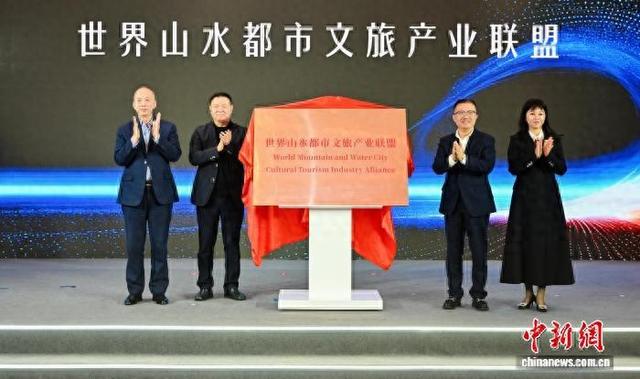
会上还发布了"两江四岸"山水都市大景区规划、长安启源·"重庆之夜"2026国际光影文化旅游季活动、 重旅商管品牌、联盟核心宣传推广平台,并启动重点项目国货精品贸易中心基地,展示"文旅+国货+直 播"的创新融合模式。 此外,来自江西、湖北、贵州、宁夏等7个省级文旅单位及生态伙伴举行了省级旅游集团跨区域伙伴签 约仪式;中国电信重庆分公司等7家数字技术及服务型企业举行了"新智共生"产业赋能签约仪式。(完) 12月23 日,世界山水都市文旅产业联盟在重庆成立。重庆文旅集团 供图 联盟采用"会员共治、机遇共享"的开放式架构,设若干专业领域委员会。在联动宣传上,联盟将整合成 员单位的分散声量,构筑强大的"联盟传播共同体";在资源统筹上,联盟将扮演"超级连接器"的角色, 全力打破信息孤岛与资源壁垒;在项目共建上,联盟鼓励成员基于各自优势,以灵活的方式组建"项目 联合体",共同开拓市场、打造标杆;在机遇共享上,联盟将共同研判产业趋势,优先获取政策讯息, 集体对接前沿技术,并携手开拓海外市场。 重庆市文化旅游委党委委员、副主任朱茂在致辞中表示,由重庆文旅集团发起成立的世界山水都市文旅 产业联盟,是重庆市国企深化改革、担当使命的 ...
曲江文旅跌停,上榜营业部合计净卖出3416.61万元
Zheng Quan Shi Bao Wang· 2025-12-23 11:57
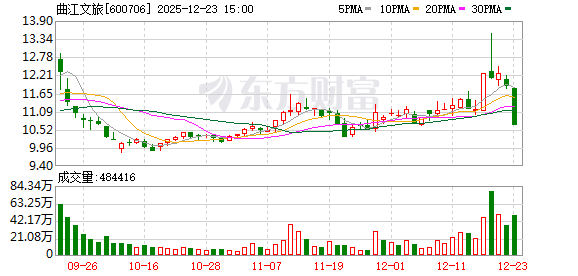
曲江文旅(600706)今日跌停,全天换手率19.07%,成交额5.33亿元,振幅11.06%。龙虎榜数据显示,营 业部席位合计净卖出3416.61万元。 曲江文旅12月23日交易公开信息 | 买/ 卖 | 会员营业部名称 | 买入金额(万元) | 卖出金额(万元) | | --- | --- | --- | --- | | 买一 | 国泰海通证券股份有限公司总部 | 1552.74 | | | 买二 | 方正证券股份有限公司杭州白石巷证券营业部 | 964.90 | | | 买三 | 东方财富证券股份有限公司拉萨东环路第二证券营业 | 706.12 | | | | 部 | | | | 买四 | 东方财富证券股份有限公司拉萨团结路第二证券营业 | 586.72 | | | | 部 | | | | 买五 | 湘财证券股份有限公司北京朝外大街证券营业部 | 550.63 | | | 卖一 | 瑞银证券有限责任公司上海花园石桥路证券营业部 | | 2202.75 | | 卖二 | 国泰海通证券股份有限公司总部 | | 1683.43 | | | | | 1574.27 | | 卖三 | 中国国际金融股份有限公司上海 ...

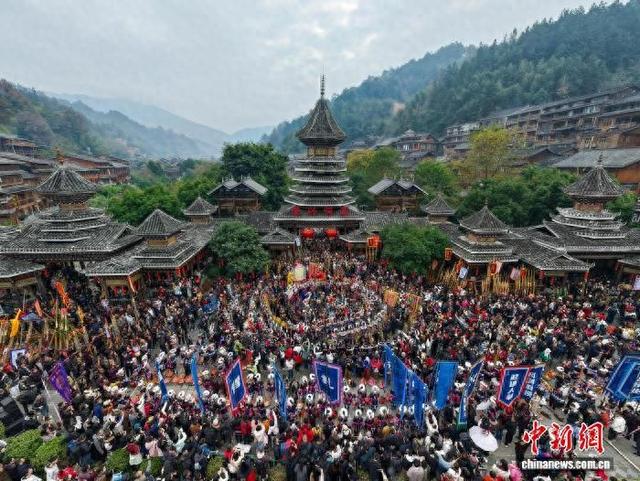
这里天天在过节?探秘“百节之乡”贵州黔东南州
Xin Lang Cai Jing· 2025-12-23 10:48
Core Viewpoint - The article highlights the vibrant festival culture in the Qiandongnan Miao and Dong Autonomous Prefecture of Guizhou, particularly in Liping County, where numerous ethnic celebrations create a lively atmosphere that attracts both locals and tourists [1][3]. Cultural Significance - Qiandongnan is home to a rich diversity of ethnic groups, including Miao and Dong, with over 390 annual festivals, of which more than 120 are large-scale events, earning it the title "Hometown of Hundreds of Festivals" [3][5]. - Festivals are deeply intertwined with agricultural practices, social interactions, and cultural rituals, reflecting the community's values of unity, hard work, and respect for nature [6][5]. Economic Impact - The festivals significantly boost local tourism and economic development, with the 2025 Sister Festival in Taijiang attracting 496,100 visitors and generating a total tourism revenue of 517 million yuan [8]. - The integration of traditional festivals with modern tourism strategies creates a positive cycle of "promoting travel through festivals and enhancing festivals through travel" [8]. Youth Engagement - There is a growing involvement of young people in cultural celebrations, with many actively participating in festival preparations and using social media to promote their heritage [8]. - The engagement of the younger generation in showcasing their culture contributes to the preservation and revitalization of traditional practices [8].
600亿帝国、三家上市公司、顶级商学院朋友圈,没能救得了他
Sou Hu Cai Jing· 2025-12-23 10:37
Core Viewpoint - The financial crisis of Xiangyuan Holdings has escalated rapidly, leading to judicial intervention and highlighting the vulnerabilities of its business model, particularly in the context of the real estate downturn [3][4][12]. Group 1: Company Overview - Xiangyuan Holdings has three publicly listed companies: Jiaojian Co., Xiangyuan Cultural Tourism, and Haichang Ocean Park [3]. - The company is controlled by Yu Faxiang, who has a significant history in the real estate and cultural tourism sectors, having established a business model that relies on real estate sales to fund long-term tourism projects [8][11]. Group 2: Crisis Timeline - The crisis began to unfold on December 4, when investors were informed of overdue payments related to financial products linked to Xiangyuan Holdings [3]. - By December 7, all three listed companies announced overdue payments, with the controlling shareholder taking on joint guarantee responsibilities [3]. - On December 16, it was revealed that a substantial portion of shares held by Yu Faxiang and Xiangyuan Holdings were subject to judicial freezes, indicating a severe debt dispute [4]. - The situation worsened on December 22, when Yu Faxiang was taken into criminal custody, marking a significant escalation in the crisis [4]. Group 3: Financial Indicators - Xiangyuan Holdings has reported total assets of approximately 600 billion yuan, with liabilities of around 400 billion yuan, indicating a precarious financial position exacerbated by a downturn in the real estate market [15]. - The cash flow situation for Jiaojian Co. has been negative since 2023, with cash and cash equivalents decreasing from 644 million yuan at the end of 2022 to 569 million yuan by Q3 2025 [15]. - Xiangyuan Cultural Tourism's cash and cash equivalents also saw a significant decline, dropping from 1.279 billion yuan at the end of 2022 to 343 million yuan by Q3 2025 [15]. Group 4: Business Model Vulnerabilities - The "land-based tourism" model employed by Xiangyuan Holdings has shown critical weaknesses as the real estate sector enters a prolonged adjustment period, leading to liquidity crises [15][17]. - The company has faced challenges in generating sufficient cash flow from its real estate operations to support its tourism investments, which are characterized by longer return cycles [11][17]. Group 5: Market Reaction - Following the crisis, stock prices of the listed companies under Xiangyuan Holdings experienced declines, although some investors believe that the intrinsic value of these companies should be assessed independently from the parent company's issues [16].
谊砾控股(00076)子公司和青岛公司签订为期三年的合作管理合约
智通财经网· 2025-12-23 08:57
Core Viewpoint - Yili Holdings (00076) has announced a three-year cooperation management agreement with Qingdao Tiantai Cultural Tourism Industry Group, focusing on expanding business in golf courses and natural hot spring hotels, integrating AI technology and health concepts into operations [1] Group 1: Agreement Details - The agreement will commence on January 1, 2026, with Yili's subsidiary collaborating with Qingdao Company [1] - Qingdao Company will pay a management fee of 1 million RMB, with 10% due within 30 days of signing and the remaining 90% to be paid by December 31, 2026 [1] - If Qingdao Company achieves a profit of 50 million RMB in 2026, Yili's subsidiary will receive an additional 10% share of the profits, payable by January 31, 2027 [1] Group 2: Financial Performance - As of November 30, 2025, Qingdao Company reported a revenue of 65 million RMB and a profit of 25 million RMB for the 11 months [1]
“祥源系”百亿金融产品爆雷后续:浙金中心董事长丁建林等18人已被刑拘
Mei Ri Jing Ji Xin Wen· 2025-12-23 07:52
Core Viewpoint - Zhejiang Zhejin Asset Operation Co., Ltd. and its actual controller, Yu Faxiang, are under criminal investigation by the Shaoxing Public Security Bureau, raising concerns about the financial products linked to the company and its affiliates [1][5][6]. Group 1: Criminal Investigation and Measures - Chairman Ding Jianlin of Zhejin Center has been criminally detained since December 12, 2023, along with 18 other individuals related to the case [1][5][6]. - A provincial task force has been established, involving key departments such as the Zhejiang Provincial Financial Office and the Public Security Bureau, to handle the investigation and asset disposal [6]. - Specific judicial measures include freezing 6.12 billion shares of Xiangyuan Culture and 2.9 billion shares of Jiaojian Co., along with controlling assets worth approximately 89.37 million yuan [6]. Group 2: Financial Products and Impact - Since November 28, 2023, multiple financial products issued by Xiangyuan Holdings have faced maturity issues, with over 200 products involved and a total transaction scale exceeding 10 billion yuan [3]. - The underlying assets of these products are primarily receivables from various real estate projects associated with the Xiangyuan Group, with expected annual returns of 4% to 5% [3]. Group 3: Company Responses and Governance - Xiangyuan Culture and Jiaojian Co. have received regulatory letters requiring clarification on information disclosure related to the ongoing investigation [4]. - Jiaojian Co. announced that its control has not changed and that operations remain normal, despite the ongoing investigation [3][4]. - Board member Yu Honghua has resigned from her position at Jiaojian Co. due to personal reasons, and she is related to Yu Faxiang [4].
赫捷康:为文旅产业细分提供创新样本
Xin Lang Cai Jing· 2025-12-23 06:41
Core Insights - The article discusses the evolving landscape of the cultural and tourism market, emphasizing the need for personalized experiences to meet diverse consumer demands [1] Group 1: Market Trends - The cultural and tourism market is becoming increasingly segmented, with traditional, homogeneous products failing to satisfy the unique needs of different customer groups [1] - Hejie Kangwen Tourism has identified three key growth areas: the silver economy, family educational travel, and wellness tourism, focusing on "characteristic IP + immersive experiences" as a core strategy [1] Group 2: Silver Economy - Hejie Kangwen Tourism has launched the "Aging Wellness" series IP, which upgrades traditional tourism projects to cater to the elderly by emphasizing comfort, culture, and health [3] - Features include accessible facilities, dedicated guides, and emergency medical support, with a 35% repurchase rate among elderly tourists for related projects [3] Group 3: Family Educational Travel - The company has developed the "Child Exploration" educational IP, integrating cultural knowledge and immersive experiences to meet the needs of families [4] - Collaborations with over 200 primary and secondary schools have established the "Child Exploration" series as a benchmark in the family educational travel market [4] Group 4: Wellness Tourism - Hejie Kangwen Tourism has created the "Forest Oxygen Healing" travel IP, focusing on urban dwellers seeking relaxation and a connection with nature [5] - The average stay for guests in the "Forest Oxygen Healing" series exceeds 5 days, with high satisfaction ratings maintained over three consecutive years [5] Group 5: Future Directions - The company aims to continue exploring niche market potentials, targeting youth socialization, light adventure, and cultural exploration to create tailored products [7] - Emphasis will be placed on deepening scene customization and IP adaptation capabilities to ensure diverse customer groups find unique cultural tourism experiences [7]