现金流危机

Search documents
大手笔AI投资之后:亚马逊、谷歌、Meta要花光现金流了?
Hua Er Jie Jian Wen· 2026-02-08 05:23
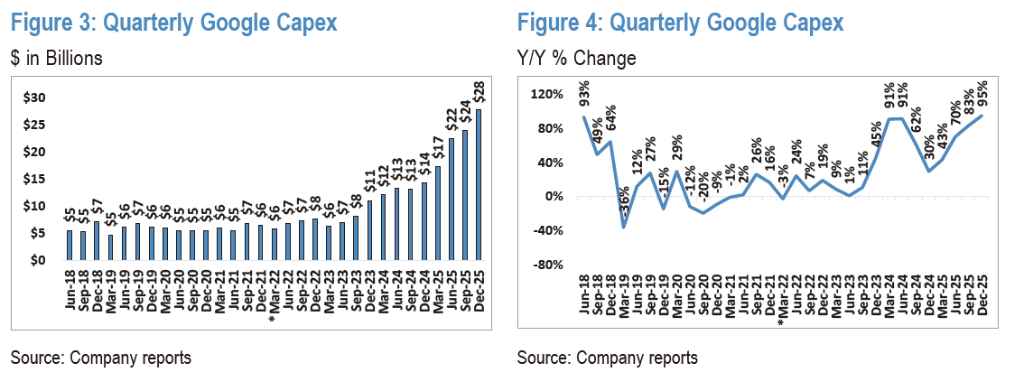
Group 1 - The core point of the article highlights a concerning turning point for investors as major tech companies like Amazon, Google, and Meta face the risk of depleting or even overdrawing their free cash flow to support AI infrastructure demands [1][24]. - According to a Morgan Stanley report, total capital expenditures for the four major cloud giants—Amazon, Google, Meta, and Microsoft—are expected to reach $645 billion in 2026, a staggering 56% increase year-over-year, with an additional $230 billion in spending [1]. Group 2 - Google is aggressively increasing its capital expenditures, with guidance raised to $175 billion to $185 billion for 2026, reflecting a 97% year-over-year growth as funds are directed towards servers and technological infrastructure [2]. - Amazon's capital expenditure guidance for 2026 is approximately $200 billion, a 52% increase, but its operating cash flow is projected to be around $178 billion, indicating a cash burn situation where expenditures exceed cash inflow [7][12]. - Meta's capital expenditures are expected to grow by 75% to between $115 billion and $135 billion in 2026, which will nearly eliminate its free cash flow, straining its previously robust financial position [12]. Group 3 - As cash flow diminishes, shareholder return plans are under pressure, with major tech companies likely to adjust their stock buyback strategies. Amazon has not engaged in stock buybacks since 2022 and is unlikely to restart them due to cash deficits [17]. - Microsoft, despite a projected capital expenditure exceeding $103 billion (over 60% growth), is expected to generate around $66 billion in free cash flow, allowing it to cover its substantial expenditures while facing higher dividend commitments [17]. Group 4 - Investors are cautioned to be vigilant about balance sheets in 2026, as the situation mirrors the "Oracle trap," where excessive debt to fund infrastructure led to a significant drop in stock price [20][23]. - The article emphasizes that the $645 billion expenditure is a critical juncture for Silicon Valley giants, as failure to convert this investment into tangible revenue growth could lead to a cash flow crisis in 2026, marking the beginning of a valuation restructuring [24].





仅3年就走向退市,“水果第一股”洪九果品遭遇了什么?
Xin Jing Bao· 2025-12-31 09:09
Core Viewpoint - Chongqing Hongjiu Fruit Co., Ltd., known as the "first fruit stock," is set to delist from the Hong Kong Stock Exchange after just over three years of being listed, primarily due to negative operating cash flow, accumulating debt, and legal issues involving senior executives [1][2]. Group 1: Company Background and Listing Journey - Hongjiu Fruit was established in 2002 and became a major distributor of Southeast Asian fruits in China, achieving a peak market value of HKD 67 billion shortly after its IPO in September 2022 [2]. - The company faced a delisting crisis within a year and a half of its listing, with its shares suspended from trading in March 2024 due to failure to disclose financial reports on time [2][3]. Group 2: Financial Performance and Issues - The last publicly available financial report indicated that for the first half of 2023, the company generated revenue of CNY 8.538 billion, a year-on-year increase of 19.37%, but net profit decreased by 6.51% to CNY 803 million [3]. - The company has been experiencing negative operating cash flow since 2019, with a cash flow deficit of CNY 1.823 billion in 2022 and CNY 314 million in the first half of 2023 [6][7]. Group 3: Legal and Operational Challenges - Multiple senior executives, including the chairman, are under criminal investigation for loan fraud and other financial misconduct, leading to operational disruptions [4][5]. - The company is facing significant liquidity issues, with bank loans amounting to CNY 2.776 billion and cash reserves of only CNY 557 million, indicating insufficient debt repayment capacity [7]. Group 4: Strategic Insights and Future Directions - Experts suggest that the company's aggressive expansion strategy has led to cash flow pressures due to high prepayments to suppliers and slow receivables collection [8]. - To recover post-delist, the company needs to optimize procurement and sales strategies, improve cash flow management, and enhance internal controls and financial transparency [8].
百亿兑付危机引爆,祥源系实控人俞发祥被采取刑事强制措施
经济观察报· 2025-12-23 06:19
Core Viewpoint - The article discusses the financial crisis faced by Xiangyuan Holdings, which has led to a significant inability to repay financial asset income rights products, amounting to over 10 billion yuan, following the criminal measures taken against its actual controller, Yu Faxiang [1][2]. Group 1: Background of the Crisis - The crisis began on November 28, when multiple financial asset income rights products guaranteed by Yu Faxiang and Xiangyuan Holdings failed to meet their repayment obligations, with the total repayment amount reaching over 10 billion yuan [1][2]. - On December 22, Yu Faxiang was taken into criminal custody by the Shaoxing Public Security Bureau due to suspected criminal activities, which has raised concerns about the company's financial stability [2]. - Prior to the crisis, Yu Faxiang's shares in Xiangyuan Holdings' listed companies were judicially frozen, indicating potential financial distress [3]. Group 2: Company Expansion and Financial Performance - Yu Faxiang, born in 1971, is the chairman of Xiangyuan Holdings, which has expanded into various sectors including real estate, cultural tourism, and construction since its inception in 1992 [5]. - Xiangyuan Holdings has received accolades for its performance in the real estate sector, ranking among the top 100 real estate developers in China and the top 10 in cultural tourism real estate [6]. - Despite previous successes, the company has faced a significant decline in revenue over the past three years, with reported revenues of 136.59 billion yuan in 2022, 118.46 billion yuan in 2023, and 107.26 billion yuan in 2024, reflecting an average annual decline of 11.39% [9][10]. Group 3: Financial Challenges - As of June 2025, Xiangyuan Holdings reported total assets of approximately 600 billion yuan and liabilities of 400 billion yuan, indicating a precarious financial position exacerbated by a downturn in the real estate market [8]. - The company has experienced a substantial drop in cash flow, with net cash flow from operating activities showing negative figures over the past three years, indicating ongoing liquidity issues [10]. - The company's real estate development segment has seen a significant reduction in new construction and sales, with new construction areas dropping from 61.53 million square meters in 2022 to just 9.65 million square meters in 2024 [10]. Group 4: Response to the Crisis - A support task force was established on December 12 to assess the company's assets and liabilities, aiming to stabilize the situation and protect investor interests [12]. - Investors have expressed hope that the task force will lead to a resolution of the repayment issues, although specific repayment plans have yet to be disclosed [13]. - Following the crisis, stock prices for Xiangyuan Holdings' associated companies have seen significant declines, reflecting market concerns over the company's financial health [13].



扣非净利亏损、核心项目延期,新安股份内忧外患
Xin Lang Cai Jing· 2025-08-29 00:31
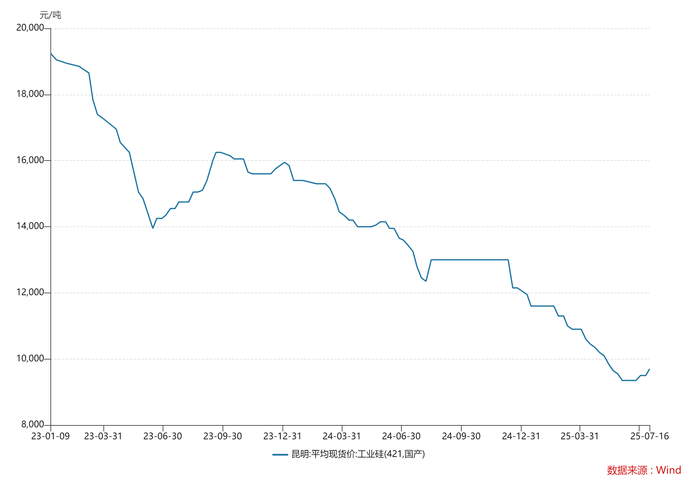
Core Viewpoint - New An Co., Ltd. is facing severe challenges due to industry overcapacity and declining prices in the silicon-based new materials sector, leading to significant financial losses and a negative net profit for the first time since its listing [1][14]. Group 1: Financial Performance - In the first half of 2025, New An reported total revenue of 8.058 billion yuan, a year-on-year decrease of 5.07%, and a net profit attributable to shareholders of 69.0734 million yuan, down 47.71% [1]. - The company's non-recurring net profit was -23.9177 million yuan, a dramatic decline of 197.73%, indicating that its core business is in a loss-making state [1]. - The reliance on government subsidies (64.39 million yuan) and non-current asset disposals (51.77 million yuan) to support profits raises concerns about the sustainability of its earnings [1]. Group 2: Industry Context - The silicon-based new materials sector, particularly organic silicon, has seen a significant increase in production capacity, with total domestic organic silicon capacity reaching 3.2 million tons by the end of 2024 [3][12]. - Despite a compound annual growth rate of 10.7% in apparent consumption from 2017 to 2024, the rapid expansion of capacity has led to a supply-demand imbalance [3][12]. - The price of industrial silicon has plummeted, with a decline of 23% from the end of 2023 to the end of 2024, and further dropping to 9,350 yuan per ton by mid-2025, resulting in a significant impact on profitability [3][5]. Group 3: Asset and Cash Flow Management - New An has recognized asset impairment risks, with a total impairment provision of 83.93 million yuan in the first half of 2025, including a 68.54 million yuan provision for inventory [5][6]. - The company's accounts receivable reached 2.157 billion yuan, a year-on-year increase of 7.68%, with a staggering ratio of accounts receivable to net profit at 4,195.51% [6]. - Continuous negative cash flow from operating and investing activities, amounting to -1.72 billion yuan in the first half of 2025, indicates a weak ability to generate cash from core operations [7]. Group 4: Strategic Challenges - New An's major project, the organic silicon synthesis project, has been delayed from September 2025 to March 2026 due to changing market conditions and increased competition [13]. - The company is still pursuing upstream industrial silicon capacity expansion despite the declining prices, raising questions about the viability of this strategy [14]. - The overall situation reflects a structural issue within the organic silicon industry, where overcapacity and price wars are severely compressing profit margins [14].