ETF

Search documents
Should iShares Core High Dividend ETF (HDV) Be on Your Investing Radar?
ZACKS· 2025-09-01 11:21
Core Insights - The iShares Core High Dividend ETF (HDV) is a passively managed fund launched on March 29, 2011, with assets exceeding $11.67 billion, focusing on the Large Cap Value segment of the US equity market [1] - Large cap companies, with market capitalizations above $10 billion, are considered more stable and less volatile compared to mid and small cap companies [2] - Value stocks typically have lower price-to-earnings and price-to-book ratios, and while they have outperformed growth stocks in the long term, they may underperform during strong bull markets [3] Costs - The ETF has an annual operating expense ratio of 0.08%, making it one of the least expensive options in its category, with a 12-month trailing dividend yield of 3.29% [4] Sector Exposure and Top Holdings - The ETF has a significant allocation to the Healthcare sector at approximately 22.9%, followed by Energy and Consumer Staples [5] - Exxon Mobil Corp (XOM) constitutes about 8.29% of total assets, with the top 10 holdings representing around 50.64% of total assets under management [6] Performance and Risk - HDV aims to match the performance of the Morningstar Dividend Yield Focus Index, which includes high-quality U.S. companies with strong financial health and sustainable dividend payouts [7] - The ETF has gained about 11.43% year-to-date and approximately 8.22% over the past year, with a trading range between $108.41 and $123.66 in the last 52 weeks [7] - With a beta of 0.64 and a standard deviation of 13% over the trailing three years, HDV is classified as a medium-risk investment [8] Alternatives - HDV carries a Zacks ETF Rank of 3 (Hold), indicating it is a viable option for investors seeking exposure to the Large Cap Value market [9] - Other comparable ETFs include Schwab U.S. Dividend Equity ETF (SCHD) with $72.51 billion in assets and Vanguard Value ETF (VTV) with $143.81 billion, with expense ratios of 0.06% and 0.04% respectively [10] Bottom-Line - Passively managed ETFs like HDV are increasingly popular among retail and institutional investors due to their low costs, transparency, flexibility, and tax efficiency, making them suitable for long-term investment strategies [11]


Should WisdomTree U.S. SmallCap Dividend ETF (DES) Be on Your Investing Radar?
ZACKS· 2025-09-01 11:21
Core Viewpoint - The WisdomTree U.S. SmallCap Dividend ETF (DES) is a passively managed fund aimed at providing broad exposure to the Small Cap Value segment of the US equity market, with assets exceeding $1.90 billion, making it one of the larger ETFs in this category [1]. Group 1: Fund Overview - The fund was launched on June 16, 2006, and is sponsored by WisdomTree [1]. - It targets small cap companies with market capitalizations below $2 billion, which are considered high-potential stocks but come with higher risks compared to larger counterparts [2]. Group 2: Investment Characteristics - Value stocks, which the fund focuses on, typically have lower price-to-earnings and price-to-book ratios, as well as lower sales and earnings growth rates [3]. - Historically, value stocks have outperformed growth stocks in nearly all markets, although growth stocks tend to perform better in strong bull markets [3]. Group 3: Costs and Performance - The ETF has an annual operating expense ratio of 0.38% and a 12-month trailing dividend yield of 2.67% [4]. - As of September 1, 2025, the ETF has gained approximately 0.89% year-to-date and 2.67% over the past year, with a trading range between $28.02 and $37.69 in the past 52 weeks [7]. Group 4: Risk and Diversification - The ETF has a beta of 0.99 and a standard deviation of 20.39% over the trailing three-year period, categorizing it as a medium-risk investment [8]. - With around 576 holdings, the fund effectively diversifies company-specific risk [8]. Group 5: Alternatives and Market Position - The WisdomTree U.S. SmallCap Dividend ETF holds a Zacks ETF Rank of 3 (Hold), indicating a sufficient option for investors seeking exposure to the Small Cap Value area [9]. - Other comparable ETFs include the iShares Russell 2000 Value ETF (IWN) with $11.74 billion in assets and an expense ratio of 0.24%, and the Vanguard Small-Cap Value ETF (VBR) with $31.35 billion in assets and a lower expense ratio of 0.07% [10]. Group 6: Investor Appeal - Passively managed ETFs like DES are increasingly favored by retail and institutional investors due to their low costs, transparency, flexibility, and tax efficiency, making them suitable for long-term investment strategies [11].

Is JPMorgan Diversified Return U.S. Mid Cap Equity ETF (JPME) a Strong ETF Right Now?
ZACKS· 2025-09-01 11:21
Core Insights - The JPMorgan Diversified Return U.S. Mid Cap Equity ETF (JPME) offers investors exposure to the mid-cap blend category, utilizing a rules-based approach to combine risk-based portfolio construction with multi-factor security selection [1][6]. Fund Overview - JPME was launched on May 11, 2016, and has accumulated over $372.98 million in assets, positioning it as an average-sized ETF in its category [1][5]. - The fund aims to match the performance of the Russell Midcap Diversified Factor Index before fees and expenses [5]. Investment Strategy - JPME employs non-cap weighted strategies, focusing on fundamental characteristics to select stocks with better risk-return performance [3][4]. - The fund's annual operating expenses are 0.24%, which is competitive within its peer group [7]. Sector Exposure - The ETF has a significant allocation in the Industrials sector, comprising approximately 12% of the portfolio, followed by Healthcare and Consumer Staples [8]. - The top 10 holdings account for about 4.96% of total assets, with Tapestry Inc Common (TPR) being the largest individual holding at 0.55% [9]. Performance Metrics - Year-to-date, JPME has increased by approximately 6.41%, and it has risen about 7.16% over the past 12 months as of September 1, 2025 [11]. - The fund has a beta of 0.93 and a standard deviation of 16.09% over the trailing three-year period, indicating effective diversification of company-specific risk [11]. Alternatives - Other ETFs in the mid-cap blend space include the Vanguard Mid-Cap ETF (VO) and the iShares Core S&P Mid-Cap ETF (IJH), which have significantly larger asset bases and lower expense ratios [12][13].


南方基金:中央汇金大举增持股票ETF!
Sou Hu Cai Jing· 2025-09-01 01:49
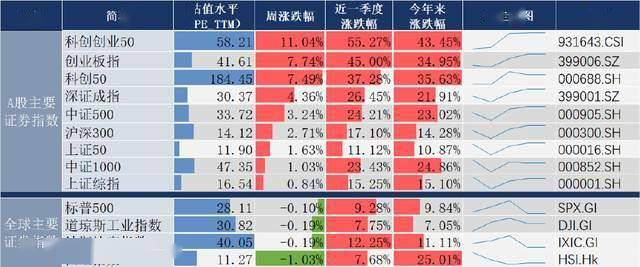
Market Performance - The market continued its upward trend last week, with major indices mostly rising. The Shanghai Composite Index closed at 3857.93 points, up 0.84% for the week, while the ChiNext Index closed at 2890.13 points, up 7.74% for the week [1] Sector Performance - In the CITIC industry sectors, the telecommunications, non-ferrous metals, and electronics indices had the highest gains, while the comprehensive financial, textile and apparel, and coal indices experienced the largest declines [1] ETF Investments - Central Huijin significantly increased its holdings in stock ETFs, with a total market value of 1.28 trillion yuan as of the end of June, representing a nearly 23% increase from the end of last year [4][5] - Central Huijin's asset management company increased its stock ETF holdings to 1.58 times that of the end of last year, with multiple broad-based ETFs receiving over 1 billion shares in increases [5] Securities Industry Performance - In the first half of 2025, 42 A-share listed securities firms reported a total operating income of 251.87 billion yuan, a year-on-year increase of 30.8%, and a net profit attributable to shareholders of 104.02 billion yuan, up 65.08% year-on-year [6] Fund Performance - The average performance of active equity funds exceeded 23% in the first eight months of the year, with an average net value growth rate of 23.89% [7][8] - Ordinary stock funds and equity-mixed funds achieved average net value growth rates of 28.38% and 28.79%, respectively, benefiting from market recovery [8] Deposit Trends - The phenomenon of "deposit migration" accelerated in July, with a decrease of 1.1 trillion yuan in new deposits from residents, while non-bank institutions saw an increase of 2.14 trillion yuan [9] Global Market Signals - Federal Reserve officials are signaling a potential interest rate cut, with an 86.9% probability of a 25 basis point cut in September according to market expectations [10][11] ETF Growth - The CSI 300 ETF has seen a significant increase of nearly 400 billion yuan in total scale over the past year, becoming one of the most关注的 categories in the broad-based ETF market [12] Future Market Outlook - The macro strategy department of Southern Fund believes the current market trend remains promising, driven by the resonance of "overseas liquidity shift" and "domestic incremental capital entry" [12] - Three main investment themes are suggested: domestic production, globalization, and leading companies, focusing on sectors like non-ferrous metals, coal, and photovoltaic [13]
四大证券报精华摘要:9月1日
Xin Hua Cai Jing· 2025-09-01 00:01
Group 1: Technology Sector Performance - The technology sector in the A-share market has shown significant performance, with Industrial Fulian's market value surpassing 1 trillion yuan and the communication and electronics industries experiencing a monthly increase of over 20% [1] - Many technology companies reported impressive earnings in their semi-annual reports, reflecting the effectiveness of increased R&D investments [1][5] - The overall trend indicates that Chinese technology enterprises are solidifying their technological foundations, contributing to the economic transformation [1] Group 2: Overall Market Recovery - As of August 31, 5424 A-share companies disclosed their semi-annual reports, achieving a total revenue of approximately 34.9 trillion yuan, a year-on-year increase of 0.03% [2] - The net profit attributable to shareholders reached about 2.99 trillion yuan, marking a year-on-year growth of 2.45% [2] - A significant portion of companies, 2908, reported a year-on-year increase in net profit, indicating a recovery across various industries, including agriculture, steel, and electronics [2][3] Group 3: Mid-Year Dividend Trends - A record high of 810 companies announced mid-year cash dividend plans, with a total proposed payout of 6428.08 billion yuan, reflecting a year-on-year increase of 9.56% in dividend amounts [6] - Among companies with dividends exceeding 1 billion yuan, state-owned enterprises account for about 30% [6] - The banking sector has also seen a notable increase in mid-year dividends, with 17 banks disclosing dividend plans, including seven banks that are implementing dividends for the first time since their listings [7] Group 4: R&D Investment - A-share companies reported over 810 billion yuan in R&D investments in the first half of 2025, with several industries, including software development and biopharmaceuticals, showing high R&D intensity [12] - Six companies, including BYD and China Mobile, each invested over 10 billion yuan in R&D [12] Group 5: Mergers and Acquisitions Trends - The A-share market is witnessing a shift in mergers and acquisitions from "buying scale" to "acquiring technology," with a notable increase in transactions involving core technologies [11] - In 2025, there have been 21 merger and acquisition projects focused on core technologies, totaling 2.569 billion yuan [11]
海外股市震荡 A股成长风格占优
Xin Lang Cai Jing· 2025-08-31 16:31
Group 1 - The overall trend in overseas stock markets was volatile, with US stocks declining due to weak semiconductor performance and a rise in core PCE year-on-year [1] - The A-share market saw a daily trading volume exceeding 2.9 trillion yuan, with the ChiNext Index and the Sci-Tech Innovation 50 Index both rising over 7% [1] - The current market cycle shows similarities to the period from 2012 to 2015, with overseas stock indices leading the way followed by a rebound in A-shares [1] Group 2 - The A-share Shanghai Composite Index recorded a monthly year-on-year return of 35.74%, surpassing major global indices and reaching a new high since 2016 [2] - The hereditary planning industry rotation model has performed well this year, achieving an absolute return of 36.15%, significantly outperforming the industry equal-weight benchmark by 17.81 percentage points [2] - The domestic absolute return ETF simulation portfolio has accumulated a return of 6.89% this year, reflecting a balanced approach to macroeconomic sensitivity and capital response [2] Group 3 - In global asset allocation, the current strategy favors bonds and foreign exchange, with a simulated portfolio annualized return of 7.25% and a Sharpe ratio of 1.50 [3] - Recent market sentiment is warming, indicating potential increases in volatility, which may present new opportunities and challenges for investors [4]
Billionaires Buy 2 Magnificent Index Funds That a Wall Street Analyst Says Could Soar 132%
The Motley Fool· 2025-08-31 08:00
Core Insights - Several billionaire fund managers have recently invested in S&P 500 index funds, indicating a strong belief in the potential for significant growth in the index by the end of the decade [1][2] - Tom Lee from Fundstrat Global Advisors predicts the S&P 500 will reach 15,000 by 2030, representing a 132% increase from its current level of 6,460 [2][15] - The S&P 500 index is considered a reliable benchmark for the overall U.S. stock market, encompassing 500 large companies across various sectors [1] Investment Activity - Notable billionaire hedge fund managers have made substantial purchases of S&P 500 index funds in the second quarter, including: - Cliff Asness acquired 72,200 shares of SPDR S&P 500 ETF Trust and 134,800 shares of Vanguard S&P 500 ETF [5] - Israel Englander added 1.2 million shares of SPDR S&P 500 ETF Trust, making it his seventh-largest position [5] - Paul Tudor Jones purchased 1.8 million shares of SPDR S&P 500 ETF Trust, now his largest position, along with 36,700 shares of Vanguard S&P 500 ETF [5] - Tom Steyer bought 5.5 million shares of SPDR S&P 500 ETF Trust, also his largest position [5] Comparison of Index Funds - The Vanguard S&P 500 ETF and SPDR S&P 500 ETF Trust both track the same index, covering about 80% of U.S. stocks and 40% of global stocks by market value [6] - SPDR S&P 500 ETF Trust is noted for its higher liquidity and narrower bid-ask spread, while Vanguard S&P 500 ETF has a lower expense ratio of 0.03% compared to SPDR's 0.0945% [7] Investment Thesis - The S&P 500 has historically provided strong returns, advancing 1,910% over the last three decades, with an annual compounding rate of 10.5% [9] - The index has never declined over any 15-year period since its inception in 1957, ensuring profitability for long-term investors [10] - A significant majority of professional investors have underperformed the S&P 500, with nearly 85% of large-cap funds lagging behind over the last decade [11] Future Outlook - Tom Lee attributes the potential rise of the S&P 500 to two main factors: - The millennial generation, which is entering peak earnings years and is set to inherit over $40 trillion, influencing economic dynamics [15] - A projected global labor shortage of 80 million workers by 2030, driving demand for AI and technology, which constitutes 34% of the S&P 500 by market value [16]

3 Vanguard ETFs to Buy With $1,000 and Hold Forever
The Motley Fool· 2025-08-30 09:34
Core Viewpoint - The article emphasizes the benefits of long-term investment in low-cost ETFs, highlighting their potential for wealth accumulation through dollar-cost averaging and compounding [2][5]. Group 1: Vanguard S&P 500 ETF - The Vanguard S&P 500 ETF (VOO) is recommended as a top choice for long-term investment, mirroring the performance of the S&P 500 and providing exposure to 500 major U.S. companies [3][4]. - The ETF has shown strong performance with average annual gains of 13.6% over the past decade, encompassing both bull and bear markets [4]. - It features a low expense ratio of 0.03%, making it an attractive core holding for investors [5]. Group 2: Vanguard Growth ETF - The Vanguard Growth ETF (VUG) is positioned as a suitable option for investors seeking growth stocks, focusing on large-cap companies with strong sales and earnings momentum [6][8]. - This ETF has outperformed the broader market with average annual returns of 16.3% over the past decade, benefiting from a higher weighting in growth-oriented companies like Nvidia [7]. - It maintains a low expense ratio of 0.04%, providing a cost-effective alternative to actively managed funds [8]. Group 3: Vanguard International High Dividend Yield ETF - The Vanguard International High Dividend Yield ETF (VYMI) offers international exposure and dividend income, tracking non-U.S. companies with above-average dividend yields [9][11]. - The ETF has performed well, with a nearly 27% increase this year and average annual returns of nearly 14% over the past five years [10]. - It has a higher expense ratio of 0.17% compared to domestic Vanguard ETFs, but remains competitive for international funds, adding diversification and yield to U.S.-focused portfolios [11].

JQUA: I Prefer This ETF Over SCHG Due To Concentration Risks
Seeking Alpha· 2025-08-30 04:21
Group 1 - The concentration risk in the market is increasing due to the continuous rise of mega-cap tech stocks, which has positively impacted the stock market and investors [1] - Many portfolios and ETFs are heavily weighted towards these mega-cap tech stocks, indicating a potential risk for diversification [1] Group 2 - The article emphasizes a strategic investment approach focused on dividend and value stocks, which has garnered a near 5-star rating on Tipranks.com and over 9,000 followers on Seeking Alpha [1]
Is Invesco RAFI US 1000 ETF (PRF) a Strong ETF Right Now?
ZACKS· 2025-08-28 11:21
Core Viewpoint - The Invesco RAFI US 1000 ETF (PRF) is a smart beta ETF that aims to provide broad exposure to the large-cap value segment of the market, managed by Invesco with over $8.09 billion in assets [5][10]. Fund Overview - Launched on December 19, 2005, PRF seeks to match the performance of the FTSE RAFI US 1000 Index, which selects large US equities based on fundamental measures such as book value, cash flow, sales, and dividends [5]. - The ETF has an annual operating expense ratio of 0.33% and a 12-month trailing dividend yield of 1.69% [6]. Sector Exposure and Holdings - The ETF has a significant allocation in the Financials sector, comprising approximately 20.8% of the portfolio, followed by Information Technology and Healthcare [7]. - Major holdings include Apple Inc (3.2% of total assets), Alphabet Inc, and Microsoft Corp, with the top 10 holdings accounting for about 20.84% of total assets [8]. Performance Metrics - As of August 28, 2025, PRF has gained approximately 10.72% year-to-date and 12.96% over the past year, with a trading range between $35.77 and $44.30 in the last 52 weeks [10]. - The ETF has a beta of 0.91 and a standard deviation of 14.94% over the trailing three-year period, indicating medium risk [10]. Alternatives - Other ETFs in the large-cap value space include Schwab U.S. Dividend Equity ETF (SCHD) and Vanguard Value ETF (VTV), which have significantly larger assets and lower expense ratios [12].