长钱长投

Search documents
上交所最新发声!
券商中国· 2026-03-29 06:33
Core Viewpoint - The Shanghai Stock Exchange (SSE) is committed to deepening comprehensive reforms in capital market financing, fostering a unique Chinese financial culture, and enhancing market resilience through various initiatives [1][2][4]. Group 1: Capital Market Reforms - SSE emphasizes the advantages of equity and debt financing to support the development of new productive forces, with significant reforms in the Sci-Tech Innovation Board leading to over 600 companies listed and cumulative stock financing exceeding 1.1 trillion yuan by the end of 2025 [1][2]. - The SSE has facilitated 1,233 asset restructuring cases since the introduction of the "merger and acquisition six guidelines," with nearly 70% focused on new productive forces [2]. Group 2: Long-term Investment Ecosystem - SSE aims to create a "long money, long investment" ecosystem by enhancing the channels for long-term capital to enter the market, resulting in the number of newly compiled indices reaching approximately 3,500 and the scale of ETF products increasing from 0.9 trillion yuan to 4.2 trillion yuan during the 14th Five-Year Plan period [2]. Group 3: Quality of Listed Companies - The SSE is focused on improving the quality of listed companies, with revenue and net profit growth rates of 3.8% and 4.6% respectively during the 14th Five-Year Plan period, alongside a 150% increase in share buybacks and a 51% increase in announced dividend amounts [3]. Group 4: Cultivating Financial Culture - SSE promotes rational, value, and long-term investment philosophies, advocating for a culture of integrity and compliance within the financial industry, and has released action plans to guide the industry in fostering a trustworthy environment [4].

非银金融行业周报|“十五五”规划:资本市场与保险行业核心部署总结
GOLDEN SUN SECURITIES· 2026-03-16 00:24
Investment Rating - The report maintains an "Accumulate" rating for the non-bank financial sector [4] Core Insights - The "14th Five-Year Plan" emphasizes the role of capital markets and the insurance industry in supporting the real economy and social welfare [1] - Key initiatives include the enhancement of patient capital, reform of investment and financing mechanisms, and the development of a multi-layered pension insurance system [3][7] - The insurance sector is set to benefit from policies aimed at expanding coverage for long-term care and commercial health insurance, addressing the aging population [3][15] Summary by Sections Industry Dynamics - The non-bank financial sector, including securities and insurance, experienced fluctuations with declines of -1.93% and -2.10% respectively during the week of March 9-13, 2026 [11] - The ten-year government bond yield increased to 1.8143%, up 3.33 basis points from the previous week [17] Insurance - The government is accelerating the development of a multi-tiered pension insurance system and enhancing the coverage of commercial health insurance [3][15] - The establishment of a long-term care insurance system is a priority, aiming to cover 300 million people [15] - The insurance product landscape is diversifying, with a focus on agricultural insurance and technology insurance [3] Securities - The China Securities Regulatory Commission (CSRC) has introduced new disclosure regulations for public funds, promoting a focus on long-term and value investing [20] - Market activity remains robust, with a daily average trading volume of 30,495.51 billion yuan, although it decreased by 5.65% week-on-week [23] - The number of IPO approvals was six, with a total fundraising amount of 2.277 billion yuan [23] Investment Recommendations - The report suggests a positive outlook for the insurance sector, driven by long-term demand for medical and pension insurance, despite short-term market pressures [7][31] - In the securities sector, the report highlights the benefits for IT companies and brokerages due to increased market risk appetite and trading activity [31] - Specific companies to watch include China Ping An A/H, China Life H, Guotai Junan, and Huatai Securities [7][31]





宏观金融数据日报-20260310
Guo Mao Qi Huo· 2026-03-10 07:12
Report Summary 1. Report Industry Investment Rating - Not provided in the report. 2. Core Viewpoints - The specific targets and policy intensity in China's 2026 Government Work Report are basically in line with expectations. The main expected targets for this year include an economic growth of 4.5%-5%, a surveyed urban unemployment rate of around 5.5%, over 12 million new urban jobs, and a consumer price increase of around 2%. [6] - With the rapid release of geopolitical risks, the short - term further adjustment space of stock indices is expected to be limited, mainly in a state of shock consolidation. For the medium - to - long - term, strategies can consider building long positions by taking advantage of the discount of stock index futures. [6] 3. Summary by Relevant Catalogs 3.1 Macro - financial Data - **Interest Rates**: DRO01 closed at 1.32 with a 0.36bp increase, DR007 at 1.45 with a 3.26bp increase, GC001 at 1.55 with a 16.50bp increase, GC007 at 1.56 with a 4.50bp increase, SHBOR 3M at 1.55 with a 0.33bp decrease, LPR 5 - year at 3.50 with no change, 1 - year treasury bond at 1.49 with a 1.50bp increase, 5 - year treasury bond at 1.74 with a 2.00bp increase, 10 - year treasury bond at 1.98 with a 2.20bp increase, and 10 - year US treasury bond at 4.15 with a 2.00bp increase. [3] - **Central Bank Operations**: The central bank conducted 48.5 billion yuan of 7 - day reverse repurchase operations yesterday at an operating rate of 1.40%, with a bid volume and winning volume of 48.5 billion yuan. With 135 billion yuan of reverse repurchases maturing on the same day, the net withdrawal was 86.5 billion yuan. This week, 277.6 billion yuan of reverse repurchases will mature, and 150 billion yuan of 1 - month treasury cash fixed - deposits will mature on Tuesday. [3][4] 3.2 Stock Index and Futures Data - **Stock Indexes**: The CSI 300 closed at 4615, down 0.97%; the SSE 50 at 2963, down 0.99%; the CSI 500 at 8279, down 0.97%; and the CSI 1000 at 8204, down 0.55%. The trading volume of the Shanghai, Shenzhen, and Beijing stock markets was 2.67 trillion yuan, an increase of 451.5 billion yuan from the previous trading day. [5] - **Stock Index Futures**: IF当月 closed at 4599, down 1.0%; IH当月 at 2962, down 0.9%; IC当月 at 8267, down 0.7%; IM当月 at 8191, down 0.3%. The trading volume and open interest of all stock index futures increased. For example, IF trading volume increased by 57.1% to 147,766, and its open interest increased by 7.0% to 290,004. [5] - **Futures Premium and Discount**: IF升贴水 was 11.69% for the current - month contract, 7.15% for the next - month contract, 6.08% for the current - quarter contract, and 6.18% for the next - quarter contract. Similar data is provided for IH, IC, and IM. [7]
宏观金融数据日报-20260309
Guo Mao Qi Huo· 2026-03-09 05:20
Report Summary 1. Report Industry Investment Rating - Not mentioned in the report. 2. Core Viewpoints - The specific goals and policy intensity in the 2026 "Government Work Report" are basically in line with expectations. The main expected goals for this year's development are an economic growth rate of 4.5% - 5%, a target of keeping the urban survey unemployment rate around 5.5%, creating over 12 million new urban jobs, and a consumer price increase of around 2%. [6] - In the short - term, the stock index is expected to fluctuate and consolidate due to the high uncertainty of geopolitical factors. In the medium - to - long - term, investors can consider building long positions by taking advantage of the stock index futures discount and are advised to build positions in batches. [6] 3. Summary by Relevant Catalogs 3.1 Market and Liquidity - **Interest Rate Instruments**: DR001 closed at 1.32 with a 4.94bp increase; DR007 closed at 1.41 with a 0.58bp decrease; GC001 closed at 1.39 with a 22.00bp increase; GC007 closed at 1.51 with a 3.00bp increase; SHBOR 3M closed at 1.55 with a 0.32bp decrease; LPR 5 - year remained at 3.50 with no change; 1 - year treasury bond closed at 1.29 with a 0.37bp decrease; 5 - year treasury bond closed at 1.53 with a 0.48bp decrease; 10 - year treasury bond closed at 1.78 with a 0.28bp decrease; 10 - year US treasury bond closed at 4.15 with a 2.00bp increase. [4] - **Open - Market Operations**: Last week, the central bank conducted 161.6 billion yuan of reverse repurchase operations. With 1525 billion yuan of reverse repurchases maturing, there was a net withdrawal of 1363.4 billion yuan. Additionally, 1000 billion yuan of 91 - day term repurchase agreements matured, and the central bank conducted 800 billion yuan of 91 - day term repurchase agreements. This week, 27.76 billion yuan of reverse repurchases will mature, and 15 billion yuan of 1 - month treasury cash fixed - deposits will mature on Tuesday. [4] 3.2 Stock Index Market - **Index Performance**: The CSI 300 closed at 4660 with a 0.27% increase; the SSE 50 closed at 2993 with a 0.14% increase; the CSI 500 closed at 8360 with a 0.62% increase; the CSI 1000 closed at 8249 with a 0.95% increase. [5] - **Futures Contracts**: IF当月 closed at 4646 with a 0.4% increase; IH当月 closed at 2990 with a 0.1% increase; IC当月 closed at 8323 with a 0.8% increase; IM当月 closed at 8212 with a 1.0% increase. [5] - **Trading Volume and Open Interest**: IF trading volume was 94058 with a 16.7% decrease, and open interest was 271094 with a 1.8% decrease; IH trading volume was 43495 with a 9.5% decrease, and open interest was 107109 with a 1.2% increase; IC trading volume was 136523 with a 22.2% decrease, and open interest was 290149 with a 4.8% decrease; IM trading volume was 175659 with a 19.8% decrease, and open interest was 368113 with a 3.9% decrease. [5] - **Last Week's Review**: The CSI 300 fell 1.07% to 4660.4; the SSE 50 fell 1.54% to 2992.7; the CSI 500 fell 3.44% to 8360.3; the CSI 1000 fell 3.64% to 8248.9. Among the CITIC first - level industry indices, the public utilities (3.4%), agriculture, forestry, animal husbandry and fishery (2.1%), and banking (1.6%) sectors led the gains, while the media (-7%), non - ferrous metals (-5.5%), computer (-5.3%), electronics (-5.1%), and building materials (-4.3%) sectors led the losses. The A - share trading volume rose and then fell last week, with daily trading volumes of 3045.8 billion yuan, 3157.6 billion yuan, 2387.9 billion yuan, 2412.6 billion yuan, and 2219.2 billion yuan respectively, and the average daily trading volume increased by 204.33 billion yuan compared with the previous week. [5] 3.3 Stock Index Futures Premium and Discount - IF升贴水: The current - month contract was 9.42%, the next - month contract was 5.41%, the current - quarter contract was 5.89%, and the next - quarter contract was 5.98%. [7] - IH升贴水: The current - month contract was 2.75%, the next - month contract was 1.43%, the current - quarter contract was 1.81%, and the next - quarter contract was 3.38%. [7] - IC升贴水: The current - month contract was 13.73%, the next - month contract was 8.42%, the current - quarter contract was 8.88%, and the next - quarter contract was 8.61%. [7] - IM升贴水: The current - month contract was 13.66%, the next - month contract was 9.76%, the current - quarter contract was 10.60%, and the next - quarter contract was 10.19%. [7]
吴清发声!公募解读来了
券商中国· 2026-03-08 23:27
Core Viewpoint - The article emphasizes the importance of high-quality development in China's capital market, focusing on risk prevention, strong regulation, and promoting long-term investment mechanisms to support the economy and enhance market stability [1][2]. Group 1: Long-term Investment Mechanism - The establishment of a "long money, long investment" market mechanism is crucial for high-quality development, aiming to enhance market stability and address cyclical and structural fluctuations [2]. - Public funds, such as E Fund and China Universal Fund, express commitment to long-term investment strategies, aiming to attract patient capital and support the development of a robust market ecosystem [3]. Group 2: Investor Protection - The article discusses the need to improve investor protection mechanisms, including compensation and representative litigation, to build a multi-layered trust system in the market [4]. - The measures proposed are expected to enhance market valuation and foster a culture of equity, thereby encouraging long-term investments [4]. Group 3: Supporting New Productive Forces - The China Securities Regulatory Commission (CSRC) aims to refine capital market products and tools to better serve new productive forces and promote capital formation in innovative sectors [6][7]. - The reform of the Growth Enterprise Market (GEM) is highlighted, with plans to introduce more inclusive listing standards to support innovative enterprises [7]. Group 4: Role of Public Funds - Public funds are seen as essential in connecting resident wealth with the capital market, playing a pivotal role in channeling long-term funds into key sectors such as technology and green development [3][9]. - The industry is shifting from a scale-oriented approach to one focused on investor returns, emphasizing professional investment research and compliance [8].

“投资者点题 代表委员作答”|稳市建设已见成效 健全“长钱长投”市场机制·2026全国两会特别策划
证券时报· 2026-03-08 07:07
Core Viewpoint - The article discusses the positive changes in the A-share market following the 2024 government work report's emphasis on enhancing the inherent stability of the capital market, highlighting the continuous influx of medium- and long-term funds as a significant observation [1]. Group 1: Capital Market Reform - The focus of capital market policies has shifted from "stabilizing the market" to building a more robust market system under stronger functional positioning [1][2]. - The 2026 government work report emphasizes comprehensive measures to stabilize the stock market, enhance the mechanism for medium- and long-term funds entering the market, and improve investor protection systems [1]. Group 2: Balancing Investment and Financing - The "14th Five-Year Plan" suggests improving the inclusiveness and adaptability of capital market systems, aiming to balance investment and financing [4]. - Key goals for capital market reform include enhancing system inclusiveness, balancing investment and financing, serving the real economy, and preventing and mitigating risks [4]. - It is essential to regulate the financing behavior of listed companies to prevent excessive financing and guide funds towards the real economy while fostering long-term institutional investors [4]. Group 3: Attracting Long-term Capital - The stable operation of the capital market requires medium- and long-term funds to act as stabilizers, which is why there has been a push to attract such funds [6]. - By the end of 2025, various medium- and long-term funds held approximately 23 trillion yuan of A-share circulating market value, a 36% increase from the beginning of 2025 [6]. - To attract long-term capital, it is necessary to strengthen listed companies and innovate investment research methods [6]. Group 4: Strengthening Information Disclosure - A fair and just market order, along with strict law enforcement, is crucial for the healthy development of the capital market [9]. - Strengthening the regulation of the authenticity of information disclosure and increasing penalties for violations, especially fraud, are foundational for market health [10]. - There is a need to enhance accountability for financial fraud among major stakeholders in listed companies and improve investor compensation mechanisms [11].

7家险企抱团参与股权投资,新公司注册资本86.01亿元
Mei Ri Jing Ji Xin Wen· 2026-02-26 12:06
Group 1 - The core viewpoint of the articles highlights the increasing involvement of insurance companies in private equity funds, driven by long-term capital investment policies and the need for asset allocation [1][4] - Tianjin Lanqin, a newly established private equity partnership, has a registered capital of 8.601 billion yuan and includes several major insurance firms as partners, indicating a strong collaborative effort in the private equity space [2][3] - The trend of insurance capital participating in private equity is not new, with previous collaborations such as the establishment of Beijing Baoshichengyuan Equity Investment Partnership, which raised 13 billion yuan, showcasing the benefits of risk sharing and increased investment capacity [3] Group 2 - The push for insurance capital to engage in private equity is supported by recent policy changes that encourage investment in equity assets, aiming to enhance the role of insurance funds in supporting the real economy [4] - Insurance funds are characterized as long-term institutional investors, and their collaboration with private equity funds can leverage professional investment capabilities while enhancing returns on insurance capital [4][5] - Future strategies for insurance capital in private equity will evolve to include secondary market transactions, cross-border investments, and ESG integration, aiming for a balance between high returns, risk diversification, and liquidity [5]


险资抱团布局股权投资再落子 注册资本达86亿元 泰康人寿、长城人寿等7家险企参与
Mei Ri Jing Ji Xin Wen· 2026-02-24 15:11
Core Viewpoint - Insurance companies are increasingly participating in private equity funds as a strategy to invest in emerging industries and align with their core business, driven by supportive policies for long-term investments [1][4]. Group 1: Company Formation and Structure - Tianjin Lanqin Equity Investment Partnership (Limited Partnership) has been established with a registered capital of 8.601 billion yuan, involving seven insurance companies including Taikang Life and others [2]. - The partnership's operations will focus on private equity investments, asset management, and investment management, pending registration with the China Securities Investment Fund Industry Association [2]. Group 2: Investment Strategy and Trends - Insurance capital is increasingly collaborating in private equity investments to mitigate risks and enhance overall investment returns, as seen in previous joint ventures like the establishment of Beijing Baoshichengyuan Equity Investment Partnership with a total investment of 13 billion yuan [3]. - The strategy of investing in private equity funds is supported by recent policy changes that encourage insurance capital to engage in equity investments, aiming to boost direct financing for the real economy [4]. Group 3: Future Directions and Innovations - The insurance sector is expected to optimize its private equity investment strategies by incorporating secondary market transactions and enhancing liquidity, while also exploring cross-border investment opportunities [5]. - Future strategies may include a combination of primary investments, secondary market funds, and ESG considerations to achieve a balance between excess returns, risk diversification, and liquidity [5].
从“存定期”到“多元配置”:五位普通投资者的理财变奏曲
Sou Hu Cai Jing· 2026-02-17 12:52
Group 1 - The article highlights a shift in investment strategies among Chinese investors during the Spring Festival, moving from traditional bank deposits to diversified options like gold ETFs, mutual funds, and stocks [1][13] - Investors are increasingly viewing gold as a hedge against inflation and currency devaluation, with many allocating a portion of their funds to gold ETFs [3][7][12] - The China Securities Regulatory Commission emphasizes the need for a stable market environment and plans to deepen public fund reforms to support long-term investments [12][14] Group 2 - Individual investors, such as Mr. Chen, are reallocating their assets, with 30% of his funds now in gold ETFs, reflecting a growing trend towards risk management and asset preservation [3] - Young investors like Mr. Liu are adopting more aggressive strategies, with significant portions of their investments directed towards technology-focused funds and stocks, influenced by social media and peer discussions [5] - The article notes that banks are tightening their gold investment policies to protect consumer rights and manage risks, indicating a regulatory response to the rising interest in gold investments [12]
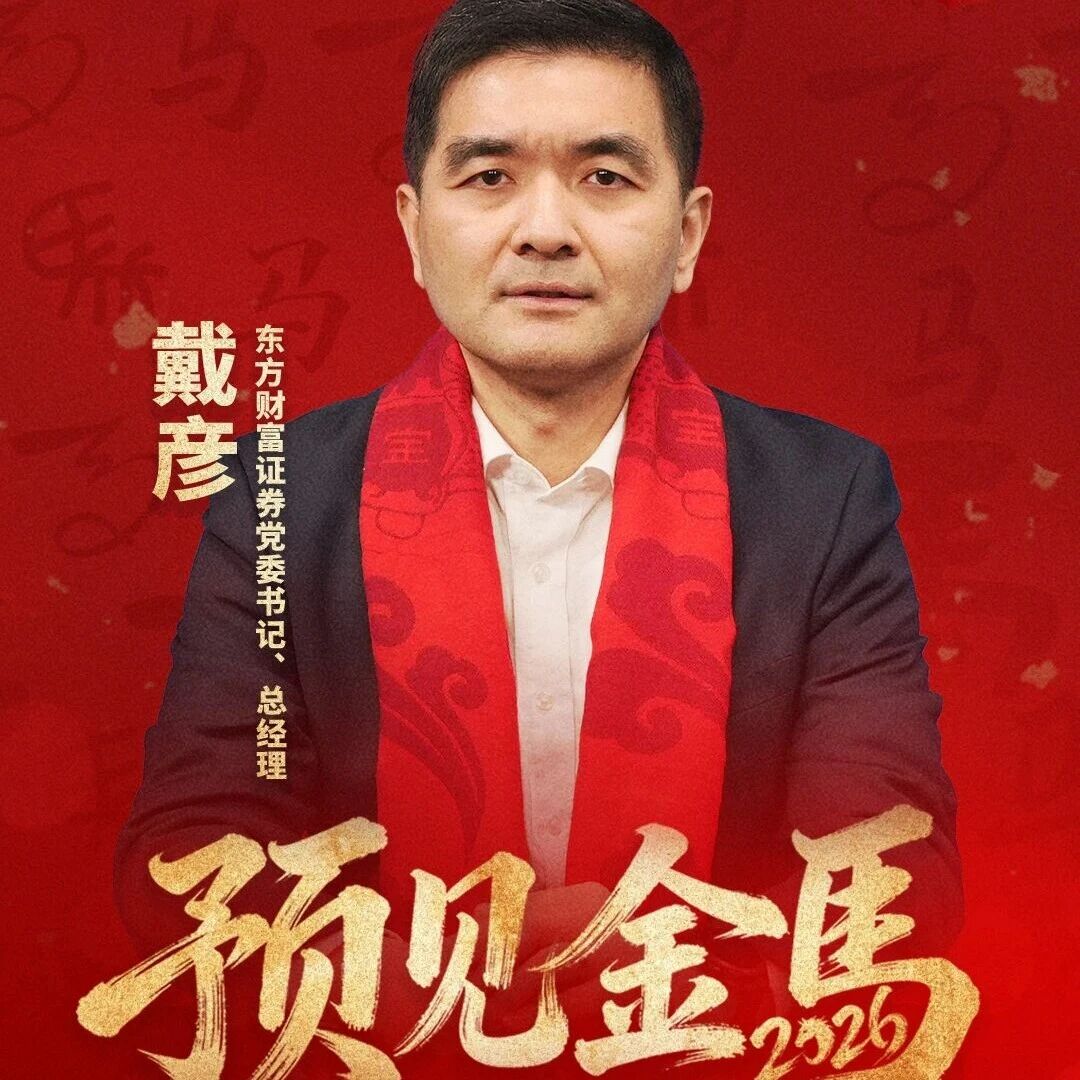
预见金马|东方财富证券戴彦:资本市场开启高质量发展新篇章,将持续孕育新的投资机遇
券商中国· 2026-02-15 02:43
Core Viewpoint - The article emphasizes the resilience and opportunities in the capital market, highlighting the importance of investor-centric policies and the emergence of new investment opportunities in technology, green transformation, and industrial upgrades as the market moves towards high-quality development in 2026 [5][6][7]. Group 1: Market Overview - In 2025, the capital market experienced comprehensive reforms aimed at creating a "long money, long investment" environment, with a series of policies implemented to support this shift [5][7]. - The concept of "resilience" has become a defining characteristic of the market, reflecting the ability to adapt and thrive amid global economic challenges and geopolitical tensions [7]. - The integration of "new quality productivity" into practice has led to significant investment opportunities in various sectors, including technology innovation and green transformation, contributing to a strong market performance [5][7]. Group 2: Future Outlook - Looking ahead to 2026, the capital market is expected to enter a new phase of high-quality development, continuing to generate new investment opportunities [6][8]. - The macroeconomic policies are anticipated to adopt a more proactive stance to stabilize and promote growth, aligning with the national "14th Five-Year Plan" strategy [8]. - The company aims to enhance its ecological advantages through a combination of platform, technology, and finance, improving service quality and efficiency to support the healthy development of the capital market [8].