
核电

Search documents
中国核电(601985.SH)2025年半年度权益分派:每股派利0.02元
Ge Long Hui A P P· 2026-01-05 10:11
格隆汇1月5日丨中国核电(601985.SH)公布2025年半年度权益分派实施公告,截至本公告披露日,公司 总股本20,568,002,074股,公司回购专用证券账户中的累计回购股份数量为41,455,157股,公司将以扣除 公司回购专用证券账户中股份数后的公司股本20,526,546,917股为基数实施权益分派,本次将派发现金 红利410,530,938.34元(含税)。 本次权益分派股权登记日为:2026年1月12日,除权除息日为:2026年1月13日。 ...

中国核电2025年半年度权益分派:每股派利0.02元
Ge Long Hui· 2026-01-05 09:56
本次权益分派股权登记日为:2026年1月12日,除权除息日为:2026年1月13日。 格隆汇1月5日丨中国核电(601985.SH)公布2025年半年度权益分派实施公告,截至本公告披露日,公司 总股本20,568,002,074股,公司回购专用证券账户中的累计回购股份数量为41,455,157股,公司将以扣除 公司回购专用证券账户中股份数后的公司股本20,526,546,917股为基数实施权益分派,本次将派发现金 红利410,530,938.34元(含税)。 ...
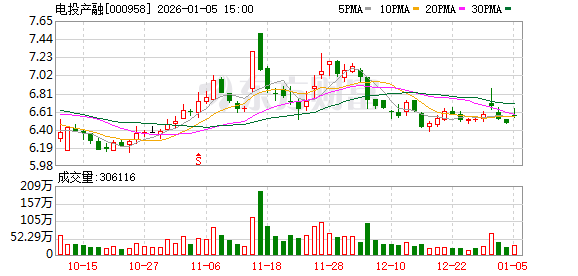
电投产融:“国和一号”的设备国产化率已超过90%
Zheng Quan Ri Bao· 2026-01-05 09:41
证券日报网讯 1月5日,电投产融在互动平台回答投资者提问时表示,在安全设计思路上,"国和一 号"采用"非能动"理念。简单来说,就是不依赖外部动力或人工干预即可自行启动运行。非能动系统利 用的是大自然的客观规律,比如水往低处流,水热之后要自然蒸发,热蒸汽遇冷会发生冷凝等。因此相 对来说,非能动比能动系统在极限情况下更可靠。通过国家科技重大专项实施,国和一号的设备国产化 率已超过90%,有效降低了建设成本。在同等厂址条件,相同对比内容下,实现批量化建设后,单位千 瓦造价有一定优势。阀门减少50%、管道减少80%,减少了安装工程量以及后续运维成本。反应堆可作 为稳定的高温热源。通过技术耦合,理论上具备供热、海水淡化、制氢等综合应用场景拓展的潜力。 (文章来源:证券日报) ...


研报掘金丨海通国际:首予中国核电“优于大市”评级,目标价11.44元
Ge Long Hui A P P· 2026-01-05 08:48
Group 1 - The core viewpoint of the report highlights that China Nuclear Power, a major subsidiary of China National Nuclear Corporation, is a leading company in the nuclear power sector [1] - As of September 30, 2025, the company operates 26 nuclear power units with a total installed capacity of 25 GW [1] - The cumulative electricity generation for the first three quarters of 2025 reached 151.008 billion kWh, representing a year-on-year increase of 11.33% [1] - The cumulative on-grid electricity volume was 141.283 billion kWh, with a year-on-year growth of 11.44% [1] - The average utilization hours of nuclear power units stood at 6046 hours [1] - The nuclear business achieved a net profit attributable to shareholders of 7.467 billion yuan, reflecting a year-on-year increase of 2.81% despite some disruptions in profitability due to market electricity prices [1] Group 2 - The company has 19 nuclear power units under construction or planned, with an approximate installed capacity of 21.86 GW [1] - It is expected that 1 and 2 units will be put into operation in 2025 and 2026, respectively, with a concentrated commissioning after 2027 [1] - Based on the DCF model, the target price is set at 11.44 yuan, with an initial coverage rating of "outperform the market" [1]
海通国际发布中国核电研报:中国核电龙头,核电主业稳步推进
Mei Ri Jing Ji Xin Wen· 2026-01-05 07:57
Group 1 - The core viewpoint of the report is that Haitong International has given China Nuclear Power (601985.SH) an "outperform" rating with a target price of 11.44 yuan [1] - China Nuclear Power is a major subsidiary of China National Nuclear Corporation, primarily engaged in nuclear power generation and sales, and is one of the leading companies in the nuclear power sector in China [1] - As of September 30, 2025, the company will have 26 operational nuclear power units with a total installed capacity of 25 GW, and the cumulative electricity generation for the first three quarters of 2025 is expected to reach 151.008 billion kWh, representing a year-on-year increase of 11.33% [1] - The cumulative on-grid electricity volume is projected to be 141.283 billion kWh, with a year-on-year growth of 11.44%, and the average utilization hours of nuclear power units are estimated at 6046 hours [1] - The nuclear business is expected to achieve a net profit attributable to shareholders of 7.467 billion yuan, reflecting a year-on-year increase of 2.81%, indicating stable performance despite some market price fluctuations [1] Group 2 - The report highlights potential risks, including slower-than-expected progress in nuclear power capacity construction, declining market prices for nuclear power transactions, and reduced profitability in the renewable energy sector [1]
中广核矿业现涨超7% 日本最大核电站将即将重启 供给偏紧铀价有望持续上行
Zhi Tong Cai Jing· 2026-01-05 06:42
Core Viewpoint - China General Nuclear Power Corporation (CGN) shares rose nearly 9% during trading, with a current increase of 6.79% at HKD 3.46, and a trading volume of HKD 252 million, driven by positive developments in the nuclear energy sector in Japan and ongoing projects in China [1] Group 1: Market Developments - Tokyo Electric Power Company announced plans to restart the Kashiwazaki-Kariwa Nuclear Power Plant Unit 6 on January 20, 2026, marking a significant step in Japan's nuclear energy revival [1] - The company plans to invest JPY 11 trillion in nuclear and renewable energy over the next decade, indicating a strong commitment to energy diversification and sustainability [1] Group 2: Supply and Demand Dynamics - According to Guotai Junan Securities, the supply of uranium is expected to recover in the short term due to the resumption of mining operations, but long-term supply capabilities are facing continuous decline [1] - The demand for nuclear power is projected to grow steadily, driven by energy security, the transition to clean energy, and increasing AI electricity needs, leading to a persistent global supply-demand gap for natural uranium [1] - Expectations of tight supply are likely to push long-term uranium contract prices upward [1]

威海市两家创新工作室获全总支持
Qi Lu Wan Bao· 2026-01-05 03:36
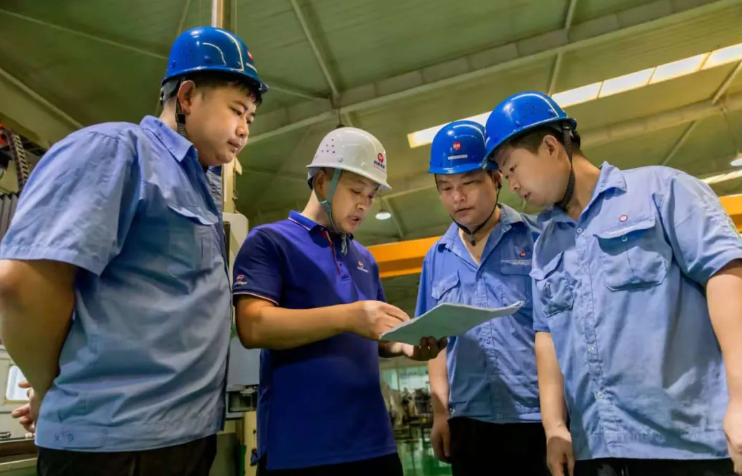
Group 1 - The All-China Federation of Trade Unions announced the list of innovation studios supported for 2025, with two studios from Weihai receiving funding of 200,000 yuan, marking a significant step in high-skilled talent cultivation and technological innovation platform development in the city [1] - The Gu Dawei Innovation Studio, led by national labor model Gu Dawei, focuses on the independent research and development of high-end equipment for the carbon fiber industry chain, aiming to provide domestically produced "mother machines" for industrial manufacturing and support national aerospace and major engineering projects [2] - The studio has applied for 200 patents and completed over 500 technological innovations since its establishment, generating an annual economic benefit exceeding 30 million yuan, while also training over 50 senior technicians and more than 1,000 individuals annually [4] Group 2 - The Duan Yanpu Innovation Studio, led by national craftsman Duan Yanpu, consists of 34 members and focuses on management, method, and technological innovations related to advanced third-generation nuclear power demonstration projects [5] - The studio has adopted a work habit of "summarizing, refining, and enhancing," leading to the discovery and resolution of on-site issues, and has accumulated over 50 patents, 4 software copyrights, and published more than 20 professional papers [7] - Weihai City Federation of Trade Unions plans to strengthen the construction of innovation studios, promote technological, service, and management innovations, and enhance the demonstration and radiation effects of labor model innovation studios to inject strong innovative momentum into the city's high-quality development [7]
郭言:日本加速重启核电风险剧增
Xin Lang Cai Jing· 2026-01-04 23:11
Core Viewpoint - Japan's Niigata Prefectural Assembly has approved a supplementary budget to restart the Kashiwazaki-Kariwa Nuclear Power Plant, with Tokyo Electric Power Company planning to restart one reactor by January 20, 2026, despite significant domestic and international opposition regarding safety concerns [1][2]. Group 1: Government Actions and Public Response - The Japanese government is accelerating the restart of nuclear power plants to alleviate energy supply pressures and increase energy self-sufficiency, but faces challenges such as aging facilities and poor management [1]. - A poll conducted in October 2025 revealed that 60% of local residents believe the conditions for restarting the Kashiwazaki-Kariwa Nuclear Power Plant are not yet mature, and nearly 70% are concerned about Tokyo Electric Power Company's operational capabilities [2]. - The government has been criticized for ignoring public opinion and safety concerns, leading to strong local opposition [2]. Group 2: Safety Concerns and Historical Context - The Kashiwazaki-Kariwa Nuclear Power Plant is located on an active seismic fault line and has a history of safety vulnerabilities, raising alarms about the decision to restart it [1]. - The Fukushima nuclear disaster's aftermath remains a concern, with ongoing safety incidents, including a recent leak of radioactive water from a decommissioned reactor, highlighting serious gaps in Japan's nuclear safety oversight [2]. - The international community is urged to remain vigilant regarding Japan's nuclear safety regulatory framework, which is perceived as severely lacking [3].
日本加速重启核电风险剧增
Jing Ji Ri Bao· 2026-01-04 22:14
Core Viewpoint - Japan's Niigata Prefectural Assembly has approved a supplementary budget to restart the Kashiwazaki-Kariwa Nuclear Power Plant, with Tokyo Electric Power Company planning to restart one reactor by January 20, 2026, despite significant domestic opposition and international concerns regarding safety [1][2]. Group 1: Domestic Concerns - There is a strong local opposition to the restart of the Kashiwazaki-Kariwa Nuclear Power Plant, with a poll indicating that 60% of residents believe the conditions for restarting are not yet mature, and nearly 70% express concerns about Tokyo Electric Power Company's operational capabilities [2]. - The history of Tokyo Electric Power Company includes incidents of concealing accidents and manipulating data related to nuclear contamination, raising doubts about its reliability [2]. Group 2: Safety Risks - Japan's push to restart nuclear power plants is seen as risky due to aging facilities, management issues, and inadequate regulation, particularly for the Kashiwazaki-Kariwa plant, which is located on an active seismic fault line and has previously been exposed for safety vulnerabilities [1]. - The recent leak of radioactive water from the decommissioned "Fugen" reactor highlights ongoing safety concerns and operational deficiencies within Japan's nuclear facilities [2]. Group 3: International Perspective - The international community is urged to remain vigilant regarding Japan's nuclear safety practices, as the decision to restart the largest nuclear power plant reflects serious flaws in the country's nuclear safety regulatory system and a lack of responsibility towards both domestic and neighboring populations [3].
中国核电:累计回购4145.52万股
Zheng Quan Ri Bao Zhi Sheng· 2026-01-04 14:12
(编辑 王江浩) 证券日报网讯 1月4日,中国核电发布公告称,截至2025年12月31日,公司累计回购股份数量为41, 455,157股,占公司目前总股本的比例为0.20%,购买的最高价为9.65元/股,购买的最低价为8.40元/ 股,已支付的总金额为374,812,709.49元(不含佣金等交易费用)。 ...