
网络安全

Search documents
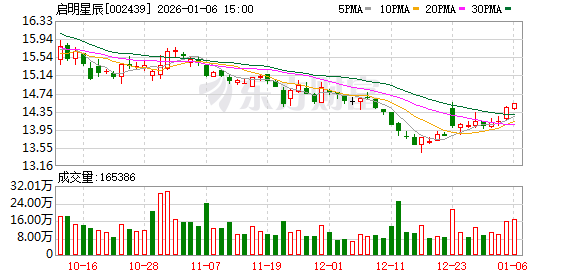
启明星辰:公司始终重视市值管理工作
Zheng Quan Ri Bao· 2026-01-06 13:41
证券日报网讯 1月6日,启明星辰在互动平台回答投资者提问时表示,公司始终重视市值管理工作,已 制定并审议通过《市值管理办法》,系统性推进市值管理各项工作。一是持续提升信息披露质量,公司 连续六年获深交所信息披露考评A级;二是持续加强投资者关系管理,通过业绩交流会、"互动易"、投 资者热线等多渠道与投资者保持沟通;三是与中国移动积极研究并持续评估包括分红、回购增持等方 案,以便适时推出符合公司发展和全体股东长远利益的回报举措。投资者热线电话在公司官网投资者关 系专栏-公司资讯,公司的年度报告、半年度报告中均有披露。 (文章来源:证券日报) ...


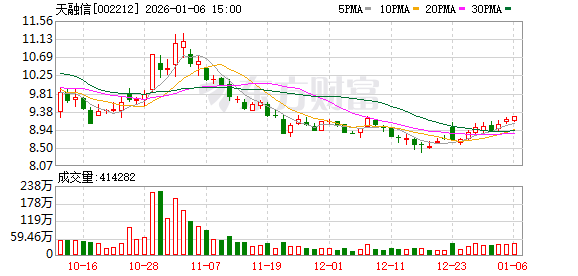
天融信:公司持续推进第一成长曲线网络安全业务的转型升级
Zheng Quan Ri Bao· 2026-01-06 13:41
Group 1 - The company is continuously advancing the transformation and upgrading of its primary growth curve in network security business [2] - The company has developed a comprehensive network security business that integrates AI and covers various scenarios including basic networks, industrial internet, vehicle networking, and IoT [2] - The network security services span across multiple industries such as government, telecommunications, finance, energy, education, and healthcare [2]

启明星辰:公司目前经营正常,现金流充裕
Zheng Quan Ri Bao· 2026-01-06 13:41
(文章来源:证券日报) 证券日报网讯 1月6日,启明星辰在互动平台回答投资者提问时表示,公司目前经营正常,现金流充 裕,资产负债结构健康,按照既定战略开展主营业务,持续深化与中国移动的战略协同,强化科技创 新,持续推进提质增效。在市值管理方面,公司力求高质量信披、加强投资者沟通、积极研究并持续评 估包括分红、回购增持等方案,以便适时推出符合公司发展和全体股东长远利益的回报举措。 ...
信创安全快速发展,国产化势在必行
NORTHEAST SECURITIES· 2026-01-06 05:40
Investment Rating - The report rates the industry as "Outperforming the Market" [4] Core Insights - The domestic information technology application innovation (信创) industry is rapidly developing, driven by both policy and market forces, with a market size of 20,961.9 billion yuan in 2023, reflecting a year-on-year growth of 25.6% [1][22] - The 信创 industry encompasses IT infrastructure, basic software, application software, and information security, forming a complete industrial chain and ecosystem [1][16] - The strategic layout of the 信创 industry is characterized by a "2+8+N" model, focusing on key sectors such as government, finance, telecommunications, energy, and education [1][28] - The growth drivers for the 信创 industry include economic factors, technological advancements, and security concerns, particularly in response to external pressures on high-tech sectors [1][25] Summary by Sections 1. Policy and Market Dynamics - The 信创 industry is supported by a comprehensive policy framework that includes top-level design, special support, and standard regulations [22] - The market for traditional cybersecurity in China has grown steadily from 47.8 billion yuan in 2019 to 69.4 billion yuan in 2023, with a CAGR of 9.77% [2][38] - The 信创 security market is projected to grow from approximately 5 billion yuan in 2023 to 16.6 billion yuan by 2027, with a CAGR of 35% [2][66] 2. 信创 Security Overview - 信创 security is a comprehensive security assurance system aimed at ensuring stability and safety against threats such as viruses and data breaches through domestic software and hardware products [2][61] - The distribution of 信创 security products is primarily in endpoint security, boundary security, and security management, with boundary security products accounting for the largest share at 29.9% [3][78] 3. Key Companies in the Industry - Notable companies in the 信创 security sector include Qi An Xin, Inspur, and Sangfor, which are actively developing and adapting their products to meet the needs of the 信创 environment [3][69] - The report highlights the importance of collaboration between security vendors and 信创 enterprises to enhance the security capabilities of the 信创 ecosystem [86] 4. Future Outlook - The 信创 security market is expected to see significant growth, driven by the need for enhanced security measures and the integration of AI technologies [88] - The industry is moving towards a more integrated and systematic approach to security solutions, adapting to various application scenarios and enhancing product performance [84][83]
一批国家标准1月1日起实施
Xin Lang Cai Jing· 2026-01-06 02:56
Group 1 - The core message is that new national standards for infant and children's furniture safety, as well as other sectors, will be implemented starting January 1, 2026, to promote healthy development in emerging industries and ensure consumer safety [1] - The "Safety Technical Specifications for Infant and Children's Furniture" establishes mandatory safety requirements for furniture used by children aged 0-14, covering materials, structure, fire resistance, electrical safety, harmful substance limits, and warning labels [1] - The "Technical Requirements for Photovoltaic Module Disposal" provides a scientific basis for determining when photovoltaic modules should be discarded, ensuring safety and functionality [1] Group 2 - The "Automotive Maintenance, Testing, and Diagnosis Technical Specifications" outlines maintenance levels, cycles, operational requirements, and quality assurance to standardize automotive repair and enhance vehicle safety and longevity [1] - The "Network Security Technical Information System Disaster Recovery Specifications" defines principles, lifecycle, basic requirements, recovery capability levels, and testing methods for disaster recovery in information systems [2] - The implementation of standards for aging-friendly products, such as "Toilet Chairs" and "Fitness Equipment for the Elderly," aims to meet the new demands of elderly users and promote the healthy development of the aging-friendly fitness equipment industry [2]
奇安信旗下子公司一年内三次涉招投标负面行为
Nan Fang Du Shi Bao· 2026-01-05 16:09
Core Viewpoint - Qihoo 360's subsidiary, Qihoo 360 Network Technology (Beijing) Co., Ltd., has been involved in negative bidding behavior, resulting in a three-year ban from participating in procurement related to "fully competitive field products" by China Mobile Xinjiang Company [2][3] Group 1: Negative Bidding Behavior - Qihoo 360 Network Technology was found to have committed a serious negative behavior during the bidding process for antivirus and server antivirus software products [3] - The specific nature of the serious negative behavior was not disclosed by China Mobile Xinjiang Company, but it falls under the category of serious negative behaviors as defined by the procurement rules [3] - In the past year, Qihoo 360 Network Technology has been involved in at least three instances of negative bidding behavior [3] Group 2: Previous Incidents - A significant incident occurred in May 2025 when Qihoo 360 Network Technology was suspended from procurement by the military due to collusion in bidding, resulting in a one-year ban from participating in military procurement activities [4] - Qihoo 360 Network Technology has repeatedly appeared on the blacklist of China Mobile subsidiaries, with previous bans from participating in specific product collaborations due to negative behaviors reported by China Mobile Fujian Company and China Mobile (Hangzhou) Information Technology Co., Ltd. [5]

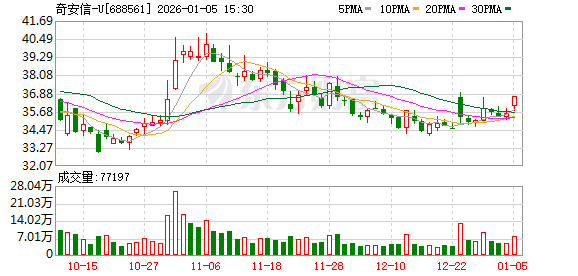
三未信安:公司已在包括机器人在内的多个智能无人设备领域进行市场布局
Zheng Quan Ri Bao Wang· 2026-01-05 14:12
Group 1 - The company has made market layouts in multiple intelligent unmanned device fields, including robotics [1] - The company has established business collaborations with leading domestic enterprises in the humanoid robot sector [1] - The company provides security solutions to clients based on its leading password products [1]

全国第一所!网安大学来了,就在武汉
Chang Jiang Ri Bao· 2026-01-05 08:22
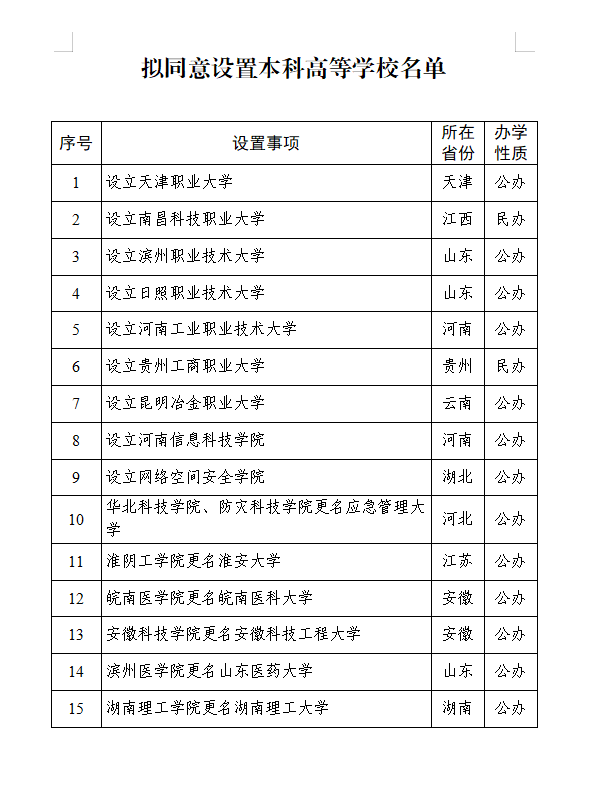
Core Viewpoint - The Ministry of Education has announced the proposed establishment of 15 new higher education institutions, including the Cybersecurity College, aimed at enhancing the country's cybersecurity talent pool and supporting national strategic goals [1][4]. Group 1: New Institutions - The proposed institutions include both public and private universities, with notable mentions such as Tianjin Vocational University (public), Nanchang University of Science and Technology (private), and the Cybersecurity College located in Hubei [2][4]. - The Cybersecurity College is positioned as the first higher education institution in China dedicated to cybersecurity, focusing on cultivating high-end talent in this critical field [5][6]. Group 2: Strategic Importance - The establishment of the Cybersecurity College is a response to the increasing demand for cybersecurity professionals due to rapid advancements in technologies like artificial intelligence and quantum technology [6]. - The college aims to bridge the gap in core technology research and development, addressing the current talent shortage in the cybersecurity sector, which is projected to reach a shortfall of 3.27 million professionals by 2027 [7]. Group 3: Educational Approach - The college will adopt an innovative application-oriented educational model, emphasizing deep integration of industry and education, and fostering collaboration between government, industry, and academia [7][15]. - Initial academic offerings will include programs in cutting-edge fields such as autonomous driving security, artificial intelligence security, software engineering security, and data science security [14]. Group 4: Infrastructure and Resources - The college will utilize the National Cybersecurity Talent and Innovation Base, which hosts over 200 cybersecurity companies, providing a rich ecosystem for practical learning and industry collaboration [13]. - Advanced facilities such as a password engineering laboratory and a cybersecurity protection and operation laboratory have already been established to support the educational mission [16].
赛迪顾问发布2026年IT趋势 AI+成发展主线
Jing Ji Guan Cha Wang· 2026-01-05 04:45
Core Insights - The 2026 IT trends conference hosted by CCID Consulting highlighted key areas such as computing power, storage, AI, industrial software, cybersecurity, satellite communication, industrial internet, financial digital transformation, and urban trusted data spaces, with insights from ten senior analysts [2] Group 1: Artificial Intelligence - The integration of cloud and data intelligence will solidify AI infrastructure, with AI-enhanced SaaS and task-oriented terminals accelerating adoption in key sectors like industry, government, and healthcare [2] - After the general model craze, large models will focus on vertical small models and autonomous intelligent agents, evolving from a "general base" to an "intelligent engine" driving industrial transformation [5] Group 2: Computing Power - The local computing ecosystem is maturing, with domestic brands expected to sell over 280,000 computing servers in 2026, leading to large-scale implementation of interconnected computing power [2][3] Group 3: Storage - The demand for AI is driving a "super cycle" in the storage industry, with prices for consumer-grade SSDs potentially doubling and high-bandwidth memory (HBM) demand continuing to rise [3] Group 4: Industrial Software - Industrial software is crucial for transitioning manufacturing from experience-driven to data-driven, enhancing efficiency and resource allocation [3] Group 5: Cybersecurity - The Chinese cybersecurity system will increasingly focus on intelligent upgrades and resilience, driven by evolving market demands and mature core technologies [4] Group 6: Satellite Communication - Satellite communication is becoming a core pillar of national strategic technological strength, facilitating seamless coverage and supporting future industries like low-altitude economy and space resource development [3] Group 7: Digital Transformation in Finance - New AI technologies are reshaping the foundational logic and operational methods of financial services, driving digital transformation in the financial sector [6] - The integration of generative AI in financial verticals is transforming IT from a supportive tool to a core engine of financial innovation [6] Group 8: Urban Trusted Data Spaces - The construction of a secure and trusted data circulation ecosystem is essential for driving high-quality urban development, enhancing modern governance and digital collaboration [5]

亚信安全:股东合计减持6490024股
Zheng Quan Ri Bao Wang· 2026-01-04 14:14
证券日报网讯1月4日,亚信安全发布公告称,2025年12月25日至31日,股东南京安融、南京安宸、天津 毅信、南京信智、南京践信通过集中竞价及大宗交易合计减持亚信安全6490024股,占总股本1.62%, 减持计划完成。上述5家减持主体及其一致行动人合计持有公司股份比例由9.17%减少至7.55%。本次减 持计划已实施完毕。 ...
