Retail

Search documents
X @The Wall Street Journal
The Wall Street Journal· 2026-03-03 09:08
A battle between Kroger and Publix illustrates the risks and rewards of spending millions to win over shoppers https://t.co/tErSGfr8nJ ...
Sturm, Ruger & Company, Inc. Reports Fourth Quarter and Full-Year 2025 Results
Businesswire· 2026-03-02 21:05
Core Insights - Sturm, Ruger & Company, Inc. reported fourth quarter net sales of $151.1 million and full-year net sales of $546.1 million, reflecting a 3.6% increase in Q4 and a 1.9% increase for the full year compared to 2024 [1] - The company declared a quarterly dividend of $0.08 per share, amounting to approximately 40% of net income for 2025 [1] - Despite a challenging consumer environment, the company launched 65 new models in Q4, contributing to strong consumer demand and outperforming the broader market [1] Fourth Quarter 2025 Financial Highlights - Adjusted diluted earnings for Q4 2025 were $0.26 per share, while diluted earnings were $0.21 per share, down from $0.62 per share in Q4 2024 [1] - Net sales for Q4 2025 reached $151.1 million, up from $145.8 million in Q4 2024 [1] Full-Year 2025 Financial Highlights - The company reported a loss of $0.27 per share for the full year 2025, compared to earnings of $1.77 per share in 2024; adjusted diluted earnings per share were $0.84 in 2025 versus $1.86 in 2024 [1] - Full-year net sales totaled $546.1 million, an increase from $535.6 million in 2024 [1] Shareholder Returns and Capital Management - In 2025, the company returned $36.1 million to shareholders through dividends and share repurchases, with $10.1 million in dividends and $26.0 million used to repurchase 733,000 shares at an average cost of $35.60 per share [1] - Capital expenditures for 2025 amounted to $30.9 million, including $15.0 million for the acquisition of Anderson Manufacturing [1] Operational Performance - Cash generated from operations in 2025 was $54.3 million, with cash and short-term investments totaling $92.5 million as of December 31, 2025 [1] - The company's finished goods inventories decreased by 47,700 units, while distributors' inventories decreased by 33,500 units, indicating strong retail demand for new products [1] - Sales of new products accounted for $173 million, or 33%, of firearm sales in 2025, with a 4.5% increase in estimated sell-through from independent distributors to retailers [1] Strategic Focus - The company emphasized the need to improve bottom-line performance and align manufacturing with demand, stating that these actions are essential for long-term success [1] - The management is focused on balancing capacity, controlling costs, and investing in products and capabilities to enhance future growth and performance [1]



The War in Iran Could Last Weeks. Why Stock Investors Are Shrugging.
Investopedia· 2026-03-02 19:50
Group 1 - Wall Street analysts predict that the oil price spike due to the conflict in Iran will be short-lived and will have minimal impact on U.S. inflation and economic activity [1] - The U.S. stock market rebounded quickly from initial losses, indicating that investors are adapting to the geopolitical uncertainty surrounding the Middle East [1] - The conflict has raised concerns about the balance of power in the region and potential disruptions to global oil supply, particularly through the Strait of Hormuz, which is crucial for oil transportation [1] Group 2 - Oil prices surged, with West Texas Intermediate futures rising nearly 6% to around $71 a barrel after hitting an 8-month high of approximately $75 [1] - Analysts from UBS expect that any spike in oil prices will reverse once it becomes clear that supply disruptions are temporary and critical infrastructure remains intact [1] - The Iranian government has stated that no ships will be allowed to transit the Strait of Hormuz, leading to a reported decline in traffic through this vital waterway [1]

Stock Market Today: Markets React to Developments in Iran; Stocks Fall; Oil Jumps, Safe-Haven Gold Gains
Investopedia· 2026-03-02 17:00
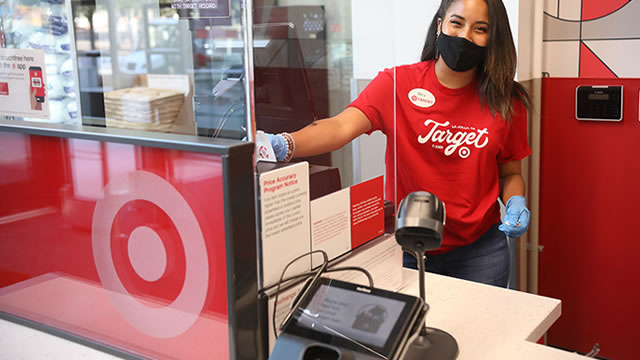
Market Reactions to Middle East Developments - Major stock indexes, including the Nasdaq and S&P 500, turned positive after earlier declines, with the Nasdaq up 0.4% and S&P 500 up less than 0.1% [1] - Oil prices surged, with West Texas Intermediate crude oil futures rising more than 6% to above $71 a barrel, benefiting oil companies [1] - Defense contractors saw significant gains, with Lockheed Martin, RTX, and Northrop Grumman up 3%, 3.5%, and 4% respectively [1] Energy Sector Performance - Shares of U.S. oil giants Exxon Mobil and Chevron increased by 2% and 1.5% respectively, while Occidental Petroleum and Phillips 66 rose by 1.5% and 2% [1] - LNG providers also experienced a boost, with Venture Global and Cheniere Energy shares soaring 11% and 7.5% respectively due to the conflict [2] Airline Industry Impact - Airline stocks dropped significantly as operations in the Middle East were disrupted, with Emirates canceling 95% of its flights and Air France-KLM shares plunging 12% [2] - U.S. carriers Delta Air Lines, United Airlines, and American Airlines saw their shares decline between 2% and 4% [1][2] Cryptocurrency and Related Stocks - Major cryptocurrencies, including Bitcoin, saw gains, with Bitcoin trading around $69,500, up from $63,000 [1] - Stocks affiliated with cryptocurrencies, such as MARA Global and Coinbase, surged by 8% and 4.5% respectively [1] Upcoming Earnings and Market Expectations - Target is expected to report fourth-quarter earnings, with traders anticipating a potential stock movement of up to 8% [1] - Analysts are focusing on Target's outlook under new CEO Michael Fiddelke, with expectations of a fundamental reshape of key processes and potential higher spending on store remodels [1]


This Is What Whales Are Betting On Target - Target (NYSE:TGT)
Benzinga· 2026-03-02 16:00
Group 1 - Deep-pocketed investors have adopted a bearish approach towards Target, indicating that significant market movements may be imminent [1] - Among the notable options activities, 46% of heavyweight investors are bullish while 53% are bearish, with a total of $418,626 in puts and $803,552 in calls [2] - The significant investors are targeting a price range for Target between $97.0 and $125.0 over the past three months [3] Group 2 - Analyzing volume and open interest is crucial for understanding liquidity and investor interest in Target's options, particularly within the strike price range of $97.0 to $125.0 over the last 30 days [4] - Professional analysts have proposed an average target price of $104.2 for Target based on insights shared over the past month [6] - Currently, Target's stock is trading at $112.4 with a volume of 1,522,432, reflecting a slight increase of 0.06% [7]


Walmart faces $100m judgment over driver pay allegations
Yahoo Finance· 2026-03-02 15:17
Core Viewpoint - Walmart has agreed to a $100 million judgment to resolve allegations of misleading delivery workers regarding their earnings, which resulted in significant financial losses for drivers [1]. Summary by Sections Allegations and Misleading Practices - The US Federal Trade Commission (FTC) and 11 states accused Walmart of overstating expected base pay, tips, and incentive payments in the Spark Driver app, leading to drivers losing tens of millions of dollars [1]. - Walmart allegedly did not disclose that advertised tips were not preauthorized and could be reduced or not received at all [2]. - The company failed to inform drivers that tips might be shared among multiple drivers for the same delivery [2]. Changes to Pay and Incentives - The complaint stated that Walmart cut base pay and/or tips when altering "batched" multi-order deliveries without properly informing drivers, sometimes only after the delivery was completed [2]. - The FTC also claimed that Walmart misrepresented the conditions for incentive payments, including referral bonuses, and sometimes failed to pay these incentives even when drivers met the criteria [3]. Legal and Regulatory Actions - The FTC indicated that these practices violated the FTC Act and the Gramm-Leach-Bliley Act by misrepresenting expected earnings and collecting drivers' financial information [3]. - Walmart's conduct was found to breach laws in several states, including Arizona, California, Illinois, Michigan, North Carolina, Oklahoma, Pennsylvania, South Carolina, Utah, and Wisconsin [4]. Settlement Terms - Under a proposed order, Walmart must implement an earnings verification program to ensure drivers receive the promised pay and tips [4]. - The company is prohibited from changing offered pay or tips after acceptance, except in limited circumstances, and from misrepresenting delivery-offer earnings [5]. Regulatory Focus - The FTC emphasized that truthful information about earnings is essential for efficient labor markets, reflecting its commitment to ensuring a healthy labor market for American workers [6].

2 Reasons to Buy Berkshire Hathaway Stock Like There's No Tomorrow
Yahoo Finance· 2026-03-02 13:57
Core Viewpoint - Berkshire Hathaway has experienced its most significant leadership change in over 50 years with Warren Buffett's retirement, yet the company is well-positioned for future growth [1] Group 1: Financial Position - Berkshire Hathaway ended Q3 with a record cash position of $381.7 billion, built through retained earnings and selective stock sales, including a 75% reduction in its Apple holdings since mid-2023 [2][3] - This substantial cash reserve provides the company with various options to enhance shareholder value, including capitalizing on market downturns, stock buybacks, and acquisitions of high-quality companies [3] Group 2: Resilience to AI Disruption - Concerns exist regarding AI's impact on various industries, particularly the software sector, but Berkshire Hathaway is relatively insulated from these disruptions [4][5] - The company's diverse portfolio, which includes insurance, railroads, utilities, energy, manufacturing, and retail, makes it less vulnerable to technological changes [6] - While some insurance operations may face risks from technological advancements, the utilities and energy sectors are expected to benefit from AI-driven demand for natural gas and electricity [6]
ETF Areas to Win/Lose Amid Middle East Tensions
ZACKS· 2026-03-02 13:25
Core Insights - Oil futures have surged sharply due to escalating conflicts in the Middle East, with Brent crude surpassing $82 per barrel and WTI crude crossing $70 per barrel, marking levels not seen since January 2025 [1][2] Military Escalation - The price increase followed extensive air strikes by the United States and Israel against Iran, aimed at dismantling Iran's nuclear program and regime [2] - Iranian Supreme Leader Ali Khamenei was reportedly killed during these strikes, prompting Iran to retaliate with missile attacks on U.S. military assets and energy infrastructure in Gulf states [3] Supply Risks - The Strait of Hormuz, a critical oil shipping chokepoint, is under scrutiny as it handles about one-fifth of global oil supply daily [4] - Approximately 15 million barrels per day typically transit the Strait, but disruptions could leave around 8 million barrels per day stranded, as regional pipelines can only reroute 5-7 million barrels daily [5] Sector ETFs to Gain - Energy ETFs, particularly the United States Brent Oil Fund LP (BNO), are expected to benefit from rising oil prices, with OPEC+ raising production quotas by 220,000 barrels per day [7] - Oil prices could exceed $100 per barrel if tanker flows are not restored quickly, with BNO gaining about 6.6% pre-market [8] - Shipping ETFs like SonicShares Global Shipping ETF (BOAT) are also likely to surge, with BOAT increasing about 5% pre-market [9][11] - Gold ETFs, such as SPDR Gold Shares (GLD), are rallying as gold is viewed as a safe haven asset amid tensions, with GLD adding about 2.2% pre-market [12] - Defense ETFs, including iShares U.S. Aerospace & Defense ETF (ITA), are performing well during warfare, with ITA gaining 3.5% pre-market [13] Sector ETFs to Lose - Oil refiners, represented by VanEck Oil Refiners ETF (CRAK), are likely to suffer as rising crude prices reduce profitability, with CRAK losing about 1.6% pre-market [14] - Retail ETFs, such as SPDR S&P Retail ETF (XRT), are expected to decline due to increased consumer costs from rising energy prices [15] - The iShares India 50 ETF (INDY) may face challenges as India relies heavily on oil imports, making it vulnerable to price increases [16] - Airlines, represented by U.S. Global Jets ETF (JETS), are likely to underperform as energy costs rise, with JETS losing 3.3% pre-market [17]

Finding The Security Premium As War Bells Ring
Seeking Alpha· 2026-03-02 12:30
Group 1: Market Reactions - Following the conflict in Iran, stocks are declining while the dollar is strengthening, with oil prices surging by 8% to over $72 per barrel and gold rising above $5,400 an ounce [5] - The Iranian Supreme Leader and top regime leaders were killed in strikes, leading to a joint U.S.-Israel military campaign aimed at curbing Iran's nuclear ambitions and regional terror activities [5] - Iran has retaliated by launching ballistic missiles towards Israel and other Gulf nations, escalating tensions in the region [5] Group 2: Investment Outlook - In the long term, investors are expected to favor nations and companies that can defend their interests and provide security, particularly in sectors like defense contracting, energy independence, and critical minerals [5] - Short-term safe havens such as gold, the dollar, and crude oil are in high demand until the investment landscape becomes clearer [5] Group 3: Company Developments - Berkshire Hathaway's Greg Abel emphasizes maintaining the company's unique culture in his first annual letter, despite a drop in operating earnings and a cash pile reaching $373 billion [3] - Amazon is increasing its investment in Spain to $40 billion, indicating a strategic expansion in international markets [8]

Here's How Much Target Stock Is Expected to Move After Earnings
Investopedia· 2026-03-02 11:40
Core Viewpoint - Target is expected to report its fourth-quarter earnings soon, with significant stock movement anticipated by traders following the results [1] Company Summary - Target's fourth-quarter earnings report is scheduled for Tuesday morning [1] - Traders are preparing for a notable change in the retailer's stock price based on the earnings results [1]