
资本市场

Search documents
证监会:继续把北京作为资本市场改革开放的重要窗口
Sou Hu Cai Jing· 2025-10-27 21:59
Core Points - The China Securities Regulatory Commission (CSRC) emphasizes Beijing's role as a key window for capital market reform and opening up, aiming to enhance the capital market's hub function [1] - CSRC plans to implement more pioneering policies in Beijing, encouraging high-quality industry institutions and long-term capital to gather and develop in the capital [1] - The CSRC aims to deepen reforms to enhance market inclusiveness and adaptability, responding to new demands and expectations from both financing and investment sides [1] Group 1 - The CSRC will initiate reforms for the Growth Enterprise Market, establishing listing standards that better align with the characteristics of emerging fields and future industries [3] - The CSRC will continue to promote the high-quality development of the Beijing Stock Exchange and improve the differentiated listing, information disclosure, and trading systems of the New Third Board [3] - The CSRC has launched the "Qualified Foreign Institutional Investor System Optimization Work Plan," which includes optimizing access management and expanding investment scope to provide a more transparent and efficient environment for foreign investors [3]

迈向高质量发展新阶段 资本市场“十四五”改革回顾与“十五五”前景展望
Zhong Guo Zheng Quan Bao· 2025-10-27 21:14
Core Viewpoint - China's capital market has undergone significant institutional reforms during the "14th Five-Year Plan" period, enhancing both scale and quality, and is expected to play a crucial role in supporting the real economy, facilitating innovation resource allocation, and driving economic transformation in the "15th Five-Year Plan" period [1][8]. Financing Reforms - The capital market has achieved multi-dimensional balanced development, with total financing through stock and bond markets reaching 57.5 trillion yuan, and the direct financing ratio increasing to 31.6%, up by 2.8 percentage points from the end of the "13th Five-Year Plan" [2]. - The quality and efficiency of financing have improved, with the new "National Nine Articles" set to enhance listing standards and the evaluation system for innovative attributes, leading to a significant filtering effect in the IPO market [2]. - From August 2023 to August 2025, approximately 560 companies withdrew their IPO applications, indicating a strengthened market entry filter [2]. Market Performance - The A-share market is expected to see an average daily trading volume of 1.67 trillion yuan from September 2024 to September 2025, with a turnover rate of 4.10%, reflecting improved market pricing efficiency and resource allocation [3]. - The capital market has shown strong performance, with the Shenzhen Component Index, Hang Seng Index, and Shanghai Composite Index rising by 61.87%, 45.38%, and 39.58% respectively, leading global stock indices [4]. Stability and Regulation - The annualized volatility of the Shanghai Composite Index decreased to 15.9%, down by 2.8 percentage points from the "13th Five-Year Plan" period, indicating enhanced market resilience [5]. - A total of 207 companies achieved smooth delisting during the "14th Five-Year Plan," with the delisting rate increasing from 0.28% in 2019 to 0.97% in 2024, reflecting a more dynamic market environment [6]. Investor Returns - The new "National Nine Articles" established stricter regulations on share buybacks and dividends, leading to a significant increase in cash dividends and share repurchases totaling 10.6 trillion yuan over the past five years, an increase of over 80% compared to the "13th Five-Year Plan" [7]. - The capital market has seen a reversal in foreign capital outflows, with a net increase of 10.1 billion USD in foreign holdings of domestic stocks and funds in the first half of 2025 [7]. Future Outlook - The "15th Five-Year Plan" emphasizes building a modern industrial system and enhancing technological self-reliance, with the capital market expected to play a pivotal role in supporting these initiatives [9][10]. - The focus will be on improving financing efficiency, enhancing the value discovery function of the capital market, and ensuring a stable investment environment to support long-term growth [10][12][13].
吴清最新讲话全文实录来了!将启动实施深化创业板改革
Xin Hua Cai Jing· 2025-10-27 14:00
Core Viewpoint - The China Securities Regulatory Commission (CSRC) emphasizes the importance of deepening reforms in the capital market to enhance its inclusiveness, adaptability, and competitiveness, while focusing on risk prevention, strong regulation, and promoting high-quality development [1][4]. Group 1: Capital Market Reforms - The CSRC will launch the first batch of newly registered companies on the Sci-Tech Innovation Board, indicating a significant step in capital market reform [1][5]. - The CSRC plans to implement deeper reforms in the ChiNext board, establishing listing standards that better align with the characteristics of emerging industries and future technologies [1][5]. - The introduction of a refinancing framework and support for mergers and acquisitions will be prioritized to strengthen the stability of listed companies [6]. Group 2: Financial Services and Support - The CSRC aims to provide more precise and inclusive financial services for new industries, new business formats, and new technologies [1][5]. - The development of the Beijing Stock Exchange will be promoted to support innovative small and medium-sized enterprises [6]. Group 3: Risk Management and Investor Protection - The CSRC will enhance risk prevention capabilities and strengthen regulatory measures to protect investor rights, including the introduction of 23 practical measures to improve investor protection [8]. - A focus on cross-market and cross-border risk monitoring will be established to prevent significant market fluctuations [8]. Group 4: International Cooperation and Market Opening - The CSRC has introduced an optimized Qualified Foreign Institutional Investor (QFII) scheme to provide a more transparent and efficient environment for foreign investors [7]. - The establishment of two ETF products for overseas market investment will be announced soon, enhancing international investment opportunities [7].

吴清:证监会将启动实施深化创业板改革,A股、港股配置价值更加显现
Mei Ri Jing Ji Xin Wen· 2025-10-27 13:50
Core Points - The China Securities Regulatory Commission (CSRC) will implement reforms to the ChiNext board to better align with the characteristics of emerging industries and innovative enterprises [2] - The CSRC has officially launched the "Qualified Foreign Investor System Optimization Work Plan," aimed at improving access management and investment efficiency for foreign investors [3] - The value of Chinese assets, including A-shares and Hong Kong stocks, is becoming more apparent amid risk re-pricing and asset rebalancing [7] Group 1: Reforms and Initiatives - The CSRC will deepen reforms on the ChiNext board, establishing listing standards that cater to new industries and technologies [2] - The "Qualified Foreign Investor System Optimization Work Plan" includes measures to streamline approval processes and expand investment scope for foreign investors [3] - A refinancing framework will be introduced to support mergers and acquisitions, encouraging companies to enhance governance and return value to shareholders [8] Group 2: Market Development and Investor Protection - The CSRC aims to promote the high-quality development of the Beijing Stock Exchange and improve the connection mechanisms between different market tiers [10] - New opinions on strengthening the protection of small and medium investors will be released, focusing on enhancing fairness in trading and improving service levels [11] - The CSRC will adopt a "zero tolerance" approach to financial fraud and market manipulation to bolster investor confidence [12] Group 3: Market Stability and Long-term Investment - The CSRC will enhance risk monitoring across markets and industries to prevent significant market fluctuations [13] - Efforts will be made to leverage long-term capital as a stabilizing force in the market, promoting reforms in public funds and encouraging long-term investment strategies [14]
吴清金融街论坛重磅发声!全文来了
Sou Hu Cai Jing· 2025-10-27 13:37
Core Insights - The speech emphasizes the importance of financial high-quality development and the need for reforms in China's capital markets to adapt to both domestic and international challenges [3][5][9] Group 1: Economic and Market Context - The past five years have seen China's capital markets withstand multiple risks and challenges, leading to improved market resilience and effective support for economic development [4] - The global economic landscape is undergoing significant changes, with over $150 billion of international funds flowing into emerging markets in the first nine months of this year, indicating a re-evaluation of Chinese assets [4] - New industries and business models, particularly in AI and biomedicine, are emerging, requiring substantial patient capital and a flexible financing environment to support innovation [4][5] Group 2: Policy and Reform Initiatives - The introduction of the "1+6" policy for the Sci-Tech Innovation Board aims to enhance the inclusiveness and coverage of the multi-tiered market system, with new companies set to list soon [6] - The focus will be on solidifying the foundation of the market by promoting high-quality listed companies and expanding channels for mergers and acquisitions [7] - A new scheme to optimize the Qualified Foreign Institutional Investor (QFII) system has been launched to improve transparency and efficiency for foreign investors [8] Group 3: Risk Management and Investor Protection - There is a strong emphasis on enhancing risk prevention and regulatory measures to protect investor rights, including a series of practical measures aimed at improving the trading environment for small investors [8] - The commitment to strengthen the monitoring of cross-market and cross-border risks is highlighted, along with a focus on deterring financial misconduct [8]

QFII制度优化方案发布,配置型外资迎“绿色通道”
Di Yi Cai Jing· 2025-10-27 13:26
Core Points - The recent optimization of the Qualified Foreign Institutional Investor (QFII) system marks a significant step in expanding China's capital market openness [2][3] - The new measures aim to provide a more transparent, convenient, and efficient environment for various foreign investors [2][3] Summary by Sections QFII System Optimization - On October 27, the China Securities Regulatory Commission (CSRC) announced the launch of the "Qualified Foreign Investor System Optimization Work Plan," which includes optimizing access management, improving investment operation efficiency, and expanding investment scope [2][3] - The plan introduces a "green channel" for certain applicants, promising a three-working-day approval timeline for qualified international organizations, sovereign funds, and pension funds [2][6] Market Impact - The optimization is expected to enhance the internationalization and marketization of China's financial markets, encouraging overseas investors to participate more actively [2][4] - As of now, there are 913 qualified foreign investors in China, with a total asset scale exceeding 1 trillion RMB [3][4] Historical Context - The last major reform of the QFII system occurred in September 2020, which lowered entry barriers and simplified application processes [4] - The current measures are part of a broader initiative to enhance China's capital market openness by 2025 [4][5] Future Developments - The CSRC plans to accelerate the implementation of additional measures from the optimization plan to attract more long-term foreign capital [7] - The focus will be on creating a balanced development between onshore and offshore channels, as well as between different types of funds [7]
证监会:强化对存在退市风险的上市公司股票异常交易监控 从严认定异常交易行为
Mei Ri Jing Ji Xin Wen· 2025-10-27 12:25
Core Viewpoint - The China Securities Regulatory Commission (CSRC) has issued new guidelines aimed at enhancing the protection of small and medium investors in the capital market, effective immediately upon publication [1] Group 1: Regulatory Measures - The guidelines emphasize the need for continuous supervision of listed companies at risk of delisting [1] - Companies facing delisting risks are required to fully disclose such risks to safeguard investors' right to be informed [1] - The CSRC will strengthen monitoring of abnormal trading activities related to stocks of companies at risk of delisting, implementing stricter criteria for identifying such activities [1] Group 2: Investor Protection - The guidelines include measures to promptly suspend trading accounts in response to identified abnormal trading activities, aiming to prevent irrational speculation [1]
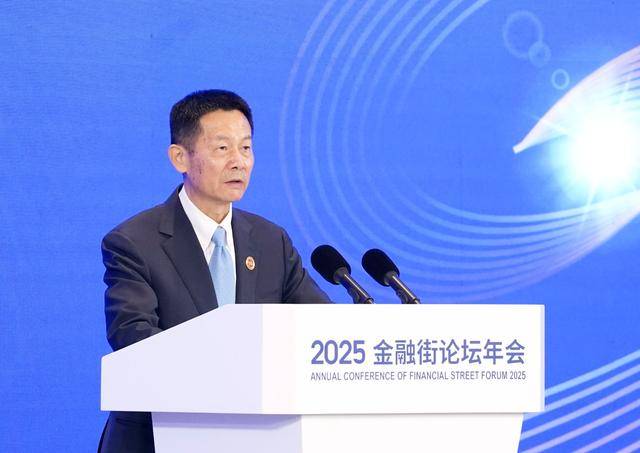
2025金融街论坛|吴清:将启动实施深化创业板改革
Bei Jing Shang Bao· 2025-10-27 12:14
同时,吴清表示,将坚持打造服务创新型中小企业主阵地的定位,持续推动北交所高质量发展,健全新 三板市场差异化的挂牌、信披、交易制度,畅通三、四板对接机制,筑牢多层次资本市场的塔基和底 座。 北京商报讯(记者 马换换 李佳雪)10月27日,中国证监会主席吴清在2025金融街论坛年会开幕式上表 示,将启动实施深化创业板改革,设置更加契合新兴领域和未来产业创新创业企业特征的上市标准,为 新产业、新业态、新技术企业提供更加精准、包容的金融服务。 ...
2025金融街论坛|吴清:将发布加强资本市场中小投资者保护的若干意见
Bei Jing Shang Bao· 2025-10-27 12:14
北京商报讯(记者 马换换 李佳雪)10月27日,中国证监会主席吴清在2025金融街论坛年会开幕式上表 示,今天,将发布加强资本市场中小投资者保护的若干意见,围绕强化发行上市、退市等过程中的投资 者保护,营造更加公平的交易环境,提升行业机构的客户服务水平,推进证券期货纠纷多元化解机制建 设等中小投资者重点关切,推出23项务实举措,不断扎牢织密投资者保护"安全网"。 ...
证监会主席吴清在2025金融街论坛年会上的主题演讲
Xin Lang Cai Jing· 2025-10-27 12:04
Core Viewpoint - The speech emphasizes the importance of comprehensive reform in investment and financing to promote high-quality development of the capital market during the 14th Five-Year Plan period and beyond, highlighting the need for adaptability and inclusiveness in the market to meet new challenges and opportunities [1][2][3]. Group 1: Capital Market Development - The past five years have seen significant improvements in China's capital market, with enhanced resilience and risk management capabilities, supporting the broader economic development [2]. - The external environment for capital market development is becoming increasingly complex, with new challenges arising from global economic shifts and technological revolutions [2][3]. - There is a growing consensus among international investors on the importance of diversified asset allocation, as evidenced by over $150 billion flowing into emerging markets in the first nine months of this year [2]. Group 2: Reform Initiatives - The introduction of the "1+6" policy for the Sci-Tech Innovation Board aims to enhance the inclusiveness and coverage of the multi-tiered market system, with the first batch of new registered companies set to list soon [4]. - The reform of the Growth Enterprise Market will focus on creating listing standards that better align with the characteristics of emerging industries and technologies [4]. - The establishment of a refinancing framework and support for mergers and acquisitions will strengthen the foundation of high-quality listed companies [5]. Group 3: Risk Management and Investor Protection - A robust risk management framework is being developed to enhance the ability to prevent and address risks, with a focus on cross-market and cross-border monitoring [6]. - New measures to protect the rights of small and medium investors will be implemented, including enhancing the fairness of trading environments and improving service levels of industry institutions [6]. - The introduction of the "Qualified Foreign Investor System Optimization Plan" aims to create a more transparent and efficient environment for foreign investors [6]. Group 4: Financial Center Development - The development of Beijing as a national financial management center is seen as a key responsibility for the China Securities Regulatory Commission, aiming to attract quality institutions and long-term capital [7]. - The capital market in Beijing will serve as a testing ground for innovative policies, enhancing the interaction between the capital market and the local economy [7].