资本市场开放

Search documents
高盛董事长苏德巍答上证报:消费是中国经济长期增长的核心驱动力
Xin Lang Cai Jing· 2026-01-29 12:12
Core Viewpoint - The core growth opportunity for the Chinese economy in the long term lies in consumption, driven by the large population base and increasing household wealth [2][4][10] Group 1: Consumption as a Growth Driver - Consumption is expected to become the main driver of economic growth, with a shift from traditional manufacturing and exports to consumption and services over the next decade [4][10] - Despite the resilience of exports, their proportion in the economic structure needs further balancing [3][9] Group 2: Global Investor Interest - The activity level in the Chinese market has rebounded and is accelerating, leading to renewed interest from global investors [5][11] - The proportion of foreign investment in China has slightly increased, with potential to rise above 10% in the future [5][11] - The attractiveness of the Chinese stock market has drawn international investors back, and ongoing economic balance and capital market openness will attract more foreign capital [5][11] Group 3: Goldman Sachs Commitment - Goldman Sachs maintains a long-term and steadfast commitment to investing in the Chinese market, encouraged by the development of the capital market and various opening measures [2][5][11] - There is optimism about further opening measures that will solidify the development of China's capital market [5][11]



资讯早班车-2026-01-26-20260126
Bao Cheng Qi Huo· 2026-01-26 01:44
1. Report Industry Investment Rating No relevant content provided. 2. Core Viewpoints of the Report - The Chinese capital market is accelerating its opening - up, and new regulations for public funds are set to address industry issues. The bond market shows a slight upward trend, and the stock market has a positive outlook with new - fund issuance booming. Commodity markets, including metals, energy, and agriculture, have various price movements driven by different factors [2][17][25][36] - The macro - economic data shows a mixed picture, with GDP growth slowing, inflation rising slightly, and changes in various economic indicators such as manufacturing PMI, social financing, and trade [1] 3. Summary by Directory 3.1 Macro Data Overview - GDP growth in Q4 2025 was 4.5% year - on - year, down from 4.8% in the previous quarter and 5.4% in the same period last year. Manufacturing PMI was 50.1%, up from 49.8% in the previous month. Non - manufacturing PMI was 50.2%, slightly up from 50.0% [1] - Social financing in December 2025 was 22075 billion yuan, down from 35299 billion yuan in the previous month. M0, M1, and M2 growth rates changed compared to the previous month and the same period last year [1] - CPI in December 2025 was 0.8% year - on - year, up from - 0.3% in the previous month. PPI was - 1.9% year - on - year, slightly improved from - 2.3% [1] 3.2 Commodity Investment Reference 3.2.1 Comprehensive - The China Securities Regulatory Commission added 14 futures and options as domestic specific varieties, signaling an acceleration of capital market opening [2] - The Fed is expected to keep the federal funds rate unchanged at 3.50% - 3.75% in its January meeting, with a 95% probability according to the CME FedWatch tool [3] - On January 23, 31 domestic commodity varieties had positive basis, and 37 had negative basis [3] 3.2.2 Metals - Gold prices broke through $5000 per ounce, and silver prices exceeded $106 per ounce, with a 3% increase. Analysts predict gold price increases between 10% - 35% in 2026 [4][5] - Gold - related listed companies' performance improved due to rising gold prices, and some companies are still acquiring gold - mine assets [5] - The prices of gold and silver reached their highest weekly gains since 2020, driven by factors such as a weak dollar, capital outflows from currency and bonds, and geopolitical tensions [5] - The lithium carbonate futures price exceeded 180,000 yuan per ton, driven by supply contraction and demand growth, but market divergence is increasing [5] 3.2.3 Coal, Coke, Steel, and Minerals - Coking coal prices rose significantly, with most coal types increasing by over 100 yuan per ton, increasing coke production costs [7] - Coking enterprises' losses intensified, with an average loss of 65 yuan per ton of coke last week, a 20 - yuan increase from the previous week [7] - The coke market is in a tight supply - demand balance, with high steel - mill iron - water production and low coke production [8] - In 2025, the national coal production by large - scale enterprises reached 48.3 billion tons, a 1.2% year - on - year increase [8] 3.2.4 Energy and Chemicals - In December 2025, the national electricity market trading volume was 608 billion kWh, a 6.6% year - on - year increase. Green power trading volume increased by 32.3% [10] - Due to a cold wave in the US, natural gas futures prices exceeded $6 per million British thermal units for the first time since 2022 [10] - The US may cancel the 25% tariff on India if India's oil imports from Russia continue to decline [11] 3.2.5 Agricultural Products - In mid - January 2026, 29 out of 50 important production materials' prices rose, 13 declined, and 8 remained unchanged compared to early January. Pig prices increased by 3.2% [14] - Fruit prices, such as strawberries, cherries, and tangerines, decreased due to sufficient supply [14] - As of mid - January 2026, the price of soybeans increased by 0.31% month - on - month [14] 3.3 Financial News Compilation 3.3.1 Open Market - On January 23, the central bank conducted 125 billion yuan of 7 - day reverse repurchase operations, with a net injection of 38.3 billion yuan after deducting the maturity amount [15] - This week, 1181 billion yuan of reverse repurchases and 200 billion yuan of MLF will mature. The central bank conducted 900 billion yuan of MLF operations in January, with a net injection of 700 billion yuan [15] - The central bank's mid - term liquidity net injection in January reached 1 trillion yuan to maintain market liquidity [16] 3.3.2 Important News - The CSRC issued guidelines for public - fund performance comparison benchmarks, and the Asset Management Association of China released operating rules, which will take effect on March 1 [17] - The national market operation and consumption promotion meeting emphasized promoting commodity and service consumption upgrades [17] - In 2025, the actual use of foreign capital in China was 747.69 billion yuan, a 9.5% year - on - year decrease, but some industries saw growth [18] - The central bank will promote global financial governance reform and international financial cooperation in 2026 [18] 3.3.3 Bond Market Summary - The Chinese bond market showed a slight upward trend, with interest - rate bond yields falling by about 1bp. The 10 - year treasury bond yield reached 1.83% [25] - In the exchange bond market, most Vanke bonds rose, and the real - estate bond index and high - yield urban investment bond index also increased [26] - The convertible bond index rose, with some bonds having significant gains and losses [26][27] - Most money - market interest rates declined, and bond - issuance yields and multiples were reported [27][28] 3.3.4 Foreign Exchange Market - The on - shore RMB against the US dollar closed at 6.9642, down 14 points from the previous trading day, but up 48 points last week. The RMB central parity rate against the US dollar was raised by 90 points [31] - The US dollar index fell 0.79%, and most non - US currencies rose [31] 3.3.5 Research Report Highlights - Huatai Fixed - Income believes that the second - tier perpetual bonds have recovered, and the bond market may continue to fluctuate in Q1, with some trading opportunities [32] - Huatai Securities is optimistic about the investment opportunities of high - quality real - estate enterprises, commercial operators, Hong Kong - funded real - estate enterprises, and high - dividend property - management companies [32] - CICC Fixed - Income reports that the scale of nominal fixed - income + funds reached a record high in Q4 2025, while pure - bond funds faced redemption pressure [33] - CITIC Securities expects the expansion of public REITs to become normal, which will help transform the REITs market from "small and scattered" to "large and excellent" [34] - CITIC Construction Investment warns of risks such as US inflation, economic recession, European energy crisis, and global geopolitical risks [34] 3.4 Stock Market News - Foreign public - fund institutions are optimistic about the A - share market in 2026, maintaining high - position strategies and focusing on the technology sector [36][37] - Since the beginning of 2026, the new - fund issuance market has recovered, with 76 new funds established and a total fundraising of 71.939 billion yuan as of January 24 [37] 3.5 Today's Reminders - On January 26, 195 bonds will be listed, 127 bonds will be issued, 127 bonds will be paid, and 498 bonds will pay principal and interest [35]
迈向更深层次更高水平 资本市场开放提速
Zhong Guo Zheng Quan Bao· 2026-01-25 21:05
Group 1 - The China Securities Regulatory Commission has announced the addition of 14 specific futures and options products for domestic markets, signaling an acceleration in the opening of capital markets to foreign investors [1] - The move aims to enhance cross-border investment and financing convenience, improve overseas listing regulations, and strengthen risk prevention capabilities in an open environment [1] - Foreign institutions are not only entering the Chinese market but are also focusing on long-term strategies and deep integration, as evidenced by the establishment of Mizuho Securities (China) in Beijing with a registered capital of 2.3 billion yuan [2] Group 2 - Foreign institutions are expanding beyond traditional securities business into asset management and wealth management, creating differentiated development paths [2] - HSBC China has successfully launched its first public fund custody business in the domestic market, marking its entry into the local public fund custody sector and supporting local fund companies in global asset allocation [2] - The number of mainland companies listed on the Hong Kong stock market has increased, indicating a growing interest in overseas listings, particularly among technology companies [3] Group 3 - Chinese securities firms are transitioning from simple business expansion to building a global service ecosystem, enhancing international competitiveness and contributing to the development of top-tier investment banks [3][4] - China Galaxy Securities has established itself as a leading investment bank in the ASEAN region, leveraging its integrated cross-border service ecosystem to attract industry resources to Hainan Free Trade Port [4] - The capital market is expected to see further institutional opening, with increased support for foreign institutions operating in China and improved convenience for participation in the capital market [5] Group 4 - The State Administration of Foreign Exchange plans to promote high-level institutional opening in direct investment, securities investment, and cross-border financing, enhancing the channels and scope for foreign investment in China [5] - Recommendations include allowing foreign growth companies to list in China and developing new international financial centers through dual opening strategies [5][6] - Strengthening infrastructure connectivity and enhancing collaboration with overseas markets are expected to optimize the investment environment [5][6]

清华大学何平:国际资本流动对中国资本市场影响日益加深
Xin Lang Cai Jing· 2026-01-15 11:09
Core Viewpoint - The Chinese capital market is undergoing significant changes, transitioning from a policy-driven market to a more effective market, with increasing influence from international capital flows, making it an important part of global asset allocation [1][3]. Group 1: Market Transition - The capital market in China is shifting from administrative pricing to a more market-oriented pricing mechanism, indicating a move towards a market-driven era [1][3]. - The primary goal of market-oriented reforms is to enhance market efficiency, ensuring that quality assets are reasonably priced and resources are effectively allocated [1][3]. Group 2: International Influence - The impact of international capital flows on the Chinese capital market is growing, with recent rapid growth in the capital market and stock indices closely linked to international capital movements [1][3]. - Five key international factors currently influencing the Chinese capital market include: 1) Decline in dollar credit, 2) Overvaluation of the dollar, 3) Weakness in the European economy, 4) Recovery of the Japanese economy, and 5) Bubble in the U.S. stock market [1][3]. Group 3: Future Outlook - The Chinese capital market is entering a new phase characterized by structural opportunities, value reconstruction, and coordinated institutional reforms, with a positive outlook for development [2][4]. - The transition from a closed market to an open market, along with the economic potential and resilience of China, is favorable for the growth of the capital market [2][4].
沙特:资本市场2026年2月向全体外国投资者开放
Jin Rong Jie· 2026-01-08 05:33
Core Insights - Saudi Arabia's capital market will open to all foreign investors starting February 1, 2026, allowing direct investment in the main market without specific qualification requirements [1] - The regulatory framework will undergo two major revisions: the removal of the "qualified foreign investor" concept and the abolition of the regulatory framework for swap agreements [1] - This initiative is part of a broader strategy to diversify the investor base and attract more international capital, enhancing market liquidity and making the Saudi exchange more appealing globally [1] Regulatory Changes - The removal of the "qualified foreign investor" concept means global investors can enter the market without meeting specific criteria [1] - The regulatory framework for swap agreements, which previously allowed non-resident investors to indirectly gain economic benefits from listed securities, will be eliminated [1] Current Foreign Investment Status - As of the end of Q3 2025, international investors held over 590 billion Saudi Riyals in the Saudi capital market, with approximately 519 billion Saudi Riyals invested in the main market [1]
沙特宣布2026年2月起向外国投资者全面开放资本市场
Xin Lang Cai Jing· 2026-01-07 04:51
Core Viewpoint - Saudi Arabia's Capital Market Authority announced the full opening of its capital market to foreign investors starting February 1, 2026, eliminating entry restrictions and allowing direct investment in the main market [1] Group 1: Regulatory Changes - The new regulations abolish the "Qualified Foreign Investor" concept, allowing all categories of foreign capital to trade listed securities without specific qualification requirements [1] - The regulatory framework for derivatives has been removed, which previously only allowed non-residents to gain economic benefits through derivatives [1] Group 2: Objectives of the Reform - The reforms aim to expand the investor base, attract capital inflows, and enhance market liquidity [1] - The ultimate goal is to increase the international appeal of Saudi Arabia's capital market [1]
沙特宣布向外国投资者全面开放资本市场
Xin Hua She· 2026-01-07 03:41
Core Viewpoint - The Saudi Capital Market Authority announced that from February 1, 2026, the Saudi capital market will be open to all categories of foreign investors, allowing direct investment without specific qualification requirements [1] Group 1: Regulatory Changes - The concept of "qualified foreign investors" in the Saudi main market has been abolished, enabling all foreign investors to enter the market without meeting specific criteria [1] - The regulatory framework for swap agreements has also been removed, which previously allowed non-resident foreign investors to gain economic benefits from listed securities [1] Group 2: Market Impact - The revisions aim to expand and enrich the investor base in the Saudi main market, support investment inflows, and enhance market liquidity [1] - The goal is to transform the Saudi capital market into an internationally attractive market [1] Group 3: Current Investment Landscape - As of the end of Q3 2025, international investors held over 590 billion Saudi Riyals in the Saudi capital market, equivalent to approximately 157.3 billion USD [1] - During the same period, the international investment in the Saudi main market was about 519 billion Saudi Riyals, or approximately 138.4 billion USD [1]
【环球财经】沙特宣布向外国投资者全面开放资本市场
Xin Hua Cai Jing· 2026-01-07 03:37
Core Viewpoint - The Saudi Capital Market Authority announced that starting February 1, 2026, the Saudi capital market will be open to all categories of foreign investors, allowing direct investment in the main board market, aiming to diversify the investor base and enhance market liquidity [1][2] Group 1: Regulatory Changes - The approved revisions eliminate the concept of "Qualified Foreign Investor," allowing all foreign investors to enter the market without specific qualification requirements [1] - The regulatory framework for swap agreements has also been removed, which previously allowed non-resident foreign investors to gain economic benefits from listed securities [1] Group 2: Market Impact - The revisions are intended to further open the Saudi capital market, making it more attractive to international investors and increasing foreign capital inflow [1] - As of the end of Q3 2025, international investors held over 590 billion Saudi Riyals in the Saudi capital market, with approximately 519 billion Saudi Riyals invested in the main board market [2]
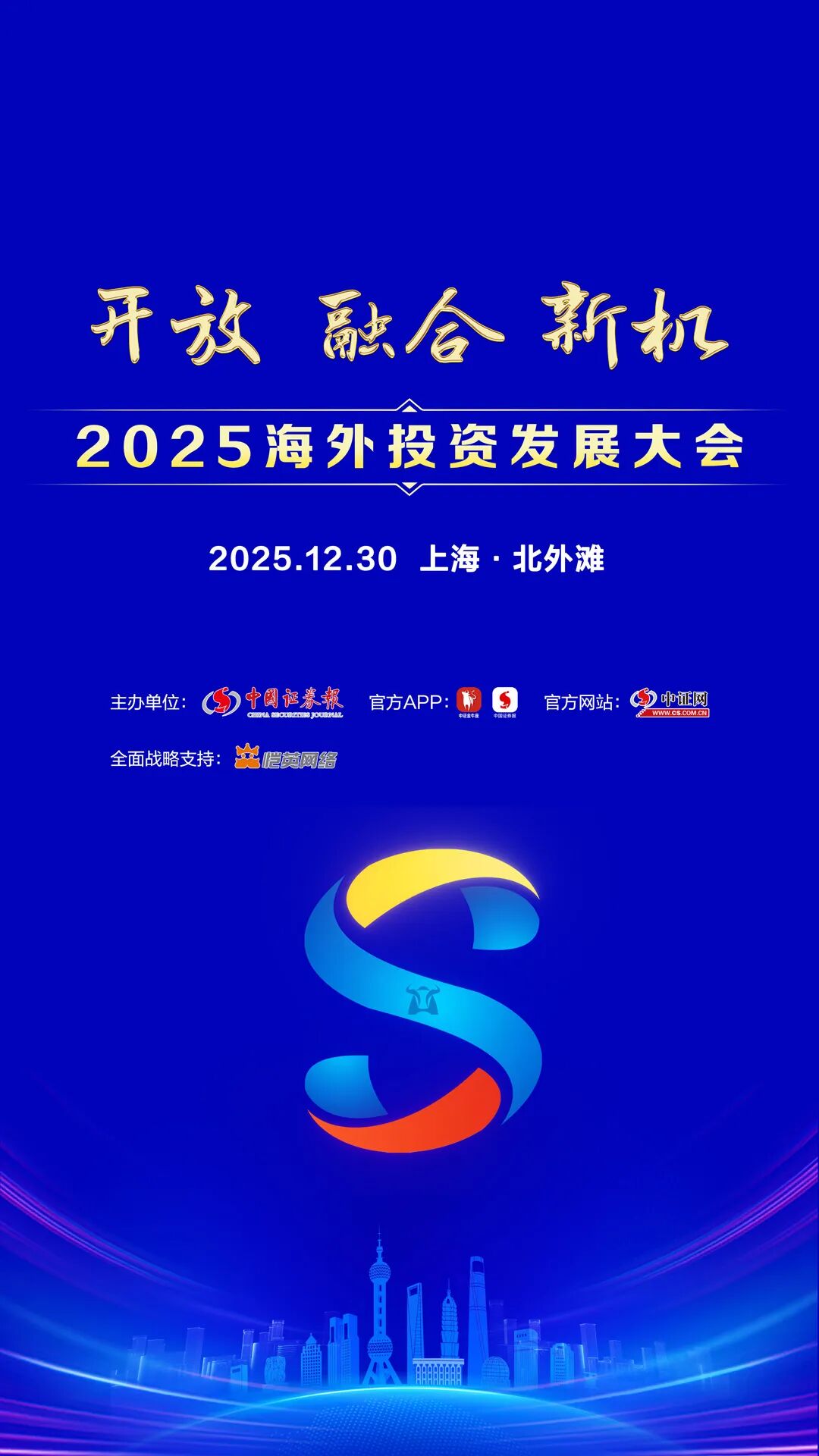
海外投资盛会,就在明天!
Zhong Guo Zheng Quan Bao· 2025-12-29 06:04
Group 1 - The global economic landscape is undergoing a profound restructuring, influenced by technological innovation and capital flows [1] - The 2025 Overseas Investment Development Conference will take place on December 30 in Shanghai, focusing on global capital trends and industry transformation opportunities [1] - The conference aims to gather various stakeholders to discuss investment logic and practical wisdom in an international context [1] Group 2 - The "14th Five-Year Plan" emphasizes the acceleration of building a financial powerhouse and expanding high-level opening-up for win-win cooperation [3] - The Central Economic Work Conference has identified "maintaining openness and promoting multi-field cooperation" as a key task for 2026 [3] - The China Securities Regulatory Commission issued a plan in October 2025 to optimize the Qualified Foreign Institutional Investor system, enhancing the attractiveness of China's capital market to long-term foreign investment [3]
人民币汇率强劲升破7.0关口,背后有哪些力量在推动?
Sou Hu Cai Jing· 2025-12-25 04:48
Core Insights - The offshore RMB/USD exchange rate has surpassed the 7.00 mark for the first time since September 2024, marking the end of a three-year depreciation cycle and reflecting significant changes in the global economic landscape and domestic fundamentals [2] - The RMB has appreciated over 12% against the USD since its low point in 2024, making it one of the strongest currencies globally [2] Group 1: Key Drivers of RMB Appreciation - **Weakening USD**: The Federal Reserve's rate cuts have led to a decline in the USD index, which fell below 98, creating a favorable environment for non-USD currencies [2] - **Corporate Behavior**: A surge in foreign exchange settlements at year-end, with December 2025 seeing a record settlement volume exceeding $200 billion, driven by strong export performance [2][3] - **Policy Support**: The central bank's adjustments to the exchange rate and cross-border capital management have helped stabilize the RMB, with a reduction in depreciation days to 38% [3] Group 2: Economic Resilience and Structural Changes - **Industrial Upgrades**: The manufacturing sector's value added has reached 32% of the global total, with significant growth in exports of new energy vehicles and 5G equipment [4] - **Capital Market Opening**: The expansion of the Shanghai-Hong Kong Stock Connect and increased foreign investment in Chinese bonds have attracted over 800 billion yuan in foreign capital [4] - **Geopolitical Financial Dynamics**: The expansion of the digital RMB's cross-border payment trials and the establishment of currency settlement channels with countries like Russia and Iran indicate a strategic shift in international finance [5][6] Group 3: Implications for Businesses and Individuals - **Corporate Strategies**: Exporters are encouraged to utilize foreign exchange options to hedge against currency risks, while importers are increasing the use of RMB for cross-border transactions [8][9] - **Personal Finance**: Individuals are advised to adopt strategies such as phased currency purchases to manage costs and to consider investments in gold ETFs and Hong Kong tech stocks [10][11] - **Policy Considerations**: The need for a balanced approach to currency flexibility and cross-border regulatory cooperation is emphasized to support stability in the financial system [12][13] Group 4: Global Perspective on RMB Internationalization - **Trade Settlement**: The proportion of trade settlements in RMB with ASEAN countries has risen to 35%, positioning the RMB as a dominant regional currency [14] - **Debt Valuation**: RMB-denominated bonds in the Belt and Road Initiative have reached a historic high of 41% [14] - **Reserve Currency Status**: Countries like Pakistan and Belarus have included RMB in their foreign exchange reserves, with a share exceeding 10% [14]