
水利

Search documents
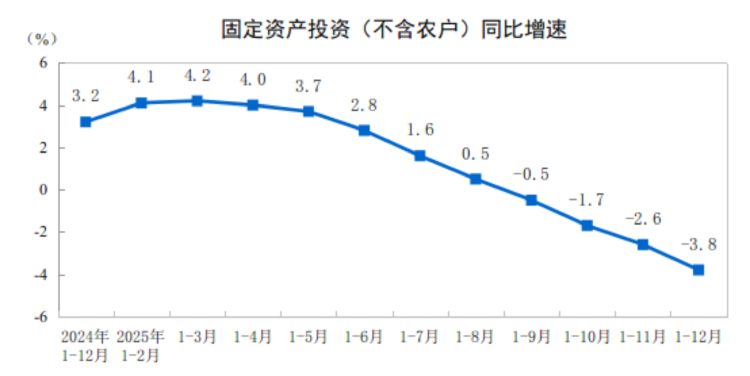
2025年全国固定资产投资485186亿元,比上年下降3.8%
Guo Jia Tong Ji Ju· 2026-01-19 02:19
Core Viewpoint - In 2025, China's fixed asset investment (excluding rural households) is projected to be 48,518.6 billion yuan, representing a decline of 3.8% compared to the previous year [1][4]. Investment by Sector - Investment in the primary industry reached 957 billion yuan, showing a growth of 2.3% year-on-year [3][4]. - Investment in the secondary industry totaled 177,368 billion yuan, with a growth of 2.5% [3][4]. - Investment in the tertiary industry was 298,248 billion yuan, reflecting a decline of 7.4% [3][4]. Secondary Industry Breakdown - Industrial investment in the secondary industry increased by 2.6% year-on-year [3]. - Mining investment grew by 2.5%, while manufacturing investment saw a modest increase of 0.6% [3]. - Investment in the electricity, heat, gas, and water production and supply industry surged by 9.1% [3]. Tertiary Industry Breakdown - Infrastructure investment (excluding electricity, heat, gas, and water production and supply) decreased by 2.2% [3]. - Notable growth was observed in pipeline transportation (36.0%), multimodal transport and agency services (22.9%), and water transportation (7.7%) [3]. Regional Investment Trends - Investment in the eastern region declined by 8.4% year-on-year [3]. - The central region experienced a decrease of 2.7%, while the western region saw a decline of 1.3% [3]. - The northeastern region faced the most significant drop at 15.5% [3]. Investment by Registration Type - Domestic enterprises' fixed asset investment fell by 3.8% [4]. - Investment from Hong Kong, Macau, and Taiwan enterprises decreased by 2.2% [4]. - Foreign enterprises experienced a substantial decline of 13.8% in fixed asset investment [4].

潜心补短板 着力优结构——开年以来各地各部门稳投资观察
Xin Hua Wang· 2026-01-18 10:38
Group 1 - The core viewpoint emphasizes the importance of investment as both current demand and future supply, with a focus on expanding effective investment to support domestic demand and stabilize growth [1] - The "Two Major" construction projects, which include significant water conservancy projects, are highlighted as a means to address infrastructure shortfalls and enhance investment structure, with a total investment of approximately 295 billion yuan planned for 2026 [2] - Various regions are accelerating "Two Major" construction projects, focusing on urban-rural integration, regional coordination, and energy security, which will further highlight the role of these projects in addressing weaknesses [2][3] Group 2 - The activation of private investment is crucial for stabilizing growth and employment, with government investment funds playing a key role in guiding and increasing private investment [4] - Policies to support private investment include loan interest subsidies for small and micro enterprises and the establishment of special guarantee plans, aimed at reducing financing barriers and costs for businesses [5] - The ongoing efforts to stimulate private investment are showing positive trends, with a focus on practical and innovative approaches [6] Group 3 - Investment in human capital is being prioritized alongside physical investment, with various urban renewal projects underway to enhance living conditions and consumer environments [7] - The investment in human capital reflects the objective of transforming economic development and aligns with the people-centered development philosophy, focusing on sectors like health, elderly care, and childcare [8] - The integration of investment in both physical and human capital is seen as essential for creating new supply and stimulating new demand, which is critical for enhancing the internal dynamics of the domestic economy [8]
丹徒 2026 年 10 项民生实事清单出炉!交通、医疗、教育等领域全面发力
Yang Zi Wan Bao Wang· 2026-01-17 05:46
Core Viewpoint - In 2026, Danju District aims to enhance the quality of life for its residents by focusing on ten key livelihood projects that address the most pressing concerns of the community, including transportation, healthcare, social care for the elderly and children, and education [1] Group 1: Transportation and Infrastructure - Upgrade of urban and rural roadways, including the renovation of 10 rural roads and 12 kilometers of county roads, along with improvements to the Qiahu Road North Extension and the Zhangang Bridge connection project [1] - Implementation of a second phase of emergency governance for the Yangtze River embankment, focusing on reinforcement and construction of flood control roads in specific areas [4] Group 2: Healthcare Services - Expansion of emergency services at the district people's hospital, including upgrades to wastewater treatment, fire safety, electrical systems, and oxygen supply facilities [2] Group 3: Social Welfare - Establishment of 15 "Caring Summer Classes" and 15 "Dream Houses" for children, along with the enhancement of two rural elderly mutual assistance points [3] Group 4: Education - Construction of standardized psychological counseling rooms in 8 schools and implementation of safety hazard rectification in 7 schools [4] Group 5: Environmental Improvements - Implementation of sewage network remediation in natural villages along major waterways to enhance rural living conditions [5] - Improvement of urban aesthetics through the renovation of Huashan Street and Aimin Road, creating distinctive commercial districts [8] Group 6: Agricultural Development - Construction of 22,300 acres of high-standard farmland, including the establishment of 16,800 acres and the upgrading of 5,500 acres [9] Group 7: Emergency Services - Renovation of the Gaozi professional fire brigade's facilities, including the construction of living support areas and enhancements to water and electricity infrastructure [7] Group 8: Flood Management - Implementation of pipeline repairs and ecological governance of flood channels in urban areas to improve drainage systems [10]
每日市场观察-20260112
Caida Securities· 2026-01-12 05:24
Market Performance - A-shares experienced a strong upward trend, with the Shanghai Composite Index closing at 16 consecutive gains, surpassing the 4100-point mark[1] - The total trading volume in the Shanghai and Shenzhen markets reached 3.15 trillion yuan, an increase of 326.1 billion yuan from the previous trading day[1] - Over 3900 stocks rose, with more than 70% of stocks in the two markets experiencing gains[1] Sector Analysis - The media, military, computer, non-ferrous metals, and machinery sectors showed significant gains, while the banking index slightly declined[1] - AI applications are entering a value realization phase in 2026, with a projected 40% year-on-year reduction in computing costs, accelerating commercialization[2] Capital Flow - On January 9, net inflows into the Shanghai Composite were 48.9 billion yuan, while the Shenzhen Composite saw net inflows of 47.5 billion yuan[5] - The top three sectors for capital inflow were IT services, software development, and advertising, while the banking sector saw the largest outflows[5] Economic Indicators - In December 2025, the Producer Price Index (PPI) decreased by 1.9% year-on-year, with a narrowing decline of 0.3 percentage points from the previous month[8] - The Consumer Price Index (CPI) rose by 0.8% year-on-year in December 2025, with food prices increasing by 1.1%[9] Policy Developments - The National Medical Insurance Administration announced a policy to enhance the cross-provincial pooling of personal medical insurance accounts, expanding the scope of mutual assistance[11] - The Ministry of Water Resources aims to maintain large-scale and high-level investment in water infrastructure construction in 2026[12]
【陇上评论】为高质量发展夯实基础
Xin Lang Cai Jing· 2026-01-11 01:43
Core Viewpoint - The article emphasizes the strategic deployment of the "Five Strengths" initiative in Gansu, particularly highlighting the newly added "Strong Foundation" action as essential for addressing deep-rooted issues and ensuring long-term development in the region [1][2]. Summary by Sections Strong Foundation Action - The "Strong Foundation" action aims to address Gansu's developmental challenges, including insufficient development and imbalanced industrial growth between urban and rural areas [1]. - It targets systemic and fundamental issues related to high-quality development, such as weak foundational research, inadequate resource support, and the need for an improved business environment [1][3]. Role of Strong Foundation - The "Strong Foundation" serves as both a "ballast" and a "connector" within the "Five Strengths" framework, providing essential support for technological innovation and industrial upgrades [2]. - It facilitates the flow of resources and collaboration between county-level and provincial initiatives, creating a conducive environment for high-quality development [2]. Multi-Dimensional System Engineering - The "Strong Foundation" encompasses both hard infrastructure (transportation, water conservancy, energy) and soft infrastructure (institutional frameworks, talent aggregation, innovation ecosystems) [3]. - The initiative requires a systematic approach to balance traditional and new infrastructure development, ensuring a comprehensive and efficient modern infrastructure system [3]. - Emphasis is placed on project management, optimizing approval processes, and enhancing financing channels to ensure effective project implementation [3].
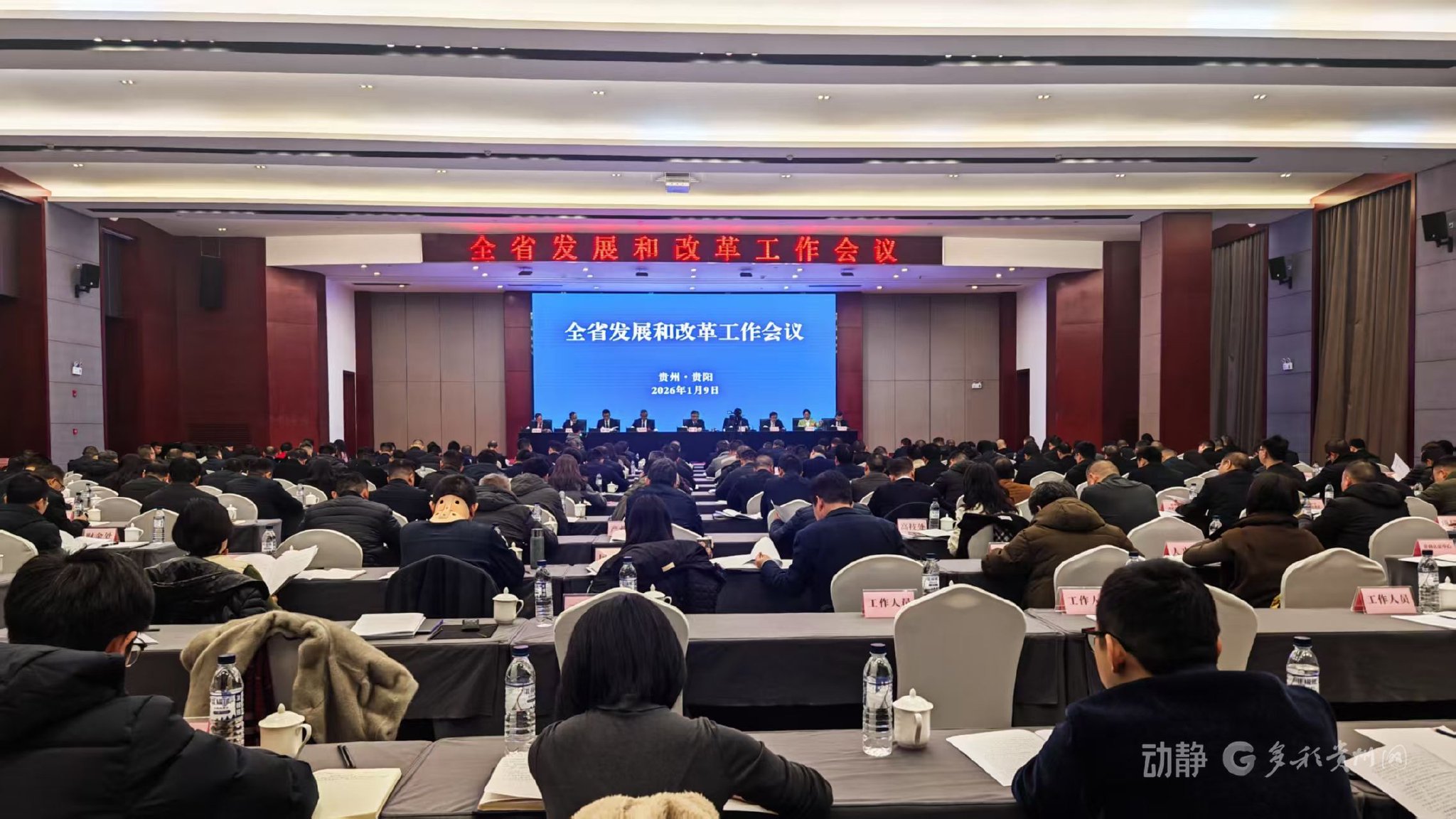
2025年贵州共争取到中央资金超417亿元,增长41.6%
Xin Lang Cai Jing· 2026-01-09 11:28
Core Insights - In 2025, the provincial development and reform system achieved breakthroughs in securing funding, projects, and policies [1] Funding - The province secured over 41.7 billion yuan in central funding, including long-term special bonds and central budget investments, marking a 41.6% increase [3] - In the social sector, 7.28 billion yuan was secured to support 249 urban renewal projects [3] Major Projects - The approval and commencement of the Qian-Gui Railway second line and the national approval of feasibility reports for the Yulong and Yingwu reservoirs were significant achievements [3] - The province ranked among the top in the nation for the number of approved computing infrastructure projects [3] Policy Initiatives - The province successfully included the Guiyang airport-type national logistics hub and the Zunyi national backbone cold chain logistics base in the national construction list [3] - The Qianxinan Prefecture was included in the first batch of high-quality outdoor sports destination cities in the country [3] Investment Trends - The "5+3" major projects accounted for approximately 70% of the total provincial investment in the past year [3] - Private investment growth continued to outpace overall investment growth, increasing its share to 39.4% [3] Reforms and Economic Development - The development and reform department made substantial progress in reducing electricity prices and logistics costs [3] - A special rectification of malicious competition in investment attraction was conducted, leading to the establishment of provincial centers for private and regional economic development [3] Employment and Income - The implementation of labor-for-work projects helped 196,000 rural workers increase their income by over 10,000 yuan each [3] - The province secured 7.175 billion yuan for 129 social sector projects, facilitating the construction of student dormitories at Guizhou University and five other quality provincial universities [3] - All phase two projects of five national regional medical centers commenced construction [3]
门头沟将活化利用永定河古渠灌溉工程
Xin Lang Cai Jing· 2026-01-08 17:59
中关村门头沟园党工委副书记王亚楠介绍,作为全市人工智能重点布局区,京西智谷已纳入北京数据基 础制度先行示范区、入选首批未来产业育新基地。未来将重点推进算力基础设施建设,推动新增200P 国产算力全面投运,同步启动计算视听、智慧文旅等行业智算中心。目前园区已聚集国家高新技术企业 355家、专精特新企业178家。 本报讯(记者 刘洋)北京青年报记者昨日从门头沟区两会新闻发布会上获悉,今年门头沟区将以永定 河古渠灌溉工程遗产活化释放生态价值、以京西古道基础设施升级赋能文旅发展等措施,推动区域绿色 高质量发展迈上新台阶。 门头沟区水务局副局长安丽透露,"十四五"期间永定河生态修复成效显著,30余处泉水复涌、绿色生态 廊道初步形成。今年将重点拓展永定河古渠灌溉工程遗产活化利用路径,串联复苏泉点与京西古道资 源,打造水利主题研学路线。同时推进付家台灌渠遗产保护利用项目,建成集科普教育和休闲体验于一 体的生态遗产示范。 区文旅局二级调研员聂爽表示,门头沟将高质量推进京西古道基础设施升级,打造国家示范性风景道。 在此基础上,将完成第四次全国文物普查,探索社会力量参与文物保护机制,建设"京西博物馆群落", 推动更多文化遗产空间 ...
2025年前三季度省级重大项目年度计划投资完成率达100.72%
Xin Lang Cai Jing· 2026-01-07 22:24
Group 1 - Yunnan aims to expand effective investment in key areas and promote major project construction to support steady economic growth by 2025 [1] - By the third quarter of 2025, 1,809 provincial major projects have an inclusion rate of 84.52%, with an annual investment completion rate of 100.72%, reflecting increases of 3.38 percentage points and 10.94 percentage points year-on-year, respectively [1] - The investment support rate for the province reached 39.22%, exceeding the annual target [1] Group 2 - In the infrastructure sector, 832 projects achieved an annual investment completion rate of 104.08%, with 50 ecological projects at 115.14% and 191 transportation projects at 109.37% [2] - Notable projects with completion rates over 95% include the Shangri-La Vocational College construction and the Yunnan South International Medical and Health Complex [2] Group 3 - In the industrial development sector, 977 projects had an annual investment completion rate of 96.69%, with energy industrial projects at 108.16% and cultural tourism projects at 105.04% [3] - Significant projects exceeding 95% completion include the Lufeng Pumped Storage Power Station and the Yaoan 200MW/400MWh Independent Shared Energy Storage Station [3]
2025年陕西落实国家政策性资金总额创新高
Shan Xi Ri Bao· 2026-01-07 00:38
Core Insights - The total amount of policy-based funding in Shaanxi is expected to reach a historical high by 2025, aligning with the end of the "14th Five-Year Plan" and the beginning of the "15th Five-Year Plan" [1] - The provincial development and reform commission is focusing on stabilizing employment, enterprises, markets, and expectations to ensure effective economic growth and quality improvement [1] Funding and Investment Growth - The province aims to increase central budget investment, "two heavy" funds, and "two new" funds by 60%, 20%, and over 70% respectively [2] - Funding for labor-intensive projects and urban underground pipeline sectors is projected to grow by 90% and over 19% respectively, while funding for urban renewal and education is expected to increase by over 50% [2] Project Implementation and Economic Performance - Key provincial projects are advancing beyond expectations, with an annual investment completion rate exceeding 100% [2] - Significant breakthroughs have been achieved in major projects such as the Xi'an Extension High-Speed Railway and the Northwest's first 8-inch high-performance semiconductor production line [2] - From January to November 2025, the province's fixed asset investment growth rate consistently outpaced the national average by over 1 percentage point, with industrial investment increasing by 12.7%, surpassing the overall investment growth rate by 14 percentage points [2]
视频丨十年来长江经济带生产总值翻了一番多 未来工作重点公布
Yang Shi Xin Wen Ke Hu Duan· 2026-01-05 14:28
Core Insights - The development of the Yangtze River Economic Belt over the past decade has seen significant improvements in water quality, with the proportion of good water quality rising from 67% to 96.5%, and regional GDP more than doubling, increasing its share of the national economy from 42.2% to 47.3% [1] Group 1: Environmental Protection and Economic Growth - The concept of "coordinated major protection, not major development" has been effectively implemented, leading to the resolution of the "chemical industry surrounding the river" issue by addressing nearly 10,000 chemical enterprises [1] - A total of 1,361 illegal docks have been cleared, and black and odorous water bodies in major cities along the river have been largely eliminated [1] - The water quality of the Yangtze River has improved from some sections being classified as Grade V to the entire river being classified as Grade II [1] Group 2: Technological and Industrial Innovation - The integration of technological and industrial innovation in the Yangtze River Economic Belt has accelerated, with the establishment of international technology innovation centers in Shanghai and other regions [1] - Significant technological achievements include the "artificial sun" achieving a billion-degree operation for a thousand seconds and targeted cancer drugs, alongside the emergence of competitive innovative companies like DeepSeek and Yushu Technology [1] - World-class industrial clusters have formed in sectors such as automotive manufacturing and electronic information [1] Group 3: Infrastructure and Transportation - The functionality of the Yangtze River as a "golden waterway" has been reinforced, with the high-grade navigable waterways increasing from 8,000 kilometers to 11,000 kilometers [1] - The cargo throughput of trunk ports has grown by 71%, reaching 4.2 billion tons, maintaining its position as the world's leading inland river [1] Group 4: Cultural and Social Development - The cultural heritage of the Yangtze River has deepened, with the successful inclusion of the Liangzhu Ancient City Ruins in the World Heritage List and significant archaeological discoveries at Sanxingdui [2] - The "Happiness Yangtze" initiative has improved quality of life, with per capita disposable income rising from 23,000 yuan to 44,000 yuan, an increase of 91% [2] - The South-to-North Water Diversion Project has delivered over 84 billion cubic meters of water, benefiting 48 cities and 195 million people [2] Group 5: Future Development Plans - The "14th Five-Year Plan" emphasizes the continued development of the Yangtze River Economic Belt, focusing on ecological protection, innovation, regional collaboration, and cultural heritage [3][4] - Key areas of focus include pollution control, fostering original technological innovations, and enhancing agricultural production capabilities [3][4] - The plan aims to strengthen the safety and quality of life in the region, ensuring food security and improving the welfare of the population [4]