Industrial Internet

Search documents
全力推动产业回归、工业回城,市中区加快构建现代化产业体系
Qi Lu Wan Bao Wang· 2025-07-22 06:02
Core Insights - The Jinan City government is actively promoting the "Industrial Strong City Development Strategy," focusing on industrial return and modernization of the industrial system, resulting in robust growth in the industrial economy of the Shizhong District [1] Group 1: Industrial Growth and Performance - Shizhong District has 82 large-scale industrial enterprises, with total industrial output value projected to reach 155.7 billion yuan in 2023 and 177.8 billion yuan in 2024, reflecting growth rates of 19.9% and 14.1% respectively [1] - The district has accumulated 330 industrial projects over the past three years, with total investments exceeding 90 billion yuan, indicating a strong foundation for future growth [2] Group 2: Key Industry Developments - The artificial intelligence sector is developing rapidly, with 40 key enterprises and a planned computing power of 4600P, focusing on high computing power and strong applications [3] - The new energy equipment industry is expected to achieve an output value of 70.4 billion yuan in 2024, contributing to the "Shandong Energy Internet Industry Cluster" with a total output value exceeding 340 billion yuan [3] Group 3: Digital Transformation - The district has established 5,481 5G base stations and 14,500 kilometers of deterministic networks, providing strong support for new industrialization [4] - The digital services industry is expected to generate revenues of 156.1 billion yuan in 2024, with 13 digital service enterprises reaching billion-level revenues [4] Group 4: Innovation Ecosystem - In 2024, the district is expected to register over 1,400 technology contracts with transactions exceeding 10 billion yuan, indicating a thriving innovation environment [5] - The number of provincial-level "specialized, refined, characteristic, and innovative" enterprises has doubled compared to the previous year, showcasing a significant increase in innovation capacity [5]
全面解析:工业互联网数据采集技术实战与应用指南
Sou Hu Cai Jing· 2025-07-21 13:27
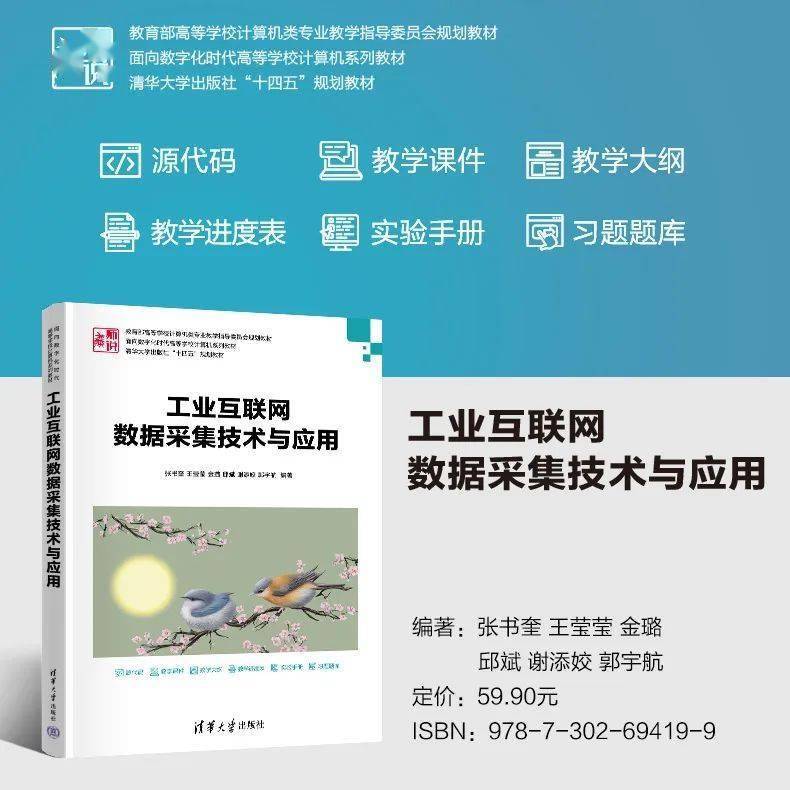
Core Insights - The book titled "Industrial Internet Data Acquisition Technology and Applications" has been published, providing valuable resources for learners and practitioners in the field of industrial automation and information integration [1][2][3] - The book is authored by a team of experts and aims to meet the urgent demand for professional knowledge in the industrial internet sector, priced at 59.9 yuan and set to be officially published on July 1, 2025 [1][2] Summary by Sections - **Overview of Industrial Internet**: The first chapter outlines the grand vision of the industrial internet, discussing the background, significance, and position of industrial data acquisition within the entire industrial internet framework [2] - **Technical Focus**: Subsequent chapters delve into specific technologies: - Chapter two covers the basic principles, hardware architecture, and programming methods of PLC, showcasing practical applications through real-world case studies [2] - Chapter three focuses on industrial Ethernet, particularly the PROFINET and EtherCAT protocols, analyzing implementation steps through project examples [2] - Chapter four discusses embedded data acquisition, exploring system architecture, hardware selection, and operating systems, with a detailed example using the STM32 microcontroller [2] - Chapter five provides a comprehensive introduction to ZigBee technology in wireless sensor networks, offering theoretical and practical guidance [2] - **Practicality and Resources**: The book emphasizes practicality and includes numerous real-life cases, transforming abstract technical principles into actionable skills. It also provides supplementary resources such as source code, teaching materials, and exercise databases to facilitate teaching and learning [2][3] - **Target Audience**: The book is essential for students in IoT and industrial internet fields, as well as for engineering professionals in automation and smart manufacturing, and enthusiasts interested in industrial data acquisition technology [3]

新书推荐 | 工业互联网数据采集技术与应用
Sou Hu Cai Jing· 2025-07-21 05:17
Core Viewpoint - The book aims to provide a comprehensive and practical guide on industrial data acquisition technology, highlighting its increasing importance in industrial production, management, and decision-making processes as China's economy rapidly develops [2][3]. Summary by Sections Chapter 1: Overview of Industrial Internet - Introduces the background and development of industrial internet technology, its concept, architecture, and significance [3]. - Discusses industrial data acquisition technology, including its characteristics and solutions [3]. - Covers the role and structure of industrial gateways and provides an overview of industrial internet experimental platforms [3]. Chapter 2: Industrial PLC Data Acquisition - Details the principles, hardware architecture, programming methods, and practical applications of PLC data acquisition technology [4]. - Explains the concept, structure, and working principles of PLC, along with its widespread applications in industrial automation [4]. Chapter 3: Industrial Ethernet Data Acquisition - Discusses the concept, protocols, and application scenarios of industrial Ethernet data acquisition technology [5]. - Focuses on the working principles of two mainstream industrial Ethernet protocols: PROFINET and EtherCAT, including device connections and communication protocols [5]. Chapter 4: Embedded Data Acquisition - Introduces embedded technology theories and its applications in industrial data acquisition [6]. - Analyzes ARM processor architecture and provides detailed explanations of STM32 microcontroller usage [6]. Chapter 5: ZigBee-based Wireless Data Acquisition - Provides a comprehensive overview of ZigBee technology and its applications in wireless sensor networks [7]. - Discusses the design of wireless sensor nodes based on CC2530 microcontroller and showcases practical applications of ZigBee in data acquisition [7]. Book Features - Comprehensive content covering various industrial data acquisition technologies, including concepts, principles, methods, and practical cases [8]. - Strong practicality by closely linking theoretical knowledge with real-world industrial applications [8]. - Rich in practical application cases to enhance understanding of industrial data acquisition technology [8]. Supplementary Resources - The book includes source code, teaching materials, syllabi, progress tables, experimental manuals, and question banks to facilitate teaching and learning [9]. Target Audience - The book serves as a textbook for higher education institutions in fields like IoT and industrial internet, and is also suitable for professionals in automation, smart manufacturing, and IoT, as well as enthusiasts interested in industrial data acquisition technology [10].

大模型“下工厂” 智联网“上高速” 我国新型工业化向“新”而行“蹄疾步稳”
Yang Shi Wang· 2025-07-21 03:42
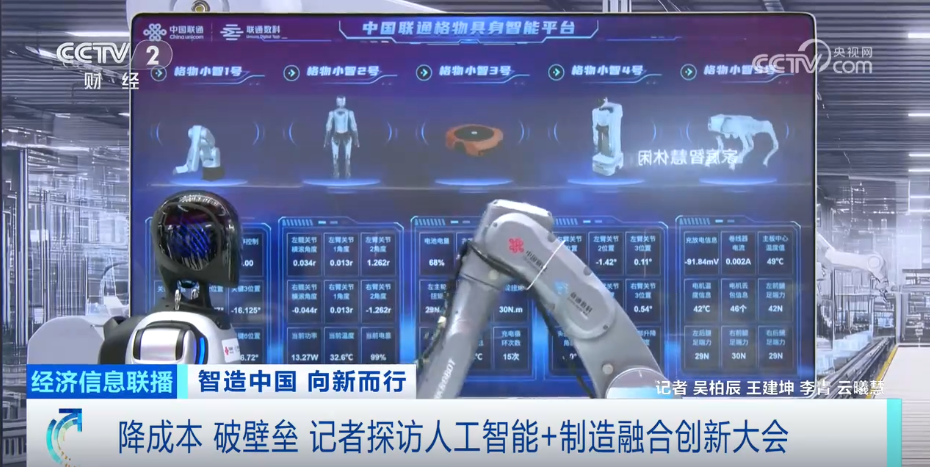
Group 1 - The conference in Shanghai focuses on "AI serving the real economy through digital technology integration," with over 1200 representatives from various sectors including communication, industry, healthcare, and consumer goods [1] - Companies are exploring how to utilize AI to optimize supply chain decisions and integrate generative AI into product design and customer service processes [1] - The challenge of "affordability" and "usability" of AI models, especially those with hundreds of billions of parameters, is hindering the realization of AI benefits [1] Group 2 - The integration of AI models into production lines is being showcased, highlighting the ability of industrial robots from different manufacturers to collaborate through a smart platform [6] - The CTO of a telecommunications company stated that switching packaging on a regular production line takes two to three days, while using robots can reduce this time to just half an hour with proper training [8] - The flexibility of production lines driven by embodied intelligence requires enhanced infrastructure capabilities, particularly with the integration of 5G-A networks and AI [10] Group 3 - The construction of a universal and rapid development platform, referred to as the MaaS platform, provides low-code and no-code tools for developing large AI models, supporting over 40 industry-specific models and 100 application scenarios [10] - This platform aims to help companies reduce costs, improve quality, and increase efficiency [10]
我国工业互联网实现41个工业大类全覆盖 算力底座加速升级
Yang Shi Wang· 2025-06-29 03:40
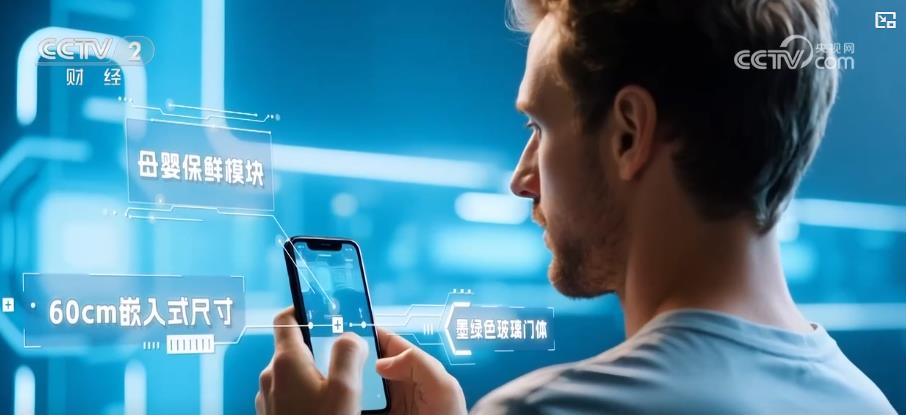
Group 1 - The core viewpoint emphasizes that information interconnectivity is a key engine for the quality upgrade of supply chains, with China having built the world's largest and technologically advanced information communication network, achieving full coverage of 41 industrial categories through the industrial internet [1] - A consumer in Europe can input specific requirements via mobile, and the data is transmitted through a 5G network to Chinese manufacturing enterprises' industrial internet platforms with an end-to-end latency of less than 20 milliseconds, significantly enhancing manufacturing efficiency [3] - The improvement in manufacturing efficiency is supported by digital infrastructure centered around computing power, with the "East Data West Computing" project initiated in 2022, aiming to establish eight major hub nodes and ten national data center clusters by the first quarter of 2025, achieving a total computing power of 215.5 billion billion floating-point operations per second [5] Group 2 - China has established 4.486 million 5G base stations and over 100 million connected industrial devices, enabling diverse applications through adaptable computing power, with more than 30,000 basic intelligent factories and over 1,200 advanced intelligent factories operational, covering over 80% of major manufacturing sectors [7] - The integration of information chains accelerates efficient communication between upstream and downstream sectors, facilitating quality upgrades in manufacturing [7]
2025上财商学院MBA/EMBA“商链共生”校企合作及培养方向升级发布会在沪举行
Zhong Zheng Wang· 2025-06-24 08:40
Group 1 - The event focused on the integration of education and industry, highlighting the launch of a new school-enterprise cooperation plan and upgraded training direction for the MBA/EMBA programs at Shanghai University of Finance and Economics [1][2] - The "Business Chain Symbiosis" initiative aims to enhance collaboration between academia and industry, addressing the challenges of the evolving business ecosystem and fostering a new educational paradigm [2] - The new training direction includes seven modules designed to promote industry-education integration, such as expert-led forums, industry park visits, and practical projects that solve real business problems [2] Group 2 - A cooperation awarding ceremony took place, with nine organizations recognized as "MBA Talent Training Practice Bases," covering cutting-edge fields like artificial intelligence, biomedicine, and industrial internet [3] - This recognition signifies a significant step forward for the "Business Chain Symbiosis" plan, expanding the network of collaboration between schools and enterprises [3]
AI竞速工业赛道最新战绩!卡奥斯再登工业互联网品牌价值榜首
Qi Lu Wan Bao· 2025-06-18 10:37
Group 1 - The core viewpoint of the article highlights how the integration of industrial internet and AI can enhance brand value, exemplified by the Kaos COSMOPlat platform, which has achieved a brand value of 116.335 billion yuan, an increase of 13.558 billion yuan from the previous year [1] - The World Brand Laboratory's report emphasizes that AI is now a central driving force in global brand strategy and digital supply chain management, facilitating a shift from product-centric to consumer-centric approaches [1] - The Kaos COSMOPlat platform has been recognized as a leading case in the development of industrial AI models, supporting over 45 high-value scenarios across nine industries, including home appliances and energy [3] Group 2 - The Kaos COSMOPlat platform has collaborated with Yanchang Petroleum to create an energy and chemical model, resulting in the development of 38 intelligent agents that enhance efficiency by an average of 20% in oil extraction and refining processes [3] - The platform's smart chemical park solutions have been implemented in over 30 chemical parks across more than 10 provinces, serving over 400 chemical enterprises [4] - In the Anhui Changfeng County industrial park, the energy utilization efficiency has improved by 20% and carbon emissions have been reduced by 15%, equivalent to the carbon absorption capacity of an additional 2,000 acres of forest [4]

广西百色市首个“万兆工厂”示范项目在平果市竣工
Zhong Guo Jin Rong Xin Xi Wang· 2025-06-06 02:24
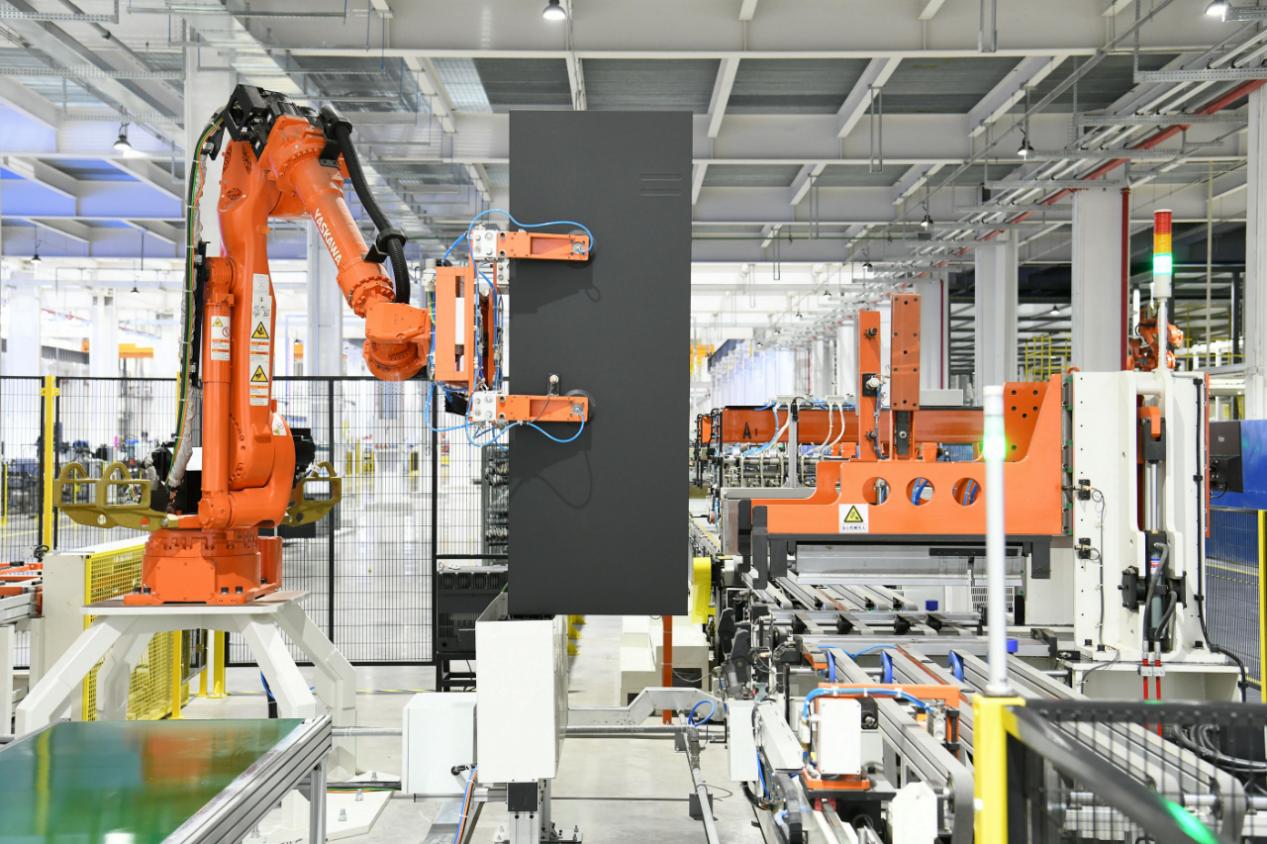
Group 1 - The completion of the "10,000-Channel Factory" demonstration project by China Aluminum Guangxi Company marks a significant upgrade in the industrial internet infrastructure in Pingguo, Guangxi, enabling digital and intelligent transformation for industrial enterprises [1] - The project utilizes a "full optical base + industrial PON" architecture, achieving end-to-end 10G network coverage and integrating cutting-edge technologies such as industrial OTN and optical bus [1] - The 10G optical network features a single wavelength bandwidth of 50Gbps and deterministic network latency, catering to demanding industrial internet applications like 8K visual inspection and cloud-based robot control [1] Group 2 - The factory's production processes have been transformed, enabling real-time data transmission from raw material storage to finished product delivery, significantly enhancing production efficiency and accuracy [2] - Remote equipment control experiences near-zero latency, allowing for synchronized command issuance and device response, which supports rapid data transmission and in-depth analysis for informed decision-making [2] - The project supports intelligent application platforms such as industrial AOI systems, digital twin systems for production processes, and intelligent safety monitoring platforms, contributing to high-quality industrial development [1][2]

【财经分析】人工智能+工业互联网,将产生怎样的“火花”?
Zhong Guo Jin Rong Xin Xi Wang· 2025-05-25 09:32
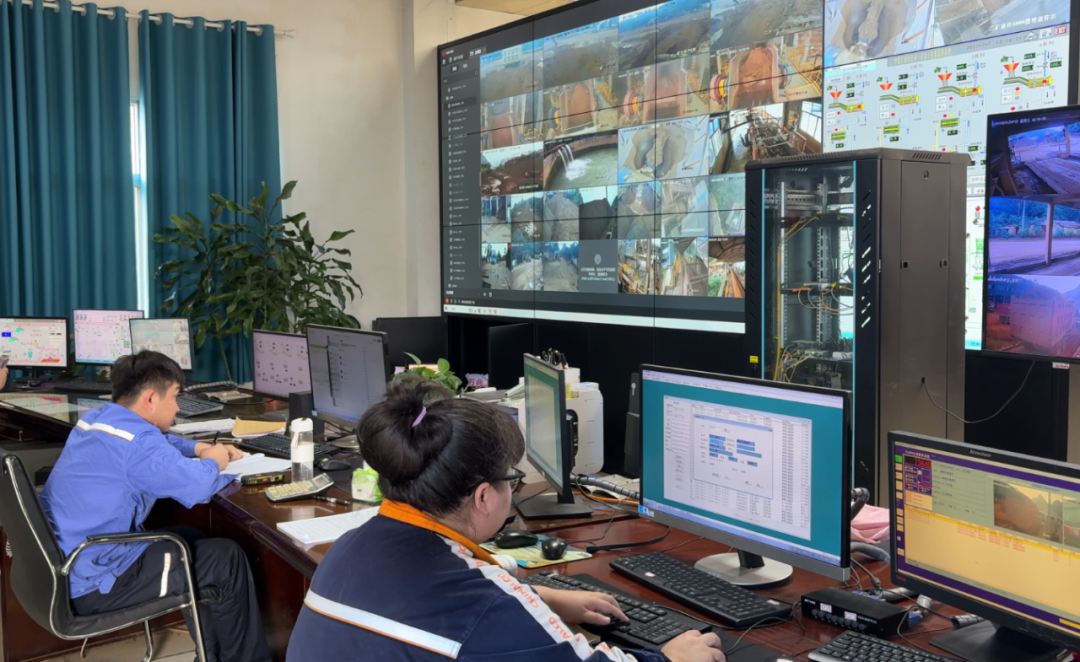
Core Insights - The core industry scale of industrial internet in China exceeds 1.5 trillion yuan, driving economic growth of nearly 3.5 trillion yuan, with artificial intelligence becoming a key variable in the development of industrial internet [1] Group 1: Industrial Internet Development - The industrial internet has expanded to cover 49 categories of the national economy, achieving full coverage of 41 industrial categories, with over 6.5 trillion identification registrations and connections to over 100 million industrial devices [2] - A multi-level platform system has been established, consisting of 49 cross-industry platforms and over 200 specialized platforms, supporting a wide range of application needs from general to industry-specific [3] Group 2: AI Integration in Industrial Applications - AI technology is being deeply applied in industrial scenarios, with companies like 蓝卓数字科技 leveraging their "supOS" factory operating system to facilitate digital transformation across over 8,000 factories in various industries [4] - 卡奥斯 has upgraded its "twin manufacturing integrated platform," which merges virtual production with physical manufacturing, optimizing the entire manufacturing lifecycle [5] - AI applications in engineering machinery and supply chain management have demonstrated significant efficiency improvements, such as a 60% increase in energy replenishment efficiency and a 30% improvement in inventory turnover [6][7] Group 3: AI and Industrial Internet Synergy - The integration of AI and industrial internet has led to the emergence of numerous application models, with a focus on both small models for specific tasks and large models for comprehensive industrial intelligence [8] - The development trend indicates a collaborative fusion of large and small models, where large models handle task planning and coordination, while small models execute specific tasks effectively [8]
江西省工业互联网平台系列展示 | 区域型
Sou Hu Cai Jing· 2025-05-22 00:32
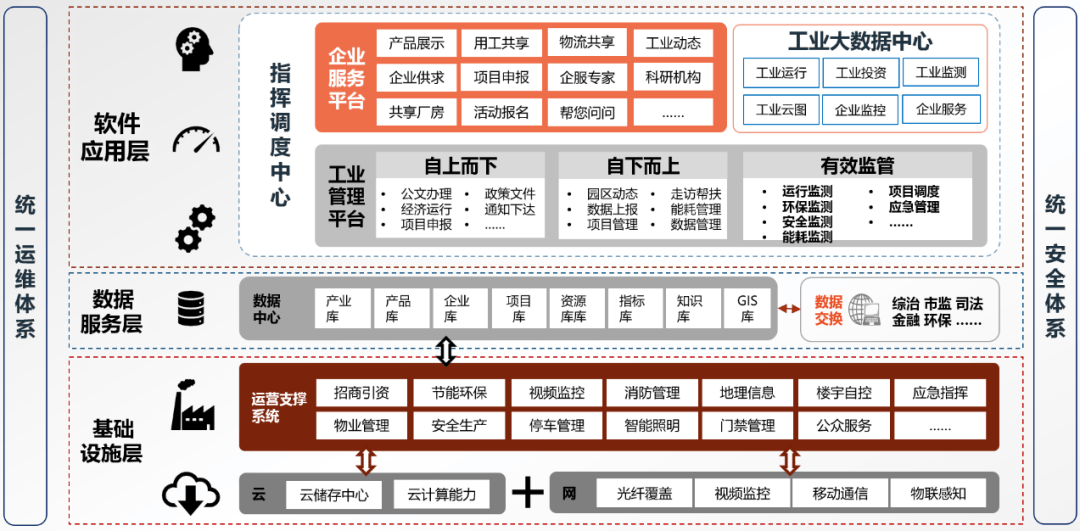
Group 1 - The Jiangxi Provincial Development Zone Unified Digital Management Service Industrial Internet Platform aims to integrate various industrial management departments, industrial parks, and enterprises through big data and cloud architecture, enhancing government oversight and macro-control effectiveness [2][3]. - The platform has been implemented in over 100 provincial-level development zones, covering 59,000 industrial enterprises and accessing 4 billion industrial information data, successfully responding to service demands over 1.854 million times [2][3]. - The platform serves multiple industries including non-ferrous metals, electronic information, equipment manufacturing, petrochemicals, building materials, textiles, food, automotive, biomedicine, semiconductor lighting, and energy conservation and environmental protection [3]. Group 2 - The platform offers a comprehensive digital transformation system for enterprises, utilizing SaaS deployment to provide solutions for common challenges across various business functions, including sales, warehousing, design, production, and finance [4]. - The Just-in-Time Delivery System enhances order management by automating processes from order placement to delivery, improving order completion rates and providing data-driven insights for decision-making [6]. - The PBA Project Management Platform streamlines project lifecycle management, improving budget efficiency and reducing labor costs by allowing departments to input data directly into the system [8]. Group 3 - The Smart Warehouse System automates inventory management processes, enhancing accuracy and reducing manual labor by integrating various management functions such as procurement, inventory, and financial management [10]. - The Gaoshu Industrial Internet Platform focuses on digital transformation solutions for industrial enterprises, leveraging IoT, digital twins, big data analysis, and AI to improve production efficiency and reduce costs [13][14]. - The platform has successfully implemented solutions across various industries, receiving high praise for its stability, usability, and value [13].