油气开采

Search documents
能源企业多措并举筑牢保供防线 守护千家万户“暖意融融”
Yang Shi Wang· 2025-12-15 02:28
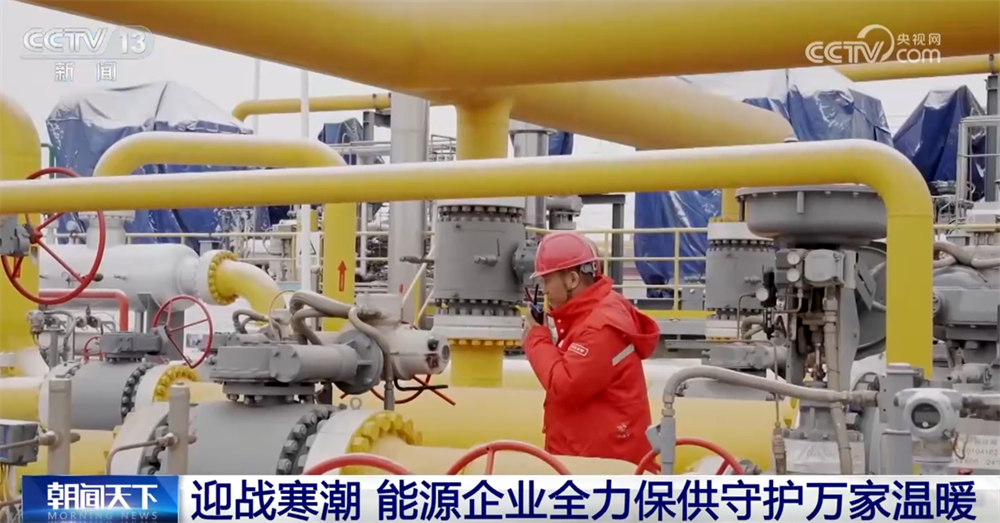
央视网消息:受强寒潮影响,我国多地出现大范围雨雪降温天气,供暖用气需求随之攀升。面对极寒考验,能源企业多措并举筑牢能源保 供防线,守护千万家庭温暖。 能源企业在加快推进油气勘探开发的同时,也在通过智能化手段加强对关键设备的检查和巡护。在位于沙漠腹地的新疆油田克拉美丽气田 天然气处理站,一台智能巡检机器人正搭载着高清摄像头、红外热像仪和气体传感器,穿梭在厂区中进行全方位检测。 中石化中原油田储气库管理中心生产指挥中心副主任刘铁英称:"目前我们供气量峰值是480万方/天,能够满足1000万户三口之家一天的 用气量,希望我们的付出能温暖更多的家庭。" 位于渤海湾的南港油田试验井产量不久前获得突破,日产油气当量340吨,预计今年新增原油产量1.5万吨、天然气2000万立方米以上。在 江苏如东液化天然气接收站,一艘满载15万立方米液化天然气的船舶进行装卸,自冬供以来,中国石油累计接卸液化天然气船舶20艘,单日气 化外输量最高可达8400万立方米,气化能力创历史新高。 为应对寒潮用气高峰,各地储气库全力保供。作为离北京最近的储气库集群,华北油田储气库群的单日采气量已突破2500万立方米,全力 守护京津冀区域百姓温暖过冬。 ...



经济日报财经早餐【12月15日星期一】
Jing Ji Ri Bao· 2025-12-14 22:37
Group 1 - During the "14th Five-Year Plan" period, China's machinery industry has an average annual growth rate of 7.1%, with a growth rate of 8.7% in the first three quarters of this year, surpassing the national industrial and manufacturing average levels [1] - The Ministry of Agriculture and Rural Affairs reported that over 700 billion yuan has been allocated for high-standard farmland construction during the "14th Five-Year Plan," supporting the establishment and enhancement of 4.6 million acres of farmland, which significantly contributes to national food security [1] - The Ministry of Commerce, the People's Bank of China, and the financial regulatory authority jointly issued a notice to enhance collaboration between commerce and finance, aiming to boost consumption through targeted measures [1] - The "Xuelong" vessel successfully completed material unloading and personnel landing at Zhongshan Station as part of China's 42nd Antarctic expedition [1] - The "14th Five-Year" development achievement report for China's oil and gas industry indicates a significant transition towards a modern oil and gas industry, with a projected natural gas production of 300 billion cubic meters by 2030 [1] - The China Academy of Information and Communications Technology reported that the artificial intelligence industry in China is accelerating, with the core industry scale expected to exceed 1 trillion yuan by 2025 [1] Group 2 - China National Offshore Oil Corporation announced the full production of the second development project of the Liuhua oil field, marking a significant advancement in deepwater complex reservoir development in China [2]

能源早新闻丨二次开发,全面投产!我国在这一领域实现重大跨越
中国能源报· 2025-12-14 22:33
News Focus - The National Energy Administration emphasizes the establishment of a data security work system for energy data processors, requiring them to develop management systems and conduct regular training [2] - The Ministry of Industry and Information Technology and the People's Bank of China support the construction of green factories through green finance policies, focusing on low-carbon technology investments [2] Domestic News - By 2030, China's natural gas production is projected to reach 300 billion cubic meters, with significant increases in proven geological reserves of oil and gas during the 14th Five-Year Plan [2] - China's first deepwater oil field secondary development project, the Liuhua oil field, has been fully operational, achieving a record daily oil production of 3,900 tons [3] - The world's first shipboard medium-voltage direct current hybrid circuit breaker has been successfully developed, marking a significant technological breakthrough in ship power equipment [3] - The South-to-North Water Diversion Project has delivered over 84.4 billion cubic meters of water, benefiting 1.95 billion people in 48 major cities [3] - The world's largest automotive safety testing center has been inaugurated in Ningbo, Zhejiang, featuring extensive testing capabilities and record-breaking facilities [4] International News - Argentina strongly condemns the investment decision by UK and Israeli companies to develop oil fields in the Malvinas Islands [5] - Hungary has reached a natural gas procurement agreement with Azerbaijan, securing 800 million cubic meters over the next two years [5] - Cuba criticizes the US military for seizing an oil tanker, labeling it as an escalation of economic warfare against Cuba [6] Corporate News - The world's largest 24,000 TEU LNG dual-fuel container ship has been delivered 8.5 months ahead of schedule, showcasing China's leadership in the global shipbuilding industry [7] - A large batch of offshore wind power monopiles has been successfully loaded and delivered to the UK, marking one of the largest export projects of its kind from China [7]
叙利亚计划到2026年底将天然气日产量提升至1500万立方米
Ge Long Hui A P P· 2025-12-14 16:00
Core Viewpoint - Syria's energy sector is expected to see significant growth in natural gas and oil production by the end of 2026, with strategic partnerships being formed to enhance operations [1] Natural Gas Production - Syria's current natural gas production is approximately 7 million cubic meters per day, which is projected to increase to about 15 million cubic meters per day by the end of 2026 [1] - The increase in natural gas production is part of a broader strategy to enhance energy resources in the country [1] Oil Production - The current oil production in Syria is around 100,000 barrels per day [1] - The government aims to boost oil production after addressing existing issues in the eastern Euphrates region [1] Strategic Partnerships - The Syrian Petroleum Company has signed a memorandum of understanding with ConocoPhillips and Novatek to expand cooperation in the natural gas sector [1]

石油化工行业周报:需求增量上调,EIA预计今年全球原油有224万桶、天的供应过剩-20251214
Shenwan Hongyuan Securities· 2025-12-14 13:14
Investment Rating - The report maintains a positive outlook on the petrochemical industry, indicating a favorable investment environment [2]. Core Insights - Three major institutions have raised their oil demand forecasts, with the EIA predicting a global crude oil surplus of 2.24 million barrels per day for the current year [4][17]. - The EIA has kept its 2025-2026 crude oil price forecasts unchanged at $69 and $55 per barrel, respectively, while raising its natural gas price forecasts for the same years [5][11]. - The report highlights a tightening supply-demand balance in the downstream polyester sector, with expectations of improved market conditions [19]. Summary by Sections Demand Forecasts - IEA expects global oil demand to increase by 830,000 barrels per day in 2025 and 860,000 barrels per day in 2026, driven by positive macroeconomic and trade outlooks [11][12]. - OPEC forecasts a demand growth of 1.3 million barrels per day in 2025 and 1.4 million barrels per day in 2026 [12][58]. - EIA anticipates a rise in global oil and other liquid fuel consumption by 1.14 million barrels per day in 2025 and 1.23 million barrels per day in 2026 [12][17]. Supply Forecasts - EIA has raised its global oil supply forecast for the current year by 200,000 barrels per day, while IEA has lowered its forecast by 100,000 barrels per day [14][17]. - EIA projects a global oil production increase of 3.01 million barrels per day in 2025 and 1.25 million barrels per day in 2026 [15][17]. - OPEC anticipates a growth in non-OPEC oil supply of 1 million barrels per day in 2025, primarily from the U.S., Brazil, Canada, and Argentina [58]. Upstream Sector - Brent crude oil prices have decreased, with the latest closing price at $61.12 per barrel, reflecting a 4.13% week-on-week decline [27]. - The report notes a slight increase in U.S. oil rig counts, with 548 rigs reported as of December 12, 2025 [40]. Downstream Sector - The report indicates an improvement in refining margins, with the Singapore refining margin rising to $19.82 per barrel [4]. - Polyester sector profitability is mixed, with PTA prices declining while polyester filament prices are on the rise [19]. Investment Recommendations - The report recommends high-quality companies in the polyester sector, such as Tongkun Co. and Wankai New Materials, as well as major refining companies like Hengli Petrochemical and Rongsheng Petrochemical [19][22]. - It also suggests focusing on high-dividend yield companies like China Petroleum and China National Offshore Oil Corporation [22].


视频丨我国首个深水油田二次开发项目全面投产 有哪些硬核实力?
Yang Shi Xin Wen· 2025-12-14 00:42
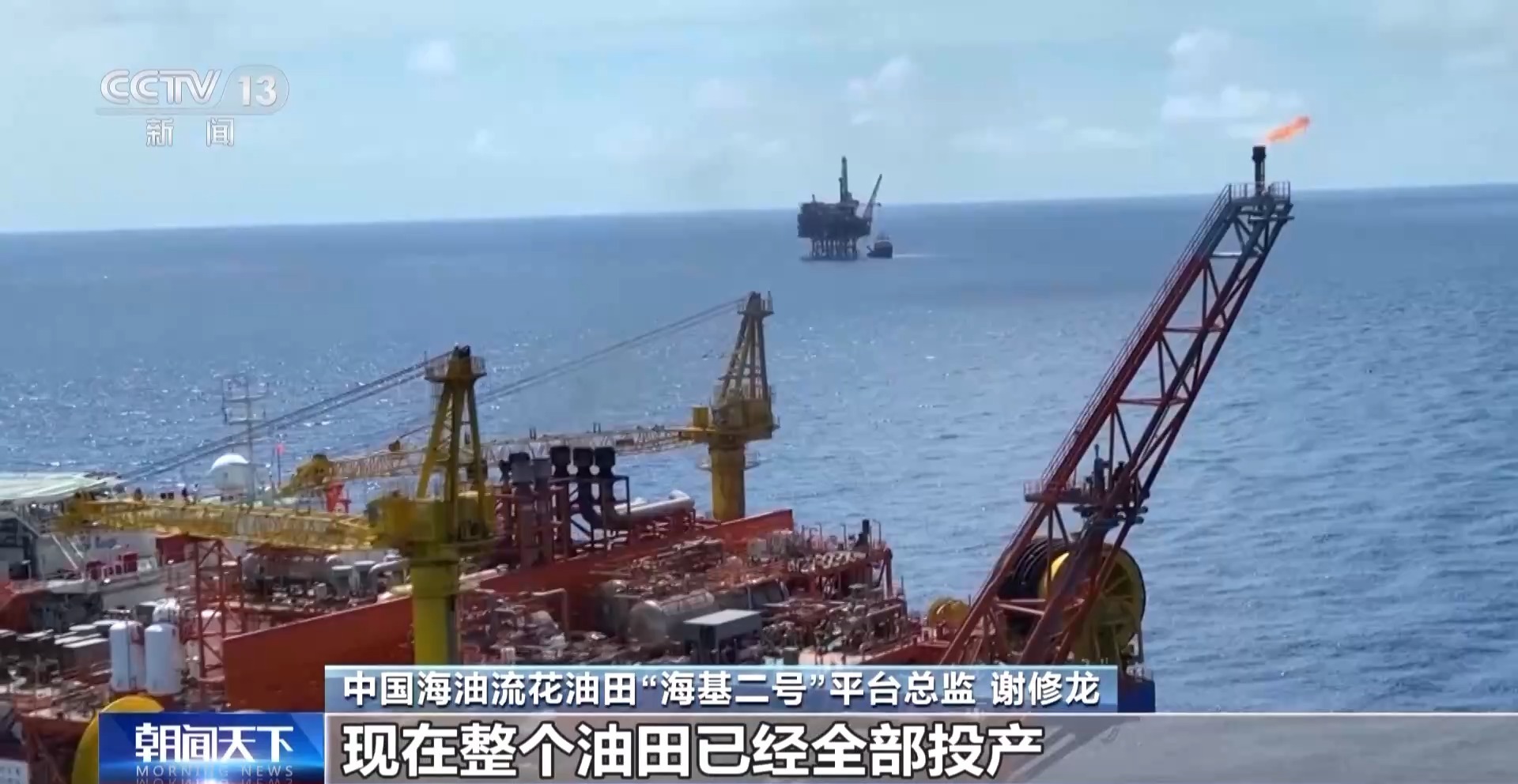
Core Viewpoint - The successful full production of the Liuhua Oilfield's secondary development project marks a significant advancement in China's deepwater oilfield development capabilities, with daily crude oil production reaching a record high of 3,900 tons and expected to exceed one million tons next year [1][3][15] Group 1: Project Overview - The Liuhua Oilfield secondary development project consists of the Liuhua 11-1 and 4-1 oilfields, located at an average water depth of 305 meters, featuring a deepwater jacket platform and a cylindrical offshore oil and gas processing facility [1][5] - Since the first production wells were put into operation in September last year, the project has produced over 900,000 tons of crude oil [1] Group 2: Technological Innovations - The project employs innovative development models using deepwater jacket platforms and cylindrical floating production storage and offloading units, creating a stable oil control and water management technology system [7][13] - The "Haiji No. 2" platform, Asia's first deepwater jacket platform, integrates over 300 advanced technologies and features a digital twin system for optimal maintenance strategies [9][11] Group 3: Production Efficiency - The project has designed 32 production wells with a total drilling depth exceeding 75,000 meters, achieving a significant increase in production efficiency and a reduction in water cut rates [11][13] - The secondary development has successfully extended the oilfield's lifespan by 30 years, demonstrating the effectiveness of the water control technology [13] Group 4: Industry Impact - China's deepwater oil and gas exploration and development capabilities have made historic leaps, with the country becoming one of the few able to conduct independent deepwater operations [15] - The deepwater oil and gas production capacity has surpassed 12 million tons of oil equivalent, contributing significantly to national energy security [15]
“增储上产”构筑中国石油高质量发展底气
Zheng Quan Ri Bao· 2025-12-12 16:40
Core Insights - The breakthrough at the ZI201 well in Sichuan marks China's first successful extraction of high-yield commercial gas flow from Cambrian shale, indicating significant advancements in deep shale gas exploration [1][2] - China National Petroleum Corporation (CNPC) is enhancing its traditional oil and gas reserves while actively investing in renewable energy, aiming for sustainable growth through innovative technologies [1][3] Natural Gas Production Growth - Following the success of the ZI201 well, CNPC is accelerating exploration and evaluation in the area, with the establishment of the ZI201H2 platform for pilot testing development techniques [2] - The pilot tests achieved four significant milestones, including reducing drilling cycles to under 100 days and implementing advanced monitoring systems in deep shale gas wells [2] Industry Development and Trends - Sichuan Basin is recognized as China's most promising area for natural gas exploration, with the highest total resource volume, particularly in shale gas [3] - Natural gas is expected to play a crucial role in China's energy transition, with medium to long-term consumption projected to grow at a moderate to high rate, enhancing CNPC's profitability in this sector [3] Enhancing Industry Resilience - The Xiangguosi gas storage facility in Chongqing is part of a strategy to create a "Southwest 10 billion gas storage center," contributing significantly to national gas supply stability [4] - The facility has achieved a 15% actual peak shaving task against its design capacity, showcasing its operational efficiency and technological advantages [4] Digital Transformation and Efficiency - The gas storage facility has implemented digital operations, reducing inspection cycles by 60% and increasing efficiency by 200% through the use of automated systems and intelligent robots [5] - CNPC's Suining gas purification plant has become the largest in China, achieving rapid production milestones and adopting a smart management model for enhanced operational efficiency [5] Transition to Comprehensive Energy Stations - CNPC is transforming traditional gas stations into comprehensive energy stations, integrating various services such as refueling, charging, and retail [6] - The Yongquan comprehensive energy station in Chengdu exemplifies this transition, featuring advanced charging infrastructure and a diverse range of services [6][7] Future Outlook - CNPC aims to maintain its core oil and gas business while innovating in comprehensive energy services, focusing on long-term growth and value creation for shareholders [7]
国家能源局召开页岩油勘探开发工作推进会
Zheng Quan Shi Bao Wang· 2025-12-12 12:46
Core Viewpoint - The National Energy Administration emphasizes the importance of accelerating shale oil exploration and development in China, particularly in Heilongjiang Province, to enhance energy security and efficiency [1] Group 1: Meeting Overview - The meeting held on December 10 in Daqing, Heilongjiang Province, was chaired by Wan Jinsong, a member of the National Energy Administration [1] - Representatives from China National Petroleum Corporation and China Petroleum & Chemical Corporation reported on the progress of shale oil exploration and the establishment of national shale oil demonstration zones [1] Group 2: Strategic Directions - Oil and gas companies are urged to increase confidence and investment in shale oil exploration and technological research and development [1] - The meeting highlighted the need for innovation in institutional mechanisms to reduce costs and improve efficiency in upstream production [1] Group 3: Policy and Support - A systematic approach is recommended to enhance policy support for shale oil exploration and development [1] - The meeting called for stronger project element guarantees and active engagement from all parties to boost shale oil reserves and production [1]
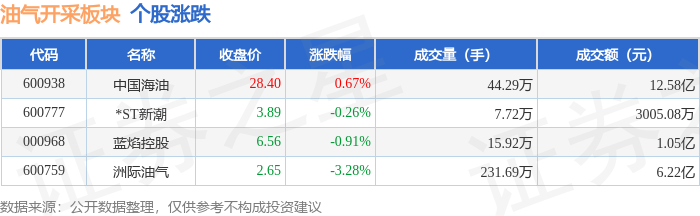
油气开采板块12月12日涨0.06%,中国海油领涨,主力资金净流入240.78万元
Zheng Xing Xing Ye Ri Bao· 2025-12-12 09:12
Core Viewpoint - The oil and gas extraction sector experienced a slight increase of 0.06% on December 12, with China National Offshore Oil Corporation (CNOOC) leading the gains [1] Group 1: Market Performance - The Shanghai Composite Index closed at 3889.35, up by 0.41% [1] - The Shenzhen Component Index closed at 13258.33, up by 0.84% [1] - The oil and gas extraction sector's individual stock performance varied, with notable movements in several companies [1] Group 2: Stock Performance Details - CNOOC (600938) closed at 28.40, with an increase of 0.67% and a trading volume of 442,900 shares, amounting to a transaction value of 12.58 million yuan [1] - ST Xinchao (600777) closed at 3.89, down by 0.26% with a trading volume of 77,200 shares, totaling 30.05 million yuan [1] - Blue Flame Holdings (000968) closed at 6.56, down by 0.91% with a trading volume of 159,200 shares, amounting to 105 million yuan [1] - Intercontinental Oil and Gas (600759) closed at 2.65, down by 3.28% with a trading volume of 2,316,900 shares, totaling 622 million yuan [1] Group 3: Capital Flow Analysis - The oil and gas extraction sector saw a net inflow of 2.4078 million yuan from main funds, while retail investors experienced a net outflow of 7.94217 million yuan [1] - CNOOC had a main fund net inflow of 50.2286 million yuan, representing 3.99% of its trading volume, while retail investors had a net outflow of 10.1 million yuan [2] - Blue Flame Holdings had a main fund net inflow of 11.3203 million yuan, with retail investors experiencing a net outflow of 2.58 million yuan [2] - ST Xinchao had a main fund net outflow of 4.1568 million yuan, while retail investors had a net inflow of 713,700 yuan [2] - Intercontinental Oil and Gas had a significant main fund net outflow of 54.9843 million yuan, with retail investors seeing a net inflow of 23.6588 million yuan [2]


两大能源国企,两位副总被查!
Xin Lang Cai Jing· 2025-12-11 10:17
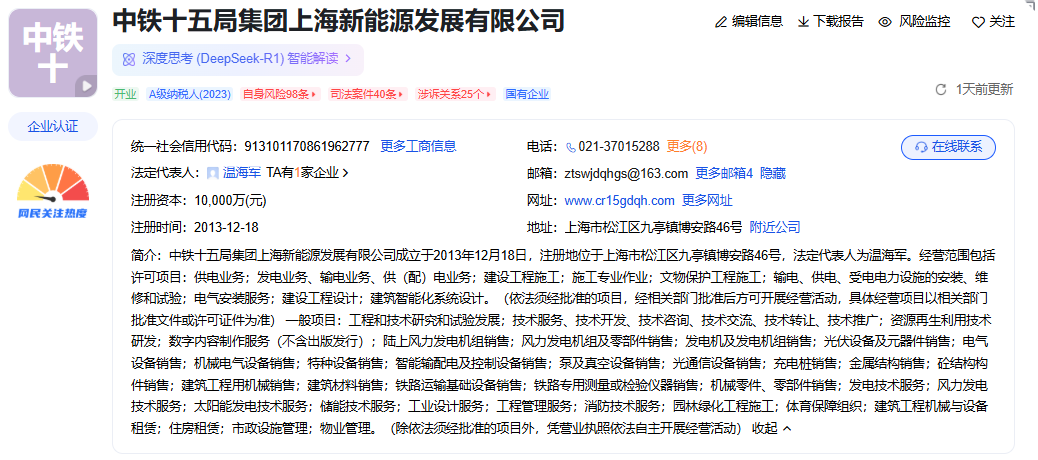
12月10日,廉洁上海微信公众号消息,据中铁十五局集团有限公司纪委、上海市静安区纪委监委消息:中铁十五局集团上海新能源发展有限公司副总经理 刘田兵涉嫌严重违纪违法,目前正接受中铁十五局集团有限公司纪委纪律审查和上海市静安区监察委员会监察调查。 辑:刘英丽 编 责编:刘婧媛 12月10日,廉洁上海微信公众号消息,据中铁十五局集团有限公司纪委、上海市静安区纪委监委消息:中铁十五局集团上海新能源发展有限公司副总经理 刘田兵涉嫌严重违纪违法,目前正接受中铁十五局集团有限公司纪委纪律审查和上海市静安区监察委员会监察调查。 企查查信息显示,中铁十五局集团上海新能源发展有限公司成立于2013年,注册资本1亿,经营范围包含供电业务;风力发电机组及零部件销售;光伏设 备及元器件销售等。 企查查信息显示,中铁十五局集团上海新能源发展有限公司成立于2013年,注册资本1亿,经营范围包含供电业务;风力发电机组及零部件销售;光伏设 备及元器件销售等。 | 备及元器件销售等。 | | | --- | --- | | 12月11日,中国海洋石油集团有限公司原党组成员、副总经理袁光宇涉嫌受贿一案,由国家监察委员会调查终结,移送检察机关审查起 ...