炼油

Search documents
EPA拟重新分配生物燃料掺混豁免义务
Zhong Guo Hua Gong Bao· 2025-09-22 03:03
Core Viewpoint - The U.S. Environmental Protection Agency (EPA) has proposed a plan to redistribute the small refinery exemption (SRE) obligations for biofuel blending to larger refineries, offering options of 50% and 100% redistribution, while also seeking public input on other potential ratios [1][2] Group 1: Proposal Details - The EPA's proposal includes a public comment period of 45 days, which is considered crucial by industry officials [1] - The biofuel industry advocates for a full 100% redistribution to maintain demand for products like corn ethanol, while refiners oppose this, citing increased costs [1] - The proposal is seen as a "stalling tactic" by some industry officials, indicating a lack of substantial progress [1] Group 2: Background Information - According to the Renewable Fuel Standard (RFS), refineries are required to blend billions of gallons of biofuels annually or purchase renewable identification numbers (RINs) from compliant entities [1] - Small refineries can apply for SRE exemptions if they demonstrate that blending requirements would cause financial hardship [1] - The EPA cleared over 170 SRE exemption applications from 2016, necessitating a compensation plan for the obligations [2] - The total amount of exemptions from 2023 to 2025 is equivalent to 2.18 billion RINs [2]
突发!拟制裁大量中企!
Sou Hu Cai Jing· 2025-09-22 03:02
Group 1 - The European Commission President Ursula von der Leyen stated that Russia's oil revenue in Europe has decreased by 90% over the past three years, and the EU is now pursuing those who violate sanctions by purchasing oil that fuels the Russia-Ukraine war [1] - The EU has approved its 19th round of sanctions since the outbreak of the Russia-Ukraine conflict in February 2022, targeting oil refineries, traders, and petrochemical companies in third countries including China, Brazil, and India [1][3] - The new sanctions are expected to restrict Russia's access to technologies such as artificial intelligence and geospatial data, as well as critical resources needed for weapons production, which may include resources sourced from foreign suppliers like China and India [3] Group 2 - Former President Trump indicated readiness to impose significant sanctions on Russia if all NATO members take similar actions and stop purchasing oil from Russia [1] - Trump previously called for a 50% to 100% tariff on Chinese and Indian companies purchasing Russian oil, highlighting the geopolitical implications of energy trade [1] - The EU plans to impose transaction bans on more Russian banks and third-country banks as part of the new sanctions [3]

俄汽油突然短缺!全因乌无人机搞事,能源战坑苦普通人
Sou Hu Cai Jing· 2025-09-21 01:56
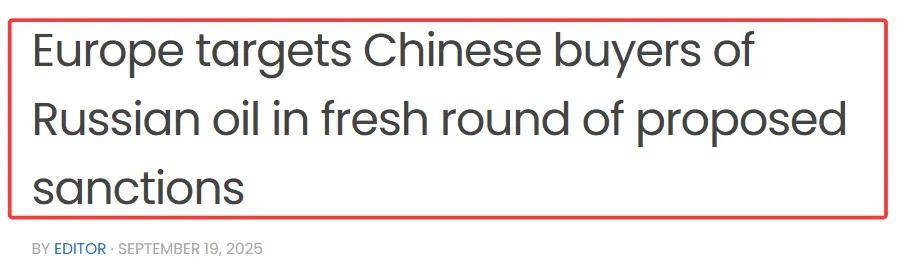
Group 1 - Ukraine's drone attacks have led to over 40% of Russia's refining capacity being incapacitated, resulting in significant gasoline shortages across more than 10 regions, including the Far East and Crimea [1] - The black market price for gasoline has surged to over 16 rubles per liter, indicating a severe impact on ordinary citizens and agricultural production in Russia [1] - The ongoing conflict has shifted the costs of war back to Russia, affecting domestic supply chains and public sentiment [1] Group 2 - Ukraine's systematic attacks on Russian energy facilities aim to reduce Russia's export revenues and provoke domestic discontent, thereby weakening Russia's war potential [9] - Russia's energy sector is resilient, with the ability to recover from attacks, but the frequency of these strikes incurs costs in terms of time and resources [4][6] - The attacks are part of a broader strategy by both sides, with Ukraine targeting Russian energy infrastructure while Russia aims to undermine Ukraine's civilian life and war support capabilities [13] Group 3 - The ethical implications of targeting energy infrastructure are significant, as these facilities are often near populated areas, raising concerns about civilian safety [19] - The conflict has entered a stalemate, with both sides engaging in retaliatory strikes that complicate peace negotiations and escalate tensions [21] - The energy conflict reflects the harsh realities of war, where ordinary citizens bear the brunt of the consequences, and the prospects for peace become increasingly dim [24]
乌打击俄炼油厂,爆炸引发火灾
中国能源报· 2025-09-20 09:18
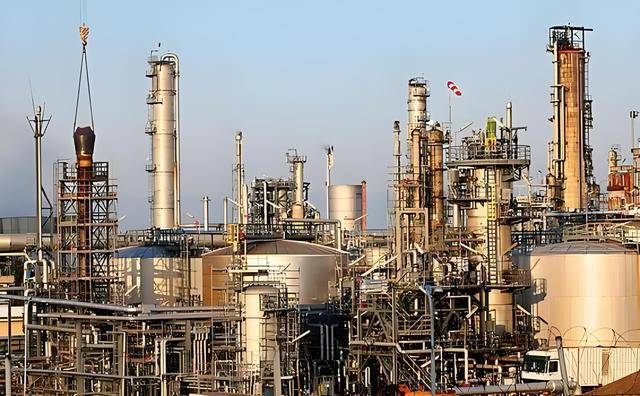
Group 1 - Ukrainian armed forces conducted drone strikes on two Russian oil refineries and another oil production facility on September 20 [1] - The strikes resulted in explosions and fires in the targeted areas, with the specific outcomes still being verified [1] - All targeted facilities were related to the logistical support of Russian armed forces [1]

美印贸易谈判现罕见议题:美国要求将印度“去俄油”纳入协定
智通财经网· 2025-09-20 01:03
Group 1 - The U.S. is attempting to include India's oil imports from Russia in bilateral trade negotiations, despite India's increasing imports to meet domestic demand [1] - A U.S. trade delegation led by Assistant Trade Representative Brendan Lynch raised this issue during a meeting with Indian representatives [1] - The discussions are unusual as they typically do not involve a country's relations with a third nation in bilateral trade talks [1] Group 2 - The Indian Ministry of Commerce has not commented on the matter, and the U.S. Trade Representative's office also declined to provide remarks [2] - Recent talks aimed to ease tensions following the U.S. imposing a 50% tariff on Indian goods, which is among the highest tariffs on Asian countries [2] - India is cautiously optimistic about reaching a trade agreement, especially after President Trump congratulated Prime Minister Modi on his birthday, indicating a potential thaw in relations [2] Group 3 - India requested the U.S. to remove an additional 25% tariff on Russian energy imports, which the Indian government deems "unfair and unreasonable" [2] - Indian refiners have no plans to reduce Russian oil imports as domestic fuel demand is expected to rise post-monsoon [2] - Both sides described the recent talks as "constructive," covering multiple aspects of the trade agreement and agreeing to intensify efforts to reach a deal [2][3] Group 4 - Previous commitments were made to finalize a bilateral trade agreement by fall, but negotiations have stalled due to both sides taking a hardline stance [3] - The U.S. is also seeking greater access to India's dairy and agricultural markets, which India is resistant to [3]
乌军称袭击俄罗斯伏尔加格勒炼油厂
Yang Shi Xin Wen· 2025-09-18 09:20
Group 1 - Ukrainian special operations forces conducted an attack on the Volgograd oil refinery, leading to its shutdown [1] - The Volgograd refinery is the largest fuel and lubricant production facility in Russia's Southern Federal District, with an annual processing capacity of approximately 15.7 million tons, accounting for 5.6% of Russia's total crude oil processing [1] - The refinery plays a crucial role in ensuring fuel supply for the Russian military, and its operations are now completely halted [1]
EIA数据显示,美国一周炼厂产能利用率下降1.6个百分点
Mei Ri Jing Ji Xin Wen· 2025-09-17 14:39
Core Insights - The EIA reported a decrease of 1.6 percentage points in the U.S. refinery capacity utilization for the week [1] Industry Summary - The U.S. refinery capacity utilization has shown a decline, indicating potential shifts in production levels and operational efficiency within the refining sector [1]
榆炼进口原油 接卸量破百万吨
Zhong Guo Hua Gong Bao· 2025-09-17 02:16
Core Insights - The Yulin Refinery has successfully imported over 1 million tons of crude oil as of September 11, reaching 1.293 million tons, which accounts for 71.8% of its annual target [1] Group 1: Operational Efficiency - To ensure efficient unloading, the Yulin Refinery has implemented a scheduling mechanism that includes "advance docking, real-time tracking, and dynamic adjustments" [1] - The refinery has optimized internal operations by refining unloading, transfer, and measurement processes, and has adopted a "stop work when personnel stop" shift model to enhance unloading efficiency [1] Group 2: Safety Management - The company prioritizes safety in production by continuously strengthening safety management practices [1] - Regular training and emergency drills are conducted for staff to improve their safety operation skills and emergency response capabilities [1] - Daily comprehensive checks are performed on equipment operation, personnel compliance, and safety measures to promptly eliminate potential safety hazards [1]
欧盟计划将一些中国独立炼油厂列入对俄罗斯的第19轮制裁!
Sou Hu Cai Jing· 2025-09-17 01:21
Group 1 - The European Commission is considering including certain independent Chinese refineries in its 19th round of sanctions against Russia [3] - A new package of sanctions may be proposed after the EU delegation returns from negotiations with the United States [3] - The EU is expanding the scope of sanctions to include third-country companies that assist Russia in evading Western restrictions [3][5] Group 2 - The 18th sanctions list included two Chinese banks and India's Nayara Energy refinery, which is a joint venture with Russian oil companies [3] - Nayara Energy stated that Microsoft has ceased providing services to it following the EU sanctions [3] - The EU has been monitoring certain Chinese refineries that purchase Russian oil from already sanctioned "shadow" oil fleets since summer [5]
用二十年迎接一场阳谋,中国炼油反内卷开始行动
Sou Hu Cai Jing· 2025-09-16 14:20
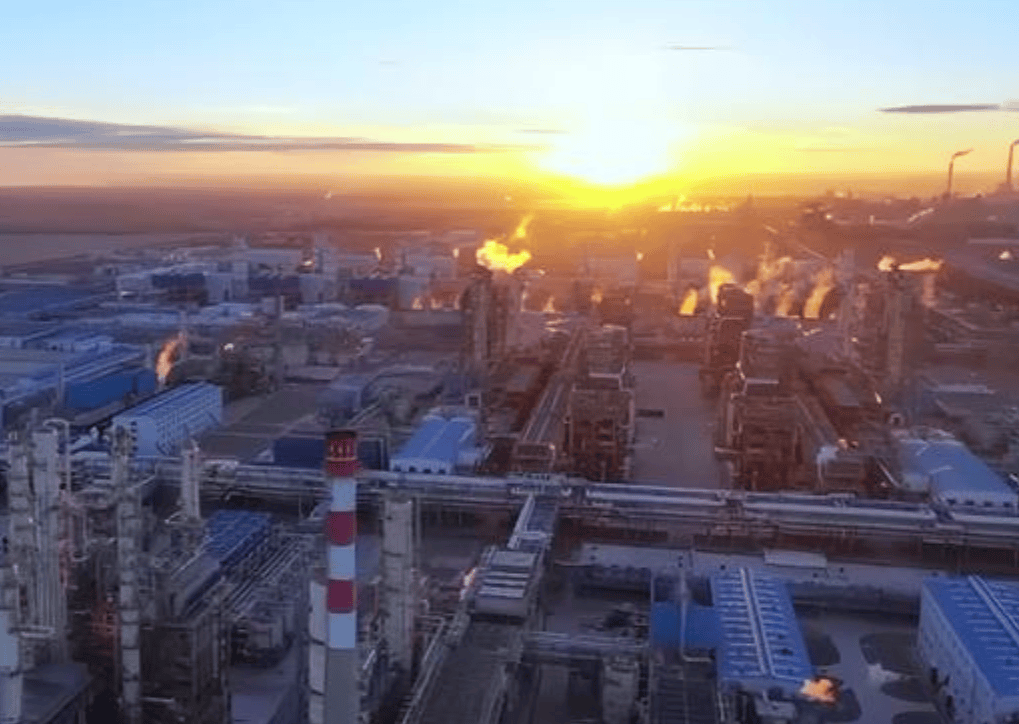
Core Insights - The Chinese refining industry is undergoing a significant transformation driven by government policies aimed at addressing overcapacity and outdated facilities, marking a shift from expansion to consolidation and upgrading [4][19] Group 1: Industry Background - The Zhoushan Green Petrochemical Base project was launched in June 2015, marking the beginning of a new era for private refining in China, supported by the government's decision to allow private refineries to use imported crude oil [2] - The refining capacity in China expanded rapidly from 2005 to 2015, with an increase of 420 million tons per year, leading to a significant rise in the number of local refineries [8] - The industry faced a crisis in 2014 when international oil prices plummeted, resulting in a drastic reduction in refining margins and exacerbating overcapacity issues [8] Group 2: Current Regulatory Environment - A recent notice from five ministries in China calls for a comprehensive assessment of aging petrochemical facilities, particularly those over 20 years old, as part of a strategy to address overcapacity and declining profitability [4][10] - The focus is on outdated equipment that consumes more energy and has lower yields, with many facilities facing resistance to closure due to their economic impact on local communities [10] Group 3: Industry Trends and Shifts - The refining sector is experiencing a shift towards high-end chemical products, with major companies like Rongsheng Petrochemical and Hengli Petrochemical investing in new materials and technologies [17] - The industry is moving towards a more concentrated market structure as state-owned enterprises plan to shut down outdated capacities while investing in new materials [19] - Foreign companies are also recognizing opportunities in China's high-end chemical market, with BASF investing significantly in integrated facilities [19] Group 4: Future Outlook - The transformation of the refining industry is expected to reshape the value chain, with a focus on high-performance polymers and advanced materials becoming the new industry keywords [19] - The government's push for industrial upgrading is seen as a critical step in moving away from traditional refining towards more sustainable and innovative chemical production [19]