Manufacturing

Search documents
Reko International Group Inc. Declares Cash Dividend
Businesswire· 2025-12-05 16:12
Core Viewpoint - Reko International Group Inc. has declared a cash dividend of $0.20 per common share, payable on January 16, 2026, to shareholders of record on December 16, 2025 [1] Company Overview - Reko International Group Inc. is a diversified, technology-driven manufacturing company located in Southwestern Ontario, specializing in robotic automation equipment and precision machining services [3] - The company serves various industries including power generation, automotive, aerospace, rail, mining, offsite construction, infrastructure, and capital equipment [3] - Reko aims to be a pillar and protector of sustainable North American manufacturing and production [3]


SoftBank CEO Masayoshi Son working on plan to Trump-branded U.S. industrial parks: WSJ
CNBC Television· 2025-12-05 12:06
Soft Bank's chief executive reportedly wants to help the Trump administration build out American manufacturing capacity. The Wall Street Journal says that SoftBank CEO Masan is working on a plan under which SoftBank would help create factory clusters in the United States using hundreds of billions of dollars pledged by the Japanese government in its recent trade deal with America. That report says that Trump branded industrial parks would be built on federal land and owned by the US government once they're ...

X @Bloomberg
Bloomberg· 2025-12-05 07:18
Economic Activity - German factory orders surged in October [1] - This surge boosts the idea that Europe's biggest economy eked out growth in the final quarter [1]
恒丰银行广东突围 两大方向初露峥嵘
Xin Hua Cai Jing· 2025-12-05 03:32
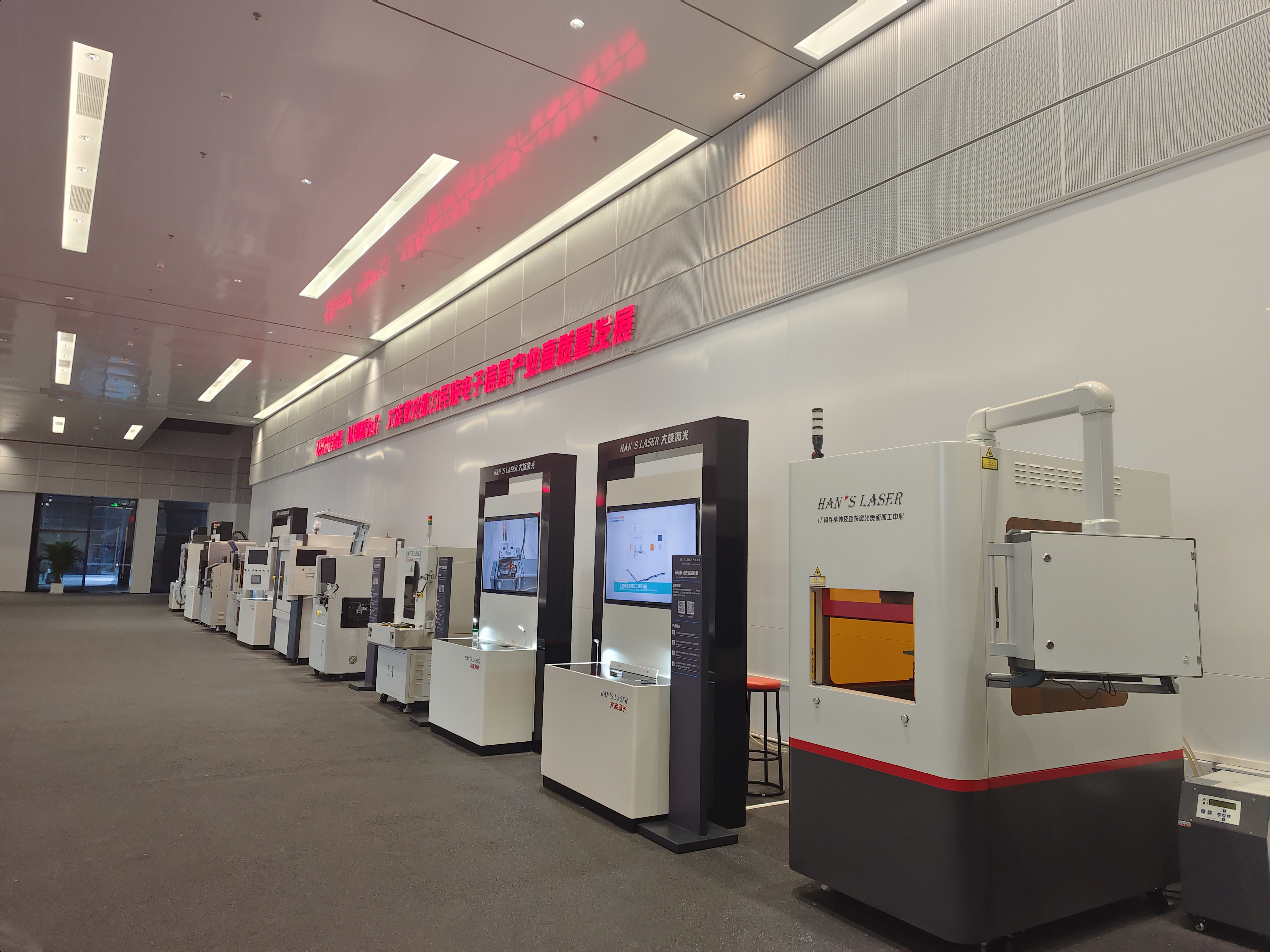
Core Insights - The banking industry is focusing on how to accurately serve high-risk, asset-light technology companies, with Hengfeng Bank's approach showcasing a blend of systematic and flexible financial services [1][2] Group 1: Banking Strategies - Hengfeng Bank's technology loan balance is projected to grow by approximately 10% by the end of November 2025, indicating a strong commitment to supporting technology enterprises [1] - The Shenzhen branch of Hengfeng Bank aims to penetrate the market by focusing on leading technology companies and providing tailored financial solutions, exemplified by its partnership with Dazhong Laser Technology Group [2][7] - Hengfeng Bank has provided Dazhong Holding with a total of 500 million yuan in working capital loans, increasing the credit limit from 500 million yuan to 800 million yuan [2] Group 2: Financial Solutions - The bank offers customized financial solutions rather than standard loans, understanding the specific needs of technology companies during critical phases of their development [2][8] - Hengfeng Bank's collaboration with ZTE Corporation demonstrates its capability to provide comprehensive financial services, including bond financing and supply chain finance, amounting to 2 billion yuan in off-balance-sheet business this year [7][8] Group 3: Risk Management - Hengfeng Bank is developing a long-term mechanism to address the unique characteristics of technology companies, focusing on creating a "willing to lend" environment [8] - The Guangzhou branch integrates financial products with industrial park ecosystems to efficiently reach and manage risks associated with small and micro technology enterprises [9][11] - The bank has successfully provided over 100 million yuan in loans to 24 small and micro enterprises in the industrial park, with 50% of these companies achieving their first financing breakthrough [11][12]
IDEX Corporation Appoints Sean Gillen as SVP, Chief Financial Officer
Businesswire· 2025-12-04 21:47
Core Viewpoint - IDEX Corporation has appointed Sean M. Gillen as Senior Vice President and Chief Financial Officer, effective January 5, 2026, succeeding Akhil Mahendra, who will return to his previous role as Vice President, Corporate Development [1][3]. Group 1: Leadership Changes - Sean M. Gillen brings extensive experience in financial performance, operational efficiency, and strategic growth from his previous role as CFO of AAR CORP, where he focused on portfolio management and M&A [2]. - Akhil Mahendra served as interim CFO since May 2025 and will resume his role in corporate development [1][3]. Group 2: Strategic Focus - IDEX's CEO, Eric Ashleman, expressed confidence in Gillen's ability to drive profitable growth and operational execution, emphasizing the importance of disciplined capital allocation and M&A experience [3]. - Gillen highlighted IDEX's differentiated strategy and the potential for margin improvement while building on growth markets [3]. Group 3: Human Resources Update - Melissa S. Flores, Senior Vice President and Chief Human Resources Officer, will leave IDEX for another opportunity effective December 19, 2025, with plans to fill her role externally [3]. Group 4: Company Overview - IDEX Corporation operates in three primary business segments: Health & Science Technologies, Fluid & Metering Technologies, and Fire & Safety/Diversified Products, employing around 8,800 people globally [4][6]. - The company reported revenues of $3.3 billion and a net income of $505 million for 2024 [6].


Owens Corning Announces 15% Dividend Increase
Businesswire· 2025-12-04 21:30
Core Viewpoint - Owens Corning has announced a 15% increase in its quarterly cash dividend, reflecting the company's commitment to returning value to shareholders [1]. Dividend Announcement - The Board of Directors declared a quarterly cash dividend of $0.79 per common share, which is a 15% increase compared to the previous quarterly dividend [1]. - The dividend will be payable on January 21, 2026, to shareholders of record as of January 5, 2026 [1]. Future Dividend Declarations - Future dividend declarations will be made at the discretion of the Board of Directors, based on the company's earnings, financial condition, cash requirements, future prospects, and other factors [2]. Company Overview - Owens Corning is a leader in building products, committed to sustainability through material innovation [3]. - The company provides durable, sustainable, and energy-efficient solutions, leveraging its unique capabilities and market-leading positions [3]. - Owens Corning has over 25,000 employees in 31 countries and reported sales of $11.0 billion in 2024 [3].


Stanley Black & Decker, Inc. (SWK) Presents at Goldman Sachs Industrials and Materials Conference 2025 Transcript
Seeking Alpha· 2025-12-04 18:38
Core Viewpoint - The company remains confident in its long-term growth trajectory despite facing challenges and headwinds in the manufacturing sector, particularly due to long supply chains extending to Asia [1][2]. Group 1: Financial Targets - The company aims for mid-single-digit top line growth, a gross margin exceeding 35%, and an EBITDA margin in the high teens or better [1]. - Tariffs have delayed the company’s progress by approximately 12 months, but price adjustments have been made to offset these tariffs [2]. Group 2: Mitigation Strategies - The company is actively pursuing mitigation strategies to recover margins affected by tariffs, indicating a proactive approach to managing costs and maintaining profitability [2]. - There is a desire for a more stable and construction-friendly environment to support business operations [2].


Flex Ltd. (FLEX) Presents at Goldman Sachs Industrials and Materials Conference 2025 Transcript
Seeking Alpha· 2025-12-04 17:38
Group 1 - The article does not provide any relevant content regarding company or industry insights [1]


November job losses hit two US regions the hardest
Yahoo Finance· 2025-12-03 23:07
Labor Market Overview - The White House announced the likely absence of the October Bureau of Labor Statistics jobs report due to a government shutdown, casting doubt on the previously reported strong September data [1] - The ADP private sector jobs report, based on anonymized payroll data from over 26 million U.S. private-sector employees, is a trusted non-government source for labor data [3] Job Losses and Sector Performance - Private employers cut 32,000 jobs in November, with significant losses in construction, manufacturing, professional/business services, and information services [5] - Job declines were uneven across sectors, with construction losing 9,000 jobs, manufacturing losing 18,000, and professional/business services losing 26,000, while natural resources and mining added 8,000 jobs [7] Regional Job Trends - The Northeast and South experienced steep job losses, with New England laying off 50,000, the Mid-Atlantic cutting 49,000, and the South Atlantic losing nearly 80,000 jobs; in contrast, the Midwest and West reported job gains of 45,000 and 67,000, respectively [9]

Fabrinet to Present at Barclays 23rd Annual Global Technology Conference
Globenewswire· 2025-12-03 21:15
Core Viewpoint - Fabrinet, a leading provider of advanced optical packaging and precision manufacturing services, will present at the Barclays 23rd Annual Global Technology Conference in San Francisco on December 10, 2025 [1][2]. Company Overview - Fabrinet specializes in advanced optical packaging and precision optical, electro-mechanical, and electronic manufacturing services for original equipment manufacturers of complex products, including optical communication components, automotive components, medical devices, and industrial lasers [3]. - The company offers a comprehensive range of capabilities across the entire manufacturing process, including process design, supply chain management, manufacturing, advanced packaging, integration, final assembly, and testing [3]. - Fabrinet operates engineering and manufacturing facilities in Thailand, the United States, China, and Israel, focusing on high complexity products in various mixes and volumes [3].