卫星通信

Search documents
炸场太空赛道!低轨卫星兵家必争!
Ge Long Hui A P P· 2025-11-06 10:23
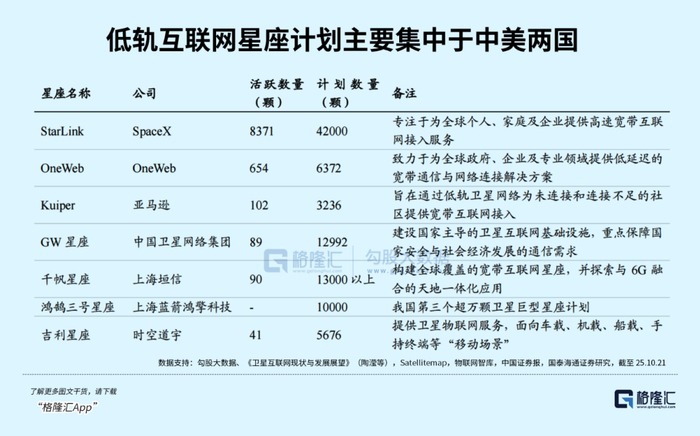
Core Insights - The low Earth orbit (LEO) satellite sector has become a new market hotspot, driven by significant developments in satellite communication technology and supportive government policies [2][3][6] Group 1: Market Dynamics - The LEO satellite industry chain has seen a collective surge, with notable performance from key players: China Satellite (up 57%), Holleywo (up 32%), and Shanghai Hantong (up 17%) [2] - Major policy support includes the "14th Five-Year Plan," which emphasizes accelerating the construction of LEO satellite constellations and prioritizing space resource development [3][6] - The successful launch of 12 LEO communication satellites by the Long March 6 rocket on October 26 has further ignited market enthusiasm, with China Satellite hitting the daily limit on stock price increase [3][6] Group 2: Competitive Landscape - The global LEO satellite race is dominated by the U.S. and China, with SpaceX's Starlink leading with 8,371 satellites in orbit, accounting for 89.6% of the global total [4][6][11] - China's GW constellation and Qianfan constellation plan to deploy a total of 25,000 satellites by 2027, positioning China as a key competitor in the LEO satellite space [6][11] Group 3: Technological Advancements - Recent technological breakthroughs have transformed LEO satellites from a distant concept to a practical necessity, with significant cost reductions in satellite launches and the introduction of satellite communication features in high-end smartphones by Huawei and Apple [7][10] - The market for LEO satellites is projected to reach $300 billion by 2025 and $1.79 trillion by 2035, with China's market expected to exceed 350 billion yuan by 2025 [8][10] Group 4: Investment Opportunities - Companies involved in satellite manufacturing and launch services are positioned as key beneficiaries of the LEO satellite deployment, with China Satellite holding over 50 billion yuan in orders [13][14] - The demand for core components and testing equipment is expected to grow significantly, driven by the increasing number of satellites in orbit and the commercialization of satellite communication [14][16] - The consumer market for satellite communication is expanding, with potential growth in applications such as emergency communication and maritime connectivity [14][16]


地球快养不起AI了,谷歌英伟达被逼上太空,结果便宜了马斯克
创业邦· 2025-11-06 10:13
Core Viewpoint - Google has launched Project Suncatcher, aiming to establish a space-based AI infrastructure powered by solar energy, addressing the increasing energy demands of data centers on Earth [5][7][11]. Group 1: Energy and Resource Challenges - The global energy consumption of data infrastructure is projected to match Japan's total energy consumption by 2030, highlighting the urgent need for energy breakthroughs in AI [9]. - A 1 MW data center consumes as much water daily as approximately 1,000 residents in developed countries, emphasizing the resource-intensive nature of current data centers [9]. - Google’s plan involves launching a satellite constellation powered by solar energy and equipped with its TPU chips to create an "orbital AI data center" [11][12]. Group 2: Advantages of Space-Based Data Centers - Solar panels in space can achieve 8 times the efficiency compared to those on Earth, and they can provide continuous power without interruptions from night or weather [12]. - Space-based data centers do not consume Earth's limited land resources or require significant water for cooling, making them a more sustainable option [13]. Group 3: Technical Challenges - Google faces three main challenges: establishing a high-bandwidth local network in space, protecting chips from cosmic radiation, and ensuring efficient data transmission back to Earth [16][20][23]. - The proposed solution for inter-satellite communication involves flying satellites in close proximity and using laser communication to achieve high-speed data transfer, with a successful demonstration of 1.6 Tbps achieved [19]. - Google’s TPU chips have shown remarkable resistance to radiation, allowing them to operate in low Earth orbit for up to five years without permanent damage [21]. Group 4: Cost Considerations - The cost of launching payloads into space remains a significant barrier, with current prices being ten times higher than the ideal target of $200/kg [28]. - If SpaceX can reduce launch costs to $200/kg by around 2035, the cost of power for space data centers could become competitive with terrestrial data centers [27][32]. Group 5: Competitive Landscape - SpaceX is positioned to play a crucial role in enabling Google's space data center model, potentially dominating the space computing market as it has in terrestrial GPU markets [30][32]. - The emergence of companies like Starcloud, which aims to process data in orbit using powerful GPUs, indicates a shift in how data is handled in space, relying on reduced launch costs from SpaceX [36][39].



炸场太空赛道!低轨卫星兵家必争!
格隆汇APP· 2025-11-06 09:21
Core Viewpoint - The low Earth orbit (LEO) satellite sector is emerging as a significant investment opportunity driven by policy support, technological advancements, and market demand, with expectations of substantial growth over the next five years [2][4][9]. Summary by Sections Market Dynamics - The LEO satellite industry is experiencing a collective boom across the entire supply chain, from satellite manufacturing and rocket launches to core components and application services, becoming a leading hotspot next to AI chips [3]. - Major companies in the sector have shown impressive stock performance, with China Satellite up 57%, Holleywo up 32%, and Shanghai Hanxun up 17% year-to-date [3]. Policy and Technological Drivers - The "14th Five-Year Plan" has explicitly prioritized the construction of LEO satellite constellations, marking a shift from an industrial focus to a national strategic priority, intensifying competition with the U.S. [4]. - Recent technological breakthroughs include the successful launch of multiple satellites by China Star Network and the integration of satellite communication features in Huawei and Apple devices, transforming satellite connectivity from a concept to a necessity [4][8]. Industry Growth Projections - The global LEO satellite market is projected to exceed $300 billion by 2025 and reach $1.79 trillion by 2035, with a compound annual growth rate (CAGR) of 9%. The Chinese market is expected to grow even faster, reaching 280 billion yuan in 2024 and surpassing 350 billion yuan in 2025, with a CAGR exceeding 25% [9]. Competitive Landscape - The limited availability of orbital and frequency resources has intensified the competition between the U.S. and China, with the U.S. currently holding 89.6% of the global LEO satellites [7]. - China plans to deploy thousands of satellites by 2027, positioning itself as a key player capable of competing with U.S. efforts [7]. Investment Opportunities - Companies involved in satellite manufacturing and launching are seen as the most stable investments, benefiting directly from the scale of satellite deployment [17]. - The core components and testing equipment sector is identified as having significant growth potential, with demand for satellite communication chips and RF modules expected to rise as terminal usage increases [18]. - The terminal and application services segment is viewed as a potential growth area, particularly with the advent of consumer-grade satellite communication capabilities [19].

Satellite firm SES's earnings miss expectations as Intelsat integration weighs
Reuters· 2025-11-06 06:33
Core Insights - European satellite company SES reported a lower than expected core profit for the third quarter [1] - The decline in profit was attributed to integration costs from its recent acquisition of Intelsat [1] Financial Performance - The core profit for SES in the third quarter was below market expectations [1] - Integration costs related to the Intelsat acquisition negatively impacted the financial results [1]

朱雀三号首飞在即 通宇通讯锚定卫星通信核心赛道
Quan Jing Wang· 2025-11-05 07:36
Core Insights - The successful maiden flight of the reusable Zhuque-3 rocket by Blue Arrow Aerospace marks a significant milestone for China's private space industry, unlocking new low-cost satellite launch pathways and providing growth opportunities for Tongyu Communication, which is deeply integrated into the industry chain [1] Group 1: Strategic Positioning - Tongyu Communication has strategically invested 30 million yuan in Blue Arrow Aerospace's subsidiary, laying the foundation for collaboration within the supply chain [2] - The Zhuque-3 rocket is essential for the Honghu constellation project led by Blue Arrow, creating a synergistic relationship that allows Tongyu to directly access the core supply chain [2] Group 2: Technological Advancements - Tongyu Communication has developed a comprehensive product matrix supporting satellite connectivity, including a Ka/Ku dual-band phased array antenna that meets low Earth orbit satellite communication needs [3] - The company has invested 65 million yuan in R&D by Q3 2025, reinforcing its technological edge in satellite communication [3] Group 3: Market Expansion - Tongyu Communication has expanded its reach beyond the Honghu constellation, engaging in multiple satellite internet projects and forming partnerships with leading companies like Yuanxin [4] - The MacroWiFi product, which connects satellites to ground networks, has a coverage area ten times that of traditional WiFi and supports 200 concurrent users, enhancing the company's global market presence [4] Group 4: Future Growth Potential - The maiden flight of Zhuque-3 is expected to catalyze growth in Tongyu Communication's satellite communication business, establishing a competitive advantage through capital binding, technical adaptation, and multi-scenario deployment [4] - As the "rocket-satellite-communication" ecosystem continues to develop, Tongyu Communication is poised to benefit from the burgeoning market for integrated communication solutions valued in the trillions [4]


东珠生态环保股份有限公司关于无锡上市公司投资者集体接待日活动暨2025年第三季度业绩说明会参加情况的公告
Zhong Guo Zheng Quan Bao - Zhong Zheng Wang· 2025-11-04 23:08
Core Viewpoint - Dongzhu Ecological Environmental Protection Co., Ltd. is actively engaging with investors regarding its business transformation and ongoing projects, particularly focusing on its major asset restructuring and overseas projects in Laos [1][2][3]. Group 1: Company Performance and Strategy - The company is facing significant challenges in its main business due to macroeconomic factors and is focusing on improving accounts receivable management while stabilizing its core operations [5][6]. - The company is pursuing a dual business model of "ecological governance" and "satellite communication" to enhance its operational sustainability and growth potential [2][5]. - The major asset restructuring is currently in the due diligence, auditing, and evaluation stages, with updates to be disclosed as progress is made [4][6][8]. Group 2: Investor Engagement and Concerns - During the investor meeting, questions were raised about the company's restructuring plans, project compliance, and the status of the Laos project, with the company assuring that all necessary approvals are being pursued [2][3][4]. - Investors expressed concerns about the company's stock performance and the effectiveness of its market strategies, to which the company responded by emphasizing its commitment to operational optimization and diversification [6][7][8]. - The company is actively responding to investor inquiries regarding its overseas projects and the qualifications of its project partners, ensuring transparency in its operations [3][4][5]. Group 3: Project Updates - The Laos project for land consolidation is progressing normally, with the company committed to adhering to regulatory requirements and maintaining communication with stakeholders [3][4][5]. - The company is also involved in acquiring Kai Rui Xing Tong Technology, which specializes in satellite communication, aiming to leverage its technological advantages in the industry [6][8]. - The company has not yet commenced work on the 3.5 billion RMB contract related to the Laos project but is actively managing the project's development [4][5][6].

Telesat(TSAT) - 2025 Q3 - Earnings Call Transcript
2025-11-04 16:30
Financial Data and Key Metrics Changes - In Q3 2025, Telesat reported consolidated revenues of $101 million, a decrease of $37 million compared to the same quarter in 2024 [7] - Adjusted EBITDA decreased by $49 million to $47 million, with an adjusted EBITDA margin of 46% [7][8] - Operating expenses increased by $12 million to $58 million, primarily due to higher headcount growth in Telesat Lightspeed and increased legal and professional fees [9] - The company recorded a net loss of $121 million in Q3 2025, compared to a net income of $68 million in Q3 2024 [10] Business Line Data and Key Metrics Changes - In the GEO segment, revenue decline was attributed to a lower rate on the renewal of a long-term agreement with DISH and the expiration of a separate agreement [3][4] - The LEO segment is progressing well with satellite development, ground infrastructure, and software, with strong interest in Telesat Lightspeed from AERO and government users [4] Market Data and Key Metrics Changes - Interest in Telesat Lightspeed is particularly strong among AERO and government users, with expectations of increased defense spending in Canada [21][22] - The company has a minimum revenue commitment of $60 million per year from the Canadian government for rural broadband connectivity, which is separate from defense commitments [24] Company Strategy and Development Direction - Telesat is focused on optimizing its capital structure and enhancing financing options, including the distribution of equity in Telesat Lightspeed to a subsidiary [5] - The company plans to launch its first satellites in late 2026, with expectations to enter global service by the end of 2027 [27][48] Management's Comments on Operating Environment and Future Outlook - Management expressed optimism about growth opportunities in defense due to increased government spending commitments [22] - The company reiterated its guidance for 2025, expecting revenues between $405 million and $425 million and adjusted EBITDA between $170 million and $190 million [12][13] Other Important Information - Telesat's total leverage ratio was calculated at 8.676 times, with compliance in all covenants of its credit agreements [13] - The company has approximately $480 million in cash and short-term investments, along with $2 billion available under funding agreements with the Government of Canada and Quebec [13] Q&A Session Summary Question: Status of debt negotiations - Management indicated it is too early to determine the outcome of debt negotiations with holders [17] Question: Guidance on EBITDA and GEO revenue - Management explained that underspending in LEO was offset by increased professional fees related to refinancing, clarifying the guidance situation [19][20] Question: Demand from the defense sector - Management confirmed strong interest from the defense sector, particularly in relation to rural broadband and defense spending commitments [21][22] Question: Rationale behind LEO equity carve-out - The rationale was to optimize capital structure and enhance funding flexibility, with no current plans to raise more equity [29][30] Question: Spectrum transactions in the industry - Management noted that while they have the capability to launch a direct-to-device network, their focus remains on deploying Lightspeed [32] Question: Launch timeline and testing - Management confirmed a gap of two to four months between the first launch of Pathfinder satellites and subsequent launches [36] Question: Partnership with Farcast - Management highlighted the collaboration with Farcast to develop innovative user terminals for Lightspeed [40] Question: Interest in space-based data centers for AI - Management expressed that while they see AI's potential in network efficiency, they are not planning to leverage Lightspeed for space-based data centers [44] Question: Gateway ground network progress - Management reported good progress in building out the gateway ground network, with several teleports already announced [52]

东珠生态:若本次收购成功,公司将形成”生态治理”+”卫星通信”双主业格局
Quan Jing Wang· 2025-11-04 09:42
Core Viewpoint - Dongzhu Ecology (603359.SH) is facing significant challenges in its main business due to macroeconomic factors, but aims to stabilize operations and improve its business structure through a potential acquisition that would create a dual business model of "ecological governance" and "satellite communication" [1] Group 1 - The company participated in the first investor reception day event in Wuxi, themed "Capital Attraction and Innovation High Ground" [1] - Dongzhu Ecology has been enhancing its accounts receivable management and focusing on core quality markets to stabilize its main business operations [1] - A successful acquisition is expected to improve the company's operational status and enhance its sustainable development potential [1]
卫星ETF(159206)午后直线拉升!成分股航天智装涨停
Xin Lang Cai Jing· 2025-11-03 06:23
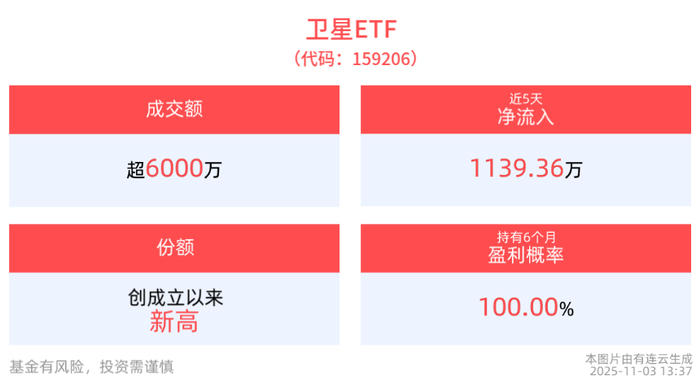
Core Viewpoint - The satellite ETF (159206) is experiencing a positive market response, with a 0.93% increase and significant net subscriptions, indicating growing investor interest in the commercial space and satellite communication sectors [3][7]. Group 1: ETF Performance - As of 13:38, the satellite ETF (159206) rose by 0.93%, with a net subscription of 11 million yuan during the trading session [3]. - The ETF's current price is 1.193, with an average price of 1.179 and a trading volume of 808 [4]. - The ETF is the first and largest of its kind in the market, tracking the national commercial satellite communication industry index [8]. Group 2: Industry Developments - The successful launch of the Shenzhou 21 manned spacecraft on November 1 and the rapid progress of liquid rockets, including the Tianlong 3 large liquid carrier rocket, are significant milestones in China's space endeavors [5]. - The Long March 7 carrier rocket successfully launched the Remote Sensing Satellite 46, marking the 605th flight of the Long March series [6]. - The commercial space sector is expected to enter a rapid development phase, driven by new rocket models and the construction of large satellite internet constellations, with China planning to launch over 25,000 satellites [6]. Group 3: Investment Opportunities - The satellite ETF focuses on commercial space and satellite communication, particularly emphasizing satellite manufacturing, which is expected to thrive under the "strong aerospace nation" initiative [7]. - The satellite internet industry is characterized by high technology and significant capital requirements, with only China and the U.S. remaining competitive in this field [6].





航天强国战略提升!最新解读来了
Zhong Guo Ji Jin Bao· 2025-11-02 08:22
Core Viewpoint - The commercial aerospace industry is entering a golden era of scaled development, driven by policy support, capital investment, and technological advancements, particularly following the elevation of the "Aerospace Power" strategy in China's 20th Central Committee [1][3][4] Policy and Strategic Importance - The "Aerospace Power" strategy has been recognized as a core national strategy, indicating a significant upgrade in policy support for the aerospace industry, which is expected to attract more resources and investment [3][4] - The 14th Five-Year Plan emphasizes the acceleration of strategic emerging industries, including aerospace, which is anticipated to lead to rapid growth in demand and commercialization [4][12] Investment Logic Transformation - The investment logic in the aerospace sector is shifting from theme-driven to a more fundamental-driven approach, focusing on long-term industry trends rather than short-term thematic investments [3][6] - The aerospace sector is expected to transition from being primarily military-focused to encompassing more commercial applications, with significant growth potential in areas like satellite communication and general aviation [7][11] Industry Fundamentals and Valuation - Current fundamentals in the aerospace industry are improving, with companies showing high gross margins and growth potential, making the sector attractive for value investment [6][7] - The valuation of aerospace companies is considered reasonable, with many firms not experiencing significant price increases recently, suggesting a favorable risk-reward profile [6][13] Commercialization and Growth Prospects - The commercialization of aerospace is expected to accelerate, particularly in satellite communication and low-altitude economy sectors, driven by technological advancements and decreasing costs [5][10] - The aerospace industry is projected to see a surge in demand over the next five years, supported by strong policy backing and market dynamics [4][12] Sector Performance and Timing - The aerospace sector is viewed as being in a developmental early stage, with significant long-term growth potential, but also facing high risks due to technological uncertainties and market competition [8][13] - Investors are advised to consider index-based investment strategies to mitigate risks associated with stock selection in this complex industry [12][13] Expected Order of Performance in the Value Chain - The aerospace industry's performance is expected to materialize in phases, starting with satellite infrastructure, followed by low-altitude vehicles and aerospace materials, and finally commercial applications [9][10]