
医疗卫生

Search documents
两办发文保障民生:强基工程、商保目录,如何推动优质医疗资源共享
2 1 Shi Ji Jing Ji Bao Dao· 2025-06-10 11:00
Group 1 - The core viewpoint of the article emphasizes the importance of the "Medical and Health Strong Foundation Project" and the "Commercial Health Insurance Innovative Drug Catalog" to enhance the accessibility and quality of healthcare services for the public [1][2] - The "Medical and Health Strong Foundation Project" aims to address the shortcomings of grassroots medical services, ensuring that citizens can access fair, systematic, and high-quality healthcare services nearby [1][2] - The document highlights the need for resource sharing among medical institutions to optimize the use of limited resources and avoid redundancy in healthcare infrastructure [3][4] Group 2 - The Commercial Health Insurance Innovative Drug Catalog is expected to meet diverse medical insurance needs and significantly address the payment challenges for innovative drugs, thereby promoting their development [2][6] - As of the end of 2024, the innovative drug market in China is projected to reach a sales scale of 162 billion yuan, with medical insurance covering approximately 44%, personal cash payments at 49%, and commercial health insurance at only 7.7% [6][8] - The establishment of a multi-level drug catalog system is crucial for commercial health insurance, allowing for a broader range of drug coverage compared to basic medical insurance [7][8] Group 3 - The article discusses the role of medical communities and networks in the strong foundation project, with over 18,000 medical alliances established nationwide by the end of 2023 [4][5] - The government aims for over 90% of county-level medical communities to meet tight-knit standards by the end of 2027, emphasizing the need for high-level medical talent to support grassroots healthcare [5][8] - The document also stresses the importance of developing a remote medical service network and promoting a "distributed examination, centralized diagnosis" model to enhance service capabilities at the grassroots level [5][8]
加快生育友好医院和儿童友好医院建设 河南定下五年“小”目标
Zheng Zhou Ri Bao· 2025-06-10 00:40
Core Viewpoint - The province is set to comprehensively promote the construction of maternity-friendly and child-friendly hospitals, aiming for 90% of maternity hospitals and over 90% of child-friendly hospitals by the end of 2030 [1][2]. Group 1: Maternity-Friendly Hospitals - By the end of 2025, the proportion of maternity-friendly hospitals among maternity medical institutions is targeted to reach 15% [1]. - By the end of 2027, this proportion is expected to increase to 50% [1]. - The final goal is to achieve 90% by the end of 2030 [1]. Group 2: Child-Friendly Hospitals - By the end of 2025, 30% of tertiary and 15% of secondary medical institutions are planned to be established as child-friendly hospitals [2]. - The target for 2027 is to have over 60% of child-friendly hospitals among those providing child healthcare services [2]. - The ultimate goal is to reach 90% by the end of 2030 [2]. Group 3: Service Capacity Enhancement - The province emphasizes improving maternity service planning and quality to ensure maternal and infant safety [2]. - There is a focus on enhancing children's healthcare services, including emergency care and multidisciplinary treatment [3]. - The introduction of traditional Chinese medicine (TCM) in pediatric care is encouraged, with specific techniques promoted for common pediatric conditions [3].
擘画新时代新征程民生建设新蓝图
Ren Min Ri Bao· 2025-06-09 23:39
Core Viewpoint - The document outlines the "Opinions" issued by the Central Committee of the Communist Party of China and the State Council, focusing on enhancing and improving people's livelihoods, addressing urgent issues faced by the public, and providing a strong impetus for the continuous improvement of living standards [1] Group 1: Policy Adaptation - The "Opinions" adapt to the evolving demands of society, emphasizing the need for continuous improvement in people's livelihoods and addressing diverse and multi-layered demands [2] - The document highlights the importance of macro policies being oriented towards people's livelihoods, aiming to create a virtuous cycle between economic development and the improvement of living standards [2][3] Group 2: Population Trends - The document recognizes the shift from population growth to a reduction phase, emphasizing the need for optimized social policies to address the challenges of an aging population and regional population disparities [3] - It calls for the expansion of inclusive services for the elderly and children, as well as the establishment of a comprehensive social security system [3] Group 3: Principles of Livelihood Construction - The "Opinions" propose four guiding principles: fairness, balance, inclusiveness, and accessibility, which are crucial for enhancing people's well-being and ensuring equitable distribution of development benefits [4] - Fairness is prioritized in social security, aiming to expand coverage and support low-income groups [4] - Balance focuses on reducing disparities in public service access between urban and rural areas [4] - Inclusiveness aims to enhance the quality of basic services in education and healthcare, ensuring they are affordable and sustainable [4] - Accessibility emphasizes the development of community-based services to improve the convenience of social services for all demographics [5] Group 4: Addressing Public Concerns - The document emphasizes the need to address urgent public concerns, such as ensuring social security continuity and improving access to quality healthcare [6][7] - It proposes measures to enhance the sharing of quality medical resources and improve the capabilities of grassroots healthcare services [7] - The "Opinions" also address educational resource disparities, proposing the construction and expansion of high-quality schools to alleviate educational anxiety among families [7] - Furthermore, it aims to ensure that migrant workers receive equal access to basic public services as local residents [8]
患者小病在社区、大病去三甲,二级公立医院如何突破“夹缝”
Di Yi Cai Jing· 2025-06-08 12:13
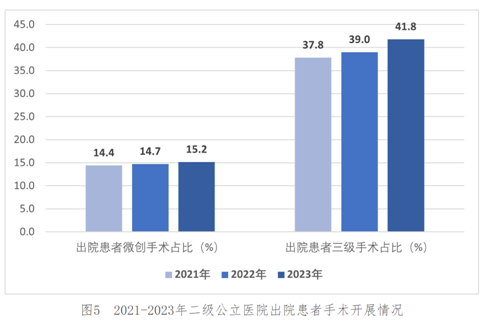
Core Viewpoint - The transformation of secondary public hospitals into specialized institutions such as rehabilitation and pediatric hospitals is a key direction for their development, addressing the challenges of patient distribution and operational efficiency [1][11]. Group 1: Performance and Trends - The performance assessment of secondary public hospitals has shown significant improvements over the past five years, with enhanced operational mechanisms and increased patient satisfaction [1]. - In 2023, the proportion of minimally invasive surgeries and tertiary surgeries among discharged patients reached 15.2% and 41.8%, respectively, marking a year-on-year increase [3][6]. - The number of secondary public hospitals participating in performance monitoring decreased to 3,607 in 2023, down from 3,633 in 2022, indicating a trend of hospital reduction [2][12]. Group 2: Specialization and Transformation - Many secondary public hospitals are transitioning from comprehensive services to specialized care, focusing on common diseases and enhancing their clinical capabilities [1][11]. - The shift towards specialized hospitals is supported by government policies aimed at promoting nursing and rehabilitation services, as well as addressing the needs of aging populations [11][12]. - The average length of hospital stays has decreased to under 9 days, reflecting improved operational efficiency [1]. Group 3: Regional Disparities - There are significant regional disparities in the capabilities of secondary public hospitals, with hospitals in Eastern and Central China showing stronger performance compared to those in Western regions [8][10]. - The CMI (Case Mix Index) and the proportion of tertiary surgeries exhibit a decreasing trend from East to West, highlighting the uneven distribution of healthcare resources [8]. Group 4: Challenges and Future Directions - Despite improvements, secondary public hospitals face challenges such as talent shortages, particularly in pediatrics and nursing, which may hinder their ability to specialize effectively [12][13]. - The government emphasizes the need for better integration of healthcare services and the extension of quality medical resources to secondary public hospitals [13].

机制活服务暖 解码眉山乡村医疗“强基”密码
Si Chuan Ri Bao· 2025-06-06 06:55
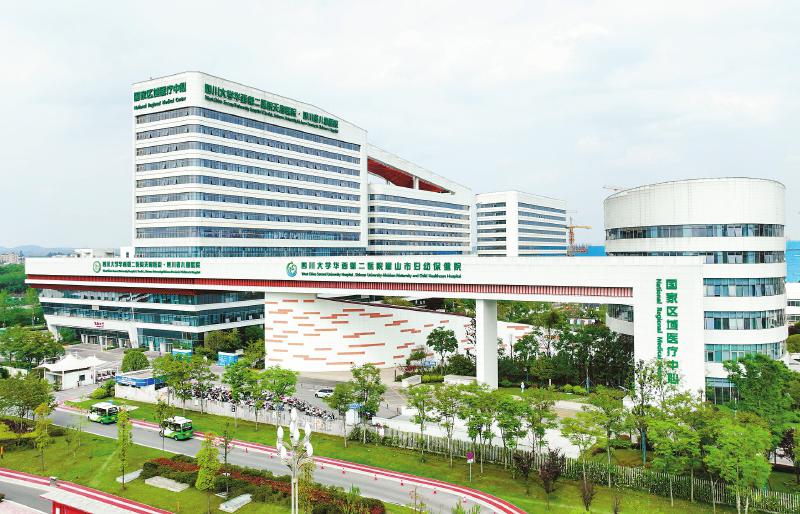
Core Viewpoint - The establishment of new healthcare facilities and innovative mechanisms in Meishan is significantly enhancing the rural healthcare system, providing a model for national rural healthcare development [6][10][13]. Group 1: Healthcare Infrastructure Development - The Sichuan University West China Second Hospital and Sichuan Provincial Children's Hospital have opened in Meishan, marking the first large-scale comprehensive hospital in the Tianfu New Area [4]. - Meishan has established 16 county-level medical and health sub-centers, achieving standardized construction coverage for township health centers and village clinics [10]. - The region has seen a 19.7% increase in remote medical imaging diagnoses in 2024 compared to 2023, indicating improved access to specialized medical services [8]. Group 2: Mechanism Innovation - Meishan has implemented a "1+2+N" policy system with 32 supporting documents to promote healthcare reform, focusing on differentiated construction strategies based on geographical features [8]. - The county has reformed the tightly-knit county medical community, enhancing resource sharing and management efficiency through the establishment of 42 specialized alliances [8]. - A new talent recruitment initiative has brought in 2,217 professionals over three years, significantly reducing vacancy rates in township health centers [9]. Group 3: Community Health Services - The introduction of a "three-color classification management" model for chronic disease patients has improved service precision, benefiting over 125,000 residents through various outreach programs [12]. - The implementation of the "123 service method" in village clinics has led to a decrease in hospitalization rates for chronic diseases like hypertension and diabetes by over 3% annually [11]. - The establishment of family doctor teams and mobile healthcare services has enhanced accessibility and responsiveness to community health needs [12]. Group 4: Future Outlook - Meishan aims to become a southern medical center of the Chengdu metropolitan area, leveraging innovative mechanisms and service networks to enhance grassroots health services [13].
中证港股通医药卫生综合指数上涨3.3%
Jin Rong Jie· 2025-06-04 11:38
Group 1 - The core viewpoint of the article highlights the performance of the CSI Hong Kong Stock Connect Healthcare Index, which rose by 3.3% to 2878.7 points, with a trading volume of 21.443 billion yuan [1] - The CSI Hong Kong Stock Connect Healthcare Index has increased by 7.16% over the past month, 18.59% over the past three months, and 37.56% year-to-date [1] - The index consists of 50 liquid and large-cap healthcare companies listed within the Hong Kong Stock Connect, reflecting the overall performance of these securities [1] Group 2 - The index is adjusted semi-annually, with sample adjustments occurring on the next trading day after the second Friday of June and December each year [1] - The weight factors are generally fixed until the next scheduled adjustment, with special circumstances allowing for temporary adjustments [1] - The index will be adjusted if any securities no longer meet the connectivity qualifications due to changes in the Hong Kong Stock Connect [1] Group 3 - Public funds tracking the CSI Hong Kong Stock Connect Healthcare Index include various funds from E Fund, Ping An, and Yinhua, among others [2]
香港医药ETF(513700)早盘冲高涨超2%,信达生物相关报告占ASCO年会报告总数2%,今日大涨超13%
Xin Lang Cai Jing· 2025-06-04 02:12
Group 1 - The core viewpoint of the news highlights significant advancements in the biotech sector, particularly focusing on the performance of companies like Innovent Biologics and Hansoh Pharmaceutical, driven by clinical trial results and strategic partnerships [1][2]. - Innovent Biologics reported promising Phase I clinical trial data for its first-in-class PD-1/IL-2α-bias bispecific antibody IBI363, showing controllable safety and encouraging efficacy in treating advanced non-small cell lung cancer [1]. - Morgan Stanley raised the target price for Innovent Biologics from HKD 55 to HKD 74, reflecting increased confidence in its pipeline, particularly IBI363 and IBI343, maintaining an "overweight" rating [1]. Group 2 - Hansoh Pharmaceutical entered a licensing agreement with Regeneron, granting global exclusive rights (excluding mainland China, Hong Kong, and Macau) for the development and commercialization of HS-20094, with an upfront payment of USD 80 million and potential milestone payments of up to USD 1.93 billion [2]. - The pharmaceutical industry is expected to experience valuation recovery in 2025, driven by factors such as innovative drug exports, optimization of domestic procurement policies, and the implementation of new medical insurance directories [2]. - The Hong Kong Medical ETF (513700) is recommended for investors looking to capitalize on the long-term growth of the Hong Kong pharmaceutical sector, as it effectively tracks the performance of the industry [2]. Group 3 - As of May 30, 2025, the top ten weighted stocks in the CSI Hong Kong Stock Connect Pharmaceutical and Healthcare Index accounted for 60.77% of the index, including companies like BeiGene, WuXi Biologics, and Innovent Biologics [3].
记者手记:在济南遇见“三明医改”
Xin Hua Wang· 2025-05-31 03:45
Core Insights - The article discusses the implementation of the "Sanming Medical Reform" experience in Jinan, focusing on improving chronic disease management and enhancing trust in community healthcare [1][2][3] Group 1: Medical Reform Implementation - The Sanming Medical Reform experience is being promoted nationwide, with a focus on adapting it to local conditions, aiming for comprehensive implementation by 2025 [3] - The reform emphasizes the importance of integrating community healthcare with higher-level hospitals to build a reliable healthcare network for chronic disease management [1][2] Group 2: Patient Experience and Trust - A case study of an 86-year-old patient illustrates the effectiveness of the new healthcare model, where community doctors can directly manage patient care and facilitate timely referrals to specialized hospitals [1][2] - Patients are more willing to trust community hospitals due to the involvement of top-tier hospitals in creating treatment plans, which also improves the convenience and reimbursement rates for patients [2] Group 3: Goals and Future Directions - The overarching goal of the reform is to ensure that every chronic disease patient receives proper management and care, thereby shifting the focus from treatment to prevention [4] - The initiative aims to create a robust health protection network for residents, enhancing overall public health outcomes [4]
广东“造血”,喀什“焕新”:南疆明珠“粤”来越好
21世纪经济报道· 2025-05-30 14:24
Core Viewpoint - The article highlights the significant impact of Guangdong's aid to Xinjiang, particularly in the Kashgar region, focusing on improvements in education, healthcare, and economic development, which are fostering sustainable growth and enhancing local living standards [4][32]. Group 1: Economic Development - In Q1 2025, Kashgar's GDP reached 32.457 billion yuan, marking a 5.8% year-on-year increase, with industrial output value growing by 22.2% and retail sales of consumer goods increasing by 8.2% [4][5]. - From 2020 to 2024, Kashgar's GDP grew from 1129.81 billion yuan to 1626.88 billion yuan, with a 6.1% increase in 2024, outpacing the national average [31][32]. - The textile industry in Kashgar accounted for 12.1% of the region's industrial output value in Q1 2025, with a remarkable growth rate of 54.5% [18]. Group 2: Healthcare Improvements - The establishment of the Southern Xinjiang National Medical Center has significantly upgraded local healthcare services, with a reported annual outpatient volume exceeding 33,000 and a bed occupancy rate of 85% [10][11]. - The number of healthcare institutions in Kashgar increased from 3,398 in 2020 to 3,785 in 2024, with hospital beds rising from 20,025 to 25,108 [15]. - The introduction of a "group-style" medical aid model has enhanced the quality of healthcare, focusing on both hardware and software improvements in local medical facilities [9][10]. Group 3: Educational Advancements - The establishment of vocational training programs, such as the Cantonese Cuisine Academy, aims to equip local students with skills relevant to the hospitality industry, with 100 full-time students enrolled by 2024 [18][21]. - By 2024, Kashgar had established 122 junior high schools and 59 high schools, with a total enrollment of approximately 329,900 students in junior high and 149,200 in high school [22][23]. - The educational initiatives are transitioning from "giving fish" to "teaching to fish," focusing on long-term talent development in the region [22][24]. Group 4: Cultural and Tourism Development - The transformation of the "Xinjiang National Musical Instrument Village" into a 3A-level tourist attraction has attracted over 70,000 visitors, enhancing local tourism and providing employment opportunities [28][29]. - The tourism market in the Tiemu Chuke city saw a 15.93% increase in visitors, reaching 530,600 in Q1 2025, with tourism consumption growing by 17.92% to 250 million yuan [27][28]. - New businesses, such as eco-friendly restaurants, are emerging in response to the growing tourism sector, contributing to local economic diversification [25][27].

“学三明、抓医改” 这个北方大省怎么做?
Xin Hua Wang· 2025-05-28 00:27
Core Viewpoint - The promotion of Sanming's healthcare reform experience is being adapted to different regions in Shandong Province, emphasizing local conditions and needs to enhance the public welfare aspect of healthcare services [1][3]. Group 1: Financial Investment and Cost Reduction - Over the past five years, the annual financial subsidy for public hospitals in Shandong Province has increased by 25% [1]. - The collection of drug and high-value medical consumables has led to significant price reductions, with the average price of cochlear implants dropping from over 200,000 yuan to around 50,000 yuan, a decrease of 75% [1]. - In Jinan's Lixia District, the average price reduction for medications for hypertension, diabetes, and cardiovascular diseases exceeded 60% after the collection [1]. Group 2: Implementation of Healthcare Reforms - Shandong Province has introduced over 50 measures to support the in-depth implementation of public hospital reforms and high-quality development projects in cities like Jinan, Qingdao, and Weifang [1]. - Weifang has established a graded diagnosis and treatment system centered on "single disease group management" to address the issue of accessible healthcare for the public [2]. - Jinan has developed a medical alliance monitoring platform to optimize and integrate healthcare services, achieving a hospitalization rate of 84.4% in county areas and a grassroots diagnosis and treatment rate of 63.3% [3]. Group 3: Nationwide Promotion and Impact - The National Health Commission has been promoting Sanming's healthcare reform experience across the country, using typical regions as models to drive healthcare reform measures and enhance public health satisfaction [3].