农产品贸易

Search documents
山西首家农产品企业通过“经核准出口商”认定
Zhong Guo Xin Wen Wang· 2025-09-02 15:42
Core Points - The article highlights that Wenshui Rongshengda Fruit Trade Co., Ltd. has become the first "approved exporter" in Luliang City and the first agricultural industrialization key leading enterprise in Shanxi Province to receive this recognition [1] - The company has exported over 120 batches of fresh pears this year, with a total value exceeding 12 million USD [1] - The approval allows the company to issue its own certificates of origin, enhancing flexibility in order planning and shipping schedules [1] Group 1 - The "approved exporter" system enables recognized companies to issue their own certificates of origin, which have the same validity as those issued by customs or trade promotion agencies, and enjoy corresponding tariff reductions [1] - The system provides convenience for companies to determine the origin of goods and issue certificates without needing to apply to customs or trade promotion agencies, with no restrictions on issuing times during holidays [1] Group 2 - Taiyuan Customs will continue to leverage its information and functional advantages to convert policy advantages into developmental benefits, guiding companies to effectively utilize existing free trade agreement tax reduction arrangements [2] - The aim is to enhance the endogenous driving force of Shanxi's foreign trade development and support the province's transformation [2]

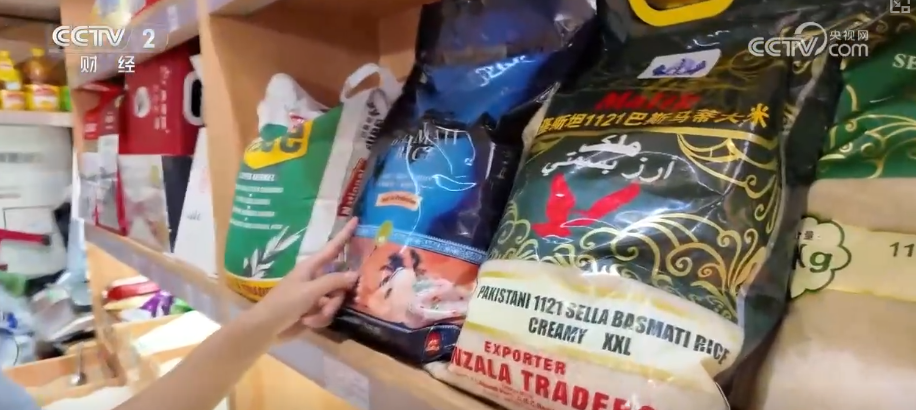
货架上的“上合味道”跨越山海 丰富消费者“菜篮子”“米袋子”
Yang Shi Wang· 2025-09-01 08:43
Core Insights - The Shanghai Cooperation Organization (SCO) has seen significant growth in trade among its member countries, with China's imports and exports reaching a historical high of 2.11 trillion yuan in the first seven months of 2025 [1] - The variety of agricultural products from SCO countries is increasingly present in Chinese markets, enhancing consumer choices [7][9] Trade Growth - In 2024, China's total imports of agricultural products from SCO member countries reached 13.66 billion USD, with an average annual growth rate of 13.3% since 2001 [10] - In the first seven months of 2025, imports from SCO countries increased by 6.2%, with notable growth in frozen fish (20.4%), canola and mustard oil (33.6%), dried and fresh fruits and nuts (44%), and rice (412.1%) [10] Market Expansion - The variety of SCO agricultural products available in Chinese markets has expanded from a few items to a diverse range including grains, oils, seasonings, and snacks [9] - The optimization of cross-border logistics and innovative consumer experiences have made it easier for consumers to access these products [10] Import Efficiency - The use of smart inspection systems at ports, such as Qingdao, has significantly improved the efficiency of agricultural product imports [11] - Qingdao serves as a key port for SCO agricultural products, contributing to market richness and industry vitality [14] Logistics and Access - Qingdao has established 42 maritime routes and 223 air routes to SCO countries, facilitating trade [16] - New product varieties from SCO countries have gained market access in China, enhancing consumer options [16]

(上合天津峰会)陕西省对上合组织国家农产品贸易快速增长
Zhong Guo Xin Wen Wang· 2025-08-30 13:59
Core Insights - The agricultural trade between Shaanxi Province and Shanghai Cooperation Organization (SCO) countries is rapidly increasing, with import and export value rising from 640 million RMB in 2021 to 2.14 billion RMB in 2024, representing a growth of over 230% [1][2] Group 1 - The SCO Agricultural Technology Exchange and Training Demonstration Base was established in 2020 in Yangling Agricultural High-tech Industry Demonstration Zone, which is the first national-level agricultural high-tech industry demonstration zone in China [1] - The Yangling Demonstration Zone has established close cooperation with over 60 countries and international organizations, housing more than 7,000 agricultural science and education talents [1][2] Group 2 - Shaanxi Province is enhancing the infrastructure and resources of the Yangling Demonstration Zone to strengthen the SCO Agricultural Technology Exchange and Training Demonstration Base as a key platform for agricultural technology cooperation [2] - The establishment of a 44,000 square meter SCO Modern Agricultural Exchange Center aims to provide service guarantees for agricultural exchanges and technical training [2] - Shaanxi plans to focus on key areas such as drought-resistant crop breeding and agricultural water-saving irrigation, aiming to deepen practical cooperation and expand training coverage under the SCO framework [2]
陕西省对上合组织国家农产品贸易快速增长
Xin Lang Cai Jing· 2025-08-30 13:31
Core Insights - The agricultural trade between Shaanxi Province and Shanghai Cooperation Organization (SCO) countries is experiencing rapid growth, with import and export values increasing from 640 million RMB in 2021 to 2.14 billion RMB in 2024, representing a growth of over 230% [1] Group 1 - The introduction of the SCO Agricultural Technology Exchange Training Demonstration Base in Tianjin is a key factor driving this trade growth [1] - The significant increase in trade volume indicates a strengthening of agricultural ties between Shaanxi and SCO member countries [1]
自知理亏的加拿大,请中方绕道加拿大一叙,加方诉求中方一个没应
Sou Hu Cai Jing· 2025-08-30 05:33
Group 1 - The core strategy of the US-China tariff negotiations is a "phased approach," which aims to minimize uncertainties and risks during the talks, creating a more stable environment for negotiations [1] - The Chinese delegation recently traveled to Washington for new tariff discussions, but first made a stop in Canada to hold a long-awaited economic meeting, indicating a shift in diplomatic relations [1][2] - The meeting between China and Canada is significant as it marks the 55th anniversary of diplomatic relations and the 20th anniversary of their strategic partnership, providing an opportunity to focus on economic cooperation [4] Group 2 - Canada is motivated to engage with China to mitigate the economic impacts of US tariff policies, as over 70% of its exports go to the US, making it vulnerable to American trade measures [2] - The meeting is expected to address the long-standing canola seed issue, where China imposed tariffs that severely affected Canadian exports, highlighting the need for Canada to seek stable markets [2][4] - China emphasizes that cooperation must be based on mutual benefit and that both parties need to manage differences constructively, indicating that concessions must come from both sides [6][7]
中国(郑州)—巴西经贸合作推介会现场签约金额120亿元
Zhong Guo Xin Wen Wang· 2025-08-28 03:08
Core Points - The China (Zhengzhou) - Brazil Economic and Trade Cooperation Promotion Conference was held in Brasília, resulting in a total signed cooperation amount of 12 billion RMB [1] - Zhengzhou has been focusing on institutional opening-up and deepening integration into the Belt and Road Initiative, with a projected total import and export volume of 29.28 billion RMB with Latin America in 2024, including 4.96 billion RMB with Brazil [1] - The event aims to deepen China-Brazil friendship and expand economic and trade exchanges, creating new opportunities for cooperation [1] Summary by Categories Signed Agreements - A total of 4 cooperation projects were signed at the event, amounting to 12 billion RMB [1] - Key agreements include strategic cooperation on agricultural industry chain resources by COFCO International, Zhengzhou Agricultural Development Group, and Ruimaotong Group [1] - Contracts for beef procurement were signed between Zhengzhou Zhonghe International Trade Co., Zhengzhou Dingshenghe International Trade Co., BarraMana, and Brazil Natural Group [1] - A cooperation agreement for the "Brazil Beef Road" event was signed between Zhengzhou Dingshenghe International Trade Co. and the Brazilian Beef Export Industry Association [1] - Ruimaotong Group and Hengtong Resources Co. signed a soybean procurement contract [1] Future Events - Zhengzhou will host the 18th China-Latin America Entrepreneurs Summit in November, inviting Brazilian entrepreneurs to discuss cooperation and development [2]
前7个月我国对阿盟进出口保持增长
Zhong Guo Xin Wen Wang· 2025-08-27 02:34
Core Insights - China's trade with the Arab League (AL) has shown significant growth, with a total import and export value of 1.72 trillion yuan in the first seven months of the year, marking a historical high and a year-on-year increase of 3.2% [1] - In July alone, trade reached 245.31 billion yuan, reflecting a growth of 6.9%, with exports continuing to rise for 21 consecutive months [1] Trade Dynamics - The trade structure between China and the AL is mutually beneficial, with China importing over 40% of its crude oil from the AL, alongside increased imports of natural gas, refined oil, and metal ores [1] - Exports of mechanical and electrical products to the AL reached 557.66 billion yuan, a 22% increase, accounting for nearly 60% of total exports to the region [1] Agricultural Cooperation - China is deepening agricultural cooperation with the AL, supporting modern agricultural development and increasing imports of AL specialty agricultural products [2] - Exports of agricultural machinery and crop seeds from China to the AL grew by 10.5% and 10.4% respectively, while imports of specific products like frozen strawberries from Egypt and chocolate from Lebanon saw significant increases of 38.2% and 54.7% [2]
张口就是5万吨,中国甩出巨额订单不到24小时,加拿大省长急了,第一时间宣布:未来几周将访华
Sou Hu Cai Jing· 2025-08-26 03:20
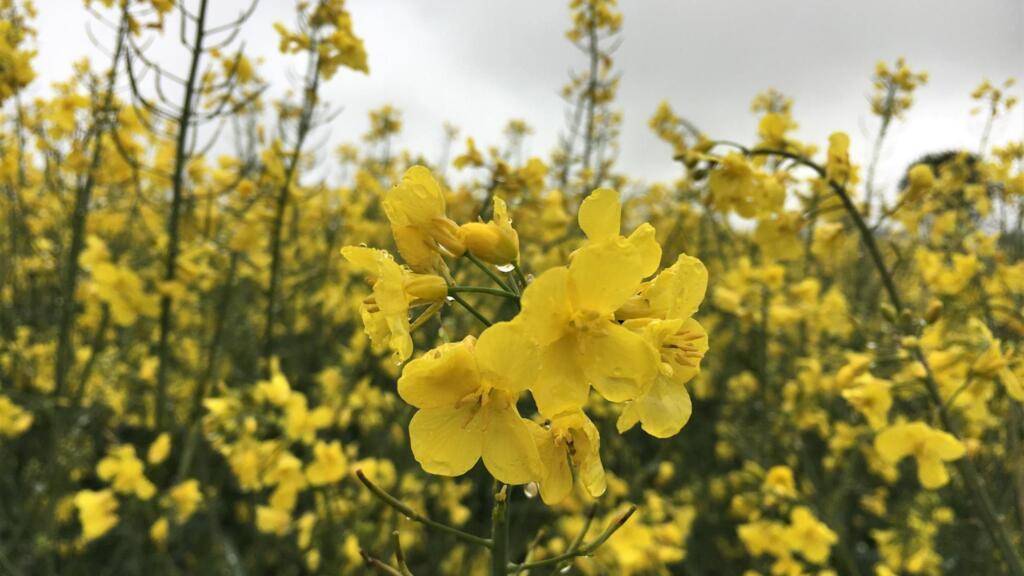
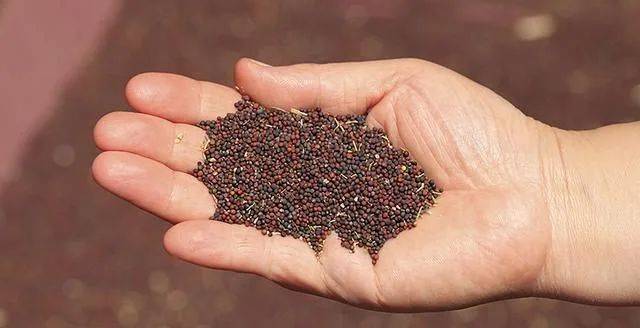
Core Viewpoint - The recent developments in the international trade of canola seeds highlight the shifting dynamics between Canada and China, particularly following China's significant order from Australia, which has prompted Canadian officials to seek discussions to revive their canola trade with China [1][3][4]. Group 1: Trade Dynamics - China has placed a 75.8% deposit on canola seeds imported from Canada, effectively blocking Canadian canola from entering the Chinese market [3][4]. - In contrast, China has recently imported 50,000 tons of canola seeds from Australia, marking the first such import in five years, which is seen as a positive development for Australia [4][6]. - The price of canola futures on the Intercontinental Exchange dropped by 6.5% following the announcement of the deposit on Canadian canola, indicating market reaction to the trade tensions [3][4]. Group 2: Canadian Response - Saskatchewan's Premier Scott Moe is planning a visit to China to discuss the canola seed issue, reflecting the urgency of the situation for Canadian farmers [3][6]. - Canadian agriculture is heavily reliant on the Chinese market, with over half of Canada's canola exports typically going to China, making the current trade barriers particularly damaging [6][7]. - The U.S. has also increased tariffs on Canadian imports to 35%, compounding the challenges faced by Canadian agriculture [6][7]. Group 3: Strategic Implications - The situation underscores the consequences of previous Canadian government trade policies that imposed tariffs on Chinese products, which have backfired by harming Canadian agricultural exports [6][9]. - China's approach to international trade emphasizes fairness and adherence to rules, as it seeks to diversify its agricultural imports from countries like Russia, Mongolia, and India, reducing reliance on Canadian products [6][7][9]. - The outcome of Premier Moe's visit to China will depend on Canada's willingness to reconsider its trade stance and remove discriminatory tariffs against Chinese products [7][9].
海关总署:农产品进口“绿色通道”让泰国、越南的新鲜水果最快7小时抵达广州
Sou Hu Cai Jing· 2025-08-25 04:39
Core Viewpoint - The press conference highlighted the achievements of the Customs in safeguarding national security and promoting high-quality development during the "14th Five-Year Plan" period, emphasizing the importance of cross-border trade facilitation as a requirement for high-level opening-up and optimizing the business environment [1][3]. Group 1: Cross-Border Trade Facilitation - The Customs has collaborated with over 20 national ministries to conduct annual special actions for cross-border trade facilitation, expanding participation to 25 cities across 17 provinces, and implementing 108 reform and innovation measures [3][4]. - Simplified customs clearance processes have enhanced market competitiveness, including a 7×24 hour appointment system and a "first inspection, then shipment" policy for consolidated exports, significantly reducing handling times [3][4]. - The introduction of the "One Port Pass" regulatory model in the Guangdong-Hong Kong-Macao Greater Bay Area has reduced cargo transfer times from 5-7 days to 2-3 days [4]. Group 2: Connectivity and Trade Facilitation - Strengthening international logistics corridors and enhancing key port capacities have improved trade connectivity, while the "single window" system has integrated with 30 departments, facilitating 26 million daily declarations from 11 million registered users [4][5]. - The Customs has expanded the list of products eligible for bonded maintenance in comprehensive bonded zones, with a reported 8.7% increase in import and export activities in this sector from January to July [5]. Group 3: Support for Enterprises - The Customs has implemented joint incentives for AEO (Authorized Economic Operator) enterprises, providing over 3,000 AEO companies with financing guarantees and credit facilities [5]. - The Customs aims to continuously improve the business environment, emphasizing that it can always be better, and will work with relevant departments to create a market-oriented, law-based, and international first-class port business environment [5].

美国大豆就算烂在地里,中国也不会买?特朗普求助无果,沉默11天后,对中方发起新制裁
Sou Hu Cai Jing· 2025-08-23 08:08
Group 1 - The core issue revolves around Trump's call for China to increase its soybean orders from the U.S. by four times, highlighting the strained trade relations between the two countries [1] - In 2017, U.S. soybeans accounted for nearly 40% of China's total imports, but this figure is projected to drop to 20% by 2024 due to tariff policies implemented by the Trump administration [3] - Brazil's share of soybean imports to China has risen significantly, from 50% in 2017 to 70% in 2024, as China diversifies its sources to ensure stable supply and lower costs [3] Group 2 - China's delayed purchasing of U.S. soybeans this year marks the latest start since 2005, indicating a shift in procurement strategies and a surplus in soybean meal supply [3] - The U.S. government has imposed sanctions on two Chinese entities related to oil trade with Iran, which is seen as an attempt to pressure China into increasing soybean purchases [5] - China's energy import strategy has diversified, reducing reliance on the U.S. dollar and making it difficult for U.S. sanctions to disrupt its energy cooperation with Iran [5] Group 3 - The long-term outlook for U.S. agriculture is bleak without the Chinese market, leading to unsold agricultural products and declining prices for American farmers [7] - The proposed $60 billion agricultural subsidy plan by the U.S. government has faced criticism for primarily benefiting large agricultural enterprises, leaving family farms with limited support [7] - China's trade policies are driven by its own market and strategic considerations, suggesting that external pressures from the U.S. may not lead to significant changes in its procurement practices [7]