卫星通信

Search documents
东珠生态(603359):跨界并购卫星通信龙头,擘画成长新蓝图
GOLDEN SUN SECURITIES· 2025-10-10 15:19
Investment Rating - The report initiates coverage with a "Buy" rating for the company [4]. Core Views - The company, Dongzhu Ecological, is a leader in ecological restoration and municipal landscape engineering in China. It is undergoing a significant transformation by acquiring a leading satellite communication company, Kai Rui Xing Tong, to create a second growth curve amidst current operational pressures [1][35]. - The satellite communication industry is experiencing robust growth driven by supportive government policies and increasing demand for low-orbit satellite constellations, which is expected to enhance terminal equipment demand significantly [3][4]. Summary by Sections Company Overview - Dongzhu Ecological is a comprehensive service provider in ecological governance, focusing on ecological restoration and municipal landscape projects. The company has faced operational challenges since 2022 due to industry demand contraction and impairment provisions, but it is expected to improve as new government policies and debt relief funds are implemented [1][22][33]. - The company reported a significant revenue decline in 2024, with total revenue of 3.8 billion yuan, down 55% year-on-year, primarily due to reduced project initiation and longer payment cycles from local governments [22][28]. Acquisition of Kai Rui Xing Tong - The company plans to acquire 89.49% of Kai Rui Xing Tong through a combination of stock issuance and cash payment, aiming to enter the satellite communication sector and diversify its revenue streams [35][37]. - Kai Rui Xing Tong is recognized as a leading domestic satellite communication system provider, with a projected revenue of 260 million yuan and a net profit of 40 million yuan in 2024, reflecting a year-on-year growth of 72% and 364%, respectively [2][37]. Industry Demand Analysis - The satellite internet industry is supported by increasing government policies, with a focus on building a "commercial space" growth engine. The demand for terminal equipment is expected to grow as the number of operational satellites increases [3][4]. - Key sectors driving demand include government emergency communication, military satellite communication, and maritime communication, with the government sector alone having an annual budget exceeding 3 billion yuan for emergency communication infrastructure [4][46]. Financial Forecast and Valuation - The company forecasts a gradual recovery in net profit from a loss of 630 million yuan in 2024 to a profit of 12 million yuan by 2027, with corresponding EPS improving from -1.41 yuan to 0.03 yuan per share [4][5]. - The report highlights that if the acquisition of Kai Rui Xing Tong proceeds smoothly, it could lead to a revaluation of the company's worth [4].

通宇通讯:与成电大为及其他有限合伙人共同设立常州市通宇致垣创业投资基金合伙企业(有限合伙)
Guo Ji Jin Rong Bao· 2025-10-10 14:01
Core Viewpoint - The company has signed a partnership agreement to establish a venture capital fund aimed at investing in a leading low-orbit satellite internet enterprise, enhancing its strategic positioning in the satellite communication sector [1] Group 1 - The fund, named Changzhou Tongyu Zhiyuan Venture Capital Fund Partnership (Limited Partnership), has a total scale of 200 million RMB [1] - The company will contribute 100 million RMB, accounting for 50% of the fund [1] - The initiative aims to deepen the company's industrial layout in satellite communications, improve industry synergy, and enhance resource integration and competitiveness [1]

卫星物联网将进入商用试验期!工信部征求意见
Zhong Guo Zheng Quan Bao· 2025-10-10 13:07
Core Viewpoint - The Ministry of Industry and Information Technology (MIIT) of China is soliciting opinions on a draft notice regarding the commercial trial of satellite Internet of Things (IoT) services, aiming to enhance market supply, stimulate market vitality, and support the development of emerging industries such as commercial space and low-altitude economy [1][4]. Group 1: Commercial Trial Details - The commercial trial period for satellite IoT services is set for two years, targeting eligible enterprises that will establish satellite IoT constellations and support systems to provide these services [2][3]. - Enterprises must meet specific criteria, including legal establishment, adequate funding and personnel, necessary facilities, a reputation for long-term service, and a comprehensive trial plan that addresses various safety and management requirements [3]. Group 2: Market Expansion and Policy Support - The MIIT aims to expand the satellite communication market by optimizing business access and supporting the development of low Earth orbit satellite Internet and direct satellite terminal connections [4][5]. - The goal is to enhance the regulatory framework and industry environment by 2030, with a target of over ten million satellite communication users and the integration of satellite communication into the new development pattern [4]. Group 3: Innovation and Application - The MIIT encourages innovative applications of satellite communication across various sectors, including industry, agriculture, transportation, and urban governance, promoting the integration of satellite communication with new information infrastructure [5]. - Experts emphasize the necessity of comprehensive coverage and the trend towards integrated development of satellite and terrestrial networks, considering factors such as construction costs and user experience [5].
工信部:开展卫星物联网业务商用试验 支撑商业航天、低空经济等新兴产业安全健康发展
智通财经网· 2025-10-10 09:00
Core Viewpoint - The Ministry of Industry and Information Technology (MIIT) is soliciting opinions on a draft notice regarding the organization of commercial trials for satellite Internet of Things (IoT) services, aiming to enhance the satellite communication market supply and support the development of emerging industries such as commercial aerospace and low-altitude economy [1][2][3]. Group 1: Commercial Trial Objectives - The satellite IoT business aims to connect various IoT devices through satellite communication technology, providing wide-area IoT connectivity for data collection terminals, wearable devices, handheld terminals, and transportation tools like cars, ships, and airplanes [3]. - The initiative seeks to enrich the satellite communication market supply, stimulate market vitality, enhance industry service capabilities, establish a safety supervision system, and create replicable and promotable experiences and models [3]. Group 2: Application and Approval Process - Eligible enterprises must establish a satellite IoT constellation, customer service system, and business support systems to provide satellite IoT services [4]. - The application process involves submitting materials to the local communication management bureau, which will conduct a preliminary review and recommend to the MIIT for further evaluation [5][6]. Group 3: Business Operation Requirements - Enterprises must fulfill responsibilities and comply with requirements such as ensuring network operation safety, service quality, and user rights [7]. - Specific obligations include constructing systems for satellite IoT services, reserving satellite communication resources, and adhering to regulations regarding terminal device connections [7]. Group 4: Trial Exit Mechanism - The MIIT can revoke the commercial trial approval if the enterprise fails to provide services on time or violates laws and regulations [8]. - Exiting enterprises must protect user rights and manage the transition of existing users appropriately [8]. Group 5: Organizational Management and Support - The MIIT is responsible for organizing and evaluating the commercial trials, while local communication management bureaus will manage applications, provide guidance, and conduct inspections [9]. - A two-year trial period is established, during which enterprises must report their trial status and issues to the MIIT [10]. Group 6: Summary of Commercial Trials - The MIIT will assess the trial outcomes and promote successful experiences and models, with the potential for policy improvements based on trial developments [10].
三大运营商均获卫星牌照许可,卫星产业链加速发展,航空航天ETF(159227)迎布局窗口
Mei Ri Jing Ji Xin Wen· 2025-10-10 05:47
Core Viewpoint - The defense and aerospace sector is experiencing a narrowing decline, with significant movements in stock prices and the recent issuance of satellite mobile communication licenses to major telecom companies in China, indicating growth potential in the satellite communication market and commercial aerospace applications [1]. Group 1: Market Performance - As of 13:30 on October 10, the aerospace ETF (159227) saw a reduced decline of 0.25%, with trading volume exceeding 100 million [1]. - Notable stock performances include Great Wall Military Industry reaching a daily limit increase, Construction Industry rising over 7%, and Inner Mongolia First Machinery Group increasing over 6% [1]. Group 2: Regulatory Developments - The Ministry of Industry and Information Technology has granted China Mobile a license for satellite mobile communication services, following similar licenses for China Telecom, China Mobile, and China Unicom, allowing them to conduct satellite direct connection services [1]. Group 3: Industry Outlook - According to Xinda Securities, satellite communication is becoming a key application in commercial aerospace, with a vast consumer market expected to drive demand and accelerate the development of China's satellite industry chain [1]. - The issuance of satellite communication licenses and advancements in satellite technology are seen as catalysts for the integrated application of aerospace and terrestrial technologies [1]. Group 4: Investment Opportunities - The aerospace ETF (159227) tracks the Guozheng Aerospace Index and is positioned to capitalize on the aerospace industry, which is benefiting from increased defense spending due to rising global geopolitical tensions and the commercialization of aerospace activities [1]. - The aerospace sector presents a combination of technological barriers and profit certainty, offering investors a way to access high-threshold industries and benefit from policy incentives and technological upgrades [1].
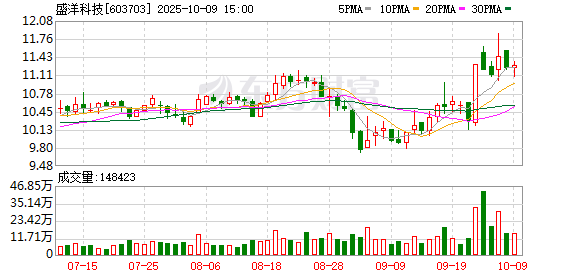
盛洋科技中标直播卫星项目 卫星通信业务布局进入加速期
Zheng Quan Shi Bao Wang· 2025-10-10 04:35
Core Viewpoint - Shengyang Technology has been selected as a candidate for a joint distribution pilot and operational cooperation project for the live satellite business of China Broadcasting Integration Intelligent Terminal Technology Co., marking a significant step in the company's strategic layout in the satellite communication field, particularly in domestic broadcasting and public service scenarios [1] Group 1: Project Details - The project focuses on the joint distribution pilot and operational services for the China Star 9C live satellite terminal, which is a crucial application of satellite communication in broadcasting public service [1] - Shengyang Technology will provide a new generation of "live satellite + Beidou + 5G" integrated communication terminals that support receiving China Star 9C satellite signals and high-definition decoding, while also enabling location locking through Beidou and adapting to 5G communication and home streaming [1] - Although specific procurement shares have not been disclosed, the company anticipates potential long-term supply orders if the pilot achieves expected results [1] Group 2: Technological Advancements - The China Star 9C satellite, which is set to replace the China Star 9 satellite in September 2025, represents a significant advancement in domestic broadcasting satellite services, providing core support for autonomous control [2] - The new terminal equipment supplied by Shengyang Technology features upgrades that include support for 4K ultra-high-definition decoding and high-precision location locking through the Beidou system, as well as deep compatibility with 5G communication [2] - This "satellite + Beidou + 5G" integration meets the technical standards of the National Radio and Television Administration's "household access" project and is designed to accommodate future developments in live satellite enhanced terminals [2] Group 3: Market Strategy - Shengyang Technology is building a satellite communication ecosystem with a global perspective while focusing on domestic market breakthroughs, particularly in areas such as Beidou vehicle-mounted terminals, 5G satellite television terminal promotion, and low-orbit satellite supporting terminals [2] - The company has achieved milestones in the domestic market, including obtaining invention patent authorization for a specific model of Beidou vehicle-mounted terminal and providing product support for related projects [2] - Internationally, the company is expanding into satellite internet, broadcasting, maritime, and education sectors through its Luxembourg subsidiary, Inverto, which has established a commercial cooperation with Eutelsat, the world's second-largest low-orbit satellite operator [3] - The recent win of the live satellite project is seen as a breakthrough for Shengyang Technology's satellite communication business in the broadcasting sector and a key step in driving growth through a dual approach of wired/wireless and satellite communication [3]

中经评论:卫星通信开启天地融合新空间
Jing Ji Ri Bao· 2025-10-10 00:03
Core Viewpoint - The Ministry of Industry and Information Technology of China has granted satellite mobile communication business licenses to three major telecom operators, enabling them to offer services such as direct satellite connectivity for mobile phones, which will enhance communication capabilities in emergency, maritime, and remote areas, unlocking a trillion-dollar market [1] Group 1: Satellite Communication Business - Satellite communication breaks the geographical limitations of terrestrial networks, providing wide coverage, high capacity, and good transmission quality, ensuring connectivity even in traditional signal blind spots like oceans and deserts [1] - The ability to connect directly to satellites is not limited to mobile phones but extends to devices such as computers, cars, ships, and drones, fostering innovation and new business models across various industries including communication, transportation, and aerospace [1] Group 2: Market Expansion and Competition - Satellite communication services are expanding into the mass market, with telecom operators launching satellite direct connection services and smartphone manufacturers introducing models equipped with satellite communication capabilities, making it more accessible and affordable for consumers [2] - The satellite communication sector is reshaping the competitive landscape of the telecom industry, with high-orbit satellites providing broad coverage for basic services and low-orbit satellites offering low-latency connections suitable for IoT, vehicle broadband, and low-altitude economies [2] Group 3: Impact on the Smartphone Industry - The smartphone industry is becoming a new battleground for satellite communication, as the decreasing cost of satellite communication modules allows mid-range devices to incorporate this feature, providing a competitive edge for manufacturers [3] - Major brands like Huawei and Xiaomi have launched smartphones with satellite communication capabilities, while smaller manufacturers are quickly following suit, driving product innovation and collaboration with service providers in navigation, emergency, and tourism sectors [3] Group 4: Contribution to Digital Economy - Satellite communication is expected to stimulate the digital economy by reaching remote areas that terrestrial networks cannot, supporting remote education and e-commerce, thereby narrowing the digital divide and unlocking new consumer potential [3] - The integration of satellite communication with industrial internet, vehicle networks, and airborne communication is expected to create new business models and accelerate the digital transformation of traditional industries, reinforcing the foundation for high-quality development of the digital economy [3]
卫星通信开启天地融合新空间
Jing Ji Ri Bao· 2025-10-09 22:02
Core Insights - The Ministry of Industry and Information Technology has granted China Mobile a license for satellite mobile communication services, allowing all three major telecom operators in China to engage in satellite communication, which will enhance emergency, maritime, and remote area communications [1] Group 1: Satellite Communication Market Expansion - Satellite communication services are expanding into the mass market, with the introduction of satellite direct connection capabilities in consumer smartphones, making the technology more accessible and affordable [2] - The collaboration between upstream and downstream industries is facilitating the miniaturization and cost reduction of satellite communication terminals, enabling broader consumer adoption [2] Group 2: Competitive Landscape in Telecommunications - The introduction of satellite communication services is reshaping the competitive landscape of the telecommunications industry, with high and low orbit satellites serving different market needs [2] - New revenue streams are emerging, including emergency satellite packages for individuals, maritime satellite broadband services for businesses, and IoT satellite access services for various industries [2] Group 3: Impact on the Smartphone Industry - Satellite communication has become a new battleground for smartphone manufacturers, with major brands like Huawei and Xiaomi launching devices equipped with satellite communication capabilities [3] - The decreasing costs of satellite communication modules are expected to lead to widespread adoption in mid-range smartphones, providing a competitive edge in a saturated market [3] Group 4: Contribution to Digital Economy - Satellite communication is poised to drive the development of the digital economy by providing connectivity in remote areas, supporting services like remote education and e-commerce, thus narrowing the digital divide [3] - The integration of satellite communication with industrial internet, vehicle networking, and airborne communication is expected to create new business models and accelerate the digital transformation of traditional industries [3] Group 5: Complementary Role of Satellite Communication - Satellite communication is not a replacement for traditional ground communication but rather a complementary technology that enhances overall communication capabilities [3] - The advancement of satellite communication technology is expected to solidify China's leadership in the information and communication sector, contributing to the global competitiveness of its digital economy [3]

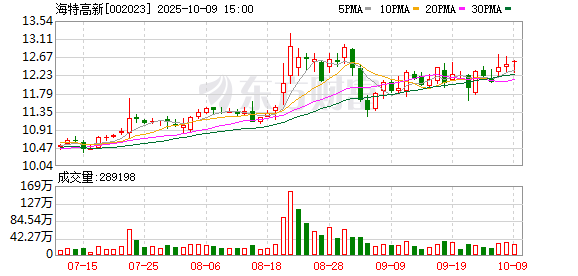
海特高新:联通航美是公司的参股公司
Zheng Quan Ri Bao· 2025-10-09 10:10
Group 1 - The core viewpoint of the article highlights that Hite High-Tech has a stake in Unicom Hongmei, which operates under three major brand lines: Woxinghai, Woxinglu, and Woxingkong, providing integrated satellite internet access services across various domains [2] Group 2 - Unicom Hongmei offers services that cover all-time domains and integrate air, land, sea, and space connectivity [2]


牵手全球第二大低轨卫星星座运营商Eutelsat 盛洋科技卫星通信业务迈入增长期
Zheng Quan Shi Bao Wang· 2025-10-09 10:09
Core Viewpoint - The collaboration between FTA Communication Technologies and Eutelsat marks a significant commercial breakthrough in the DVB-NIP technology for low Earth orbit satellite communication, transitioning the satellite communication business from an investment phase to a growth phase, indicating a clearer second growth curve for the company [2][3][6]. Group 1: Partnership and Market Position - Eutelsat, the second-largest low Earth orbit satellite constellation operator, plans to triple its satellite fleet to approximately 1,800 satellites, enhancing its service capabilities and competitive edge [3][5]. - The partnership addresses core pain points in the satellite communication industry, with FTA's DVB-NIP solution integrating satellite and IP technologies to support various services, including linear broadcasting and on-demand content [3][4]. Group 2: Technological Advancements - The product leverages Inverto's Q-Stream platform, utilizing DVB-NIP technology to optimize bandwidth and enable content preloading, effectively addressing ground network blind spots [4][5]. - The collaboration allows FTA to provide solutions and technical support while Eutelsat supplies satellite resources, creating a model that enhances brand strength and drives sales of related products [4][6]. Group 3: Strategic Growth and Market Outlook - The company has established a dual-driven strategy focusing on wired/wireless communication and satellite communication, positioning satellite terminal business as a key second growth curve [6][7]. - The global satellite communication terminal market is projected to reach 79.9 billion by 2029, with a compound annual growth rate of 11.1%, indicating a robust growth opportunity for the company [7].