
智能机器人

Search documents
中海达:公司具身智能机器人相关产品为小批量交付阶段
Bei Jing Shang Bao· 2025-11-04 06:06
Core Viewpoint - The company Zhonghaidah has confirmed that its embodied intelligence robot IMU products are currently in the small batch delivery phase [1] Company Summary - Zhonghaidah responded to investor inquiries regarding its embodied intelligence orders, indicating that the IMU products are in a targeted small batch delivery stage [1]


港股异动丨巨星传奇高开5%,获超2000万元机器人销售订单
Ge Long Hui· 2025-11-04 01:39
Core Viewpoint - The strategic investment in Galaxy, the agency of G-Dragon, has sparked market interest in Superstar Legend, a "Jay Chou concept stock," highlighting progress in IP commercialization [1] Group 1: Strategic Developments - Superstar Legend opened 5% higher at HKD 10.02 following the news of the strategic investment [1] - The company announced a strategic partnership with Yushu Technology to launch a smart robotic dog with strong IP attributes [1] Group 2: Financial Highlights - The first product from the partnership has secured orders worth over RMB 20 million, with global storage giant ADATA Technology acting as the distributor for 1,000 units of the "Superstar Dog" [1]
在佛山顺德,他们推动机器人核心技术本土化替代
Nan Fang Du Shi Bao· 2025-11-03 12:25
Core Insights - The inclusion of "embodied intelligence" and "intelligent robots" in the 2025 government work report signifies the formal recognition of cutting-edge technology as a national strategy [1] - Foshan has introduced a series of new policies aimed at establishing the intelligent robot industry as a new engine for high-quality development and a new pillar of the economy [1] - The focus on self-controllable core components is a critical battle for the industry, highlighted by Midea Group's recent advancements in localizing core robot technologies [1] Group 1 - Midea's Central Research Institute has developed a servo motor design platform from scratch, overcoming initial challenges and breaking international technology monopolies [3][5] - The success of the KUKA China project, which integrates local core components into heavy-duty robots, marks a significant milestone in Midea's vertical integration strategy [5][9] - Midea's robot and automation business reported a 9% year-on-year revenue increase, reflecting a strategic focus on industrial robot intelligence, home appliance robotics, and humanoid robot value [5][9] Group 2 - The development of servo motors involved extensive trial and error, requiring a system-level approach to address issues beyond the motor itself [7][8] - A pivotal decision was made to abandon a conventional design in favor of a new structure, demonstrating the team's innovative capabilities and commitment to high standards [8][9] - The establishment of the Blue Orange Laboratory, a key national laboratory supported by a private enterprise, has achieved significant advancements in critical technologies, further enhancing Midea's position in the industry [9] Group 3 - The collaborative efforts within the Blue Orange Laboratory aim to consolidate domestic robot companies and enhance the overall technological capabilities of the industry [9] - The integration of AI technology into Midea's robotics applications is paving the way for deeper collaboration between intelligent systems and physical robots [9] - The ongoing efforts in core technology localization not only deepen Midea's vertical integration strategy but also lay a solid foundation for the safety and self-sufficiency of China's intelligent robot industry [9]


工信部发布2025年度国家中小企业特色产业集群名单,成华区智能机器人产业集群入选
Jing Ji Wang· 2025-11-03 08:57
Core Insights - The Chenghua District's intelligent robot industry cluster in Chengdu has been recognized as a national-level cluster, making it the only national-level intelligent robot full industry chain cluster in Western China [1][2]. Group 1: Industry Overview - The intelligent robot industry cluster focuses on a "hardware + software intelligence" model, centering on intelligent robot manufacturing, including industrial robots, service robots, special robots, and humanoid robots [2]. - The cluster comprises 78 technology companies, including 12 leading enterprises, 18 national and provincial "specialized and innovative" enterprises, and 34 national high-tech enterprises, with 50 innovation platforms established at or above the provincial level [2]. Group 2: Economic Performance - The total output value of the cluster is projected to reach 6.42 billion yuan in 2024, with an average annual growth rate of nearly 30% over the past three years [2]. Group 3: Key Companies - Chengdu Kanopu Robot Technology Co., Ltd. is a national-level "specialized and innovative" enterprise with a complete industrial robot supply chain, ranking among the top five domestic brands globally in arc welding industrial robot sales [5]. - Chengdu Weijing Motor Co., Ltd. has developed over 2,000 types of micro and special motors, participating in the formulation of 28 national and industry standards, and has established the only certified military standard production line for torque motors in China [7]. Group 4: Policy and Support - Chenghua District has implemented policies to support high-quality industrial development, including over 100 million yuan in subsidies, the construction of one million square meters of carrier space, and the establishment of a fund matrix worth billions [9]. - The district aims to leverage its national-level small and medium-sized enterprise characteristic industry cluster to enhance cluster vitality and promote coordinated development across the intelligent robot industry chain [9].
政策助力科创品牌升级
Jing Ji Ri Bao· 2025-11-01 21:58
Group 1 - The core viewpoint of the news is the launch of the Qiuzhi Innovation Bay in Wuhu, Anhui Province, aimed at integrating government, industry, academia, research, finance, and application to enhance innovation and R&D capabilities [1] - The Qiuzhi Innovation Bay features a cluster of R&D platforms, including the Chery Kaiyang Laboratory and a national key laboratory established by Conch Group, focusing on carbon reduction technologies [1] - The initiative aims to address the shortage of R&D space for enterprises and promote the upgrade from manufacturing clusters to R&D clusters, enhancing core competitiveness and fostering future industrial growth points [1] Group 2 - Wuhu City has established a "1+1+N" policy system to ensure the sustainable development of the Qiuzhi Innovation Bay, which includes city-level general policies, talent-specific policies, and park support policies [2] - Key policy highlights include a maximum subsidy of 100 million yuan for building global R&D centers and up to 10 million yuan for recruiting global partners [2] - Support for high-level talent teams in innovation and entrepreneurship can reach up to 3 million yuan [2]
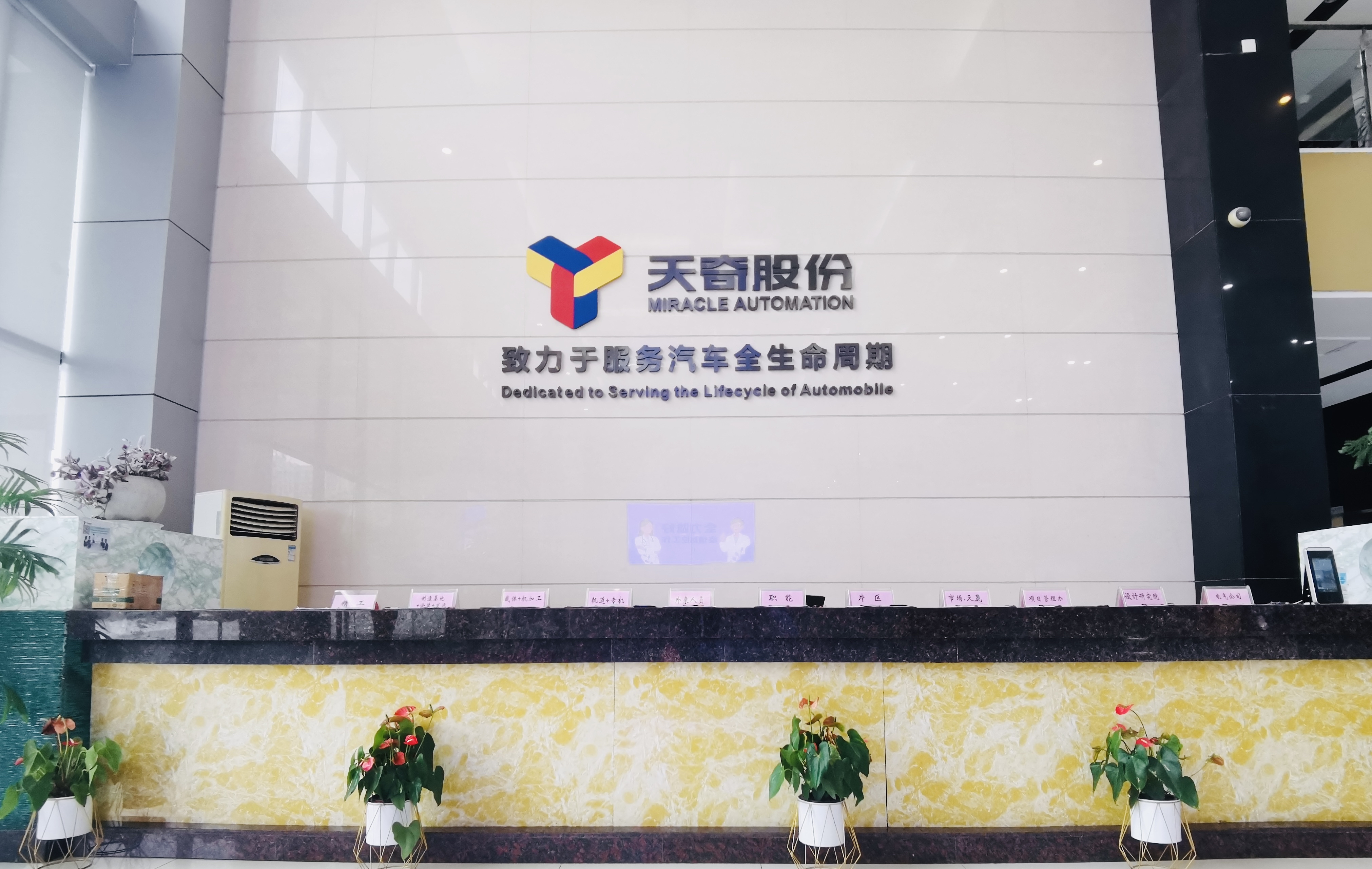
天奇股份获富士康汽车订单,将供应2000台具身机器人
Ju Chao Zi Xun· 2025-11-01 06:21
Core Viewpoint - Tianqi Automation Engineering Co., Ltd. has signed a strategic cooperation framework agreement with Foxconn Automotive to promote the deep application and technological innovation of embodied intelligent robots in industrial scenarios [3]. Group 1: Strategic Cooperation Details - The agreement is a framework and intention-based arrangement, not involving specific transaction amounts, and does not require board or shareholder approval [3]. - Both parties will engage in systematic cooperation around the research and application of embodied intelligent robots [3]. - Foxconn Automotive will provide smart manufacturing scenarios, technical testing grounds, and application incubation environments [3]. - Tianqi will contribute its expertise and R&D resources in intelligent equipment, system integration, and core technologies of embodied intelligent robots [3]. Group 2: Application Goals and Areas - The collaboration aims to set clear goals for large-scale applications, planning to deploy no less than 2,000 embodied intelligent robots within Foxconn's manufacturing system over the next five years [3]. - Development of intelligent robotic systems for precise operations in production lines, including material handling, cross-station transport, high-precision visual sorting, and assembly [4]. - Joint development of autonomous inspection robots with multimodal perception capabilities for smart factory inspections [4]. - Exploration and implementation of robotic applications in smart services, including unmanned retail, intelligent guidance, and smart delivery [4]. - Establishment of a robot data collection center and a training center to create a complete technical closed loop from data generation, collection, training to scenario validation [4]. - Collaborative research efforts will focus on shared demand, joint technical challenges, and co-creation of solutions [4].

天奇股份:与富士康汽车签订战略合作框架协议,围绕具身智能机器人的研发与应用开展系统性合作
3 6 Ke· 2025-11-01 00:26
Core Viewpoint - Tianqi Co., Ltd. has signed a strategic cooperation framework agreement with Foxconn New Energy Vehicle Industry Development (Henan) Co., Ltd. to promote the deep application and technological innovation of embodied intelligent robots in industrial scenarios [1] Group 1: Strategic Partnership - The agreement aims to set clear goals for large-scale application, planning to deploy no less than 2,000 embodied intelligent robots within Foxconn's automotive manufacturing system over the next five years [1] - The agreement becomes effective upon signing by the legal representatives or authorized representatives of both parties and is valid for five years [1] Group 2: Business Impact - This partnership is expected to have a significant positive impact on the future business development and operational performance of Tianqi Co., Ltd. [1]
平治信息:投资的未来伙伴已推出智能机器人系列产品
Mei Ri Jing Ji Xin Wen· 2025-10-31 09:48
Core Insights - The company has successfully transformed its business in the computing power sector, with total signed orders exceeding 2.4 billion yuan [1] - The company has completed the delivery and deployment of related computing power servers [1] - The company invested in Future Partner Robotics (Shenzhen) Co., Ltd., acquiring a 40% stake, and the latter has launched a series of intelligent robot products [1]

天奇股份:公司与富士康汽车签订《战略合作框架协议》
Xin Lang Cai Jing· 2025-10-31 08:36
Core Viewpoint - The company Tianqi Co., Ltd. has signed a strategic cooperation framework agreement with Foxconn Automotive for the development and deployment of embodied intelligent robots within Foxconn's manufacturing system over the next five years [1] Group 1 - The agreement involves the collaboration on research, application, and the establishment of a data collection and training center for embodied intelligent robots [1] - The plan includes the deployment of no less than 2,000 embodied intelligent robots within Foxconn's production system [1] - The agreement is an intention document and does not specify any concrete transaction amounts [1]
百个项目加速落地平原新城
Bei Jing Ri Bao Ke Hu Duan· 2025-10-30 22:44
Group 1: Beijing-Tianjin-Hebei Collaborative Development - The Beijing-Tianjin-Hebei collaborative development has entered a new decade, with significant progress in enhancing the capital's functions and urban development quality, leading to the acceleration of 100 projects in the Plain New City area [1] - The first batch of cultural relics relocation projects in the core area has reached a 100% signing rate, with the "relocation and improvement" initiative completing 94% of its annual tasks by the end of September [2][3] - The establishment of the Beijing-Tianjin-Hebei advanced manufacturing cluster alliance and the breakthrough of 36 key core technologies in the industrial chain indicate a growing integration and collaboration among the three regions [6] Group 2: Urban Development and Infrastructure - The completion of various urban projects, including the opening of the largest "green lung" park and the transformation of 234 overpass spaces, reflects the ongoing urban renewal efforts in Beijing [2] - The Plain New City has seen the implementation of 100 key projects, with 4 completed, 54 under construction, and 19 approved, enhancing the region's industrial competitiveness [6][7] - The establishment of new educational and healthcare facilities, such as the Beijing Fashion Institute's Tongzhou campus and the new Beijing Children's Hospital, supports the balanced distribution of quality resources [2] Group 3: Technological and Industrial Advancements - The establishment of the Beijing-Tianjin-Hebei Intelligent Connected New Energy Vehicle Technology Ecological Park aims to accelerate industrial agglomeration and technological innovation in the region [4][5] - The successful signing of 12 companies in the ecological park and the development of a cross-province autonomous driving highway highlight the collaborative efforts in advancing the automotive industry [4][5] - The introduction of innovative projects, such as the first intelligent robot 4S store and the brain science industrial cluster, showcases the region's commitment to fostering high-tech industries [7]