电力

Search documents
百亿央企母基金招GP
FOFWEEKLY· 2026-03-05 09:36
Group 1 - The core viewpoint of the article is the establishment of the Chengtong Science and Technology Innovation Investment Fund (Jiangsu) Co., Ltd., which aims to promote technological innovation, industrial upgrading, and the cultivation of new productive forces through long-term, patient, and strategic capital [1] - The Chengtong Science and Technology Innovation Fund was established in December 2025 with a total scale of 10 billion yuan and a duration of 15 years [1] - The fund primarily invests in strategic emerging industries such as new materials, high-end equipment manufacturing, new generation information technology, new energy, life health, and nuclear-related fields, particularly focusing on key industries supported by Jiangsu Province [1] Group 2 - The fund is currently seeking to publicly select fund management institutions for its nuclear-related industry sub-fund, which must be registered within Jiangsu Province and have a scale of no less than 500 million yuan [1] - Investments for the sub-fund will focus on areas such as nuclear technology applications, electricity (including new types of electricity), and high-end equipment manufacturing, among others [1] - The sub-fund must comply with relevant laws, regulations, and self-regulatory rules, and is required to register its products with the Asset Management Association of China [1]

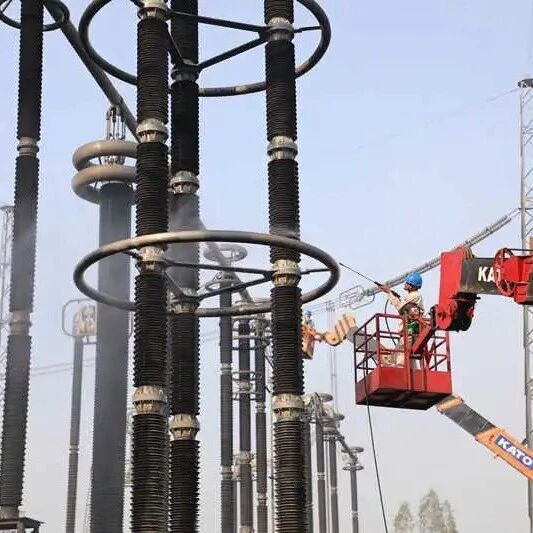
今年加快智能电网建设
第一财经· 2026-03-05 08:57
Core Viewpoint - The article emphasizes the importance of establishing a strong energy nation, focusing on energy security and supply capabilities to meet the demands of economic development and social stability [3]. Group 1: Energy Security and Development - The core essence of building an energy strong nation is energy security, which requires robust supply capabilities to effectively meet the energy needs of national economic development and social stability [3]. - The construction of a new energy system will be significantly influenced by smart grids, which will enhance the safety, efficiency, cleanliness, and reliability of the energy system, thereby better ensuring national energy security and supporting a comprehensive green transformation of economic and social development [3][4]. Group 2: Smart Grid Development - Smart grids are a crucial component of the new energy system, designed to adapt to the rapid development of high-proportion renewable energy, consisting of main grids, distribution networks, and microgrids with distributed energy sources and storage devices [4]. - The construction of smart grids and microgrids will facilitate multi-level collaborative development, improving the grid's ability to accept, allocate, and regulate clean energy, thus ensuring safe, reliable, and economically efficient grid operations [4]. - Major investment plans have been announced by State Grid and Southern Power Grid, with State Grid's fixed asset investment expected to reach 4 trillion yuan during the 14th Five-Year Plan period (2026-2030), a 40% increase compared to the previous period, averaging 800 billion yuan annually [4]. - Southern Power Grid's investment for 2026 is projected at 180 billion yuan, with total investments during the 14th Five-Year Plan expected to reach around 1 trillion yuan, leading to a combined total investment of nearly 5 trillion yuan from both companies [4]. - The construction and operation of smart grids encompass a complete chain from high-end equipment manufacturing to data analysis and operation services, driving the development of related industries such as information technology, high-end equipment manufacturing, new materials, and renewable energy, thus creating new economic growth points [4].
【百亿基金经理内参】北美缺电新机会:从电力运营商到电解铝;燃机板块显著预期差,AI基建催生海外需求新蓝海;户储需求的“三重奏”
第一财经· 2026-03-05 05:00
Group 1 - The article highlights new investment opportunities in North America due to electricity shortages, focusing on sectors from power operators to electrolytic aluminum [2] - There is a significant expectation gap in the gas turbine sector, with AI infrastructure creating new overseas demand [2] - The combination of European subsidies, electricity shortages in emerging markets, and the spillover of AI in the US is driving a "triple play" in household energy storage demand [2] Group 2 - The bottleneck in computing power is shifting from chips to communication, marking the beginning of a golden era for CPO (Cloud Processing Optimization) [2] - In addition to Nvidia, Google is also accelerating its transition to liquid cooling technologies [2] - The article features in-depth discussions among fund managers from various buy-side institutions regarding the market outlook, policies, and future investment opportunities [2]

中国银河证券:CBAM将显著增加中国高排放行业短期碳成本 转型快、已取得一定成果头部企业值得关注
智通财经网· 2026-03-05 02:40
Group 1 - The core viewpoint is that low-carbon technology and industries are essential for high-emission sectors to respond to the Carbon Border Adjustment Mechanism (CBAM) and achieve green transformation during the 14th Five-Year Plan period [1] - The three major high-emission industries—steel, aluminum, and cement—will focus on the circular economy, supported by both policy and corporate transformation needs, becoming a new engine for green low-carbon growth [1] - Leading companies in high-emission industries that have made significant progress in transformation possess technological and financial advantages, which may enhance their international competitiveness through low-carbon transformation [1] Group 2 - The CBAM will officially take effect on January 1, 2026, after a two-year transition period, initially covering six high-emission industries, including steel, aluminum, and cement [1] - Importers will need to pay for carbon emissions from the previous year, with the first CBAM certificate payments due in 2027, and the scope may expand to downstream industries by 2028 [1][2] - The CBAM is part of the EU carbon market reform, which will gradually increase the proportion of paid certificates while phasing out free allowances for relevant industries by 2035 [2] Group 3 - The CBAM is essentially a green trade barrier aimed at revitalizing the EU economy and addressing internal and external challenges, including the post-COVID recovery and energy crisis [3] - The EU is implementing a "Brussels effect" through the CBAM, encouraging other countries to adopt similar measures, thereby strengthening its position as a global regulator in green trade [3] Group 4 - The CBAM will significantly increase short-term carbon costs for China's high-emission industries, with cement facing the highest cost pressure, followed by steel and aluminum [4] - The carbon cost as a percentage of the value of corresponding export products is estimated to be 14.2%-15.9% for cement, 8.5%-9.5% for steel, and 2.9%-3.2% for aluminum [4] - Exporting companies in these sectors will also incur additional "hidden costs" related to carbon auditing and data management to comply with CBAM requirements [4] Group 5 - In response to the CBAM, China has made some preparations and achieved certain industry transformation results, but stricter carbon management and assessment will be enforced during the 14th Five-Year Plan [5] - High-emission industries will face dual carbon costs domestically and internationally, necessitating gradual low-carbon transformation through technological innovation [5] - The evolving trade landscape and supply chain restructuring present opportunities for accelerated transformation, with companies that adapt effectively likely to excel in innovation and operational performance [5]

永安期货每日观点-20260305
Xin Yong An Guo Ji Zheng Quan· 2026-03-05 02:23
Economic Overview - The US economy shows strong data, with the service sector expanding at its fastest pace in nearly four years, as indicated by a service index rise to 56.1, up 2.3 points[1] - ADP reported that US companies added 63,000 jobs in February, the highest since July, indicating a stabilizing labor market[1] Market Reactions - A-shares experienced a gap down, with the Shanghai Composite Index falling by 0.98% to 4082.47 points, while the Shenzhen Component and ChiNext Index dropped by 0.75% and 1.41%, respectively[1] - The Hong Kong Hang Seng Index declined by 2.01% to 25249.48 points, marking a three-day losing streak, with significant pullbacks in oil and gas, shipping sectors, and tech stocks[1] Chinese Economic Outlook - The Chinese government may lower its economic growth target for the year during the upcoming National People's Congress, with economists predicting a fiscal deficit rate of 8%[1] - The meeting will provide insights into China's economic strategies amid global uncertainties, particularly in light of the ongoing Middle East conflicts[1]


能源早新闻丨全国人大首场发布会提及国家电网、中石油;生态环境法典是中国第二部以“法典”命名的法律
中国能源报· 2026-03-04 22:33
Key Points - The National People's Congress highlighted investments by State Grid in Portugal and a joint venture between China National Petroleum Corporation and Shell in Australia, emphasizing technology sharing and economic development [2] - The newly introduced Ecological Environment Code is China's second law named as a "code," representing a systematic integration and enhancement of existing environmental laws [2] - A member of the National Committee expressed intentions to promote Chinese products and technologies globally, contributing to the renewable energy sector [3] - The National Energy Administration is advancing rural wind and solar energy development, aiming to enhance electricity supply and promote renewable energy heating solutions [4] - In January, 5,690 new renewable energy projects were registered in China, with 66 wind and 5,618 solar projects, indicating robust growth in the sector [5] - The credit index for Chinese enterprises remained stable at 161.79 in January, reflecting a good credit level across various industries [6] - The Three Gorges South Line lock has commenced its scheduled maintenance for 2026, marking the ninth planned maintenance since its operation began [6] - European economists are concerned that disruptions in Middle Eastern oil and gas supplies could lead to significant inflation and economic downturns [7] - A major oil field in southern Iraq has suspended production due to shipping disruptions caused by the closure of the Strait of Hormuz [7] - The Tarim Oilfield has produced over 500 billion cubic meters of natural gas, playing a crucial role in ensuring national energy security and promoting a low-carbon energy structure [8]



【风口研报】北美LNG终端建设正在加速,这家公司高端产品有望受益,且其他造船、电力领域订单增长前景强劲
财联社· 2026-03-04 13:57
Group 1 - The construction of North American LNG terminals is accelerating, and a specific company is expected to benefit from high-end products, along with growth prospects in shipbuilding and power sectors [1] - The supply-demand pattern in the large refining industry is likely to show elasticity first, with a particular company positioned better in the supply-demand structure, combined with the benefits from petrochemical investment returns, which may allow it to fully enjoy the economic elasticity [1]

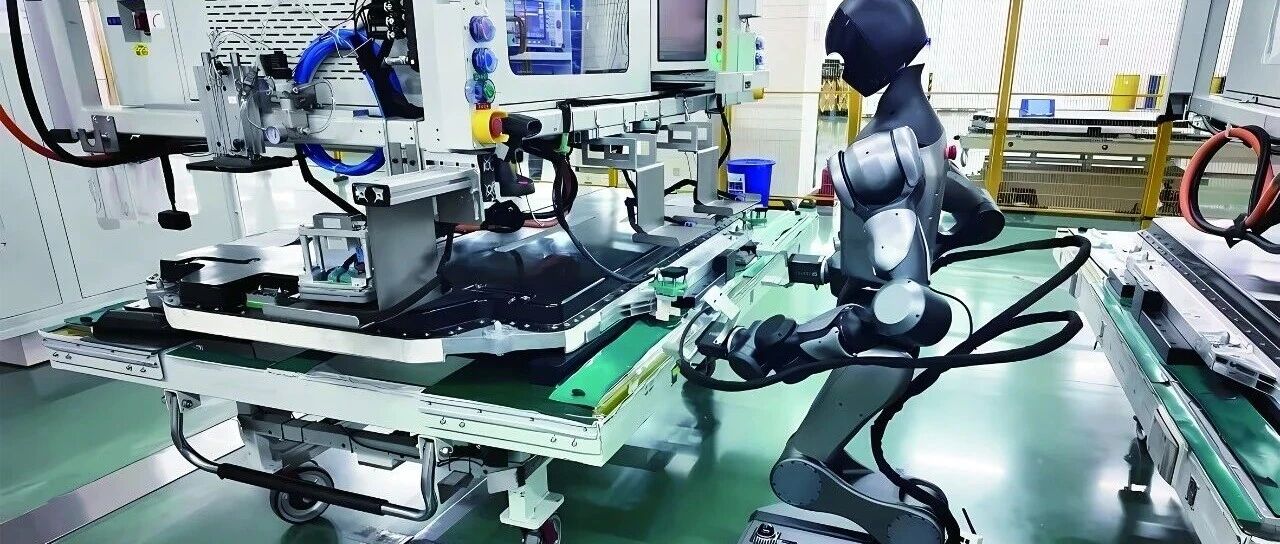
从舞台到产业,人工智能驱动能源转型加速
中国能源报· 2026-03-04 13:23
Core Viewpoint - The year 2026 is seen as a critical year for the comprehensive promotion of "Artificial Intelligence + Energy" for high-quality development in the energy sector [1][10]. Group 1: AI's Role in Energy Transformation - The integration of AI in the energy sector is essential for addressing the challenges posed by the high proportion of renewable energy sources, such as wind and solar power, which are characterized by randomness and volatility [5][8]. - AI can enhance energy management by utilizing data-driven approaches, autonomous capabilities, and adaptive technologies to optimize power dispatch, improve grid stability, and enhance system efficiency [5][8]. - AI's ability to analyze climate data is crucial for improving energy power regulation efficiency, particularly in optimizing renewable energy consumption and ensuring grid safety [5][8]. Group 2: Policy and Technological Developments - In September 2025, the National Development and Reform Commission and the National Energy Administration issued guidelines to promote the integration of AI in the energy sector, aiming for significant breakthroughs in core technologies by 2027 and achieving world-leading levels by 2030 [7][8]. - The application of AI in the energy sector is transitioning from pilot projects to large-scale implementations, becoming a strategic support for building a new energy system [8][10]. - Successful examples of AI applications in the energy sector include the State Grid's "Bright Power Model," which reduces prediction errors for wind and solar energy, and the Southern Power Grid's training of AI robots to enhance operational safety [8][10]. Group 3: Future Outlook and Challenges - The energy sector is entering a phase of accelerated system optimization and intelligent decision-making, with AI expected to play a significant role in renewable energy generation, storage systems, and grid coordination [10][11]. - Despite the potential, challenges such as data quality, complex application scenarios, and market environment differences need to be addressed for the large-scale implementation of energy AI [10][11]. - The transition from information and digitalization to intelligent energy systems is underway, with pilot demonstrations leading to broader applications that ensure the safe and stable operation of high proportions of renewable energy [10][11].
能源开新局丨国家能源局可靠性和质监中心主任武英利:全面提升电力建设工程质量监督能力
国家能源局· 2026-03-04 09:24
Core Viewpoint - The article emphasizes the importance of enhancing the quality supervision capabilities of electric power construction projects to ensure safety and reliability in the power system during the "14th Five-Year Plan" and beyond [2][8]. Group 1: Achievements and Current Status - During the "14th Five-Year Plan" period, the number of electric power construction projects remained high, with quality supervision institutions conducting over 10,000 inspections annually and identifying more than 500,000 quality issues each year [4]. - The establishment of various regulations and guidelines, including the "Interim Regulations on Quality Supervision of Electric Power Construction Projects," has strengthened the management foundation [5]. Group 2: Challenges and New Tasks - The "15th Five-Year Plan" period presents multiple pressures and challenges, including the increasing complexity and scale of electric power projects, which complicates quality management [7]. - There is a dual pressure on quality management and supervision, particularly in rapidly growing fields like pumped storage and nuclear power, where resource allocation is strained [7]. Group 3: Future Directions and Strategies - The article outlines strategic tasks for the future, including improving the regulatory framework and technical standards, enhancing institutional and personnel development, and focusing on key project quality supervision [9][10]. - The integration of new technologies such as IoT and AI in quality supervision is highlighted as a means to enhance monitoring capabilities and improve efficiency [11][12].

中国电力1月合并总售电量1045.95万兆瓦时 同比增加4.79%
Zhi Tong Cai Jing· 2026-03-04 08:58
Core Viewpoint - China Power (02380) reported a total consolidated electricity sales volume of 10.4595 million megawatt-hours in January 2026, representing a 4.79% increase compared to the same period last year [1] Group 1 - The total electricity sales volume for the company and its subsidiaries reached 10.4595 million megawatt-hours in January 2026 [1] - The year-on-year growth in electricity sales volume is 4.79% [1]