网约车

Search documents
三年半净亏19亿元,知名网约车平台冲刺IPO,背后是这家车企巨头!重金押注Robotaxi,能挣到钱吗?
Mei Ri Jing Ji Xin Wen· 2025-10-31 10:01
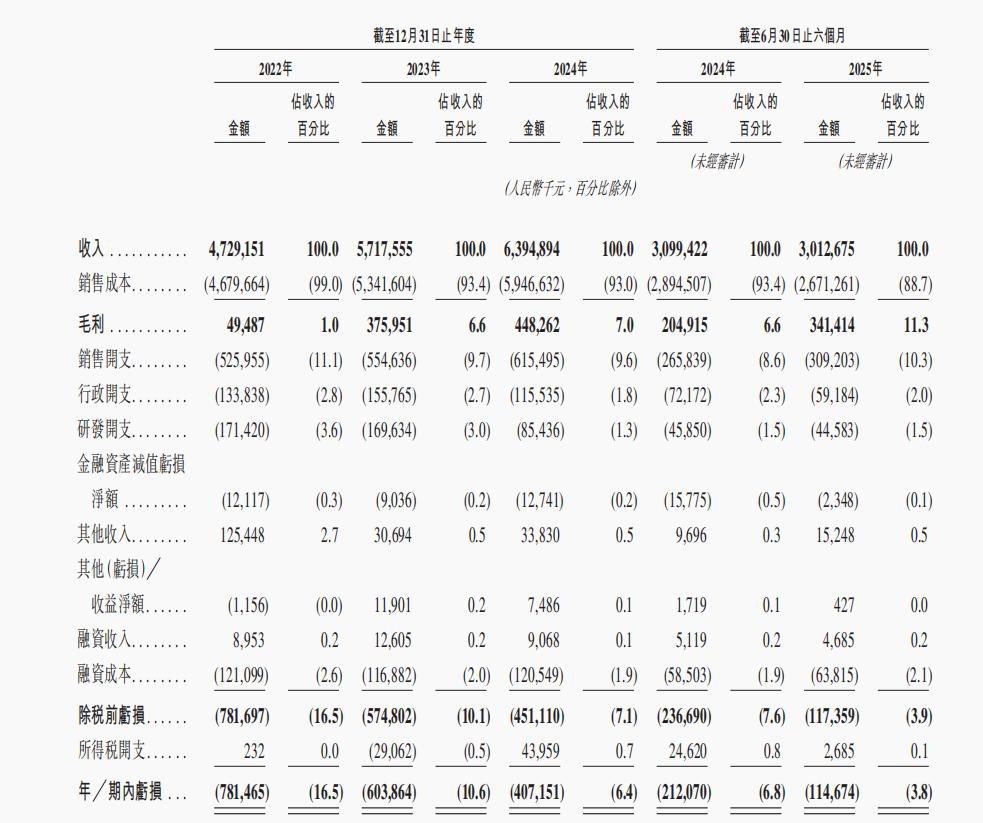
Core Viewpoint - Xiangdao Travel, a ride-hailing platform under SAIC Group, has submitted its IPO application to the Hong Kong Stock Exchange, with CICC and Guotai Junan International as joint sponsors [1] Financial Performance - Xiangdao Travel has shown steady revenue growth, with projected revenues of approximately RMB 47.29 billion, RMB 57.18 billion, and RMB 63.95 billion for the years 2022 to 2024, respectively [4] - Despite revenue growth, the company remains in a loss-making position, with net losses of approximately RMB 7.8 billion, RMB 6 billion, and RMB 4.1 billion for the same years [4] - In the first half of 2023, the company achieved revenue of RMB 30.13 billion, with a reduced net loss of RMB 1.1 billion compared to the same period in 2024 [4] - The company's gross margin has been on the rise, reaching 11.3% in the first half of 2025, up from 1% in 2022 [6] Business Segments - The ride-hailing service is a core business for Xiangdao Travel, contributing approximately RMB 49.91 billion in revenue in 2024, accounting for 78% of total revenue [7] - Vehicle leasing services primarily target B-end corporate clients, generating around RMB 10.84 billion in revenue in 2024 [7] Client Base and Shareholding - Revenue from five major clients has decreased from RMB 3.21 billion in 2022 to RMB 1.2 billion in the first half of 2025, with SAIC Group being the largest client [8] - SAIC Group holds approximately 75.37% of Xiangdao Travel's shares, making it both a major client and a controlling shareholder [8] Strategic Focus - The company is focusing on the commercialization of Robotaxi services, with significant funds from the IPO intended for R&D in autonomous driving technology [3][9] - Xiangdao Travel has already initiated Robotaxi operations in Shanghai and aims to achieve fully driverless operations by the end of 2025 [9] - The company has completed over 330,000 orders and driven more than 2.5 million kilometers since launching its Robotaxi service [9] Market Outlook - The Robotaxi market is expected to grow significantly, with projections indicating a market size exceeding RMB 2.93 trillion by 2030 [11] - The competitive landscape includes various players, such as ride-hailing platforms and autonomous driving companies, indicating a highly competitive environment [11][12] - Xiangdao Travel's technological capabilities, particularly its self-developed "Xiangdao Smart Brain" system, are seen as a core competitive advantage [12]

四年半净亏19亿元,知名网约车平台冲刺IPO,背后是这家车企巨头!重金押注Robotaxi,能挣到钱吗?
Mei Ri Jing Ji Xin Wen· 2025-10-31 09:20
Core Viewpoint - Xiangdao Travel, a ride-hailing platform under SAIC Group, has submitted its IPO application to the Hong Kong Stock Exchange, with CICC and Guotai Junan International as joint sponsors [1] Financial Performance - Xiangdao Travel has shown steady revenue growth, with projected revenues of approximately RMB 4.73 billion, RMB 5.72 billion, and RMB 6.39 billion for 2022, 2023, and 2024 respectively [3] - The company remains in a loss-making position, with net losses of approximately RMB 780 million, RMB 600 million, and RMB 410 million for the same years [3] - In the first half of 2025, the company achieved revenue of RMB 3.01 billion, with a reduced net loss of RMB 114.67 million compared to the same period in 2024 [3] - Gross margin is on the rise, expected to reach 11.3% in the first half of 2025, up from 1% in 2022 [3] Business Segments - The ride-hailing service is a core business, projected to contribute approximately RMB 4.99 billion in revenue for 2024, accounting for 78% of total revenue [4] - Vehicle leasing services primarily target B-end corporate clients, with expected revenue of approximately RMB 1.08 billion in 2024 [4] Client Base - Revenue from five major clients from 2022 to the first half of 2025 shows a decline, with the largest client, SAIC Group, contributing RMB 1.71 billion in 2022, which decreased to RMB 310 million in the first half of 2025 [5] Shareholding Structure - SAIC Group is not only a major client but also a significant shareholder, holding approximately 75.37% of Xiangdao Travel's shares [6] Strategic Focus - The company is focusing on the commercialization of Robotaxi services, with plans to use a significant portion of the IPO proceeds for R&D in autonomous driving technology [2][7] - Xiangdao Travel aims to achieve its first "driverless" Robotaxi operations by the end of 2025, with plans for expansion into densely populated urban areas by 2027 [7] Market Outlook - The Robotaxi market is expected to grow significantly, with projections indicating a market size exceeding RMB 2.93 trillion by 2030 [8] - The competitive landscape includes various players, such as ride-hailing platforms and dedicated autonomous driving companies, highlighting the need for continuous funding and technological advancement [8] Technological Edge - Xiangdao Travel is recognized as the first L4-level Robotaxi operator with an automotive background in China, leveraging its proprietary "Xiangdao Smart Brain" system for dynamic scheduling and risk management [8]

四年半亏损约19亿元!享道出行拟港股IPO:押注Robotaxi赛道能否突破盈利瓶颈?
Mei Ri Jing Ji Xin Wen· 2025-10-31 07:17
Core Viewpoint - Xiangdao Travel, a ride-hailing platform under SAIC Motor Corporation, has initiated its IPO process, aiming to raise funds primarily for the development of autonomous driving technology and the commercialization of Robotaxi services [1][2][10]. Financial Performance - Xiangdao Travel has shown steady revenue growth, with projected revenues of approximately RMB 47.29 billion, RMB 57.18 billion, and RMB 63.95 billion for the years 2022 to 2024, respectively [5]. - Despite revenue growth, the company remains in a loss-making position, with net losses of approximately RMB 7.8 billion, RMB 6 billion, and RMB 4.1 billion for the same years [5]. - In the first half of 2025, the company reported revenues of RMB 30.13 billion and a reduced net loss of RMB 1.1 billion compared to the same period in 2024 [5]. - The gross profit margin has been on the rise, increasing from 1% in 2022 to 11.3% in the first half of 2025, attributed to improved profitability in ride-hailing services and vehicle leasing efficiency [6]. Business Segments - The ride-hailing service is a core business for Xiangdao Travel, contributing approximately RMB 49.91 billion, or 78% of total revenue in 2024 [9]. - Vehicle leasing services primarily target B-end corporate clients, generating around RMB 10.84 billion in revenue for the same year [9]. - The company has a significant reliance on major clients, with SAIC Motor being the largest, contributing revenues of RMB 1.71 billion in 2022, which decreased to RMB 0.31 billion by 2025 [9]. Market Position and Strategy - The Robotaxi sector is highly competitive, with various players including ride-hailing platforms and specialized autonomous driving companies [4][11]. - Xiangdao Travel aims to leverage its technological advancements and partnerships to differentiate itself in the market [4][10]. - The company has already initiated Robotaxi operations and plans to achieve fully driverless operations by the end of 2025, with a broader rollout expected by 2027 [10][12]. Investment and Future Outlook - The IPO is seen as a crucial step for Xiangdao Travel to secure funding for its next phase of development, particularly in the autonomous driving sector [11][12]. - The company is positioned as the first L4-level Robotaxi operator with a background in automotive manufacturing, which is considered a significant competitive advantage [11].
享道出行提交港交所上市申请,文远知行、小马智行同日回港IPO
Sou Hu Cai Jing· 2025-10-31 06:52
Core Viewpoint - The article discusses the growth and operational performance of Xiangdao Mobility, a leading comprehensive smart travel platform in China, which is expanding its services in the ride-hailing and Robotaxi sectors. Group 1: Company Overview - Xiangdao Mobility is positioned as a leading all-scenario smart travel platform in China, offering ride-hailing, vehicle rental, vehicle sales, and Robotaxi services to meet diverse travel needs [1]. - The company was initiated by SAIC Motor Corporation and has gradually attracted key investors from the industry chain, including Momenta (autonomous driving solutions), Amap (map services), and CATL (power battery supplier) [2]. Group 2: Operational Data - In 2024, Xiangdao Mobility achieved an average of over 600,000 daily orders, with a total transaction value (GTV) exceeding RMB 5.5 billion [3]. - As of June 30, 2025, the company's ride-hailing services have expanded to cover 85 cities across China [3]. Group 3: Financial Performance - The revenue for Xiangdao Mobility for the years 2022, 2023, 2024, and the first half of 2025 was approximately RMB 4.729 billion, RMB 5.718 billion, RMB 6.395 billion, and RMB 3.013 billion respectively [4]. - The gross profit for the same periods was approximately RMB 494.87 million, RMB 376 million, RMB 448 million, and RMB 341 million respectively [4]. - The company is anticipated to follow in the footsteps of other ride-hailing firms like Dida Chuxing, Cao Cao Mobility, and Ruqi Chuxing in potentially listing on the Hong Kong stock exchange [4]. Group 4: Market Trends - The article notes that two leading domestic Robotaxi companies, WeRide and Pony.ai, have successfully listed on NASDAQ and are now initiating their IPO processes in Hong Kong, indicating a trend of dual listings in both US and Hong Kong markets [6][7].

享道出行赴港IPO 3年半亏损19亿5月份完成13亿融资
Xin Lang Cai Jing· 2025-10-31 06:44
Core Insights - Xiangdao Mobility (Shanghai) Technology Co., Ltd. has filed for an IPO on the Hong Kong Stock Exchange, with CICC and Guotai Junan International as joint sponsors [1] - The company aims to create a comprehensive smart mobility platform that includes ride-hailing, vehicle leasing, vehicle sales, and Robotaxi services, addressing diverse travel needs for individuals and enterprises [1] - As of 2024, the company ranks fifth in China's ride-hailing market by Gross Transaction Value (GTV) and second in Shanghai by completed orders [1] Financial Performance - Xiangdao Mobility reported revenues of 4.729 billion yuan in 2022, 5.718 billion yuan in 2023, 6.395 billion yuan in 2024, and 3.013 billion yuan in the first half of 2025 [2][3] - The company incurred losses of 781 million yuan in 2022, 604 million yuan in 2023, 407 million yuan in 2024, and 115 million yuan in the first half of 2025, totaling 1.907 billion yuan in losses over the past three and a half years [2][3] Shareholding Structure - The major shareholders before the IPO include SAIC Motor Corporation, which holds 75.37% of the shares, with 6.43% directly and 68.94% through Changzhou Saike [1][4] - Other significant shareholders include Tianjin Gaohang (6.47%), Suzhou Chusu (5.29%), and Ningde Times (1.86%) [4][5] Capital Structure Changes - In July 2023, the company announced a reduction in registered capital to offset losses, decreasing it by 3.756 billion yuan to 350 million yuan [4]
威海“怡心护‘新’”激活网约车司机治理新动能
Da Zhong Ri Bao· 2025-10-31 03:00
Core Viewpoint - The article discusses the innovative approach taken by the Yiyuan Street in Weihai to support ride-hailing drivers, transforming them from "service recipients" to "active participants" in community governance through the establishment of supportive services and community engagement initiatives [1][4]. Group 1: Support Services for Drivers - Yiyuan Street has created "Driver Homes" centered around three charging stations, providing rest areas, consultation zones, and cultural corners equipped with essential amenities like air conditioning and microwaves [2] - The "Driver Homes" also offer practical services such as free tire inflation and discounted car washes in collaboration with local businesses, enhancing the overall experience for drivers [2] - Community events like the Mid-Autumn Festival and Dragon Boat Festival have been organized to distribute useful items to drivers, ensuring their needs are met while they take breaks [2] Group 2: Childcare Solutions - To address the concerns of drivers regarding their children's safety during work hours, Yiyuan Street has implemented a dual service model of "summer care and after-school support" [3] - This initiative includes community-based care programs that provide academic assistance and creative activities for children, allowing drivers to focus on their work without worry [3] - The "Four O'clock Classroom" service offers comprehensive after-school care, including safe transportation and homework help, further supporting driver families [3] Group 3: Community Engagement and Governance - Yiyuan Street has established a "dual-integration" model to foster community governance, utilizing ride-hailing vehicles as mobile platforms for public awareness campaigns [4] - Regular meetings at the "Driver Homes" serve as a platform for collecting feedback from drivers, addressing issues such as parking difficulties and the need for additional charging station amenities [4] - A volunteer service team named "Yijiaqin" has been formed, consisting of 45 ride-hailing drivers who report community issues, contributing to urban management and enhancing local governance [4]
港股递表:享道出行的Robotaxi攻坚路
3 6 Ke· 2025-10-31 01:28
Core Viewpoint - The article discusses the financial performance and strategic positioning of Xiangdao Mobility, highlighting its transition from a traditional ride-hailing service to a Robotaxi operator, backed by its automotive lineage and recent funding activities [1][2][11]. Financial Performance - Xiangdao Mobility reported revenues of approximately 47.29 billion RMB for 2022, with projections of 57.18 billion RMB for 2023 and 63.95 billion RMB for 2024, indicating a compound annual growth rate of 16.3% from 2022 to 2024. However, a decline of 2.8% is expected in the first half of 2025 compared to the same period in 2024, primarily due to decreased ride-hailing service revenues [2][4]. - The company incurred losses of approximately 7.81 billion RMB in 2022, 6.04 billion RMB in 2023, 4.07 billion RMB in 2024, and 1.15 billion RMB in the first half of 2025, totaling around 19.07 billion RMB in cumulative losses over three and a half years. Notably, the loss rate has significantly narrowed, with a nearly 80% reduction in the first half of 2025 compared to 2022 [3][4]. - The registered capital of Xiangdao Mobility was drastically reduced from 4.106 billion RMB to 350 million RMB in July 2023, a decrease of 91.48%, reflecting the company's financial strain [5][6]. Business Segments - The ride-hailing service is the core business, projected to generate 49.91 billion RMB in 2024, accounting for 78.0% of total revenue. Vehicle leasing services are expected to contribute 10.84 billion RMB, ranking second in corporate travel services in China [8]. - The cost of sales as a percentage of revenue decreased from 99% in 2022 to 88.7% in the first half of 2025, while gross margin improved from 1.0% in 2022 to 11.3% in the first half of 2025, driven by enhanced efficiency in vehicle leasing and improved margins in ride-hailing services [8][9]. User Growth and Market Position - Xiangdao Mobility has seen rapid growth in user and driver registrations, with monthly active users increasing from 26.6 million in 2022 to 127 million by mid-2025. The number of registered drivers rose from approximately 341,200 to 1,062,200 during the same period [10]. - The company achieved a compliance rate ranking in the top three among ride-hailing platforms, with order compliance rates of 93.4% in 2022 and 92.9% in the first half of 2025 [10]. Strategic Initiatives - Xiangdao Mobility is leveraging its automotive background to enhance its Robotaxi operations, forming a partnership with SAIC Motor and Momenta to develop autonomous driving capabilities. The company aims to achieve commercial operations without safety drivers in Shanghai by the end of 2025 [17][20]. - The company has completed over 330,000 Robotaxi orders and plans to expand its operations to multiple cities by 2027, indicating a strategic pivot towards autonomous vehicle services as traditional ride-hailing growth slows [19][20]. Competitive Landscape - The Robotaxi sector is becoming increasingly competitive, with major players like Baidu and Pony.ai already established in the market. Xiangdao Mobility's unique advantage lies in its integration with automotive manufacturing and technology, which is difficult for pure internet-based platforms to replicate [22].
上汽捧出一个港股IPO,押注Robotaxi,阿里宁德Momenta都是股东
3 6 Ke· 2025-10-30 23:06
Core Viewpoint - The company Xiangdao Mobility, backed by SAIC Group and notable investors like Alibaba, is preparing for an IPO in Hong Kong, reflecting the trend of capitalizing on the Robotaxi sector in China [2][28]. Company Overview - Xiangdao Mobility was initiated by SAIC Group and has a strong investor lineup including Alibaba, Momenta, Gaode, and CATL [6][19]. - The company positions itself as a leading comprehensive smart mobility platform in China, offering ride-hailing, vehicle rental, vehicle sales, and Robotaxi services [6][11]. Market Position - According to Frost & Sullivan, in 2024, Xiangdao ranked fifth in China's ride-hailing platforms by Gross Transaction Value (GTV) and second in Shanghai by completed orders [8]. - The company also ranked second in the domestic corporate travel service industry by GTV in 2024 [8]. Financial Performance - For the first half of 2025, Xiangdao reported revenue of RMB 3.013 billion, a slight decrease of 2.8% year-on-year, with a net loss of RMB 115 million, narrowing from RMB 212 million in the same period last year [8][11]. - The company's revenue for 2022, 2023, 2024, and the first half of 2025 was approximately RMB 47.29 billion, RMB 57.18 billion, RMB 63.95 billion, and RMB 30.13 billion respectively, with a compound annual growth rate of 16.3% from 2022 to 2024 [11][12]. - The gross margin improved significantly from 1.0% in 2022 to 11.3% in the first half of 2025, driven by operational efficiencies in ride-hailing and scale effects in vehicle rental [11][12]. Business Segments - The core business segments include ride-hailing services, vehicle rental services, vehicle sales, and Robotaxi services, with ride-hailing contributing the majority of revenue [11][18]. - As of June 30, 2025, the ride-hailing service covered 85 cities in China, achieving over 600,000 daily orders and a GTV exceeding RMB 5.5 billion in 2024 [12][14]. Shareholder Structure - SAIC Group is the majority shareholder, controlling 75.37% of the company, with significant investments from Alibaba and CATL [19][21]. - The company has raised over RMB 2.6 billion since its inception, with the latest funding round in June 2025 amounting to over RMB 1.3 billion [21][23]. Research and Development - Xiangdao's R&D expenditures for 2022, 2023, and the first half of 2025 were RMB 1.71 billion, RMB 1.70 billion, and RMB 450 million respectively, representing 3.6%, 3.0%, and 1.5% of revenue [25]. - The company employs 667 full-time staff, including a dedicated R&D team of 178 engineers focused on core projects like the platform and Robotaxi services [25][26]. Industry Implications - The IPO application of Xiangdao Mobility signifies a critical step for automotive-backed mobility platforms in China, highlighting the acceleration of capitalizing on the Robotaxi sector [28][29]. - The company's ability to scale its ride-hailing business and commercialize Robotaxi technology will be crucial for its future success [28].

网约车老五赴港上市,聚合模式或成最大赢家?
Sou Hu Cai Jing· 2025-10-30 13:03
Core Viewpoint - Xiangdao Mobility has submitted its prospectus to the Hong Kong Stock Exchange, aiming for a listing on the main board, positioning itself as the fifth largest ride-hailing platform in China by Gross Transaction Value (GTV) in 2024 [1][15]. Financial Performance - Revenue projections for Xiangdao Mobility from 2022 to 2024 are 4.729 billion, 5.718 billion, and 6.394 billion RMB, respectively, with net losses decreasing from 781 million to 407 million RMB, indicating a narrowing loss rate from 16.5% to 6.4% [3][4][6]. - The ride-hailing service, which is the core business, is expected to generate over 5.5 billion RMB in GTV in 2024, with daily orders exceeding 600,000 [3][4]. User and Driver Metrics - The number of registered drivers is projected to grow from 341,000 in 2022 to 1,062,000 by mid-2025, reflecting significant expansion in operational capacity [3][4]. - Monthly active users reached 127 million, with the ride-hailing service covering 85 cities in China [3]. Market Position - Xiangdao Mobility holds a 10.2% market share in Shanghai, ranking second in completed orders, and has established a fleet of over 5,300 compliant vehicles in the city [8]. - The company has expanded its operations from Shanghai to the Yangtze River Delta and nationwide since its establishment in 2018 [8]. Business Model and Growth Strategy - The company has increasingly relied on aggregation platforms for order fulfillment, with the proportion of orders from these platforms rising from 91.79% in 2022 to 98.55% in the first half of 2025 [11][12]. - The gross profit margin for the ride-hailing business is projected to increase from 2.2% in 2023 to 12.2% in the first half of 2025, indicating a shift from aggressive expansion to refined operations [6][7]. Industry Trends - The aggregation model in the ride-hailing industry has grown significantly, with market share increasing from 5.7% in 2019 to an expected 29.6% in 2024, suggesting a strong growth potential [12][13]. - The competitive landscape is shifting, with companies needing to adapt to the dominance of aggregation platforms, which are becoming the primary winners in the market [14].
享道出行赴港IPO,近两年亏损超100亿元
Sou Hu Cai Jing· 2025-10-30 09:56
网约车服务是享道出行的核心业务板块,2024年贡献收入49.91亿元,占总收入的78%。截至2025年6月 30日,享道出行的网约车服务已覆盖中国85个城市,注册司机数量约106.2万名。2024年,实现日均订 单超过60万单,交易总额超55亿元。 10月28日,享道出行(上海)科技股份有限公司(下称"享道出行")正式向港交所递交招股书,募集资 金拟用于自动驾驶研发、Robotaxi服务的商业化推广等,联席保荐人为中金公司、国泰君安国际。 根据弗若斯特沙利文资料,以2024年交易总额统计,享道出行在国内网约车平台中排名第五,以完单量 统计,公司在上海市网约车平台中排名第二。 招股书显示,享道出行在2022年、2023年及2024年分别实现营业收入47.29亿元、57.18亿元及63.95亿 元;尽管收入增长,但该公司仍处于亏损状态,2022年、2023年及2024年,公司的净亏损分别为78.15 亿元、60.39亿元及40.72亿元。 | | | | 截至12月31日止年度 | | | | | 截至6月30日止六個月 | | | | --- | --- | --- | --- | --- | --- | -- ...