量子科技

Search documents
A股收评:创业板指低开低走跌近2% 全市场4100只个股飘绿
2 1 Shi Ji Jing Ji Bao Dao· 2025-10-30 07:53
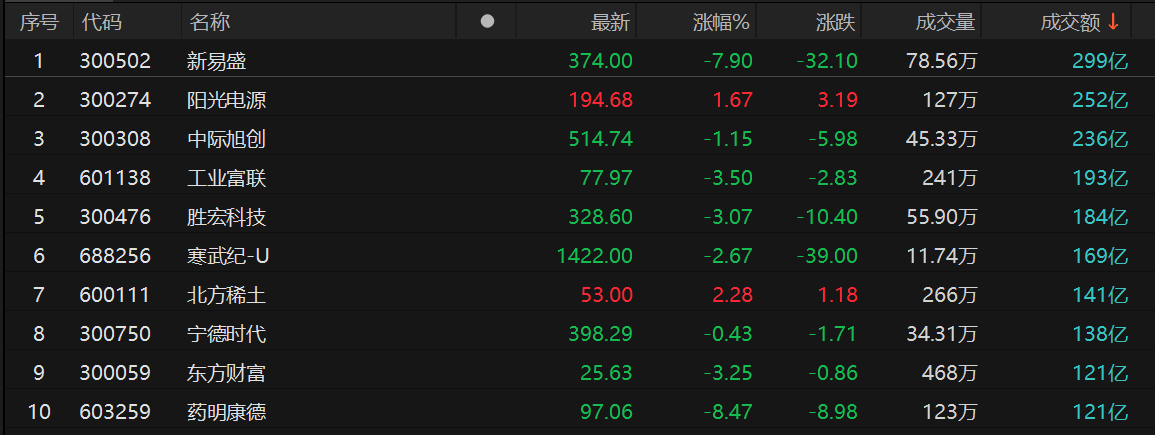
Market Overview - The market experienced significant fluctuations, with all three major indices showing sharp declines. The ChiNext index fell nearly 2%, and the Shanghai Composite Index dropped below 4000 points. By the end of trading, the Shanghai Composite Index decreased by 0.73%, the Shenzhen Component Index fell by 1.16%, and the ChiNext index declined by 1.84% [1] - The total trading volume in the Shanghai and Shenzhen markets reached 2.42 trillion yuan, an increase of approximately 165.6 billion yuan compared to the previous trading day [6] Sector Performance - The lithium mining sector saw a rapid increase, with Tianqi Lithium hitting the daily limit [2] - Quantum technology stocks were active, with Shenzhou Information achieving two consecutive trading limits and Geer Software hitting four trading limits in six days [3] - The battery sector showed strong fluctuations, with both Shida Shenghua and Tianji Co. reaching the daily limit. The energy storage sector was also active, with Tongrun Equipment achieving two consecutive trading limits [4] - The gaming sector faced a sharp decline, with Giant Network nearing a trading limit drop. The coal sector mostly declined, with Antai Group hitting the trading limit drop [5] Trading Volume Leaders - The top trading stock was Xinyisheng, with a trading volume of 29.9 billion yuan, followed by Sunshine Power, Zhongji Xuchuang, Industrial Fulian, and Shenghong Technology, with trading volumes of 25.2 billion yuan, 23.6 billion yuan, 19.3 billion yuan, and 18.4 billion yuan respectively [7]


A股锂矿概念逆势爆发,港股短线拉升,加密货币超16万人爆仓
2 1 Shi Ji Jing Ji Bao Dao· 2025-10-30 07:49
Market Overview - The A-share market experienced fluctuations on October 30, with the three major indices dropping significantly, particularly the ChiNext index which fell nearly 2%. The Shanghai Composite Index closed down 0.73%, the Shenzhen Component Index down 1.16%, and the ChiNext down 1.84% [1] - The total market turnover reached 2.46 trillion yuan [1] Sector Performance - The market showed mixed performance with nearly 4,100 stocks declining. However, the lithium mining sector saw a strong rally, with companies like Yongxing Materials and Jiangte Motor hitting the daily limit, and Tianqi Lithium reaching a peak increase of over 9% before closing [2] - Quantum technology stocks were active, with Shenzhou Information achieving two consecutive limits and Geer Software recording four limits in six days. The battery sector also showed strength, with Shida Shenghua and Tianji Shares both hitting the daily limit [2] - Conversely, the computing hardware sector faced significant declines, with companies like Tianfu Communication and Xinyi Sheng experiencing large drops. The gaming sector also suffered, with Giant Network nearing a limit down, and the coal sector saw most stocks decline, including Antai Group hitting the limit down [2] International Gold Market - International gold prices saw a short-term increase, reaching a peak of $3,982 per ounce before settling at $3,964.38 per ounce, with a daily increase of 0.88% [4] - According to the World Gold Council, global gold demand is projected to reach 1,313 tons by Q3 2025, with a total value of $146 billion, marking the highest quarterly demand on record [4] - The World Gold Council anticipates a seasonal improvement in gold jewelry consumption in Q4, although this may be tempered by rising gold prices and the later timing of the 2026 Spring Festival, which typically boosts gold consumption [4] Cryptocurrency Market - The cryptocurrency market experienced a sharp decline, with Bitcoin dropping over 3% at one point, falling below $108,000, before recovering to above $110,000 [4] - Data from Coinglass indicated that over 160,000 traders were liquidated in the past 24 hours, with liquidation amounts exceeding $800 million [4]
收评:沪指失守4000点创业板指跌近2% 能源金属板块逆市大涨
Zhong Guo Jin Rong Xin Xi Wang· 2025-10-30 07:45
转自:新华财经 新华财经北京10月30日电(王媛媛)周四A股三大指数集体回调,沪指失守4000点大关。截至收盘,沪 指报3986.90点,跌0.73%,成交10701亿元;深证成指报13532.13点,跌1.16%,成交13516亿元;创业 板指报3263.02点,跌1.84%,成交6453亿元。沪深两市成交额2.42万亿元,较上一个交易日放量1656亿 元。 盘面热点 板块方面,能源金属、钢铁、量子科技、电池等板块涨幅居前,CPO、游戏、煤炭等板块跌幅居前。 个股跌多涨少,全市场4100只个股飘绿。 盘面上,锂矿概念快速走强,天齐锂业触及涨停。量子科技概念股表现活跃,神州信息2连板,格尔软 件6天4板。电池板块震荡走强,石大胜华、天际股份双双涨停。储能板块局部活跃,通润装备2连板。 下跌方面,算力硬件股集体走弱,天孚通信、新易盛等多股大跌。游戏板块重挫,巨人网络一度逼近跌 停。煤炭板块多数下跌,安泰集团跌停。 消息面上 世界黄金协会:三季度全球黄金需求总量达1313吨 创单季度黄金需求最高纪录 世界黄金协会10月30日发布的数据显示,2025年三季度全球黄金需求总量(包含场外交易 )达1313 吨,需求总金 ...
A股锂矿概念逆势爆发,港股短线拉升,加密货币超16万人爆仓
21世纪经济报道· 2025-10-30 07:45
国际金价方面,现货黄金短线走高,一度触及3982美元/盎司,截至发稿,最新报3964.38美元/盎司,日内涨幅收窄至0.88%。 记者 | 金珊 编辑 | 曾静娇 10月30日,A股市场震荡调整,三大指数盘中跳水,创业板指跌近2%,沪指失守4000点。 截至收盘,沪指跌0.73%,深成指跌1.16%,创业板 指跌1.84%。 市场成交额2.46万亿。 | 上证指数 | 深证成指 | 北证50 | | --- | --- | --- | | 3986.90 | 13532.13 | 1553.32 | | -29.43 -0.73% -159.26 -1.16% -20.39 -1.30% | | | | 科创50 | 创业板指 | 万得全A | | 1461.30 | 3263.02 | 6379.87 | | -27.82 -1.87% -61.25 -1.84% -67.88 -1.05% | | | | 沪深300 | 中证500 | 中证A500 | | 4709.91 | 7385.71 | 5653.75 | | -37.93 -0.80% -95.26 -1.27% -50.24 -0.88% ...

收评:创业板指低开低走跌近2% 全市场4100只个股飘绿
Xin Lang Cai Jing· 2025-10-30 07:25
转自:智通财经 MACD金叉信号形成,这些股涨势不错! 【收评:创业板指低开低走跌近2% 全市场4100只个股飘绿】智通财经10月30日电,市场震荡调整,三 大指数盘中均出现跳水,创业板指跌近2%,沪指失守4000点。沪深两市成交额2.42万亿,较上一个交 易日放量1656亿。盘面上,市场热点较为杂乱,全市场4100只个股下跌。从板块来看,锂矿概念快速走 强,天齐锂业触及涨停。量子科技概念股表现活跃,神州信息2连板,格尔软件6天4板。电池板块震荡 走强,石大胜华、天际股份双双涨停。储能板块局部活跃,通润装备(维权)2连板。下跌方面,算力 硬件股集体走弱,天孚通信、新易盛等多股大跌。游戏板块重挫,巨人网络一度逼近跌停。煤炭板块多 数下跌,安泰集团跌停。板块方面,能源金属、钢铁、量子科技、电池等板块涨幅居前,CPO、游戏、 煤炭等板块跌幅居前。截至收盘,沪指跌0.73%,深成指跌1.16%,创业板指跌1.84%。 ...
创业板指低开低走跌近2% 沪指失守4000点
Mei Ri Jing Ji Xin Wen· 2025-10-30 07:20
Market Overview - The market experienced volatility on October 30, with all three major indices showing significant declines, particularly the ChiNext Index which fell nearly 2% [1] - The Shanghai Composite Index fell below the 4000-point mark, closing down 0.73%, while the Shenzhen Component Index decreased by 1.16% and the ChiNext Index dropped by 1.84% [1] - The total trading volume in the Shanghai and Shenzhen markets reached 2.42 trillion yuan, an increase of 165.6 billion yuan compared to the previous trading day [1] Sector Performance - Lithium mining stocks surged, with Tianqi Lithium (002466) hitting the daily limit [1] - Quantum technology stocks were active, with Shenzhou Information (000555) achieving two consecutive limits and Geer Software (603232) recording four limits in six days [1] - The battery sector showed strength, with both Shida Shenghua (603026) and Tianji Shares (002759) reaching the daily limit [1] - The energy metals, steel, quantum technology, and battery sectors saw the largest gains, while sectors such as CPO, gaming, and coal experienced significant declines [1] Declining Stocks - Computing hardware stocks collectively weakened, with companies like Tianfu Communication (300394) and Xinyi Sheng (300502) experiencing substantial drops [1] - The gaming sector faced severe losses, with Giant Network (002558) nearing the daily limit down [1] - The coal sector saw most stocks decline, with Antai Group (600408) hitting the daily limit down [1]



收评:沪指跌0.73%失守4000点 锂矿概念逆市上涨
Zheng Quan Shi Bao Wang· 2025-10-30 07:13
Core Viewpoint - The stock market experienced a slight decline, with major indices showing weakness, particularly the Shanghai Composite Index falling below 4000 points, while certain sectors like lithium mining and quantum technology saw gains [1] Market Performance - The Shanghai Composite Index closed down by 0.73% - The Shenzhen Component Index decreased by 1.16% - The ChiNext Index fell by 1.84% [1] Sector Highlights - Lithium mining stocks, such as Xizang Chengtou and Dazhong Mining, reached their daily limit [1] - Quantum technology stocks, including Shenzhou Information and Geer Software, also hit their daily limit [1] - Cultivated diamond stocks, led by World, saw significant gains, with the stock reaching its daily limit at one point [1] - Rare earth permanent magnet stocks experienced a surge, with Jiuling Technology rising over 9% [1] - Solid-state battery stocks were active, with companies like Penghui Energy and Tianji Shares hitting their daily limit [1] Underperforming Sectors - Sectors that saw declines included components, semiconductors, internet, communication equipment, and securities [1]
市场震荡调整,创业板指低开低走跌近2%,全市场4100只个股飘绿
Feng Huang Wang Cai Jing· 2025-10-30 07:13
Market Overview - The market experienced fluctuations with all three major indices showing significant declines, particularly the ChiNext index which fell nearly 2% and the Shanghai Composite Index dropping below 4000 points [1] - The total trading volume in the Shanghai and Shenzhen markets reached 2.42 trillion yuan, an increase of 165.6 billion yuan compared to the previous trading day [1] - By the end of the trading session, the Shanghai Composite Index decreased by 0.73%, the Shenzhen Component Index fell by 1.16%, and the ChiNext Index dropped by 1.84% [1] Sector Performance - Energy metals, steel, quantum technology, and battery sectors showed the most significant gains, while sectors such as CPO, gaming, and coal experienced the largest declines [1] - A total of 4100 stocks in the market declined, indicating a broad-based sell-off [1] Notable Stocks - Lithium mining stocks surged, with Tianqi Lithium hitting the daily limit [1] - Quantum technology stocks were active, with Shenzhou Information achieving two consecutive limit-ups and Geer Software hitting the limit four times in six days [1] - The battery sector showed strength with both Shida Shenghua and Tianji Shares reaching the daily limit [1] - The energy storage sector saw some activity, with Tongrun Equipment achieving two consecutive limit-ups [1] - Conversely, computing hardware stocks weakened significantly, with Tianfu Communication and Xinyi Sheng experiencing substantial declines [1] - The gaming sector faced severe losses, with Giant Network nearing a limit-down situation [1] - The coal sector mostly declined, with Antai Group hitting the limit-down [1] Limit-Up Performance - The limit-up performance showed a sealing rate of 67% with a profit rate of 0.84% [3] - The sealing rate for stocks that hit the limit was 67%, indicating a strong performance in this category [3]
收评:沪指震荡调整放量跌0.73%,全市场4100只个股下跌
Xin Lang Cai Jing· 2025-10-30 07:09
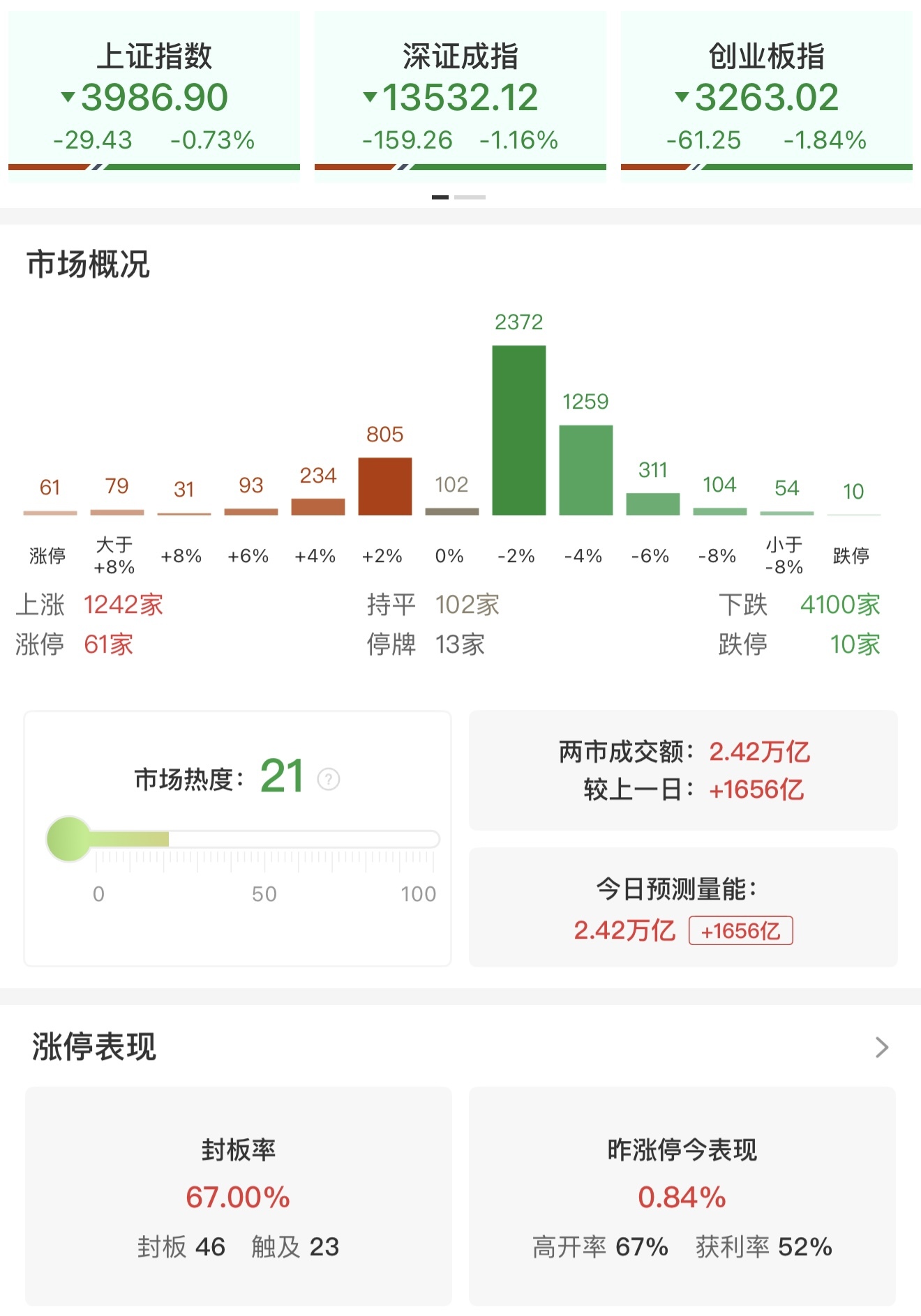
Market Overview - The three major A-share indices collectively declined, with the Shanghai Composite Index down 0.73%, the Shenzhen Component down 1.16%, and the ChiNext Index down 1.84% [1] - The total trading volume in the Shanghai, Shenzhen, and Beijing markets reached 24,643 billion yuan, an increase of 1,736 billion yuan compared to the previous day [1] - A total of 4,100 stocks in the market experienced declines [1] Sector Performance - Energy metals, steel, quantum technology, batteries, wind power equipment, port shipping, and phosphorus chemical sectors showed the highest gains [1] - Conversely, sectors such as CPO, PET copper foil, coal mining and processing, gaming, lithography machines, and securities experienced the largest declines [1] Notable Stocks - The lithium mining sector showed strong fluctuations, with Tianqi Lithium and Yongxing Materials hitting the daily limit, while Ganfeng Lithium, Tibet Mining, and Shengxin Lithium also saw gains [1] - Quantum technology concept stocks remained active, with Guandun Quantum, Hexin Instruments, and Weide Information leading in gains [1] - The steel sector performed positively, with Anyang Steel, Dazhong Mining, and Ordos hitting the daily limit [1] Declining Stocks - CPO concept stocks saw significant declines, with Hezhu Intelligent hitting the daily limit down, and Tianfu Communication, Tengjing Technology, Jingwang Electronics, Xinyi Sheng, and Huilv Ecology also experiencing notable drops [1] - The coal sector also faced adjustments, with Antai Group hitting the daily limit down, and Xindaozhou A, Yunmei Energy, and Shaanxi Black Cat all declining [1] - Additionally, gaming, lithography machines, and securities sectors also recorded declines [1]
量子科技股集体走强,企查查:量子计算相关企业近10万家
Qi Cha Cha· 2025-10-30 05:56
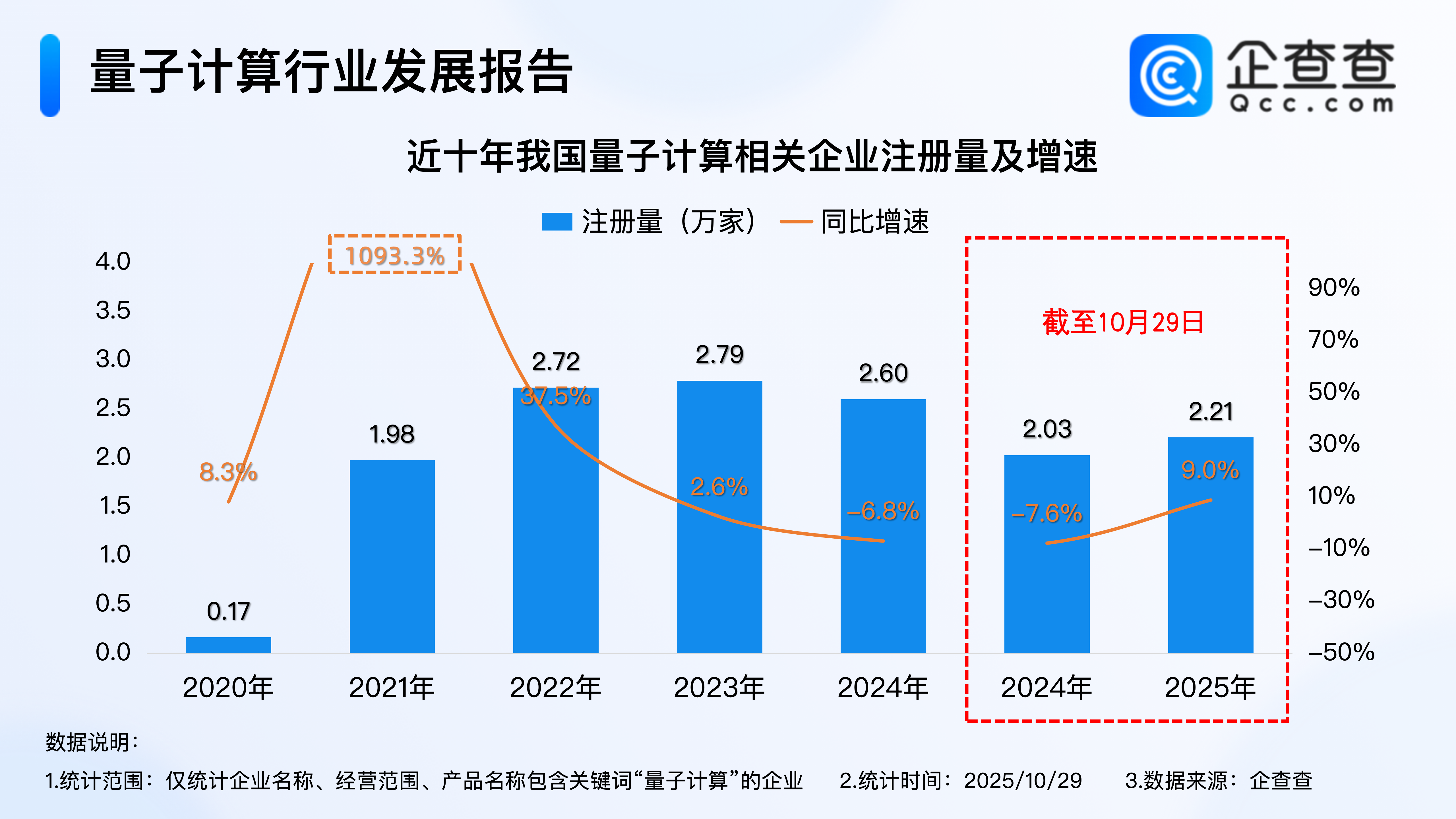
Core Insights - The A-share market has seen a significant rise in quantum technology stocks, with notable gains from companies such as Fujitsu, GuoDun Quantum, and others following the release of the "14th Five-Year Plan" which emphasizes the development of quantum technology as a new economic growth point [1] Industry Overview - The global quantum technology market is projected to exceed $6.1 billion by 2025, with China's market expected to reach 11.56 billion yuan, reflecting a compound annual growth rate (CAGR) of over 30% [1] - Quantum computing is recognized as one of the most disruptive frontier technologies, currently in the early stages of technical breakthroughs, with substantial advancements anticipated in the next 5 to 10 years [1] Company Registration Trends - As of October 29, 2023, there are 96,000 existing quantum computing-related enterprises in China, with over 50% located in the South and East China regions, particularly in South China, which accounts for 26.9% [2][14] - The registration of quantum computing companies has surged since 2021, with the annual registration volume exceeding ten times that of 2020, reaching 19,800 in 2021. By October 29, 2023, the number of registered companies has increased by 9% compared to the same period in 2024, totaling 22,100 [2][6] Regional Distribution - The majority of quantum computing enterprises are concentrated in South and East China, which together account for over 50% of the total, with North and Central China holding 15.2% and 12.1% respectively, while Northeast China has a relatively small share at 2.8% [14]