人工智能硬件

Search documents
Z Potentials|顾嘉唯,从百度技术少帅到两次创业,AI硬件的黄金时机不是技术顶峰,而是商业静默期
Z Potentials· 2025-11-17 14:38
Core Insights - The article discusses the evolution of AI hardware, emphasizing the importance of a "gentle penetration" approach rather than radical replacement in the market [2][5] - The founder of Ling Universe, Gu Jiawei, shares his unique entrepreneurial philosophy shaped by his experiences in both academia and the tech industry [2][4] Personal Journey - Vision and Refinement - Gu Jiawei's career has consistently focused on the next generation of human-computer interaction, with varying responsibilities and mindsets at different stages [4][5] - The transition from a scientist to an entrepreneur involves facing real-world challenges and balancing idealism with practical business needs [8][9] Industry and Product - Essence and Future of AI Hardware - Ling Universe is developing a product called "Xiaofangji," which serves as the first AI terminal for the "Gen Alpha" generation, aiming to create a new operating system called LingOS [15][18] - The product is designed to be a container for AI capabilities, moving away from traditional smartphone functionalities [15][20] Barriers and Moats - Standing Out in a Crowded Market - The primary distinction of Xiaofangji compared to other AI hardware is its focus on being a multi-functional AI terminal rather than a simple interactive toy [19][20] - The company leverages existing user data from previous products to enhance its AI capabilities and create a competitive edge [20][21] Timing and Market Readiness - Timing is crucial in technology commercialization, with the need to identify the right moment when technology is mature and user demand is activated [13][14] - Gu Jiawei emphasizes the importance of breaking down large goals into smaller, manageable steps to ensure gradual progress in product development [14][24]


郑州穹沁医疗器械有限公司成立 注册资本1万人民币
Sou Hu Cai Jing· 2025-11-12 05:48
Core Viewpoint - Zhengzhou Qiongqin Medical Equipment Co., Ltd. has been established with a registered capital of 10,000 RMB, indicating a new player in the medical equipment industry [1] Company Overview - The legal representative of the company is Peng Shaomei [1] - The company is involved in the sales of first-class and second-class medical devices, as well as adult products, indicating a diverse product range [1] Business Scope - The business scope includes general projects such as sales of daily necessities, cosmetics, metal products, rubber products, artificial intelligence hardware, and smart robots [1] - The company also engages in advertising design, agency, publication, and marketing planning, showcasing its involvement in promotional activities [1] - Additional services include software development, technical services, and food internet sales, specifically focusing on pre-packaged food [1]
硬蛋创新涨超3% 与汇芯投资订立谅解备忘录 确立与NARFD的战略合作框架
Zhi Tong Cai Jing· 2025-11-07 02:15
Core Viewpoint - Hard Egg Innovation (00400) has entered a non-binding memorandum of understanding with Shenzhen Huixin Equity Investment Management Co., Ltd. to establish a strategic cooperation framework for AIoT innovation enterprise incubation [1] Group 1: Company Developments - Hard Egg Innovation's stock rose by 3.32% to HKD 2.8, with a trading volume of HKD 11.13 million [1] - The memorandum aims to leverage the strengths of Hard Egg Innovation in AI chip applications, solution design, and supply chain integration alongside NARFD's research and incubation resources [1] Group 2: Strategic Implications - The collaboration is expected to create a complete industrial ecosystem for AIoT startups by combining technological, capital, industrial resources, and government support [1] - This partnership is anticipated to strengthen Hard Egg Innovation's position in the AI hardware industry, expand market coverage, and accelerate the commercialization of innovative AI products [1]
港股异动 | 硬蛋创新(00400)涨超3% 与汇芯投资订立谅解备忘录 确立与NARFD的战略合作框架
智通财经网· 2025-11-07 02:11
Core Viewpoint - Hard Egg Innovation (00400) has entered a non-binding memorandum of understanding with Shenzhen Huixin Equity Investment Management Co., Ltd. to establish a strategic cooperation framework for AIoT innovation enterprise incubation [1] Group 1: Company Developments - Hard Egg Innovation's stock rose by 3.32% to HKD 2.8, with a trading volume of HKD 11.13 million [1] - The memorandum aims to leverage the strengths of Hard Egg Innovation in AI chip applications, solution design, and supply chain integration alongside NARFD's research and incubation resources [1] Group 2: Strategic Implications - The collaboration is expected to create a complementary advantage in technology, capital, industrial resources, and government support for both parties [1] - This partnership will help build a complete industrial ecosystem for AIoT startups, enhancing Hard Egg Innovation's position in the AI hardware industry and expanding market coverage [1] - The initiative is anticipated to accelerate the commercialization of innovative AI products and lay a solid foundation for a long-term strategic partnership and sustainable development [1]
硬蛋创新(00400)与汇芯投资订立谅解备忘录 拟共同开展AIoT创新企业孵化平台
智通财经网· 2025-11-06 08:43
Core Viewpoint - The company has entered into a non-binding memorandum of understanding with Shenzhen Huixin Equity Investment Management Co., Ltd. to establish a strategic cooperation framework for AIoT innovation enterprise incubation [1] Group 1: Strategic Partnership - The memorandum aims to leverage the company's strengths in artificial intelligence chip applications, solution design, and supply chain integration alongside NARFD's research, incubation, and capital resources [1] - This collaboration is expected to create a robust support system for AIoT startups, enhancing the overall ecosystem [1] Group 2: Industry Positioning - The partnership is anticipated to strengthen the company's position in the artificial intelligence hardware industry and expand its market coverage [1] - The cooperation is seen as a means to accelerate the commercialization of innovative artificial intelligence products and establish a foundation for long-term strategic partnerships and sustainable development [1]
硬蛋创新与汇芯投资订立谅解备忘录 拟共同开展AIoT创新企业孵化平台
Zhi Tong Cai Jing· 2025-11-06 08:41
Core Viewpoint - The company has entered into a non-binding memorandum of understanding with Shenzhen Huixin Equity Investment Management Co., Ltd. to establish a strategic cooperation framework for AIoT innovation incubation [1] Group 1: Strategic Partnership - The memorandum aims to leverage the company's strengths in AI chip applications, solution design, and supply chain integration alongside NARFD's research, incubation, and capital resources [1] - NARFD is a key operational unit under the National 5G High-Frequency Device Innovation Center and is established under the guidance of the Ministry of Industry and Information Technology [1] Group 2: Industry Impact - The collaboration is expected to create a complete industrial ecosystem for AIoT startups by combining technological, capital, industrial resources, and government support [1] - This partnership is anticipated to strengthen the company's position in the AI hardware industry, expand market coverage, and accelerate the commercialization of innovative AI products [1]
硬蛋创新(00400) - 自愿性公告 - 有关共同开展AIoT创新企业孵化平台之谅解备忘录
2025-11-06 08:34
香港交易及結算所有限公司及香港聯合交易所有限公司對本公告的內容概不負責,對其準確性或完整性亦不 發表任何聲明,並明確表示,概不對因本公告全部或任何部分內容而產生或因倚賴該等內容而引致的任何損 失承擔任何責任。 INGDAN, INC. 硬 蛋 創 新 ( 於開曼群島註冊成立的有限公司) (股份代號:400) 有關共同開展AIoT創新企業孵化平台之諒解備忘錄 承董事會命 硬蛋創新(「本公司」,連同其附屬公司統稱「本集團」)董事會(「董事會」)欣然宣佈,本公司 已於 2025 年 11 月6 日 與深 圳市 匯芯 股權 投資 管理 有限 公司(「匯 芯投 資」)訂 立一份不 具法 律 約束力之諒解備忘錄( 該「諒解備忘錄」)。匯芯投資為於中華人民共和國成立之公司,並為 國家5 G中高頻器件創新中心(「NARFD」)之核心運營單位。 該 諒 解 備 忘 錄 旨 在 確 立 本 集 團 與 NARFD 之 戰 略 合 作 框 架 , 共 同 開 展 AIoT 創 新 企 业 孵 化 平 台 。 本 集 團 將 運 用 其 在 人 工 智 能 芯 片 應 用 、 方 案 設 計 及 供 應 鏈 整 合 方 面 之 優 ...
“大空头”伯里警示AI泡沫后 披露Q3大幅做空英伟达(NVDA.US)Palantir(PLT...
Xin Lang Cai Jing· 2025-11-04 13:20
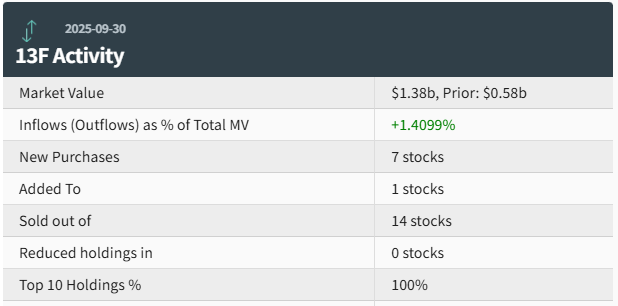
Core Viewpoint - Michael Burry's Scion Asset Management has disclosed significant bearish positions on AI stocks Nvidia and Palantir, indicating a cautious outlook on the AI-driven market rally [1][3][5]. Holdings Summary - Scion's total market value for Q3 2025 reached $1.38 billion, up 138% from $0.58 billion in the previous quarter [2]. - The fund added 7 new stocks and increased its position in 1 stock while completely selling out of 14 stocks, with no reductions in existing holdings [2]. - The top ten holdings account for 100% of the total market value [2]. Specific Positions - Scion holds 1 million put options on Nvidia, valued at approximately $186.58 million, and 5 million put options on Palantir, valued at around $912.1 million, together constituting 80% of the fund's portfolio [3][4]. - The fund has also established bullish positions in Pfizer, Halliburton, Molina Healthcare, and Lululemon Athletica, purchasing 6 million call options on Pfizer and 2.5 million on Halliburton [8][9]. Market Context - Nvidia's stock has risen 54% year-to-date, while Palantir's stock has surged over 173%. Despite strong earnings reports, both stocks experienced pre-market declines [5]. - Burry has expressed concerns about the slowing growth in cloud services from major players like Amazon, Alphabet, and Microsoft, which are central to the AI boom [5][7]. Additional Insights - Scion has increased its exposure to the managed healthcare sector by adding 125,000 shares of Molina Healthcare, which has seen a 49% decline in stock price this year [9]. - The fund's top five purchases include Palantir puts, Nvidia puts, Pfizer calls, Halliburton calls, and Molina Healthcare [9][10].


“大空头”伯里警示AI泡沫后 披露Q3大幅做空英伟达(NVDA.US)Palantir(PLTR.US)
智通财经网· 2025-11-04 13:14
Core Insights - Michael Burry's Scion Asset Management has disclosed significant bearish positions on AI stocks Nvidia and Palantir, indicating a cautious outlook on the AI-driven market rally [1][3][5] - The total market value of Scion's holdings increased to $1.38 billion in Q3 2025, up 138% from $0.58 billion in the previous quarter, with a focus on a concentrated portfolio [2][3] Holdings Summary - Scion Asset Management reported holding 1 million put options on Nvidia and 5 million put options on Palantir, which together account for 80% of the fund's positions [3][4] - The fund made 7 new stock purchases and added to 1 existing position while completely selling out of 14 stocks, maintaining a concentrated portfolio with the top 10 holdings comprising 100% of total market value [2][8] Stock Performance - Nvidia's stock has risen 54% year-to-date, while Palantir's stock has surged over 173% [4][5] - Despite strong quarterly results and an upward revision of guidance from Palantir, its stock fell 7.2% in pre-market trading, while Nvidia's stock dropped 1.9% [4][5] Investment Strategy - Scion has established bullish positions in Pfizer, Halliburton, Molina Healthcare, and Lululemon Athletica, indicating a diversified approach beyond bearish bets on AI stocks [8][9] - The fund's new positions include 6 million call options on Pfizer and 2.5 million call options on Halliburton, reflecting a strategic pivot towards sectors with potential growth catalysts [8][9] Market Commentary - Burry has expressed concerns about the sustainability of the AI stock rally, citing slowing growth in cloud services from major players like Amazon, Alphabet, and Microsoft [5][7] - He has drawn parallels between current capital expenditure trends in the tech sector and those observed during the 1999-2000 internet bubble, suggesting a cautious stance on tech investments [5][7]
⼤摩:2026将是AI科技硬件之年
美股研究社· 2025-11-04 12:04
Core Insights - Morgan Stanley predicts that 2026 will be a pivotal year for explosive growth in AI hardware, primarily driven by strong demand for AI server hardware [6][7] - The report highlights a significant redesign upgrade in AI servers driven by GPUs and ASICs, with new platforms from NVIDIA and AMD expected to enhance computing power and cabinet density [6][7] AI Server Rack Demand Surge - AI server cabinet demand is projected to surge from approximately 28,000 units in 2025 to at least 60,000 units in 2026, representing over 100% growth [7][13] - The transition from single GPU designs to integrated rack systems is expected to benefit ODM manufacturers like Quanta, Foxconn, Wistron, and Wiwynn [13] Power and Cooling Solutions - The report emphasizes that the challenges of power consumption and cooling due to hardware upgrades present significant opportunities for power and cooling suppliers [18][19] - A shift to 800V high-voltage direct current (HVDC) power solutions is anticipated, with the value of power solutions for Rubin Ultra cabinets projected to exceed ten times that of current GB200 cabinets by 2027 [20][22] Liquid Cooling Necessity - Liquid cooling has transitioned from an optional solution to a necessity, with the total value of cooling components for a GB300 cabinet estimated at approximately $49,860, expected to increase by 17% for the next-generation Vera Rubin platform [23][26] Value Chain Upgrades - The report indicates that the upgrade of AI platforms will have profound impacts on printed circuit boards (PCBs) and interconnect components, with increasing requirements for layer counts and material grades [30][31] - The evolution of NVIDIA's GPUs shows a trend towards more complex and higher-value PCB manufacturing processes, creating structural growth opportunities for PCB and upstream material suppliers [32][33]