
大气污染治理

Search documents
同兴科技:8月15日召开董事会会议
Mei Ri Jing Ji Xin Wen· 2025-08-15 11:56
Company Overview - Tongxing Technology (SZ 003027) announced its fifth board meeting on August 15, 2025, to review the proposal for the 2025 semi-annual report [1] - As of the report, Tongxing Technology has a market capitalization of 2.6 billion yuan [1] Industry Insights - For the year 2024, the revenue composition of Tongxing Technology is as follows: 99.59% from air pollution control industry and 0.41% from other businesses [1]

中自科技: 北京金杜(成都)律师事务所关于中自科技股份有限公司2025年限制性股票激励计划(草案)的法律意见书
Zheng Quan Zhi Xing· 2025-08-06 16:22
Core Viewpoint - The legal opinion letter issued by Beijing King & Wood Mallesons (Chengdu) Law Firm confirms that Zhongzi Technology Co., Ltd. is eligible to implement its 2025 Restricted Stock Incentive Plan in compliance with relevant laws and regulations [1][4][26]. Group 1: Company Information - Zhongzi Technology Co., Ltd. is a publicly listed company with a registered capital of 1,195.64509 million RMB and was established on July 15, 2005 [8]. - The company operates in various sectors, including construction engineering, environmental protection, and battery manufacturing [6]. Group 2: Incentive Plan Overview - The 2025 Restricted Stock Incentive Plan aims to attract and retain talent, aligning the interests of shareholders, the company, and employees [28][29]. - The plan involves granting a total of 2,062,238 restricted stocks, accounting for approximately 1.72% of the company's total share capital [13][15]. Group 3: Eligibility and Conditions - The incentive plan targets 63 individuals, including directors, senior management, and key technical personnel, representing about 8.08% of the total workforce [10][11]. - The plan includes performance assessment criteria based on the company's revenue targets for 2025 and 2026, with specific thresholds for stock vesting [22][24]. Group 4: Legal Compliance and Procedures - The company has fulfilled necessary legal procedures, including board resolutions and supervisory committee reviews, to implement the incentive plan [26][27]. - The plan will undergo further legal procedures before implementation, including public disclosure and shareholder voting [27][28].

同兴科技股价微跌0.69% 公司回应CCUS技术国际水平
Sou Hu Cai Jing· 2025-07-30 12:10
Core Viewpoint - The stock price of Tongxing Technology closed at 18.72 yuan on July 30, 2025, reflecting a decrease of 0.69% from the previous trading day, with a trading volume of 0.65 billion yuan and a turnover rate of 3.32% [1] Company Overview - Tongxing Technology specializes in flue gas treatment in non-electric industries and the research and development of CCUS (Carbon Capture, Utilization, and Storage) technology [1] - The company has advanced air pollution control technologies in the glass and mineral wool industries and has implemented multiple related projects [1] Recent Developments - The company announced on an interactive platform that its self-developed TX-1 absorbent has reached internationally advanced performance levels [1] - Tongxing Technology aims to leverage industry policy opportunities to drive business growth [1] - The employee stock ownership plan for 2025 has been approved by the shareholders' meeting, intending to grant 1.285 million shares to no more than 67 incentive targets, with performance targets of net profit growth rates of no less than 20% and 40% for 2025 and 2026, respectively [1] Market Activity - On July 30, 2025, the net outflow of main funds from Tongxing Technology was 3.5196 million yuan [2]
凯龙高科:7月28日召开董事会会议
Mei Ri Jing Ji Xin Wen· 2025-07-29 11:35
Group 1 - The company Kailong High-Tech (SZ 300912) held a temporary board meeting on July 28, 2025, to discuss changes in registered capital and amendments to the company’s articles of association [1] - For the year 2024, the company's revenue composition shows that air pollution control accounted for 99.93%, while other segments contributed only 0.07% [1] - As of the report date, Kailong High-Tech has a market capitalization of 1.8 billion yuan [1]
海螺新材: 关于收购河南康宁特环保科技股份有限公司80%股权及郑州康宁特环境工程科技有限公司100%股权的公告
Zheng Quan Zhi Xing· 2025-06-17 11:25
Transaction Overview - The company plans to acquire 80% equity of Henan Kangning Special Environmental Technology Co., Ltd. and 100% equity of Zhengzhou Kangning Special Environmental Engineering Technology Co., Ltd. for a total transaction price of 185.55 million RMB [1][2] - The acquisition aims to accelerate the development of the SCR denitration catalyst industry and improve market layout [1][2] Financial Details - The acquisition will be funded through the company's own funds and bank loans [2] - The final transaction price will be adjusted based on the difference between the book value at the time of management transfer and the assessed book value as of March 31, 2025 [1][10] Target Company Information - Kangning Special has a registered capital of 169.12 million RMB and operates in the manufacturing and sales of desulfurization and denitration equipment [3][7] - As of March 31, 2025, Kangning Special reported total assets of 287.03 million RMB, total liabilities of 83.33 million RMB, and net assets of 203.70 million RMB [3] - The engineering company has a registered capital of 60 million RMB and reported total assets of 149.76 million RMB as of March 31, 2025 [7] Strategic Rationale - The acquisition aligns with national policies promoting air pollution control and is expected to enhance the company's market competitiveness in the central region [18] - The company aims to expand its SCR denitration catalyst production capacity and extend its denitration engineering business [18] Governance and Compliance - The transaction does not constitute a related party transaction and does not require shareholder approval [2] - The target companies do not have any significant legal disputes or third-party rights affecting the equity [4][8]

以“蔚蓝”为名,这支高校先锋队“智”理大气污染
Zhong Guo Qing Nian Bao· 2025-06-08 01:03
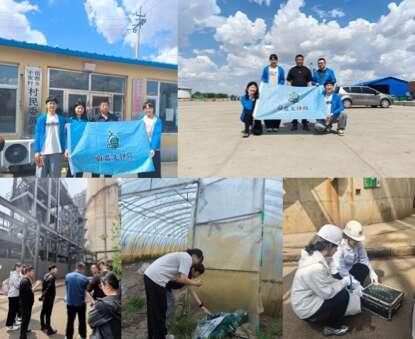
Core Viewpoint - The 2024 Beijing Ecological Environment Status Bulletin indicates a significant improvement in air quality, with 290 days of good air quality, an increase of 114 days compared to 2013, marking the highest number in history [1] Group 1: Environmental Initiatives - The "Blue Vanguard Team," primarily composed of students, plays a crucial role in pollution prevention and green development [1][2] - The Beijing University of Technology's Key Laboratory for Regional Air Pollution Control serves as a core technological force in air quality management, focusing on innovative solutions for complex pollution issues [1][2] Group 2: Research and Development - The Key Laboratory has undertaken over 50 national and provincial projects, including major national R&D programs and has received the First Prize of Beijing Science and Technology Progress Award in 2020 [1] - The laboratory promotes the integration of research and social responsibility, encouraging students to engage in practical environmental initiatives [1][2] Group 3: Community Engagement - The "Blue Vanguard Team" was established in 2018, led by doctoral student Wen Chaoyu, and includes talents from various interdisciplinary fields, creating a new model of "Research + Public Welfare" [2] - The team focuses on enhancing public awareness of environmental protection through various activities, including technology research, public education, and volunteer services [2] Group 4: Innovative Solutions - The team has developed an AI-enabled localized database technology to identify pollution control priorities in rural areas, conducting surveys in 80 counties and 393 villages in key northern regions [4] - A tiered governance strategy has been proposed, recommending efficient clean energy alternatives for accessible villages while allowing for a transitional phase for economically disadvantaged areas [5] Group 5: Addressing Agricultural Pollution - The team has conducted surveys on straw burning in rural areas, exploring the motivations and methods of straw disposal among farmers [5][6] - A scientific approach to defining "controllable burning boundaries" has been proposed, aiming for a balanced solution that is acceptable to farmers, environmentally sustainable, and policy-compliant [6]

江西:今年秋冬季还可能出现长时间、大范围大气污染过程
Zhong Guo Qing Nian Bao· 2025-06-02 08:38
Core Viewpoint - The Jiangxi Provincial Ecological Environment Department acknowledges the improvement in air quality but emphasizes the need for continued efforts due to potential adverse weather conditions that may lead to air pollution in the upcoming autumn and winter seasons [1][2] Group 1: Air Quality Improvement Efforts - The department plans to enhance pollution control through three main strategies: strengthening pollution reduction, improving response to pollution, and leveraging technological support [1] - Key industries such as steel, cement, and coking will undergo ultra-low emission transformations to improve waste gas treatment capabilities [1] - The focus will also be on mobile source pollution prevention, particularly targeting diesel truck emissions and promoting clean transportation in key industries [1] Group 2: Monitoring and Coordination - A systematic approach involving daily monitoring, weekly discussions, monthly summaries, and quarterly analyses will be implemented to manage air quality effectively [2] - The department will collaborate with neighboring provinces like Hunan and Hubei for inter-provincial air pollution control, enhancing cooperative efforts in the Yangtze River middle reaches urban agglomeration [2] - Professional technical teams will be organized to assist local areas in identifying and rectifying air pollution issues, thereby improving local response capabilities [2] Group 3: Research and Development - The Jiangxi Provincial Ecological Environment Department will utilize the Joint Air Pollution Prevention and Control Center to conduct research on the causes of complex air pollution and develop localized forecasting models [2] - The focus will be on addressing various contradictions in air pollution control efforts and tackling significant challenges that hinder continuous improvement in air quality [2]
中国科学院院士朱彤:尽快修订环境空气质量标准 以健康驱动空气质量持续改善
2 1 Shi Ji Jing Ji Bao Dao· 2025-05-15 02:27
Core Viewpoint - The article emphasizes the urgent need for China to revise its air quality standards, particularly for PM2.5, to maximize health benefits and promote sustainable development in the context of air pollution and climate change [1][3][5]. Group 1: Air Quality Standards and Health - The current air quality standards, established in 2012, are no longer effective for many cities that have met the existing PM2.5 limits, necessitating a revision to provide long-term goals for continuous air quality improvement [4][7]. - The latest data indicates that in 2024, the national average PM2.5 concentration is 29.3 micrograms per cubic meter, with 252 cities meeting the PM2.5 annual average standard [3][4]. - The World Health Organization (WHO) has set a new guideline for PM2.5 at 5 micrograms per cubic meter, which has sparked discussions on how to balance international standards with China's specific conditions [5][6]. Group 2: Collaborative Governance - The article advocates for a collaborative governance approach to address air pollution and climate change, highlighting the interconnectedness of these issues due to human activities [8][9]. - It suggests that health protection should be a primary goal in formulating strategies for air pollution control and climate change mitigation, promoting coordinated efforts to reduce both air pollutants and greenhouse gases [9][10]. Group 3: Green Technology and Corporate Responsibility - Companies are encouraged to invest in green technologies, such as electric vehicles and clean heating solutions, to contribute to air quality improvement and carbon reduction [10][11]. - The article stresses the importance of businesses aligning with national pollution reduction goals and adopting sustainable practices to ensure long-term viability and societal responsibility [12][13]. Group 4: International Cooperation - China is positioned to share its experiences and technologies in air pollution control with other developing countries facing similar challenges, enhancing its role in global environmental governance [13][14]. - The article highlights the potential for Chinese scientists to influence international discussions and collaborations on air quality and climate change, promoting a unified approach to these global issues [14].
凯龙高科2024年年报解读:营收净利双降,多项费用增长引关注
Xin Lang Cai Jing· 2025-04-23 00:49
Core Viewpoint - The financial performance of Kailong High-Tech Co., Ltd. in 2024 showed significant declines, with net profit dropping by 3053.67% and basic earnings per share decreasing by 3112.50%, indicating serious challenges for the company [1][3]. Revenue Performance - In 2024, the company's operating revenue was 578,361,817.50 yuan, a decrease of 44.52% from 1,042,425,321.44 yuan in 2023 [2]. - The atmospheric pollution control business accounted for 99.93% of revenue, with a year-on-year decline of 44.47%, primarily due to reduced sales and prices amid increased competition and market changes [2]. Profitability Analysis - The net profit attributable to shareholders was -276,508,534.74 yuan, compared to 9,361,512.77 yuan in 2023, marking a decline of 3053.67% [3]. - The net profit after excluding non-recurring items was -279,816,063.33 yuan, a drop of 5257.39% from the previous year [3]. Expense Breakdown - Sales expenses increased by 32.81% to 27,260,659.24 yuan, driven by higher costs associated with new business development and market expansion [4]. - Management expenses rose by 6.32% to 79,218,859.20 yuan, reflecting increased operational complexity as the company diversified its business [5]. - Financial expenses decreased by 18.76% to 9,956,862.45 yuan, attributed to reduced interest expenses [6]. - R&D expenses grew by 7.91% to 67,989,381.85 yuan, emphasizing the company's commitment to innovation and technology development [7]. Cash Flow Situation - The net cash flow from operating activities was -19,011,056.23 yuan, a decline of 137.11% from 51,228,007.15 yuan in 2023, indicating cash flow pressure [9]. - The net cash flow from investing activities significantly decreased to -34,602,236.44 yuan, down 6742.36% from 520,933.17 yuan in 2023, suggesting a need for investment strategy optimization [10]. - The net cash flow from financing activities increased to 30,963,955.04 yuan, a growth of 383.79% from -10,910,762.90 yuan in 2023, indicating reliance on debt financing to meet funding needs [11]. Future Outlook - The company faces various risks, including economic fluctuations, technological changes, and raw material price volatility, which could impact its operations and profitability [12]. - To address these challenges, the company plans to monitor macroeconomic policies, enhance technological capabilities, and implement refined management practices to control costs and improve competitiveness [12].
与PM2.5“交手”十余年,胡京南:我们实现了发展与环保双赢
Xin Jing Bao· 2025-04-17 14:13
4月17日,国新办举行"新征程上的奋斗者"中外记者见面会,5位生态环境领域的代表亮相,其中包括中 国环境科学研究院大气环境研究所所长胡京南。 奋战在大气污染防治科研一线18年,主持科研项目30余项,一次又一次跟踪研判京津冀PM2.5污染过 程,在实际道路上开展近千次机动车排放测试,推动机动车监管从实验室走向实际道路……比起胡京南 这个名字,人们更加熟悉的是已经渐成常态的"北京蓝"。 见面会上,胡京南告诉大家,从2013年到2022年的十年间,京津冀区域在GDP增长六成的同时,PM2.5 的浓度下降了六成以上,实现了经济发展与环境保护的双赢。 2900多名科研工作者参与 污染过程往往发生在秋冬季,"有的同事上半夜收集和整理数据,我和其他同事就下半夜起来,去分 析、提炼数据和结论,然后第二天再参加污染过程会商。"胡京南回忆,2015年以来每个冬天的夜晚, 一旦出现污染过程,他和攻关团队都是这样度过的。 "交手"次数多了,攻关团队也渐渐"摸"到了解题思路。"我们从排放、气象、化学和传输等方面,系统 阐明了污染的成因。"胡京南说。 PM2.5是指大气中粒径小于或等于2.5微米的颗粒物,是监测和评估空气质量的重要指标。 ...