
房地产投资

Search documents
宏观经济周报:2026总量为结构让位-20251213
Guoxin Securities· 2025-12-13 13:17
Economic Policy Shift - The focus of economic policy is shifting from "total growth" to "structural optimization" for 2026[1] - "High-quality development" is now prioritized over "seeking progress while maintaining stability" in policy statements[1] - The introduction of a national unified market regulation aims to enhance market efficiency and address "involution" competition[1] Investment and Consumption - Investment strategies will emphasize "new quality productivity," focusing on technology innovation, digitalization, and green upgrades[1] - The structure of demand is shifting from a single focus on consumption to a dual focus on consumption and investment[1] - Specific measures include increasing central budget investments and optimizing special bonds to stabilize investment[2] Economic Indicators - Fixed asset investment has decreased by 1.70% year-on-year[4] - Retail sales increased by 2.90% year-on-year, while exports rose by 5.90% year-on-year[4] - M2 money supply growth is at 8.00%[4] Fiscal and Monetary Policy - The broad fiscal deficit is projected to be between 12.5 trillion and 13 trillion yuan for 2026, up from 11.86 trillion yuan in 2025[39] - Fiscal policy will maintain a high deficit rate, with special bonds and government bonds expected to increase[2] - Monetary policy will remain "moderately loose" but will focus on structural guidance and maintaining adequate liquidity[2]
凯德投资:完成人民币母基金旗下第二只境内子基金募集
Zhong Zheng Wang· 2025-12-11 08:13
Group 1 - The core point of the news is that CapitaLand Investment has successfully raised its second domestic sub-fund under its RMB mother fund platform, reaching a total scale of 1 billion RMB, which is expected to increase its asset management scale by approximately 1.48 billion RMB [1] - The newly raised fund, China Retail RMB Fund (CRF I), has attracted multiple local institutional investors in addition to the capital commitment from the mother fund [1] - Since 2021, CapitaLand Investment has established nine onshore RMB funds, accumulating nearly 55 billion RMB in domestic fundraising [1] Group 2 - CapitaLand Investment's first sub-fund under the RMB mother fund, China Industrial Park Fund IV, completed fundraising in September 2025 with an asset management scale of 1.74 billion RMB, using the Dalian Tengfei Park project as a seed asset [2] - The company has a rich asset reserve in first-tier and strong second-tier cities, including shopping centers, industrial parks, logistics parks, and rental housing, which supports the establishment of more sub-funds in the future [2] - The CapitaLand Mall New Central project in Qingdao, with a total construction area of 141,000 square meters and an occupancy rate of approximately 99.6%, will be restructured into the capital structure of CRF I as a seed asset [1]
丰银禾控股完成收购香港物业
Zhi Tong Cai Jing· 2025-12-09 08:43
Group 1 - The core point of the article is that Fengyinhe Holdings (08030) has announced the completion of the acquisition of a property in Hong Kong, with all preconditions met for the transaction [1] - The acquisition is set to be completed on December 9, 2025, and the property will become an asset of the group upon completion [1] - The financial impact of the property will be reflected in the group's accounts following the completion of the acquisition [1]
普汇中金国际(00997)发布中期业绩 股东应占亏损1.2亿港元 同比减少47.51%
智通财经网· 2025-11-28 13:52
Core Viewpoint - Puhui Zhongjin International (00997) reported a significant decline in total revenue and an increase in losses for the six months ending September 30, 2025, indicating challenges in its core business segments [1] Financial Performance - The company achieved total revenue of HKD 35.732 million, representing a year-on-year decrease of 19.57% [1] - The loss attributable to shareholders was HKD 120 million, which is a reduction of 47.51% compared to the previous year [1] - Basic loss per share was HKD 0.1028 [1] Business Segments - Revenue primarily came from property investment and financial services, both of which experienced declines during the reporting period [1] - The decrease in property investment revenue was attributed to a drop in average occupancy rates, along with extended rent-free periods and rental discounts offered to retain existing tenants and attract new ones [1]
芒格生前最后投资曝光:押注一行业赚超5000万美元,还扶持年轻邻居打造30亿地产帝国
华尔街见闻· 2025-11-28 04:35
Core Insights - Charlie Munger's later years were marked by active investment decisions and new challenges, rather than a quiet retirement [2][3] - Munger made significant investments in the coal industry, an area he had avoided for 60 years, resulting in over $50 million in paper gains [5][6] - He also collaborated with a young neighbor to build a real estate empire valued at approximately $3 billion [8][9] Investment in Coal Industry - Munger's unexpected investment in coal stocks came as many investors were bearish on the sector due to declining usage [5] - He believed that global energy demand would keep coal necessary, and many producers remained profitable with undervalued stock prices [5] - In May 2023, he purchased shares of Consol Energy and later Alpha Metallurgical Resources, both of which saw significant stock price increases [6] Real Estate Ventures - Munger's real estate investment began with a mentorship of his young neighbor, Avi Mayer, who sought guidance in his career [8] - Together with Mayer and Reuven Gradon, they acquired nearly 10,000 low-rise apartments in Southern California starting around 2017 [8] - Afton Properties, the company they formed, now holds assets valued at about $3 billion, with Munger actively involved in decision-making [9] Health Challenges and Social Engagement - Munger faced significant health challenges, including vision loss, but maintained a humorous outlook and engaged socially to combat loneliness [10][11] - He adapted his lifestyle, including dietary changes, and emphasized the importance of forming new friendships in his later years [11] - Munger continued to communicate regularly with Warren Buffett, maintaining their long-standing partnership despite health issues [12][13]


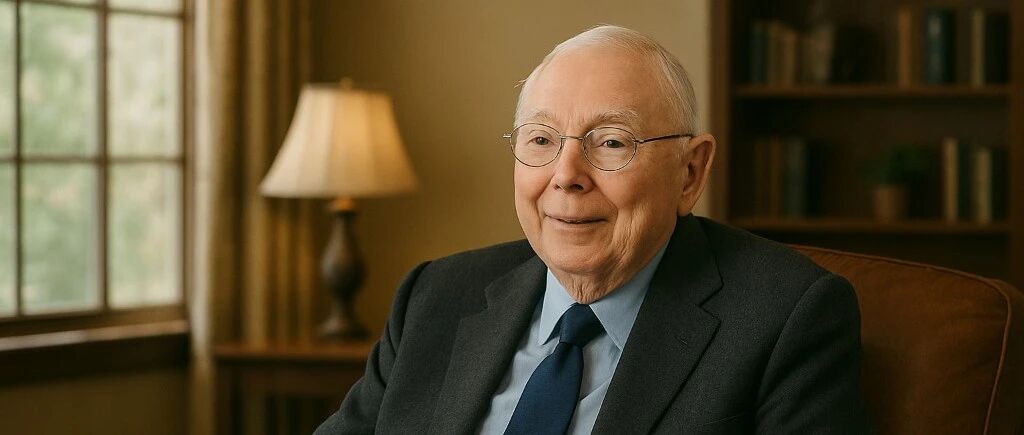
华尔街日报:查理芒格最后的岁月,99岁仍在大胆投资,扶持年轻邻居打造地产帝国
美股IPO· 2025-11-28 01:09
Core Insights - Charlie Munger's final years were marked by active investment decisions and new challenges, rather than a quiet retirement [3][4] - Munger made significant investments in the coal industry, an area he had avoided for 60 years, resulting in over $50 million in paper gains [5][6] - He also played a crucial role in real estate investments, helping to build a $3 billion apartment empire [8] Investment in Coal Industry - Munger's unexpected investment in coal came as many investors were bearish on the sector due to declining usage [5] - He believed that global energy demand would keep coal necessary, and many producers remained profitable with undervalued stock prices [5] - His investments in Consol Energy and Alpha Metallurgical Resources led to substantial gains, with Consol's stock price doubling by the time of his passing [6] Real Estate Ventures - Munger mentored a young neighbor, Avi Mayer, leading to a partnership in real estate that acquired nearly 10,000 low-rise apartments in Southern California [7] - Under Munger's guidance, their company, Afton Properties, adopted long-term loans to secure favorable rates, resulting in a portfolio valued at approximately $3 billion [8] Health Challenges and Social Engagement - Munger faced significant health issues, including vision problems, but maintained a humorous outlook and engaged socially to combat loneliness [9] - He continued to share investment wisdom and life philosophy with peers during regular breakfast meetings [9] Final Farewell to Buffett - Munger maintained a close friendship with Warren Buffett, communicating regularly despite challenges due to hearing issues [10][11] - In his final days, Munger requested privacy to make a last call to Buffett, marking a poignant farewell between the two legendary investors [11]
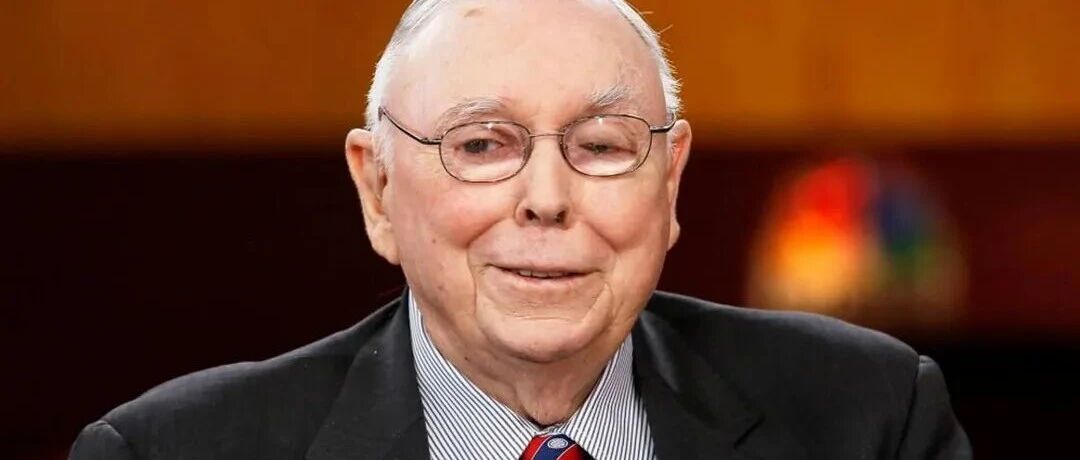
投资传奇芒格最后的篇章曝光
第一财经· 2025-11-27 05:29
2025.11. 27 本文字数:2393,阅读时长大约4分钟 在生命的最后十年,他与公司的联系有所减少,但每隔一两周就会与巴菲特通话。巴菲特住在内布拉 斯加州奥马哈,而芒格住在洛杉矶,两人都有听力障碍,这使得沟通更加困难。 押注这个冷门行业 芒格毕业于哈佛法学院,曾与人共同创立了位于洛杉矶的芒格、托尔斯和奥尔森律师事务所。1962 年,他辞去了律师工作,专注于投资,并于1978年加入伯克希尔·哈撒韦公司。 芒格成为了巴菲特的顾问和智囊,他敦促巴菲特放宽投资标准,不再仅仅关注低价投资,而是投资优 质公司。"在商业决策上,查理和我是可以互换的。"巴菲特在1982年说道。 作者 | 第一财经 冯迪凡 "股神"沃伦·巴菲特的黄金搭档查理·芒格生命中最后的篇章鲜为人知。 据最新报道,在他去世前一年,投资了一个曾避之不及60年的冷门行业,从中获利超过5000万美 元,他还加大了对房地产的投资力度,与一位年轻的邻居合作进行大笔长期投资。 "他们会大声喊叫。"芒格的孙媳妇杰克逊(Whitney Jackson)说,她经常去芒格家探望他。"这或 许是想保密,但方圆一英里内的人都能听到。"她说。 朋友们说,几十年来,他几乎不关 ...

新世纪集团(00234)发布中期业绩,股东应占亏损1871.6万港元 同比增加340.69%
智通财经网· 2025-11-26 12:22
Core Viewpoint - New Century Group (00234) reported a significant decline in revenue and an increase in losses for the six months ending September 30, 2025, indicating challenges in its lending and investment operations [1] Financial Performance - The company achieved revenue of HKD 36.926 million, a year-on-year decrease of 24.17% [1] - Loss attributable to owners increased to HKD 18.716 million, representing a year-on-year increase of 340.69% [1] - Earnings per share reported a loss of HKD 0.32 [1] Operational Challenges - The increase in losses is primarily due to tightened lending measures on all loan applications, leading to a decline in the loan portfolio and reduced profits from lending operations [1] - The fair value loss of investment properties in Hong Kong, mainly commercial retail units, has increased [1] - There was a decrease in fair value gains and dividend income from listed equity investments [1]
新世纪集团发布中期业绩,股东应占亏损1871.6万港元 同比增加340.69%
Zhi Tong Cai Jing· 2025-11-26 12:21
Core Viewpoint - New Century Group (00234) reported a significant decline in revenue and an increase in losses for the six months ending September 30, 2025, indicating challenges in its lending and investment operations [1] Financial Performance - The company achieved revenue of HKD 36.926 million, a year-on-year decrease of 24.17% [1] - Loss attributable to owners increased to HKD 18.716 million, representing a year-on-year increase of 340.69% [1] - Earnings per share reported a loss of HKD 0.32 [1] Factors Contributing to Performance - The increase in losses was primarily due to tightened lending measures on all loan applications, leading to a decline in the loan portfolio and reduced profits from lending activities [1] - The fair value loss of investment properties in Hong Kong, mainly commercial retail units, increased [1] - There was a decrease in fair value gains and dividend income from listed equity investments [1]
NIRAKU附属拟约5060万港元转让“界阿苏”的信托受益权
Zhi Tong Cai Jing· 2025-11-21 18:59
Group 1 - NIRAKU (01245) announced a trust beneficial interest transfer agreement with a total transfer price of 9.557 billion yen (approximately 50.6 million HKD) for the trust beneficial interest of "Kie Asu" [2] - The effective date of the transfer is expected to be December 2, 2025 [2] - The group initiated its real estate investment business preparations in August 2024, focusing on investments in hotels and leisure facilities with high resale value potential [2] Group 2 - The new business officially launched in April 2025 aims to support the Japanese government's key policy of regional revitalization [2] - The strategy involves transforming local Japanese inns and hotels into financial products for sale to investors, redirecting capital from Tokyo to local economies [2] - The board views the sale as a prudent and strategic business decision to capitalize on favorable market conditions and generate substantial financial returns in the real estate investment sector [2] Group 3 - The proceeds from the sale are intended to be used for general working capital or future investment opportunities [2]