
航天科研

Search documents
“美国捉襟见肘,再看看中国…”
Guan Cha Zhe Wang· 2025-09-14 01:48
Core Viewpoint - A team of scientists, including NASA researchers, has identified critical gaps in NASA's development of biological life support systems, which may hinder the U.S. in long-term manned space exploration and habitation, especially in competition with China [1][2]. Group 1: Current State of U.S. Space Life Support Systems - The U.S. space life support systems, including those used on the International Space Station, rely on supply missions for essential resources like water and food [1]. - Long-term manned missions beyond Earth's orbit face significant costs and logistical challenges due to reliance on supply launches, alongside safety concerns regarding radiation and microgravity effects on human health [2]. Group 2: Biological Life Support Systems (BLSS) - Biological life support systems (BLSS) are seen as a superior solution for long-term deep space missions, utilizing biological processes to create a sustainable closed-loop environment for food, water, and oxygen [2]. - The lack of available BLSS technology and systems is currently limiting the goals of manned lunar exploration programs [2]. Group 3: Historical Context and Funding Issues - NASA previously focused on biological regeneration methods in the 1990s, which led to the development of sustainable agricultural systems for space exploration [5]. - A significant shift in focus and budget cuts in 2004 led to the dismantling of the BIO-Plex project, which aimed to test life support systems for future space missions [5][6]. - Since the early 2000s, U.S. support for biological regeneration life support research has diminished, while China has actively advanced this area over the past two decades [6]. Group 4: China's Advancements in Space Exploration - China has established a strong position in biological life support technology, exemplified by projects like "Moon Palace 1," which is a closed ecological system for lunar base life support research [6]. - Recent plans from the China National Space Administration (CNSA) indicate that China has surpassed the U.S. and its allies in emerging technologies and capabilities for establishing lunar or Martian habitats [6][9]. Group 5: Future Implications and Challenges - The U.S. space program faces years of challenges in rebuilding the necessary facilities and infrastructure for biological life support systems [9]. - Despite ongoing research in the field, including private sector initiatives and international collaborations, there are concerns about funding and political support for these projects in the U.S. [11][12].

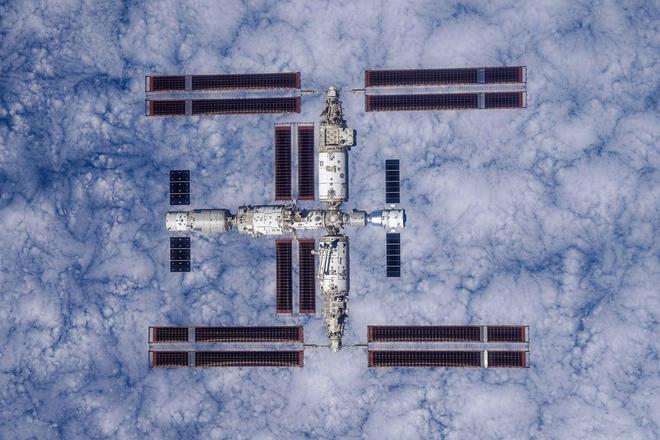
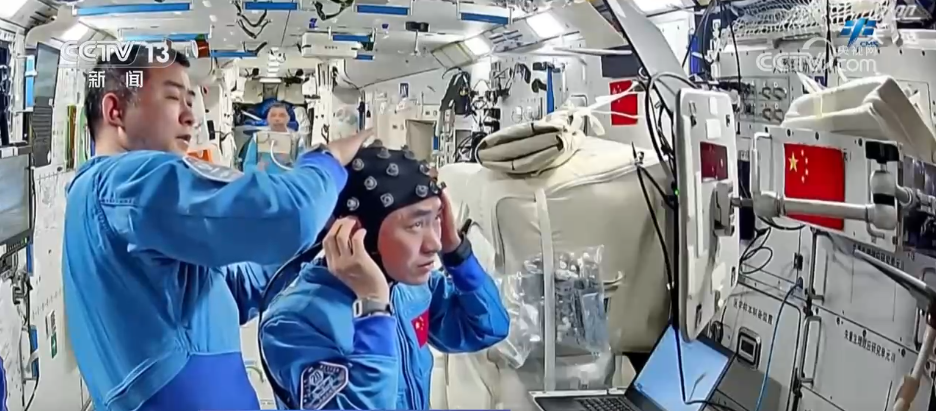
神二十乘组工作日志“上新” 多领域空间科学实(试)验进展顺利
Yang Shi Wang· 2025-09-07 10:49
Core Insights - The Shenzhou-20 astronaut crew is making steady progress in various space science experiments within the national space laboratory [1] Group 1: Space Science Experiments - The crew is conducting multiple projects in the field of space medicine, including studies on visual fields and executive function training [3] - Experiments related to microgravity's impact on cognitive relationships and the dynamics of astronaut trust in AI assistants are being carried out [3] - The crew performed vascular ultrasound examinations to explore blood flow patterns in a microgravity environment [5] Group 2: Equipment Maintenance and Health Assurance - Routine maintenance tasks such as checking the regenerative life support system and environmental monitoring have been completed [6] - The crew is actively engaged in health maintenance activities, including quality measurements and hearing tests, as well as physical exercise to counteract the physiological effects of microgravity [8] Group 3: Human Factors Research - The crew is conducting in-orbit tests on the changes in operational force under typical long-duration postures, analyzing differences in push-pull and rotational forces [7] - Preparations for future experiments in space life sciences are underway, including the installation and testing of a universal biological culture module [7]
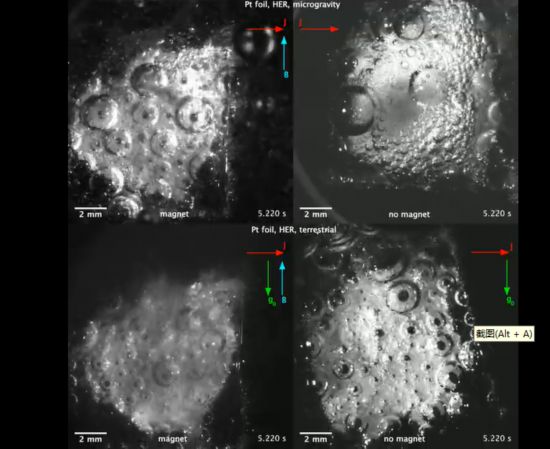
现有商用磁铁可助力太空制氧,支持人类更高效开展宇宙探索
Ke Ji Ri Bao· 2025-09-02 01:12
Core Insights - A recent study published in *Nature Chemistry* demonstrates that using commercial magnets can enhance oxygen production in space by up to 240% in microgravity environments, potentially improving oxygen supply for astronauts during space exploration [2] Group 1: Research Findings - The study highlights the need for efficient and lightweight life support systems for space missions, as current systems, like those on the International Space Station, rely on complex mechanical components and consume significant power [2] - The process of electrolysis converts water into breathable oxygen, reducing the need to transport additional fuel and air to spacecraft [2] - In microgravity, the lack of buoyancy makes it difficult for gas bubbles to detach from electrode surfaces, which can limit the production of fuel and air for astronauts [2] Group 2: Proposed Solutions - Previous solutions to bubble detachment included shaking or vibrating devices, which consume extra energy and increase costs [2] - Researchers from Georgia Tech and the University of Bremen simulated a low-gravity environment and demonstrated a simple method to remove bubbles from the electrode surface by incorporating commercial neodymium magnets, enhancing the detachment of oxygen bubbles [2] - The study also includes the design of a proof-of-concept device that can separate bubbles during water decomposition in low gravity, achieving efficiency close to that in Earth environments [3]
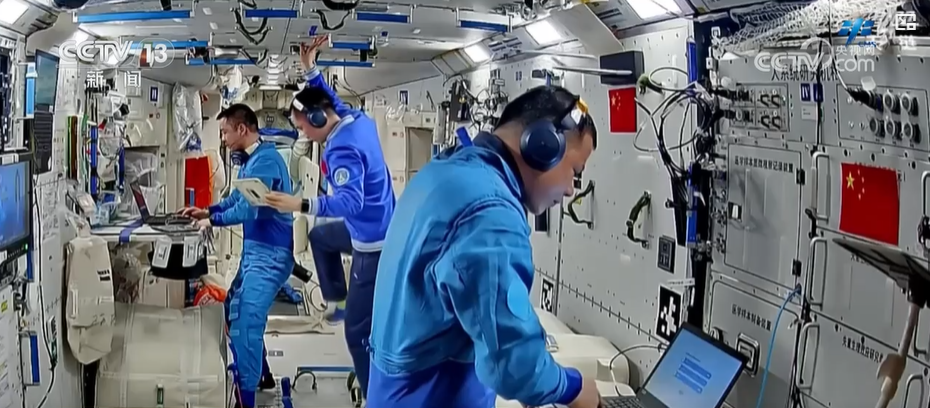
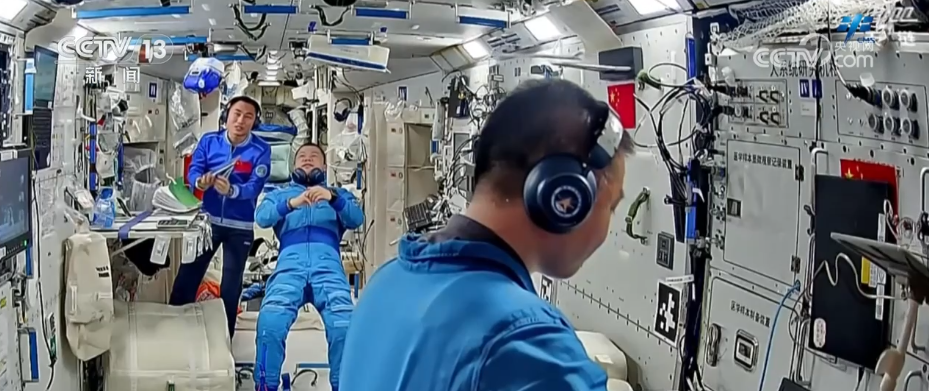
神二十乘组:太空实验室各项在轨实(试)验稳步推进
Yang Shi Wang· 2025-08-31 16:50
Group 1 - The Shenzhou-20 crew, consisting of astronauts Chen Dong, Chen Zhongrui, and Wang Jie, has been in space for over 120 days, focusing on various research areas including psychological and behavioral studies of astronauts [1] - In the field of microgravity physical science, the crew conducted high-temperature material experiments, achieving a new record by heating tungsten alloy to over 3100 degrees Celsius, marking the highest heating temperature in international space material science experiments [2] - The crew is also working on extraterrestrial artificial photosynthesis technology, having completed multiple key technology verifications and gathered significant data on physical and chemical reactions in microgravity, which is crucial for developing new in-situ resource utilization technologies [2] Group 2 - In aerospace medicine, the crew performed experiments on fine motor control and trust and collaboration mechanisms, providing valuable data for ground researchers [3] - Ongoing collaboration experiments with flying robots are being conducted, enhancing human-robot cooperation methods [3] - Regular maintenance activities include organizing supplies and cleaning the cabin environment to ensure a comfortable and clean working space [5] Group 3 - Health maintenance activities included eye pressure and fundus examinations, as well as bone density tests, allowing ground researchers to closely monitor the astronauts' health status during their time in space [5]
“小航”再上线→材料“小熔炉”刷新纪录…… | 神二十乘组工作周记亮点多
Yang Shi Wang· 2025-08-31 07:13
Core Insights - The Shenzhou-20 crew, consisting of astronauts Chen Dong, Chen Zhongrui, and Wang Jie, has been in space for over 120 days, focusing on various in-orbit experiments and research activities [1] Group 1: In-Orbit Experiments - The crew is conducting ongoing research on astronaut psychology and behavior, including emotional evaluation technology and emergency decision-making capability assessments, to understand changes in emotional states and decision-making over long durations in space [1] - In the field of space medicine, astronauts are utilizing laptops and testing software to perform experiments on fine motor control, trust, and collaboration mechanisms, with data aiding ground researchers [1] - The collaboration with flying robots continues, with the "Xiao Hang" robot working alongside the astronauts to explore efficient human-robot cooperation methods [3] Group 2: Material Science and Technology - In microgravity physics, the crew has conducted experiments involving high-temperature materials, including changing samples in the high-temperature materials experiment cabinet and maintaining equipment, achieving a new record of over 3100 degrees Celsius for material science experiments in space [5] - In the field of new technologies and applications, astronauts are replacing reactors in extraterrestrial artificial photosynthesis technology experiments, having successfully completed multiple key technology verifications and gathered significant data on physical and chemical reactions in microgravity [7] Group 3: Health and Maintenance - The crew has performed maintenance on life support systems and conducted tests on the -80°C space refrigerator, ensuring the operational integrity of onboard systems [8] - Regular health checks, including eye pressure and bone density tests, have been conducted to monitor the astronauts' health status during their mission [9]
【科技日报】中国空间站完成空间生命科学在轨实验任务
Ke Ji Ri Bao· 2025-08-26 00:50
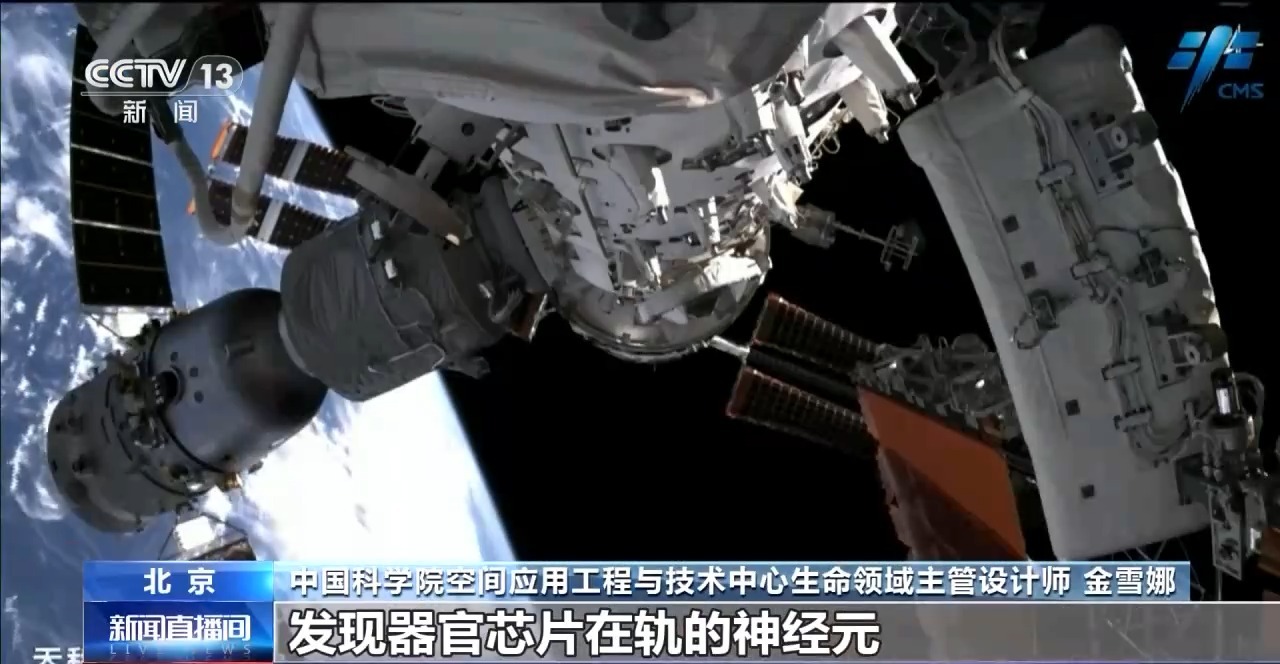
Core Insights - The Tianzhou-9 cargo spacecraft successfully delivered 23 scientific experiments to the Chinese space station, with significant progress reported in life sciences experiments [1][2] - Three life science experiments involving liver cells, skeletal muscle precursor cells, and brain organoid chips have been completed, demonstrating the potential advantages of nucleic acid drugs in microgravity environments [1][2] Group 1: Life Sciences Experiments - The experiments have successfully achieved automated culture, in-orbit drug administration, microscopic imaging, and sample fixation [1] - In microgravity, the uptake efficiency of nucleic acid drugs by cells significantly increased, leading to a rapid decrease in disease-related protein expression levels, indicating superior therapeutic effects compared to ground control experiments [1][2] Group 2: Skeletal Muscle and Brain Research - Research on the impact of microgravity on skeletal muscle precursor cell migration indicates that migration is hindered, potentially affecting muscle regeneration and homeostasis [2] - The study using organ-on-a-chip technology shows that brain organoids can be cultured in 3D for extended periods in space, with faster neuronal migration observed compared to ground conditions [2] Group 3: Overall Scientific Achievements - As of August 22, 2025, the Chinese space station has implemented 58 scientific and application projects, conducting over 26,000 experiments and transporting more than 800 kilograms of scientific materials [2] - A total of 27 types of space science experiment samples have been returned, yielding 110 terabytes of scientific data [2]
中国空间站完成空间生命科学在轨实验任务 还刷新一项新纪录
Yang Shi Xin Wen Ke Hu Duan· 2025-08-25 01:52
Group 1 - The Tianzhou-9 cargo spacecraft successfully delivered 23 scientific experiment materials to the Chinese space station, with ongoing experiments showing positive progress, particularly in space life sciences [1][11] - Recent experiments in microgravity have revealed that brain cells move faster in space, while muscle repair processes slow down, and the treatment effects of lipid metabolism disease drugs are significantly improved, potentially opening new avenues for Alzheimer's disease treatment and drug development [2][10] Group 2 - Three space life science experiments were conducted to explore the effects of microgravity on brain organoid structure and function, the migration behavior of skeletal muscle precursor cells, and the transport mechanisms of nucleic acid lipid nanoparticles within cells, enhancing understanding of physiological and pathological processes [4][17] - Observations indicate that neurons in organ-on-a-chip experiments move faster in space, suggesting that the unique environment may promote cell movement and maturation, offering new treatment strategies for neurodegenerative diseases [6][15] Group 3 - The experiments also found that skeletal muscle precursor cell migration slows down in microgravity, delaying muscle regeneration, which could hinder muscle repair [8] - The study of nucleic acid lipid carriers in microgravity showed increased cellular uptake efficiency of nucleic acid drugs and a rapid decrease in disease-related protein expression, indicating potential advantages for space applications [8][10] Group 4 - The samples from the completed experiments are currently stored in a low-temperature storage cabinet and are expected to return to Earth with a crewed spacecraft for further research [11][15] - The Chinese space station has conducted a total of 58 scientific and application projects this year, achieving significant advancements, including a record-setting experiment that heated tungsten alloy to over 3100 degrees Celsius [18][24] Group 5 - The tungsten alloy experiment, conducted by a research team from Northwestern Polytechnical University, utilized microgravity conditions to achieve a uniform state of the alloy, which is beneficial for enhancing material properties [20][22] - The successful heating of tungsten alloy to such high temperatures not only validates the performance of China's self-designed space materials science experiment cabinet but also provides valuable data for the development of new tungsten alloys and their applications in extreme environments [24][26]
俄发射生物卫星将小鼠和果蝇送入太空
Xin Hua She· 2025-08-21 03:46
Core Viewpoint - The launch of the "Bion-M" 2 biological science satellite by Russia aims to study biological safety in a high-radiation orbit, which is crucial for future manned space missions [1] Group 1: Launch Details - The "Soyuz-2.1b" rocket successfully launched from the Baikonur Cosmodrome in Kazakhstan, placing the "Bion-M" 2 satellite into its designated orbit [1] - The satellite is positioned in a high-latitude orbit at an altitude of 370 to 380 kilometers, where cosmic radiation levels are approximately one-third higher than those at the International Space Station [1] Group 2: Research Objectives - The "Bion-M" 2 satellite carries 75 mice, around 1,500 fruit flies, cell cultures, and various biological samples including plants, seeds, fungi, lichens, grains, legumes, and economic crop samples [1] - The mission is planned to last for 30 days, with scientists aiming to gather data on the biological safety of the orbit to support future manned spaceflight endeavors [1] Group 3: Historical Context - The "Bion" series satellites are developed by Russia for biological research in space, with the first satellite of the "Bion-M" series successfully launched in 2013, which included various organisms such as mice and plants [1]
更精准丈量太空 我国获得宇宙探索新进展
Yang Shi Wang· 2025-08-17 08:35
Core Points - Chinese scientists successfully detected a laser signal reflected from a 10-centimeter diameter retroreflector on the Moon, marking a significant achievement in space exploration [1][4] - This accomplishment makes China the fourth country to complete such measurements, following France, Germany, and the United States [4] - The new generation of lunar retroreflectors offers higher precision compared to previous models, despite being more challenging to observe due to their smaller size and weaker signals [6][8] Group 1 - The laser echoes were received from a set of retroreflectors installed on the lunar surface, which serve as reference points for measuring distances in space [3] - The measurement process involves sending laser pulses from ground observation stations to the retroreflectors and calculating the time taken for the pulses to return [3] - The difficulty of detecting such a small target from a distance of approximately 380,000 kilometers is likened to finding a grain of sand on an aircraft carrier's deck [8] Group 2 - The "Tianqin Project" aims to continuously collect data from the retroreflectors to accumulate high-precision Earth-Moon distance measurements [10] - This data will be used for research on gravitational forces, the evolution of the Earth-Moon system, and will lay the groundwork for future gravitational wave detection in space [10]

“已陆续发放125.42克,含其他6个国家的2.18克”
Guan Cha Zhe Wang· 2025-08-08 13:32
Core Points - The National Space Administration has distributed nine batches of lunar research samples totaling 125.42 grams, including 2.18 grams from the Chang'e 5 mission for seven institutions from six other countries [1] - Over 150 research results have been published by domestic and international scientists based on the lunar samples from the Chang'e 5 and Chang'e 6 missions [1] - The National Space Administration approved international borrowing applications for lunar samples from seven institutions in six countries, including France, Germany, Japan, Pakistan, the UK, and the USA [1]