KTV

Search documents
独家专访魅KTV创始人吴海:我就是个做歌厅的小老板
2 1 Shi Ji Jing Ji Bao Dao· 2025-06-12 01:56
Core Insights - The company "Mei KTV" is experiencing rapid expansion, opening 733 stores with 170 more in preparation, despite a significant decline in the KTV industry, where closure rates are 43.5% in first-tier cities and 68.2% in lower-tier cities [1][2] - The founder, Wu Hai, transitioned from the hotel industry to KTV, leveraging his previous success and financial resources to innovate within the entertainment sector [2][3] - The company emphasizes technological innovation, particularly through AI, to enhance the KTV experience, investing over 200 million yuan in technology development [2][7] Company Overview - Mei KTV has positioned itself as a "dark horse" in the KTV industry, which has seen a drastic reduction in consumer numbers, with an 87% decrease over the past three years [1][2] - The founder's previous venture, "Juzi Hotel," was sold for 3.65 billion yuan, providing the capital for this new venture [1][2] - The company aims to redefine KTV as a social venue, arguing that offline social interactions remain a necessity despite the rise of online alternatives [4][5] Innovation and Technology - The company is focused on using AI to enhance customer experience, offering features such as real-time singing feedback and personalized song recommendations based on user emotions [9][10] - Mei KTV's approach to innovation does not rely on traditional market research, believing that disruptive ideas often emerge independently of current consumer feedback [5][6] - The company has developed a unique scoring system for singing competitions, utilizing AI to ensure fairness and engagement among participants [11] Market Strategy - The company is expanding rapidly through a franchise model, which allows for quick scaling while providing support to franchisees to enhance profitability [15][16] - Mei KTV is exploring international markets, with plans to open locations in Hong Kong and Southeast Asia, focusing on technology upgrades for existing venues rather than opening new ones [17] - The company aims to achieve a market valuation in the hundreds of billions, positioning itself as a leading global cultural entertainment company [18][19]
抢占万亿蓝海!才盛云如何用首创自助KTV模式改写 KTV行业命运
Jiang Nan Shi Bao· 2025-06-09 08:37
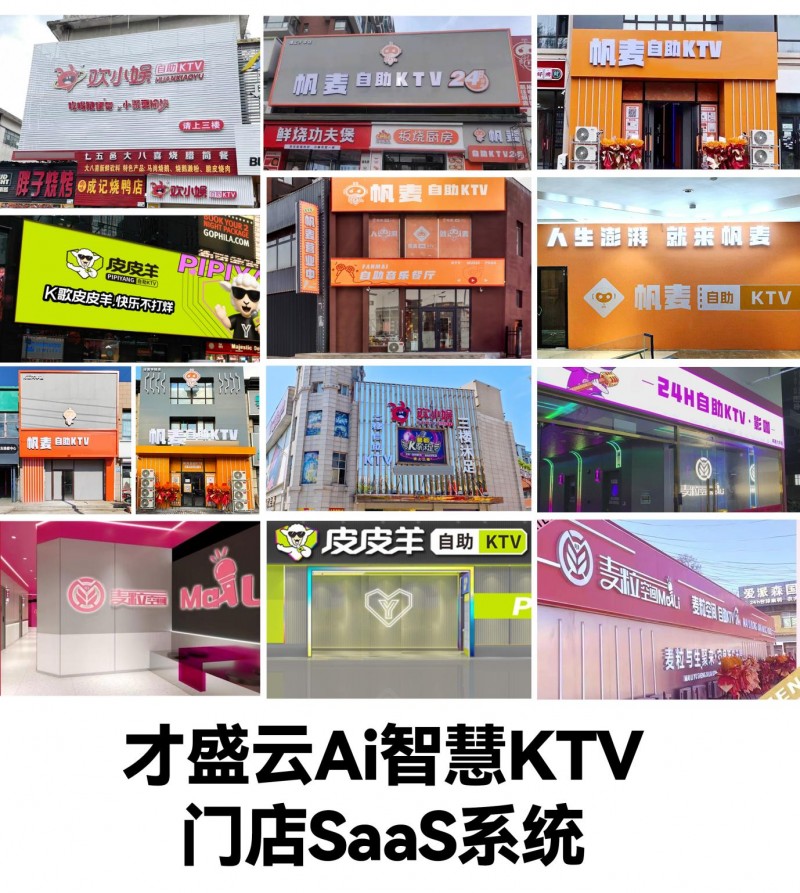
Core Insights - The traditional KTV industry is struggling with price wars and homogenization, while the company has successfully launched a self-service KTV model, creating a new wealth opportunity with its AI-driven SaaS system [1][13] - The company has signed over 180 stores and opened more than 80, showcasing the disruptive potential of its system in the KTV sector [1][11] Group 1: System Development and Market Penetration - The company introduced the first self-service KTV SaaS system in China, integrating AI, Internet, IoT, and SaaS to accelerate KTV smart operations [3] - Collaborations with partners like Que Shiying and Fan Mai have led to successful store openings, validating the system's adaptability and operational efficiency [5] - The system has undergone continuous upgrades, enhancing user experience and operational efficiency, leading to explosive growth in brand presence [9][11] Group 2: Market Opportunity and Competitive Advantage - The self-service KTV model significantly reduces costs, with initial investments being only 1/5 of traditional models and operational costs dropping by 70%, allowing for a payback period of approximately 12 months [13] - The self-service KTV market has a penetration rate of less than 5%, indicating a vast untapped market potential worth trillions [13] - Government support for nighttime economy and cultural consumption upgrades further boosts the market prospects for self-service KTVs [13] Group 3: Success Stories and Replication Potential - Brands like Fan Mai and Mai Li Space have rapidly expanded their store counts by leveraging the system's capabilities, demonstrating its effectiveness in various market segments [16] - The system's modular design and comprehensive support enable even newcomers to replicate the success of established brands in the industry [16][18] - The company has established itself as a leader in the self-service KTV sector, with a strong service network and proven operational solutions [18]

“银发族”拯救KTV?
创业邦· 2025-06-04 03:31
Core Viewpoint - The KTV industry in China has experienced a significant decline in popularity, particularly among younger consumers, leading to a shift in focus towards the elderly demographic as a potential customer base [3][8][16]. Industry Overview - KTV originated in Japan in 1971 and gained popularity in China during the late 1980s, peaking around 2014 with over 120,000 establishments [4][6]. - Since 2015, the industry has faced a closure wave, with approximately 70,000 KTV outlets shutting down, leaving only about 39,400 active businesses as of May 2023 [6][16]. Consumer Behavior Changes - Recent surveys indicate a shift in entertainment preferences, with activities like park visits, city walks, and yoga seeing increased participation, while KTV has seen a marked decline [3][6]. - The overall foot traffic in KTV venues has dropped by over 70% since 2020, making it difficult to find KTV establishments in major urban areas [6][11]. Competitive Landscape - The KTV industry faces competition from online platforms like "全民 K 歌" and "唱鸭," as well as from mini KTVs that offer more flexible and affordable singing experiences [9][11]. - The mini KTV market reached a size of 3.18 billion yuan in 2017, growing by 92.7% from the previous year, indicating a strong consumer preference for alternative singing venues [11]. Internal Challenges - High operational costs, including rent (30%-50% of total costs), and increased copyright awareness have further strained KTV businesses [11][12]. - The industry's reliance on a young consumer base has proven detrimental, as younger individuals increasingly prefer other forms of entertainment [11][12]. Future Strategies - KTV establishments are attempting to innovate through technology, incorporating AR, holographic projections, and AI features to enhance the singing experience [15]. - The industry is now targeting the elderly demographic, which constitutes 35% of KTV customers and has a consumption frequency 1.8 times that of younger consumers [16].

KTV现在只能靠老年人“续命” ,KTV“夕阳红”生意,一包瓜子唱响的行业自救
Sou Hu Cai Jing· 2025-05-27 08:28
Group 1 - The KTV industry is experiencing a significant shift, with a decline in young customers and an increase in elderly patrons, who now account for over 60% of the customer base [2][5] - The number of KTV establishments has drastically decreased from over 120,000 in 2015 to less than 30,000 in 2023, highlighting the industry's struggle [2] - Daytime occupancy rates for KTVs are generally above 80%, indicating a strong demand from the elderly demographic [2][6] Group 2 - KTVs are adapting to the aging population by implementing "age-friendly" modifications, such as larger font screens and accessibility features [7] - The industry is exploring new service models, including "health KTV" concepts that monitor heart rates and promote intergenerational singing events [5][6] - Despite the opportunities presented by the silver economy, challenges remain, including lower spending from elderly customers and potential conflicts with younger patrons [7] Group 3 - The average cost for elderly customers during daytime is between 10-30 yuan, making it an attractive option for retirees [6] - A nostalgic trend is emerging, with songs from the 1980s seeing a significant increase in requests, particularly works by artists like Teresa Teng and Fei Xiang [6] - KTVs are facing profitability issues, as the average spending of elderly customers is only one-fifth that of younger customers, leading to some venues struggling financially [7]