怀旧经济

Search documents
刘晓庆“福”字一字千金,谁在为怀旧经济买单
Bei Jing Shang Bao· 2026-02-05 08:27
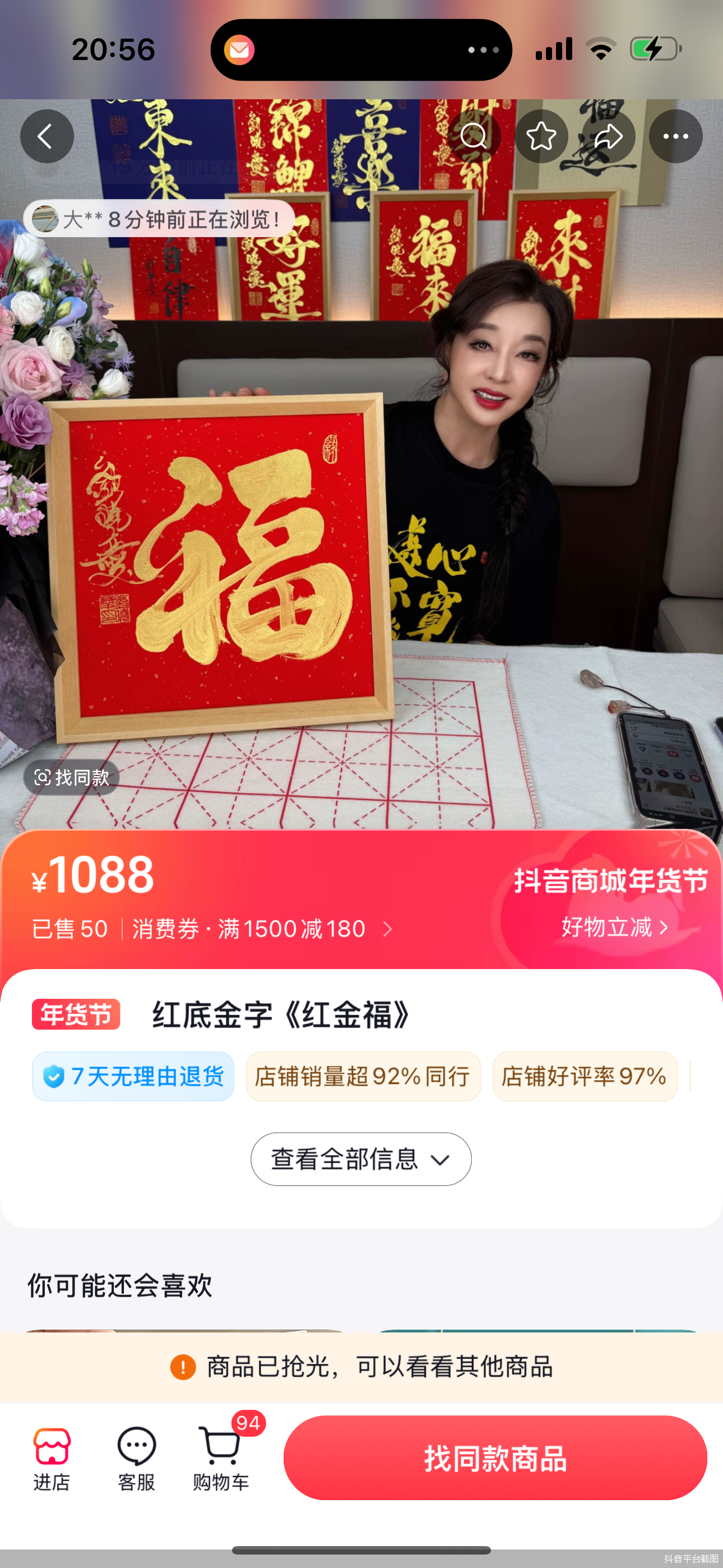
Core Viewpoint - Liu Xiaoqing, a 75-year-old actress, has gained significant attention for selling her calligraphy works during live streams, with the topic "Liu Xiaoqing sells calligraphy for a thousand gold" reaching over 4.5 million views on Weibo, highlighting the intersection of celebrity culture and market demand for nostalgic products [1] Pricing Controversy - The most popular calligraphy piece, a "Fu" character, is priced at 1,088 yuan, with 50 pieces sold, while other pieces are priced as high as 3,999 yuan [4] - Liu Xiaoqing's live stream on February 1 sold 26 items, generating nearly 240,000 yuan in sales, with prices ranging from 199 to 3,999 yuan [4] - Consumer reactions are mixed, with some viewing the purchase as valuable due to the interaction with the celebrity, while others criticize the pricing as exploitative [4][6] Market Dynamics - Experts note that the sale of celebrity signatures and calligraphy is a legitimate market activity, but there are concerns about the sustainability of the pricing model and the potential for market backlash if the perceived value does not align with actual artistic merit [5][6] - The reliance on celebrity status for sales may dilute the perceived scarcity of the products, leading to a potential loss of consumer interest over time [7] Delivery Challenges - The live selling format introduces uncertainties, such as the quality of the calligraphy, which can lead to consumer dissatisfaction and trust issues [6][7] - Liu Xiaoqing has faced penalties for failing to meet delivery deadlines, indicating the pressures associated with live selling [6] Artistic Value Debate - There are ongoing debates regarding whether Liu Xiaoqing's calligraphy qualifies as true art, with some experts arguing that her celebrity status allows her to command prices that ordinary calligraphers cannot achieve [8] - The commercialization of her calligraphy raises questions about the relationship between emotional value and market pricing, as consumers weigh the worth of the art against the celebrity's fame [8] Investment and Resale Market - The resale market for Liu Xiaoqing's calligraphy is emerging, with prices ranging from 280 to 2,980 yuan, indicating a potential disconnect between initial sale prices and resale values [9] - Experts suggest that the current offerings lack significant artistic or collectible value, primarily serving as a means for the celebrity to capitalize on her fame [9][10] Cultural Consumption Trends - The phenomenon of celebrity calligraphy sales reflects broader trends in cultural consumption in the digital age, where emotional connections and marketing strategies play crucial roles in driving sales [10] - The need for authenticity and respect for artistic value is emphasized as essential for sustaining consumer interest and preventing the market from becoming a fleeting commercial bubble [10]

《QQ经典农场》2月6日正式回归 小游戏如何再唤全民热情?
Xin Lang Cai Jing· 2026-02-04 04:03
Core Insights - Tencent is set to relaunch "QQ Classic Farm" on February 6, following a temporary shutdown on February 2, with all game data from the testing period being permanently cleared [1][4] - The game will offer a 200% diamond rebate for in-game purchases made during the testing phase, along with special gifts and exclusive avatar frames for participants [1] Group 1: Game Overview - "QQ Farm" is a simulation game launched by Tencent in May 2009, allowing players to grow crops and raise animals, which became a cultural phenomenon with a peak of 120 million concurrent users [3] - The nostalgia surrounding the game has sparked significant online discussions, with many users reminiscing about their experiences of "stealing vegetables" and the joy it brought [3] Group 2: Market Trends - The return of classic games aligns with the rising trend of nostalgia in the gaming industry, appealing to younger audiences who resonate with the concept of "returning to youth" [4] - The casual gaming segment is projected to generate substantial revenue, with Sensor Tower reporting that in-app purchase revenue for casual games will see the highest growth among all mobile game categories in 2024 [4] Group 3: Company Strategy - Tencent's CEO, Ma Huateng, emphasized the importance of leveraging AI to rejuvenate classic products like QQ Farm, highlighting the company's focus on user feedback [4]


你愿意为情怀买单吗
Xin Lang Cai Jing· 2026-02-01 21:21
Core Insights - Nostalgia economy, also known as retro economy, is driven by consumers' nostalgic emotions, utilizing old items, traditional crafts, and classic IPs to evoke collective memories and meet emotional and social needs [3][5] - The market size of China's nostalgia economy is projected to reach 355.25 billion yuan by 2025, with an annual growth rate of 11.7%, and is expected to reach 587.85 billion yuan by 2030 [3] Group 1: Market Trends - Nostalgia consumption is increasingly popular among young consumers, with online second-hand trading platforms becoming a key area for purchasing old items like stamps, coins, toys, books, and records [4] - The topic "Did you play CCD today?" on social media has over 1 billion views, indicating a strong interest in retro photography equipment [4] - Commercial areas are also embracing nostalgia, with places like Beijing Wangfujing creating retro scenes that resonate with consumers' childhood memories [4] Group 2: Consumer Behavior - Consumers are seeking emotional comfort and identity recognition through nostalgia, providing a sense of stability and belonging in a rapidly changing world [5] - The viewing of nostalgic films, such as the recent release of "The Legend of the Condor Heroes," serves as a ritualistic re-experience of past emotions rather than just entertainment [3] Group 3: Business Opportunities and Challenges - Businesses are capitalizing on nostalgia by reviving classic IPs and creating retro-themed products, leading to a positive cycle of emotional demand and commercial supply [6] - However, challenges such as high prices, lack of innovation, and market saturation pose risks to the sustainability of the nostalgia economy [6][7] Group 4: Future Directions - The future of the nostalgia economy lies in balancing emotional authenticity with innovation, suggesting that brands should integrate modern functional needs while preserving core cultural elements [8][9] - Expanding the nostalgia economy beyond consumer experiences to include creative design, product development, and brand incubation can create a cultural value-driven ecosystem [8][9]

创新怀旧经济,激活体验消费潜力
Xin Lang Cai Jing· 2026-01-21 13:24
Core Insights - The nostalgic economy in China is projected to reach a market size of 355.25 billion yuan in 2025, with a year-on-year growth of 11.7%, and is expected to reach 587.85 billion yuan by 2030 [1] - Nostalgic economy, driven by consumer sentiment, utilizes old items, traditional crafts, and classic IPs to evoke emotional resonance and meet consumers' spiritual needs while also providing practical value and social attributes [1][2] Group 1: Market Trends - The trend of nostalgia has transformed from mere emotional resonance into a significant business opportunity, with young consumers driving this change [2] - Sales of nostalgic products such as retro cameras, old gaming consoles, and nostalgic snacks have seen a 120% year-on-year increase, with 65% of orders coming from the 18 to 35 age group [1] Group 2: Consumer Behavior - In a fast-paced, uncertain world, nostalgia serves as a "psychological anchor," providing a sense of security, continuity, and identity, while experiential consumption translates this abstract comfort into tangible social moments [3] - Nostalgic experiences cater to emotional healing, allowing consumers to reconnect with childhood memories and cultural heritage, thus fulfilling deeper psychological needs [3] Group 3: Challenges and Innovations - The nostalgic economy faces challenges such as inflated prices, severe homogenization, counterfeit goods, and a lack of innovation [4] - To enhance the nostalgic experience, companies should leverage technologies like VR/AR to recreate classic scenes, explore local unique memories, and integrate contemporary aesthetics with retro elements [4]
发布28条政策促进消费和服务业联动发展 上海:优化汽车贷款流程 放宽申请条件
Zhong Guo Zheng Quan Bao· 2026-01-13 21:03
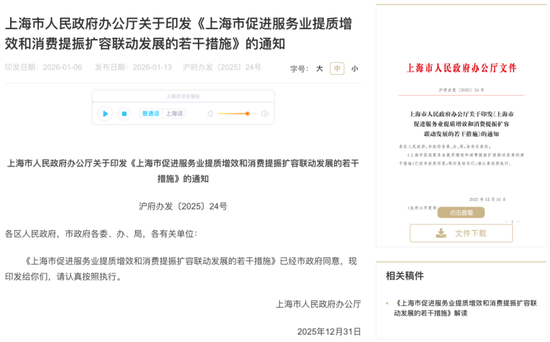
Group 1 - The core viewpoint of the article is the introduction of 28 policy measures by the Shanghai Municipal Government to enhance service quality and boost consumption across six key sectors: finance, information services, transportation, cultural and entertainment services, life services, and inspection and certification [1][3] Group 2 - In the financial sector, the measures encourage innovation in financial products tailored to new consumption trends, such as holiday, night, nostalgic, and anime economies, and include personal consumption loan interest subsidies and optimized auto loan processes [1][2] - In transportation services, the government supports airlines in launching new international routes and developing luxury tourism trains, as well as enhancing airport commercial layouts to create composite consumption scenarios [2] - In the cultural and entertainment sector, there is a focus on promoting the gaming and esports industry, supporting the development of original IP games, and incentivizing quality micro-short film content creation [2] Group 3 - The next steps involve ensuring the effective implementation of the measures by coordinating service supply with consumer demand, promoting digital, green, and intelligent consumption, and enhancing service quality [3] - The government aims to create a favorable environment for sustained consumption growth by implementing fiscal and financial support policies and improving service quality management and brand building [3]
利好来了!刚刚,上海重大发布!28条举措,涉及消费
Xin Lang Cai Jing· 2026-01-13 07:20
Core Viewpoint - The Shanghai Municipal Government has issued a set of measures aimed at enhancing service quality and boosting consumption, focusing on the interconnection between service industries and consumer demand through 28 specific initiatives [1][8]. Group 1: Policy Measures - The measures support the innovation and development of comprehensive platform enterprises, including e-commerce and life service platforms, while promoting specialized consumption platforms in areas such as maternal and child care, housekeeping, and elderly care [1][8]. - The government aims to optimize the automotive loan process by relaxing application conditions and determining reasonable loan issuance ratios, terms, and interest rates [2][9]. - The measures encourage financial institutions to innovate consumer financial services tailored to new consumption characteristics, including holiday, night, nostalgic, and subculture economies [4][10]. Group 2: Financial Support and Infrastructure - There is a focus on enhancing financial support for consumer infrastructure, encouraging financial institutions to back key projects in commercial facilities and community service upgrades [4][10]. - The measures promote the issuance of real estate investment trusts (REITs) for consumer infrastructure and support eligible projects in applying for local government special bonds [4][10]. Group 3: Cultural and Entertainment Sector - The measures aim to invigorate the cultural and entertainment sectors by enhancing the supply of cultural performances and exhibitions, supporting high-level paid exhibitions, and developing cultural products [6][12]. - There is an emphasis on leveraging the spillover effects of sports events by attracting well-known brand events and creating proprietary sports event IPs, with incentives based on the economic impact of these events [6][12]. Group 4: Gaming and Short Video Content - The government plans to promote the development of the gaming and esports industry by establishing a globally influential proprietary event system and supporting high-quality original games and esports projects [7][13]. - Support for the creation of quality micro-short films is included, with initiatives to attract creators and provide rewards for outstanding projects [7][13]. Group 5: Health Services - The measures encourage the development of high-end medical services and diversified health industries, including medical tourism and various health insurance products [7][13].
《上海市促进服务业提质增效和消费提振扩容联动发展的若干措施》印发
Zheng Quan Shi Bao Wang· 2026-01-13 02:16
Core Viewpoint - The Shanghai Municipal Government has issued measures to enhance service quality and stimulate consumer spending, focusing on innovative financial products tailored to new consumption trends [1] Group 1: Consumer Financial Services - The measures aim to enrich personal consumer financial services, particularly in areas such as holiday economy, night economy, nostalgic economy, and ACG (Anime, Comic, and Games) economy [1] - Financial institutions are encouraged to innovate and develop financial products and services that align with the characteristics of new consumption [1] - Various card discount activities will be organized in conjunction with consumer festivals to promote spending [1] Group 2: Personal Consumption Loans - The implementation of personal consumption loan interest subsidy policies is highlighted to support consumer spending [1] - The process for auto loans will be optimized, with relaxed application conditions and reasonable determination of loan issuance ratios, terms, and interest rates [1] Group 3: Credit Products and Payment Services - There will be an expansion of credit products in large consumer areas such as green smart home and home decoration [1] - The measures include enhancing mobile payment services, particularly focusing on "external card internal binding" and "external package internal use" [1] - The promotion of asset securitization for retail loans, including personal consumption and credit cards, is aimed at revitalizing existing credit stock [1]
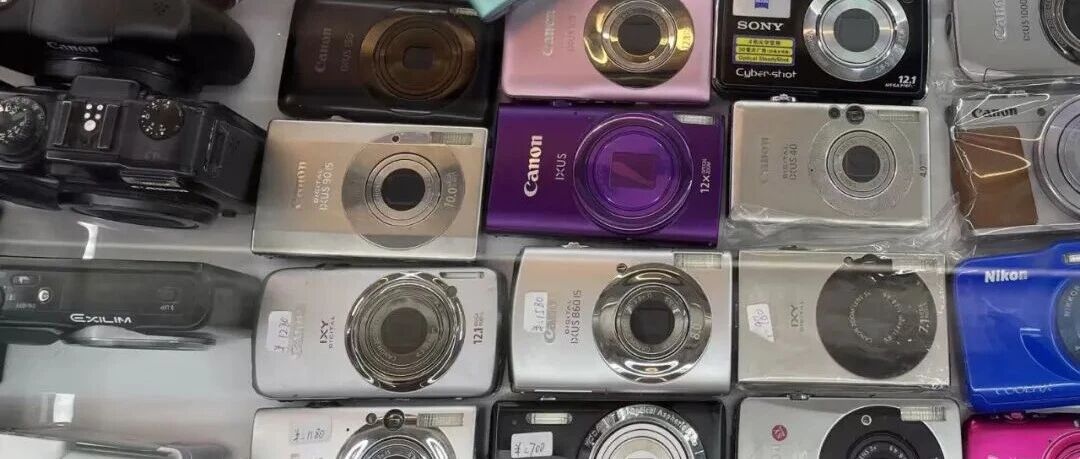
网红CCD炒至上千元,年轻人为回忆杀疯狂买单
2 1 Shi Ji Jing Ji Bao Dao· 2026-01-11 22:59
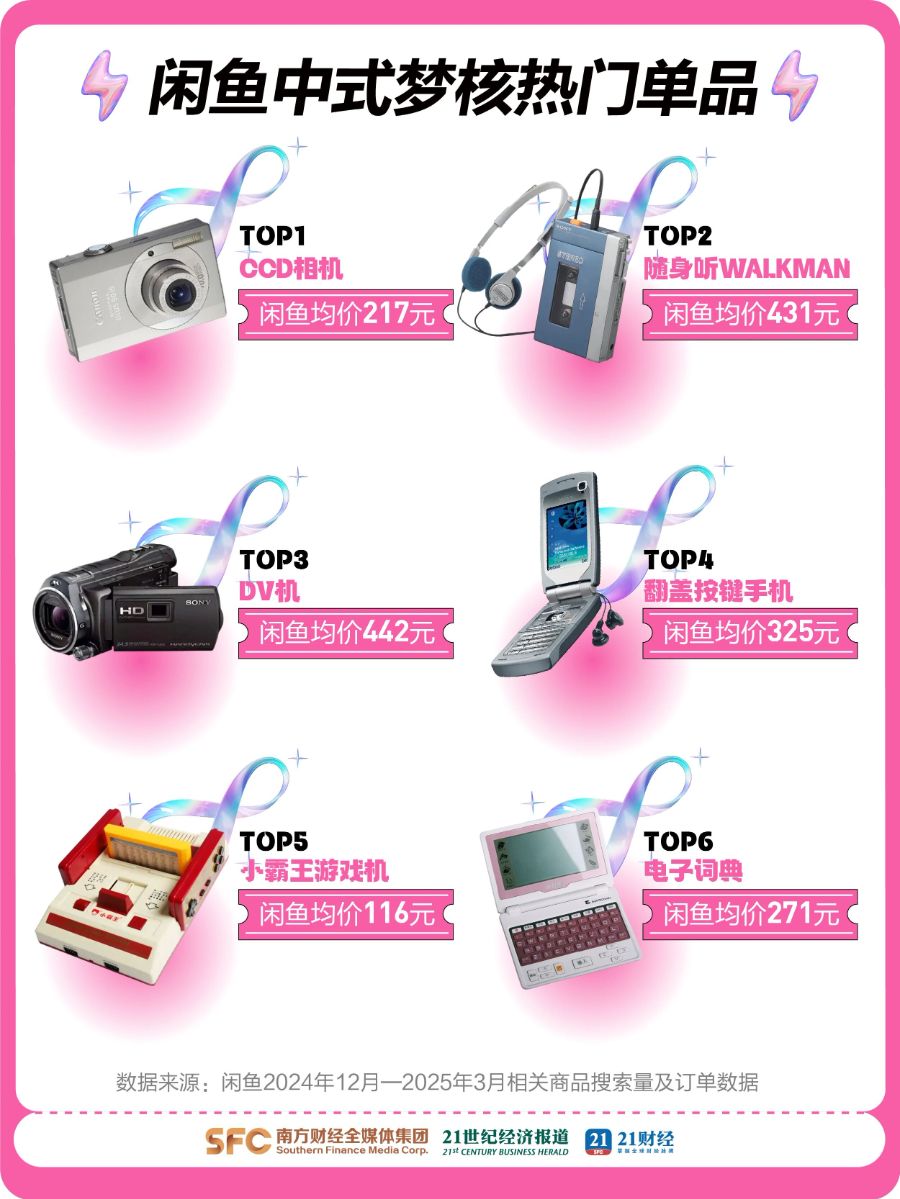
Core Insights - The trend of nostalgia among young consumers is growing, with a significant willingness to spend on nostalgic items, transforming previously discarded electronics into sought-after products [1][2][11] Group 1: Nostalgia Consumption Trends - Young consumers are increasingly engaging in nostalgia-driven purchases, with significant online engagement on platforms like Xiaohongshu, where topics related to nostalgic items have amassed billions of views [2][11] - The resale market for nostalgic items is thriving, with second-hand prices for items like portable CD players averaging 431 yuan, flip phones at 325 yuan, and CCD cameras at 217 yuan [2][4] - The nostalgia economy in China is projected to reach a market size of 355.2 billion yuan by 2025, with an annual growth rate of 11.7% [11][15] Group 2: Emotional and Psychological Factors - Over 80% of consumers engage in emotional spending at least once a month, indicating that nostalgia purchases serve as a form of emotional comfort for young people [5] - The rapid pace of societal change has led young consumers to cherish the past, using nostalgic items to escape current anxieties and reconnect with their childhood [6][8] - Nostalgic purchases allow young consumers to relive their childhood experiences, fulfilling desires for items they could not obtain in their youth [7][9] Group 3: Market Dynamics and Brand Strategies - Brands are capitalizing on the nostalgia trend, successfully reviving products that resonate with young consumers, such as the re-release of classic Nokia phones and nostalgic food items [11][15] - The resurgence of old films and immersive experiences in tourism reflects the broader cultural shift towards nostalgia, with significant box office success for re-released films targeting younger audiences [11][15] - However, the market is also facing challenges, including inflated prices and counterfeit products, highlighting the need for consumers to be cautious [13][15]
“怀旧消费”不能千篇一律
Xin Lang Cai Jing· 2026-01-11 22:25
Core Viewpoint - The "nostalgia trend" is becoming a new consumer market force, but there are concerns about its superficiality and lack of deep connection to local history and culture [1][2] Group 1: Transformation of Nostalgia Consumption - The key to transforming "emotional consumption" into "value creation" lies in moving from mere "place replication" to "scenario presentation" [1] - Nostalgia consumption should focus on allowing visitors to "experience" and "understand" the past rather than just "seeing" it [1] - Engaging activities, high-tech scene restoration, and immersive storytelling can turn historical facts into tangible experiences, encouraging deeper engagement from visitors [1] Group 2: Local Roots and Unique Identity - The vitality of the nostalgia economy comes from its unique and regional characteristics, which cannot be replicated [2] - Project development should deeply explore local historical and cultural resources to uncover unique urban, industrial, and community memories [2] - Rooting projects in specific cultural contexts can help avoid the monotony of "one-click replication" and build lasting competitive advantages [2] Group 3: Expanding Beyond Single Business Models - Nostalgia themes should extend beyond consumer scenarios to encompass upstream industry chains, including creative design, product development, and brand incubation [2] - Landmarks, stories, and buildings can give rise to diverse cultural products, immersive dramas, and themed travel routes, creating a culture-value-centric industrial ecosystem [2] - Collaborating with night economies, educational travel, and senior markets can develop deep experience products for various demographics, effectively broadening market boundaries [2] Group 4: Integration with Urban Planning - Nostalgia economy projects must maintain close ties with cities and receive support in urban planning to encourage positive interactions with surrounding historical streets and traditional markets [2] - Continuous exploration of cultural value during project construction can elevate nostalgic spaces into "living memory museums" for cities [2] - When the nostalgia economy transcends mere nostalgia, it can become a new driver of consumer growth [2]
网红CCD卖上千元,麦当劳经典奶昔被炒至150元2杯,年轻人为回忆杀疯狂买单
21世纪经济报道· 2026-01-11 08:28
Core Viewpoint - The current trend among young people shows a strong inclination towards nostalgia, leading to a significant market for vintage items and experiences, which are often sold at high prices despite their outdated technology and performance [1][2][19]. Group 1: Nostalgia Consumption Trends - Young consumers are increasingly engaging in nostalgia-driven activities, such as listening to old songs and watching classic TV shows, which has led to a resurgence in the popularity of vintage items [2][19]. - On social media platforms like Xiaohongshu, nostalgia-related topics have garnered massive attention, with hashtags like 今天玩CCD了吗 reaching over 970 million views [2]. - The second-hand market shows significant price increases for nostalgic items, with average prices for used items like portable CD players at 431 yuan and flip phones at 325 yuan [2][4]. Group 2: Emotional and Psychological Factors - Over 80% of consumers engage in "emotional consumption" at least once a month, indicating that purchases related to nostalgia are often tied to emotional comfort and self-reward [7]. - The rapid pace of societal change has led young people to cherish the past, as vintage items provide a connection to their memories and a temporary escape from modern anxieties [8]. - Nostalgic purchases allow young consumers to reconnect with their childhood selves, fulfilling desires for items they could not obtain in their youth [9]. Group 3: Market Dynamics and Brand Strategies - The retro economy in China is projected to reach a market size of 355.2 billion yuan by 2025, with an annual growth rate of 11.7%, indicating that nostalgia is becoming a new consumer trend [15]. - Brands are capitalizing on nostalgia, with successful re-releases of products like the classic Nokia phone and McDonald's milkshakes, which have seen significant demand and price inflation [15][19]. - However, the market is also facing challenges, including price inflation and authenticity issues in the second-hand market, which consumers need to navigate carefully [17][19].