
工业

Search documents
财政部:1-9月国有企业利润总额31670.3亿元,同比下降1.6%
Sou Hu Cai Jing· 2025-10-29 02:15
Revenue Performance - In the first nine months, the total operating revenue of state-owned enterprises reached 613,290.5 million yuan, representing a year-on-year increase of 0.9% [1] Profitability - The total profit of state-owned enterprises for the same period was 31,670.3 million yuan, showing a year-on-year decline of 1.6% [2] Tax Obligations - The tax payable by state-owned enterprises amounted to 44,145.4 million yuan, which is a year-on-year increase of 0.5% [3] Financial Health - As of the end of September, the asset-liability ratio of state-owned enterprises stood at 65.2%, an increase of 0.2 percentage points year-on-year [4]
235只港股获南向资金大比例持有
Sou Hu Cai Jing· 2025-10-29 02:15
Group 1 - The overall shareholding ratio of southbound funds in Hong Kong Stock Connect stocks is 18.97%, with 235 stocks having a shareholding ratio exceeding 20% [1] - As of October 28, southbound funds hold a total of 4,796.11 million shares, accounting for 18.97% of the total share capital of the eligible stocks, with a total market value of 62,349.33 billion HKD, representing 14.49% of the total market value [1] - The highest shareholding ratio by southbound funds is in China Telecom, with 9,879.07 million shares held, representing 71.18% of the issued shares [2] Group 2 - Southbound funds with a shareholding ratio exceeding 20% are mainly concentrated in the healthcare, industrial, and financial sectors, with 55, 35, and 34 stocks respectively [2] - Among the stocks with over 20% shareholding by southbound funds, 125 are AH concept stocks, making up 53.19% of that group [1] - The top stocks by southbound fund shareholding include China Telecom, COSCO Shipping Energy, and GCL-Poly Energy, all with over 70% shareholding [2][3]

财政部:1—9月国有企业营业总收入613290.5亿元,同比增长0.9%
Jing Ji Guan Cha Wang· 2025-10-29 02:05
Group 1 - The core viewpoint of the article is that the economic performance of state-owned and state-controlled enterprises in China showed a slight increase in revenue but a decline in profit for the first nine months of 2025 [1] Group 2 - Total operating revenue for state-owned enterprises reached 613,290.5 billion yuan, reflecting a year-on-year growth of 0.9% [1] - Total profit for state-owned enterprises amounted to 31,670.3 billion yuan, indicating a year-on-year decrease of 1.6% [1] - Taxes payable by state-owned enterprises were 44,145.4 billion yuan, which represents a year-on-year increase of 0.5% [1] - The asset-liability ratio for state-owned enterprises stood at 65.2% at the end of September, showing an increase of 0.2 percentage points year-on-year [1]
3600亿,人民币拐点已至,结汇顺差创纪录,外资抛美元疯抢中国资产
Sou Hu Cai Jing· 2025-10-28 16:34
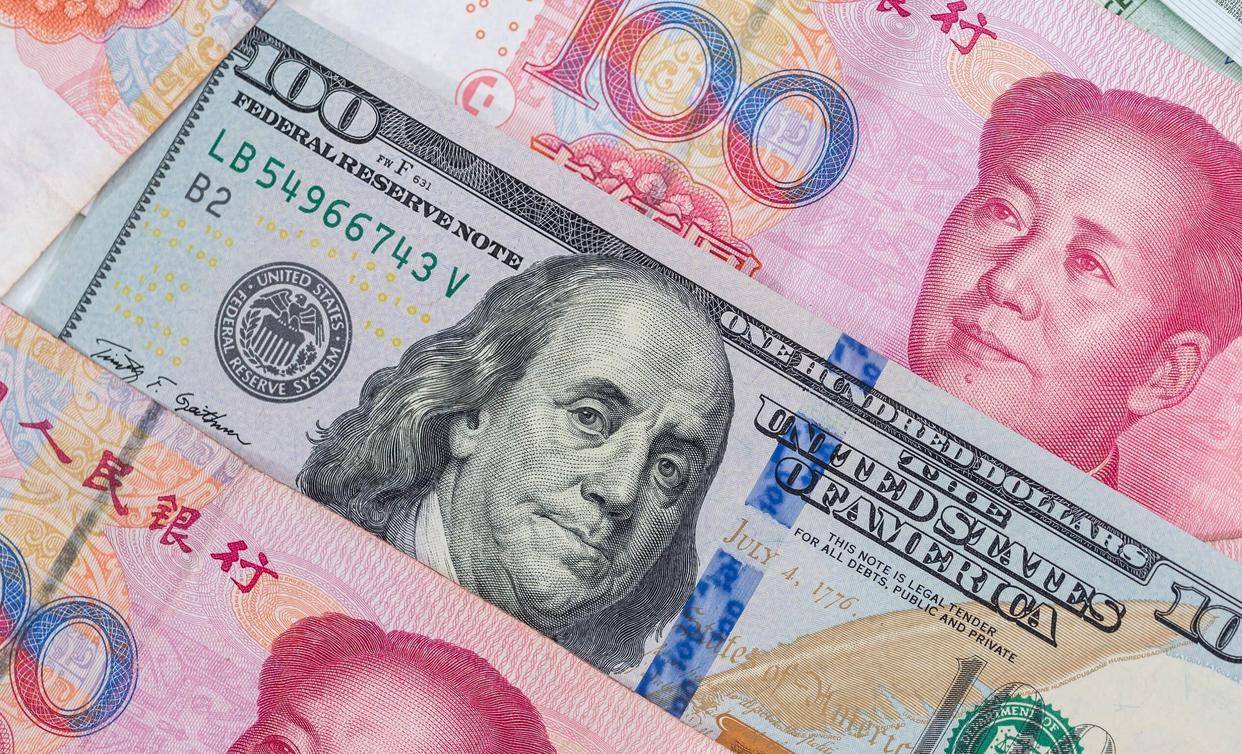
Core Insights - In September 2025, China's bank settlement and sales surplus reached $51 billion, the highest monthly figure since December 2020, indicating a significant shift in cross-border capital flow back to China [1][3] - The total bank settlement in September was $264.7 billion, with sales at $213.6 billion, resulting in a substantial surplus that reflects a fundamental change in corporate financial strategies [3][4] - The depreciation risk of the US dollar, coupled with expectations of further interest rate cuts by the Federal Reserve, has prompted companies to accelerate the conversion of their dollar assets back to RMB [4][5] Group 1 - The net inflow of foreign capital into China reached $93.1 billion in the first three quarters of 2025, marking four consecutive quarters of net inflow [6] - The onshore RMB appreciated from 7.1805 to 7.1330 against the US dollar by August 2025, the highest level in nearly ten months, supported by increased capital inflows [6] - The appreciation of the RMB is expected to further increase the settlement ratio of exporters, potentially leading to additional RMB strengthening [6][9] Group 2 - The stock market is experiencing a systemic revaluation, with the Shanghai Composite Index reaching new highs, indicating strong investor sentiment [6] - A 1% appreciation of the RMB could lead to approximately a 3% increase in the Chinese stock market, creating a "Davis Double Play" effect for international investors [6] - Different industries are experiencing varied impacts from RMB appreciation, with import-dependent sectors like aviation benefiting from reduced procurement costs [6][8] Group 3 - Foreign investment strategies in Chinese assets are diversifying, with a focus on "growth leaders and high-dividend blue chips," particularly in technology and industrial sectors [8] - The shift in capital flow patterns is creating more room for monetary policy adjustments, with continuous surpluses in bank settlements since March 2025 [8][9] - The current market dynamics are fostering a positive feedback loop between RMB appreciation and stock market performance, enhancing liquidity and potentially lowering financing costs [9]

光电股份:10月28日召开董事会会议
Mei Ri Jing Ji Xin Wen· 2025-10-28 15:50
Group 1 - The core point of the article is that Guangdian Co., Ltd. announced a board meeting to discuss the use of raised funds for capital increase in its subsidiary to implement fundraising projects and related transactions [1] - Guangdian Co., Ltd. reported that its revenue composition for the first half of 2025 was 100.0% from the industrial sector [1] - As of the report, Guangdian Co., Ltd. has a market capitalization of 10.5 billion yuan [1] Group 2 - The A-share market has surpassed 4000 points, marking a significant resurgence after a decade of stagnation, with technology leading the market's transformation [1] - The article suggests that a new "slow bull" market pattern is emerging [1]

上海沪工:10月28日召开董事会会议
Mei Ri Jing Ji Xin Wen· 2025-10-28 15:50
Company Overview - Shanghai Huguang (SH 603131) announced its fifth board meeting on October 28, 2025, via teleconference to review the proposal for the third quarter report of 2025 [1] - As of the report, Shanghai Huguang's market capitalization stands at 7.3 billion yuan [1] Financial Performance - For the year 2024, Shanghai Huguang's revenue composition is as follows: industrial revenue accounts for 99.28%, while other business activities contribute 0.72% [1]

建设工业(002265.SZ):前三季净利润2993万元 同比下降83.66%
Ge Long Hui A P P· 2025-10-28 15:09
Group 1 - The core viewpoint of the article highlights that the company, Construction Industry (002265.SZ), reported a significant decline in its financial performance for the third quarter [1] Group 2 - The company's operating revenue for the first three quarters was 2.34 billion yuan, representing a year-on-year decrease of 19.90% [1] - The net profit attributable to shareholders of the listed company was 29.93 million yuan, down 83.66% year-on-year [1] - The net profit attributable to shareholders after deducting non-recurring gains and losses was 5.42 million yuan, reflecting a substantial decline of 95.15% year-on-year [1]

德赛电池:10月27日召开董事会会议
Mei Ri Jing Ji Xin Wen· 2025-10-28 14:44
Group 1 - Desay Battery announced the convening of its 11th Board of Directors meeting on October 27, 2025, to review the Q3 2025 report and other documents [1] - For the first half of 2025, Desay Battery's revenue composition was 100% from the industrial sector [1] - As of the report date, Desay Battery's market capitalization was 10.5 billion yuan [1] Group 2 - The A-share market has surpassed 4000 points, marking a significant resurgence after a decade of stagnation, with technology leading the market's new "slow bull" pattern [1]

ST长园:公司及控股子公司对外担保总额约为65.36亿元
Mei Ri Jing Ji Xin Wen· 2025-10-28 11:50
Group 1 - ST Changyuan announced that the total external guarantees provided by the company and its subsidiaries amount to approximately 6.536 billion yuan, which represents 159.96% of the company's most recent audited net assets and 41.99% of the company's most recent audited total assets [1] - The balance of external guarantees provided by the company and its subsidiaries is approximately 3.637 billion yuan, accounting for 89.01% of the company's most recent audited net assets and 23.37% of the company's most recent audited total assets [1] - For the first half of 2025, ST Changyuan's revenue composition is as follows: industrial business accounts for 99.17%, while other businesses account for 0.83% [1] Group 2 - As of the report, ST Changyuan's market capitalization is 4.4 billion yuan [2]

文灿股份:10月28日召开董事会会议
Mei Ri Jing Ji Xin Wen· 2025-10-28 11:34
Group 1 - The core point of the article is that Wencan Co., Ltd. announced a temporary board meeting to discuss the management system for senior executives' departure [1] - The company's revenue composition for the year 2024 is 98.39% from industrial operations and 1.61% from other businesses [1] - As of the report, Wencan Co., Ltd. has a market capitalization of 6.9 billion yuan [1] Group 2 - The A-share market has surpassed 4000 points, marking a significant resurgence after a decade of stagnation [1] - The technology sector is leading the market's transformation, indicating the beginning of a "slow bull" market pattern [1]
