城市轨道交通

Search documents
城轨协会:2025年城轨新增里程有望超800公里
Zhong Guo Jing Ying Bao· 2025-07-02 14:01
Core Insights - The China Urban Rail Transit Association reported that as of June 30, 2025, there are 58 cities in mainland China operating urban rail transit lines totaling 12,381.48 kilometers, with a new operational line length of 220.70 kilometers in the first half of 2025, representing a 13.73% increase year-on-year, but a 53.92% decrease compared to the peak in 2021 [1] - It is expected that approximately 600 kilometers of urban rail transit lines will be opened in the second half of 2025, with a total new operational line length for the year projected to exceed 800 kilometers, continuing a downward trend from 936.23 kilometers in 2024 [1] - The investment in urban rail construction is projected to be around 339.18 billion yuan in 2025, a decrease of 28.59% compared to 2024, indicating a sustained decline in investment and new line construction over recent years [1] Industry Trends - The peak period for urban rail transit investment and construction occurred between 2017 and 2020, with record high construction mileage and investment each year. However, since 2018, the central government has raised the approval thresholds for urban rail projects, leading to a significant reduction in construction activities [2] - The "Document No. 52" issued by the State Council in July 2018 emphasized the need for prudent planning and management of urban rail transit, increasing the financial and GDP requirements for project approvals, which has contributed to the slowdown in new projects [2] - Design firms in the urban rail industry, such as Guangzhou Metro Design Institute, are experiencing project reductions and talent loss due to the decline in construction activities, prompting them to explore opportunities in municipal, highway, and real estate development projects [2] Operational Developments - In the first half of 2025, there were no new cities added to the urban rail transit network, but nine cities, including Hangzhou, Chongqing, and Guangzhou, opened new lines or extensions [3]
铁路部门未加码充电宝安检规定,地铁充电宝乘车要求各地有差异
Xin Jing Bao· 2025-07-01 07:22
Group 1 - The railway department allows passengers to carry power banks as long as they are clearly marked and do not exceed an energy rating of 100Wh (approximately 27000mAh) [1][2] - There are no additional security checks for power banks, and passengers will not be prohibited from carrying them based on brand or lack of 3C certification [2][4] - Passengers can find more information about carrying items and luggage on the 12306 website and app, and charging facilities are available on trains and at some stations [3] Group 2 - Different cities have varying regulations regarding power banks on subways, with Beijing not having mandatory restrictions [4][5] - In cities like Fuzhou and Hefei, the regulations are similar to those of the railway, allowing power banks with a maximum energy rating of 100Wh and limiting the number of power banks per passenger [4] - Guangzhou subway allows passengers to carry up to 5 power banks, each with a maximum capacity of 20000mAh, while Beijing has been increasing the availability of power bank rental services [5]
广州地铁宣布!新广州塔站,明天启用
Nan Fang Du Shi Bao· 2025-06-30 13:12
Core Points - The Guangzhou Metro announced the completion of the upgrade project for the Guangzhou Tower Station of the Haizhu Tram Line 1, which will officially open on July 1 [1][3] - The opening coincides with the launch of the east and west sections of the Metro Line 10 and Line 12, attracting many passengers to experience the new lines [3] Summary by Sections Station Upgrade Details - The upgraded Guangzhou Tower Station is located on the east side of the Guangzhou Tower, adjacent to the Wealth Wharf, and maintains a similar position to the original Guangzhou Tower East Station [4] - The station's area has been expanded to approximately 1.35 times its original size, transitioning from an open platform to a fenced platform, with the addition of platform doors to separate boarding and alighting areas [9] Design and Features - The design incorporates the "Waterfront White Crane" theme, enhancing the station's aesthetics through updated facades, improved greenery in the track area, optimized signage, and upgraded lighting [7] - New outdoor features include the "Most Beautiful 7 Kilometers" stone path, camera-shaped photo frames, and signage that enhances the visitor experience [11] Future Developments - Once the construction of the Guangzhou Tower Square platform is completed, a direct connection to the tram station will be established, facilitating seamless access between the landmark building and the tram service [14]


明天起 上海地铁全网试点银行卡刷卡过闸
财联社· 2025-06-27 09:52
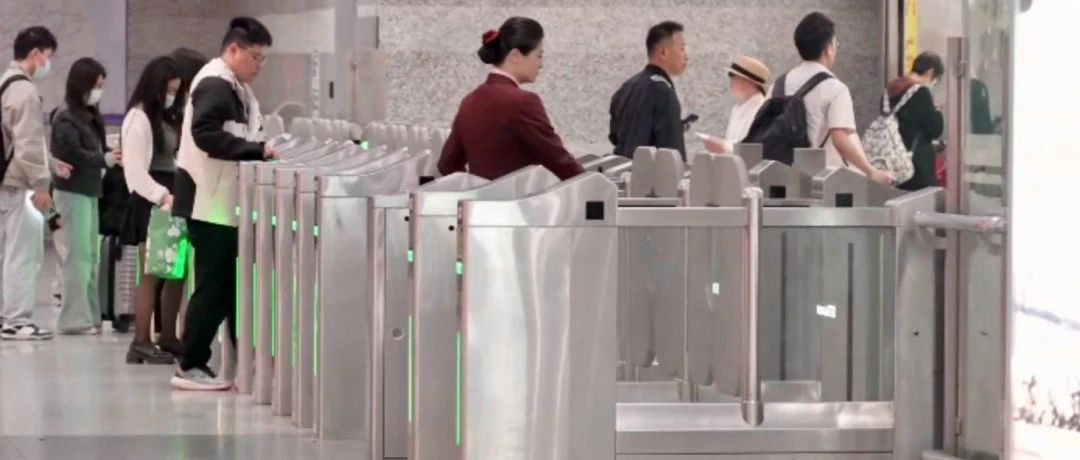
记者从上海地铁了解到,为进一步方便入境抵沪旅客出行,提升轨道交通支付便利性,上海地铁继 前期在磁浮线成功试点银行卡(含主流国际卡)及数字人民币硬钱包刷卡过闸功能后,计划于6月28 日起,将试点范围扩展至轨道交通全线网(含市域线)。届时,乘客持银联、维萨(Visa)、万事 达(Mastercard) 等主流芯片闪付卡及各类符合金融IC卡标准的手机Pay,或符合人民银行数 字货币研究所标准的各形态数字人民币硬钱包,在全线网各座车站闸机直接刷卡, 就能快速 过闸。 据悉,目前,上海轨道交通网络规模庞大,运营总里程达896公里,拥有21条线路、517座车 站,每天承担上海全市超过77%的公共交通出行量。此项新支付功能的全面试点应用,将极大 地方便入境抵沪旅客的交通出行,更加顺畅、高效地直达城市的各大文旅商体展等目的地,为 优化上海市营商环境、吸引国际游客、激发城市活力进一步筑牢公共交通服务基础。 (本文来源:央视新闻) 上海地铁服务热线:(021)64370000; 银联客服热线:95516; 数字人民币客服专线:956196。 以上热线受理时间均为7x24小时。 据介绍,根据一阶段磁浮线的试点情况,需要特别提醒乘客 ...
新思想引领新征程丨做好节能减排工作 书写绿色低碳发展新答卷
Yang Guang Wang· 2025-06-27 02:28
Group 1 - China's ecological civilization construction is focusing on carbon reduction, with a shift towards a dual control system for carbon emissions and intensity [1] - The energy utilization efficiency has significantly improved, with a continuous decline in carbon dioxide emission intensity [1] - In Jiangxi's Jiujiang Chaisang District, an energy company processes around 2,000 tons of waste daily, generating approximately 1.1 million kWh of electricity for eight surrounding enterprises [1] Group 2 - By the end of May, the installed capacity of wind and solar power in China accounted for 45.7% of total installed capacity, surpassing that of coal-fired power [2] - The installed capacity of photovoltaic power has historically exceeded 1 billion kW, reflecting the optimization of China's energy structure [2] - A national-level green factory in Xi'an has reduced energy consumption per unit of output by over 30% in the past three years [2] Group 3 - The concept of green development is becoming more ingrained in society, as seen in Shenyang's metro system introducing a carbon points platform to encourage green commuting [3] - Since 2012, China's energy consumption intensity has decreased by over 26%, equivalent to saving 1.4 billion tons of standard coal and reducing carbon dioxide emissions by approximately 3 billion tons [3] - During the 14th Five-Year Plan period, energy consumption intensity and carbon emission intensity are projected to decrease by 3.8% and 3.4% respectively in 2024 [3]
打造“立体城市”深圳要挖48座“地下城”
2 1 Shi Ji Jing Ji Bao Dao· 2025-06-25 07:21
Core Viewpoint - Shenzhen is accelerating its development of underground spaces to create a vibrant three-dimensional city, with a focus on utilizing underground resources from 2025 to 2035, as outlined in the newly released planning document [1][2]. Group 1: Planning and Development - The Shenzhen Municipal Planning and Natural Resources Bureau has identified 48 key areas for underground development, distributed across various districts [2][3]. - The development will focus on integrating above-ground and underground spaces, particularly around urban functional centers and transit hubs [3][4]. Group 2: Area Distribution - The distribution of the 48 underground development areas includes: - Nanshan District: 10 areas - Futian District: 8 areas - Bao'an District: 8 areas - Longgang District: 7 areas - Longhua District: 4 areas - Luohu District: 3 areas - Pingshan District: 3 areas - Guangming District: 3 areas - Yantian District: 1 area - Dapeng New District: 1 area [4]. Group 3: Functional Focus - The primary functions of these underground areas will include transportation facilities, municipal utilities, and commercial services, with an emphasis on connectivity between underground transit hubs and surrounding amenities [5]. Group 4: Economic Rationale - The development of underground spaces is deemed necessary due to Shenzhen's limited land area and high population density, which necessitates maximizing space utilization to support economic growth and urban living [6]. - Shenzhen's GDP is projected to reach 3.68 trillion yuan in 2024, highlighting the economic imperative for underground development [6]. Group 5: Transportation Infrastructure - By the end of 2024, Shenzhen's urban rail transit network is expected to reach 595.1 kilometers, with a network density of 0.30 kilometers per square kilometer, making it the most extensive in the country [7]. - The city aims to enhance the functionality of underground spaces, improve integration with transit systems, and ensure robust regulatory frameworks for future developments [7].
城市24小时 | 东西两大省会,冲刺“700公里俱乐部”
Mei Ri Jing Ji Xin Wen· 2025-06-18 16:09
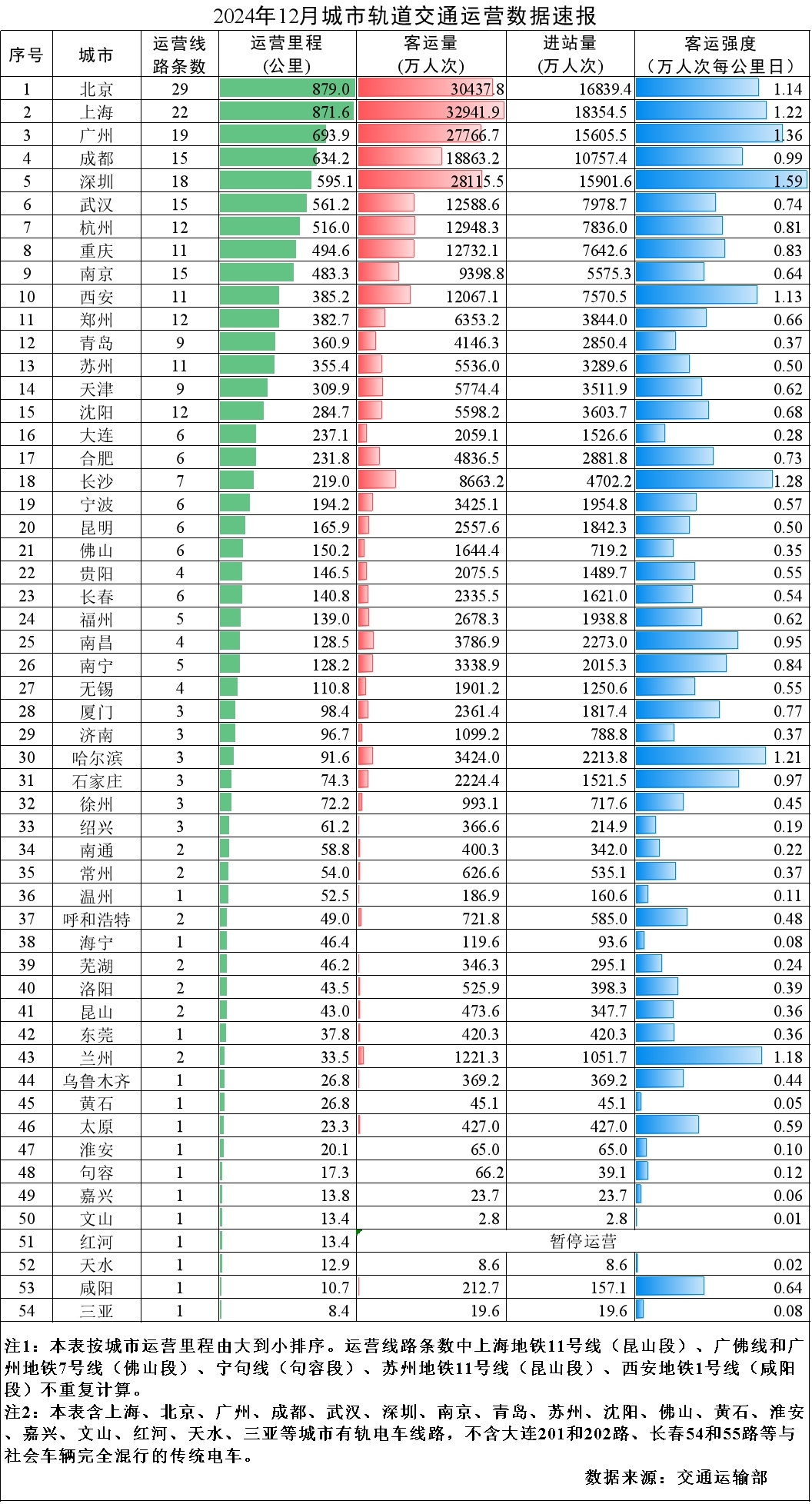
Group 1 - Chengdu's urban rail transit is accelerating with the full launch of trial operations for multiple new lines, including Line 10 Phase III, Line 17 Phase II, and Line 30 Phase I, aiming for initial operation this year [1] - The total length of the four lines expected to open this year in Chengdu is 87.5 kilometers, contributing to a projected total urban rail transit operating mileage of over 700 kilometers by the end of the year [1] - Chengdu's previous significant operational expansion occurred in 2020, when seven lines totaling over 200 kilometers were opened, pushing its urban rail transit mileage past 500 kilometers and ranking it fourth nationally [1] Group 2 - By the end of 2024, major cities like Beijing and Shanghai are expected to exceed 800 kilometers in urban rail transit operating mileage, creating a significant gap with other cities [2] - Guangzhou ranks third with an expected operating mileage of 693.9 kilometers, placing it in the same category as Chengdu, which is also projected to surpass 700 kilometers [2] - Other cities such as Shenzhen, Wuhan, and Hangzhou have also surpassed 500 kilometers in operating mileage, while Chongqing and Nanjing are at 400 kilometers [2] Group 3 - The operational statistics for major cities show that Beijing leads with 879 kilometers and a passenger volume of 30.44 million, followed by Shanghai with 871.6 kilometers and 32.94 million passengers [3] - Chengdu has 634.2 kilometers of operational rail with a passenger volume of 18.86 million, indicating a lower passenger intensity compared to other major cities [3] Group 4 - Guangzhou's government report indicates plans to complete three new metro lines totaling 74.5 kilometers this year, which will help it maintain its position as the third-largest urban rail system in China [7] - Both Chongqing and Nanjing are in a competitive race to expand their urban rail systems, with Nanjing's government aiming to open several new lines this year [8] Group 5 - Several cities, including Guangzhou, Suzhou, Zhengzhou, and Xi'an, have outlined plans to accelerate the approval of new urban rail transit construction projects in their government reports [9] - The trend indicates that urban rail construction will continue to focus on first-tier and economically strong second-tier cities, while approvals for third and fourth-tier cities will be more cautious [9]
申通地铁: 申通地铁2025年第一次临时股东大会决议公告
Zheng Quan Zhi Xing· 2025-06-18 11:19
Meeting Overview - The shareholders' meeting of Shanghai Shentong Metro Co., Ltd. was held on June 18, 2025, at the Shenwang Hotel in Shanghai [1] - The attendance rate of ordinary shareholders and preferred shareholders with restored voting rights was 61.2915% [1] Voting Results - All proposed resolutions were passed with significant majority votes, including: - Resolution 1: 99.8168% approval from A-shareholders [1] - Resolution 2: 99.7533% approval from A-shareholders [1] - Resolution 3: 99.8376% approval from A-shareholders [1] - Resolution 4: 99.8478% approval from A-shareholders [1] - The voting results for significant matters showed that the resolutions received high approval rates, with the lowest being 94.7138% for the amendment of the Articles of Association [2] Legal Compliance - The meeting was conducted in accordance with legal regulations and the company's articles of association, with no temporary proposals raised by shareholders [3] - The legal representatives confirmed the legitimacy of the meeting and the validity of the resolutions passed [3]

北京地铁10号线9座车站自动扶梯将改造施工
Xin Jing Bao· 2025-06-18 03:49
Core Points - The Beijing Subway Line 10, which opened in 2008, has been in operation for over 15 years, and the escalators at its stations have exceeded their service life without any updates or renovations [1] - A bidding plan for the renovation of 24 escalators across 9 stations on Line 10 has been announced, with an estimated investment of 1.4666 million yuan [1] - The escalators have reached or surpassed their design lifespan, necessitating upgrades to ensure safe operations [1] Summary by Sections - **Project Overview** - The renovation project involves 24 escalators at 9 stations, including key locations such as Sun Palace, San Yuan Qiao, and Guomao [2] - The project aims to enhance passenger safety and has been part of ongoing upgrades to the escalators on Line 10 [2] - **Renovation Timeline** - Previous escalator renovations occurred from December 26, 2023, to January 21, 2024, at Liangmaqiao Station, and further renovations are scheduled for January 26 to February 25, 2024, at Shuangjing Station [2] - The renovation process includes the removal of old escalators, installation of new ones, and various related construction tasks [2]
城市轨交排名格局生变:成都广州破700公里,南京或超重庆杭州!
第一财经· 2025-06-17 16:24
Core Viewpoint - The urban rail transit ranking is expected to change this year, with Chengdu's rail transit network set to exceed 700 kilometers due to multiple new line openings, enhancing connectivity and supporting economic development [1][3][4]. Summary by Sections Chengdu's Rail Transit Expansion - Chengdu's rail transit group announced the full launch of trial operations for several new lines, marking a significant step towards initial operations [1]. - The total operational mileage of Chengdu's rail transit is projected to surpass 700 kilometers this year, with the addition of four new lines totaling 87.5 kilometers [3][4]. Comparison with Other Cities - Other major cities like Guangzhou, Chongqing, and Nanjing are also set to open new lines, potentially altering the rankings in urban rail transit mileage [6][8]. - Guangzhou is expected to maintain its third position with a projected operational mileage of 700 kilometers after the opening of new lines [6]. Future Projections - The fifth phase of Chengdu's rail transit planning has been approved for 2024, with new lines expected to be announced soon [4]. - The number of cities with operational rail transit exceeding 500 kilometers will increase to nine, with Nanjing expected to surpass Chongqing in the rankings [6][8]. Competitive Landscape - The competition between cities like Xi'an and Zhengzhou is intensifying, with both cities aiming to improve their rankings through new line openings [8].