
机场

Search documents
海南机场董事长杨小滨: 迎封关 谋整合 打造国际区域航空枢纽
Zhong Guo Zheng Quan Bao· 2025-12-17 20:12
Core Insights - The official launch of the Hainan Free Trade Port on December 18 is expected to significantly enhance Hainan's attractiveness as an international tourism consumption center and regional aviation hub due to a series of policy benefits [1][4] Group 1: Business Performance - Hainan Airport has seen strong growth in passenger traffic, with 86 countries now allowing visa-free entry, and record-breaking passenger throughput at Haikou Meilan Airport and Sanya Phoenix Airport [2][4] - For the period from January to September 2025, Hainan Airport reported operating revenue of 3.28 billion yuan and a net profit attributable to shareholders of 64 million yuan, with total assets of 52.969 billion yuan and a net asset of 23.543 billion yuan [2] Group 2: Strategic Developments - The company is pursuing the acquisition of Meilan Airport to unify operations across three major airports in Hainan, aiming to create a large airport operating group with an annual passenger throughput exceeding 50 million [3] - The acquisition process for Meilan Airport's controlling stake has completed necessary registration procedures, and all preconditions for the transaction have been met [3] Group 3: Policy Impact - The release of multiple policies, including the seventh freedom of the air, visa-free access for 86 countries, and enhanced duty-free shopping regulations, is expected to bolster Hainan Airport's growth [4][5] - The seventh freedom of the air will allow foreign airlines to establish operational bases in Hainan, increasing air transport capacity for both passengers and cargo [4]

上海国际机场股份有限公司关于签订免税店项目经营权转让合同的公告
Shang Hai Zheng Quan Bao· 2025-12-17 19:02
Core Viewpoint - Shanghai International Airport Co., Ltd. has signed contracts for the transfer of duty-free shop operating rights at both Pudong and Hongqiao International Airports, which is expected to positively impact the company's revenue from 2026 to 2033 [4][11][16]. Group 1: Contract Details - The contract with Dufour (Shanghai) Commercial Co., Ltd. for the Pudong International Airport (T1 terminal and S1 satellite hall) has a transfer period of 3+5 years, starting from January 1, 2026, to December 31, 2033 [4]. - The contract with China Duty Free Group Co., Ltd. for the Pudong International Airport (T2 terminal and S2 satellite hall) has a transfer period of 5+3 years, also from January 1, 2026, to December 31, 2033 [7]. - The contract for Hongqiao International Airport with China Duty Free Group Co., Ltd. has a similar transfer period of 5+3 years, from January 1, 2026, to December 31, 2033 [11]. Group 2: Financial Terms - The monthly fixed fee for the T1 terminal is set at ¥3141 per square meter, with commission rates ranging from 8% to 24% based on sales [5]. - The monthly fixed fee for the T2 terminal is set at ¥3090 per square meter, with similar commission rates [8]. - The monthly fixed fee for Hongqiao International Airport is set at ¥2827 per square meter, with commission rates ranging from 8% to 22% [12]. Group 3: Performance and Guarantees - Each party is required to provide a performance bond of ¥150 million for the contracts at Pudong International Airport and ¥30 million for the contract at Hongqiao International Airport [6][10]. - The contracts include provisions for performance assessments, with the possibility of contract renewal based on meeting specified criteria [4][7][11]. Group 4: Strategic Goals - The agreements aim to enhance the competitive position of Shanghai Airport's duty-free business by optimizing resources and improving the shopping experience for travelers [13]. - The contracts also emphasize the introduction of traditional Chinese products and online booking services for duty-free shopping [13][14].

中金公司明日复牌;协创数据将在广州开发区投资光模块研发和生产建设项目丨公告精选
2 1 Shi Ji Jing Ji Bao Dao· 2025-12-17 15:12
Group 1 - Shanghai Airport signed three duty-free store project operation rights transfer contracts with Dufour and China Duty Free Group, with no impact on current year performance but expected positive influence on revenue from 2026 to 2033 [1] - China CNR Corporation signed several major contracts totaling approximately 533.1 billion yuan, including wind power and energy storage equipment sales contracts worth about 166.5 billion yuan, which represents 21.6% of the company's projected 2024 revenue [2] - CICC is planning to absorb and merge with Dongxing Securities and Xinda Securities through a share exchange, with stock trading resuming on December 18, 2025, pending board and shareholder approvals [3] Group 2 - Xiechuang Data signed a cooperation agreement for a research and production project of optical chips and modules in Guangzhou, which is expected to positively impact future performance if successfully implemented [4] - Meike Home is planning to acquire control of Shenzhen Wandeli Optoelectronics through a combination of share issuance and cash payment, with stock suspension starting December 18, 2025 [5] - Bona Film Group is preparing multiple film and series projects, actively participating in the New Year and Spring Festival releases, while facing stock trading volatility due to a significant price drop [6] Group 3 - Tongrentang clarified that it does not hold any equity or investment rights in Sichuan Health Pharmaceutical, which is a subsidiary of its controlling shareholder, and is taking steps to address related reports [7][8] - Fengxing Co. plans to acquire 75% of Baiyin Huaxin, which is expected to constitute a major asset restructuring [9] - Deep City Transportation plans to raise no more than 1.8 billion yuan through a private placement for the development of intelligent transportation equipment [9]

上海机场进出境免税店项目经营权转让合同签约
Zheng Quan Shi Bao Wang· 2025-12-17 14:33
Core Viewpoint - Shanghai Airport Group has signed contracts for the transfer of operating rights for duty-free shops at Pudong and Hongqiao International Airports, marking the beginning of a diversified competitive model involving both domestic leaders and international giants in the duty-free business [1] Group 1 - The signing ceremony took place on December 17, with representatives from Shanghai Airport, China Duty Free Group, and Avolta participating [1] - The new model aims to enhance the operational capabilities of Shanghai Airport's duty-free business by leveraging partnerships with established international players [1]

站上新起点,白云国际机场年旅客吞吐量首破8000万人次
2 1 Shi Ji Jing Ji Bao Dao· 2025-12-17 13:49
Core Insights - Guangzhou Baiyun International Airport has achieved a historic milestone by surpassing an annual passenger throughput of 80 million, marking its entry into the global "80 million passenger club" [1][6] - The airport's international passenger volume has seen a significant recovery, increasing by over 19% year-on-year, with international travelers accounting for more than 20% of total passenger traffic [1][3] Group 1: Passenger Growth and Economic Impact - The surge in passenger traffic is attributed to the continuous optimization of the airport's operational support system and the collaborative efforts of Guangdong Province and Guangzhou City in sports, cultural tourism, and exhibition economies [2] - The 15th National Games held in Guangdong provided dedicated services at the airport, including fast-track security for participants and special flights, with 135 event-related flights on December 16 alone [2] - Major exhibitions and events, such as the International Airport Expo and the Canton Fair, have contributed to a steady influx of business travelers, further boosting airport traffic [2] Group 2: Operational Efficiency and Infrastructure Development - Baiyun Airport has effectively managed over 1,500 daily flight operations by enhancing coordination with air traffic control and airlines, leading to improved operational efficiency [3] - The airport is set to enhance its infrastructure with the opening of Terminal 3 and the addition of the fourth and fifth runways by 2025, creating a new hub structure of "three terminals and five runways" [4] - The new terminal will feature fully automated facilities, improving passenger convenience, while the additional runways will increase flight capacity and reduce delays during peak times [4] Group 3: Future Prospects and Strategic Development - In 2024, the airport is expected to see passenger numbers rise to 76 million, with a historic breakthrough of 80 million anticipated in 2025 due to improved infrastructure and service optimization [5] - Baiyun Airport is positioned as a key international aviation hub, enhancing connectivity in the Guangdong-Hong Kong-Macao Greater Bay Area by adding nearly 40 new or restored international routes this year [6] - The airport aims to strengthen its role as a vital gateway for global connectivity, contributing to the high-quality economic development of the region [6]

广州白云机场年旅客吞吐量首破8000万,全球航线网络提速
Nan Fang Du Shi Bao· 2025-12-17 13:22
Core Insights - Guangzhou Baiyun International Airport has achieved a historic milestone by surpassing an annual passenger throughput of 80 million, marking its entry into the global "80 million passenger club" and enhancing its status as a key international aviation hub [1][2][8] Passenger Growth and Operational Performance - As of December 17, 2025, Baiyun Airport's annual passenger throughput exceeded 80 million, with over 16.6 million international passengers [2] - The airport's growth is attributed to the optimization of its operational support system and the synergistic development of Guangdong's sports, cultural tourism, and exhibition economies [5][6] - The airport has successfully supported major events, including the 15th National Games and the 12th National Paralympic Games, demonstrating its capability to handle significant passenger flows [5] Infrastructure Development - The airport's infrastructure upgrades, including the opening of Terminal 3 and the operation of the fourth and fifth runways, have created a new hub structure of "three terminals and five runways," significantly enhancing its capacity and operational efficiency [7] - Terminal 3 features advanced smart facilities that improve passenger convenience, while the new runways increase flight capacity and reduce delays [7] Economic Impact and Connectivity - The airport's growth is a catalyst for the Guangdong-Hong Kong-Macao Greater Bay Area's transportation connectivity and regional economic development [9] - Baiyun Airport has expanded its domestic and international route network, adding nearly 40 new or restored international passenger routes this year, including direct flights to cities like Madrid and Darwin [9][12] - The airport has become the first in mainland China to restore direct flights to India, enhancing connectivity to South Asia [12] Summary of Achievements - Baiyun Airport has consistently shown robust growth, surpassing 70 million passengers in 2019 and achieving the highest passenger volume globally in 2020, with a steady recovery to 76 million in 2024 and now exceeding 80 million in 2025 [8] - The airport's strategic initiatives and infrastructure improvements underscore its competitive position in both national and global aviation networks [8][9]

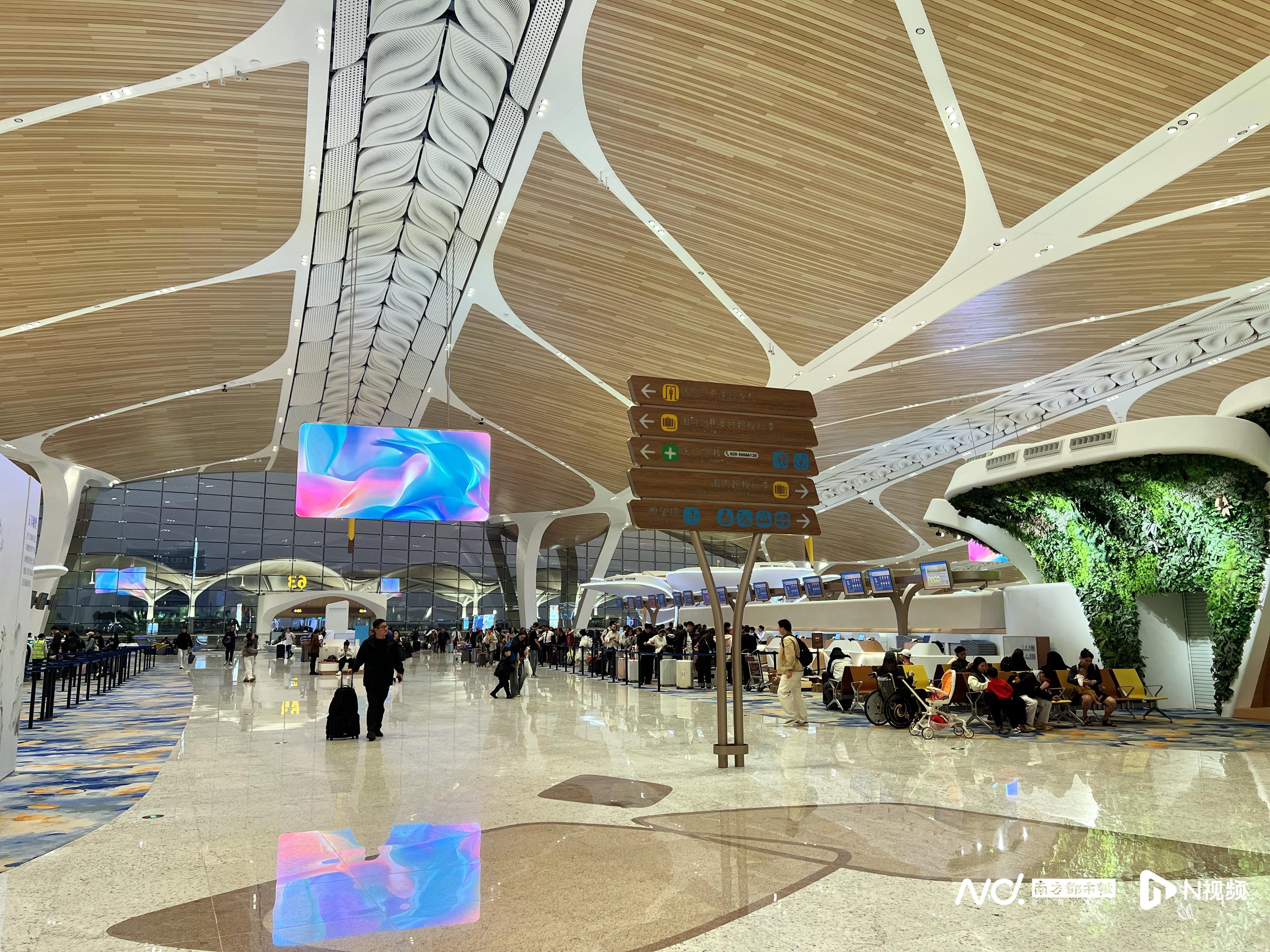
【财闻联播】韩国或将脱发治疗纳入医保!宗馥莉,退出一家“娃哈哈系”核心公司
券商中国· 2025-12-17 12:26
Macro Dynamics - The National Development and Reform Commission (NDRC) and other departments have released the "Benchmark Levels and Baseline Levels for Clean and Efficient Utilization of Coal (2025 Edition)", aiming to align with the strictest domestic and international pollutant emission standards for coal [2][3] - The document emphasizes the need for dynamic adjustments to benchmark and baseline levels based on industry development and standard revisions, enhancing the guiding role of benchmark levels and the constraining role of baseline levels [2] Industry Initiatives - Six departments, including the NDRC and the Ministry of Industry and Information Technology, are promoting the clean and efficient utilization of coal in new and existing projects, encouraging upgrades to meet benchmark levels [3] - Existing projects that fall below baseline levels are urged to undergo orderly upgrades, with a general deadline of no more than three years for compliance [3] Financial Data - From January to November, the national general public budget revenue reached 200,516 billion yuan, a year-on-year increase of 0.8%, with tax revenue at 164,814 billion yuan, up 1.8% [4] Company Dynamics - Zhong Fu Li has resigned from key positions in Hangzhou Wahaha Food Co., marking her complete exit from core management roles within the Wahaha Group [10] - The company, established in 1992, is a significant player in the pre-packaged food sector and holds 387 trademarks valued over 90 billion yuan [10] Market Data - On December 17, A-shares saw a collective rise, with the Shanghai Composite Index up 1.19% and the ChiNext Index up 3.39%, indicating a strong market performance [8] - In Hong Kong, the Hang Seng Index increased by 0.92%, with notable gains in the metals and semiconductor sectors [9] Technology Developments - Moer Thread has announced the open-sourcing of its 3DGS base library LiteGS, which can achieve up to 10.8 times training acceleration while reducing parameter volume by over 50% [11] Business Contracts - Shanghai Airport has signed contracts for the transfer of duty-free shop operating rights at both Pudong and Hongqiao International Airports, expected to positively impact revenue from 2026 to 2033 [12]

上海机场:第九届董事会第二十九次会议决议公告
Zheng Quan Ri Bao· 2025-12-17 12:17
证券日报网讯 12月17日晚间,上海机场发布公告称,公司第九届董事会第二十九次会议审议通过《关 于签订免税店项目经营权转让合同的议案》《关于投资设立免税合资公司的议案》。 (文章来源:证券日报) ...
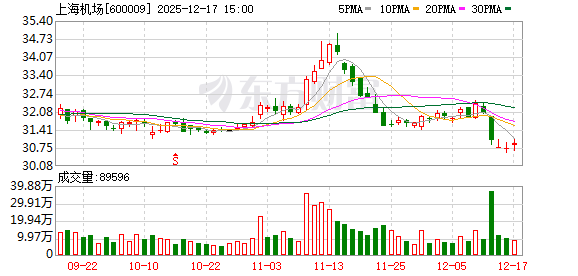
广州白云国际机场年旅客吞吐量首次突破8000万人次
Xin Lang Cai Jing· 2025-12-17 11:52
截至12月17日,广州白云机场年旅客吞吐量首次突破8000万人次,实现历史性跨越,其中国际旅客超 1660万人次。(新华社) ...
中国中免:全资子公司签署免税店项目经营权转让合同
Zheng Quan Shi Bao Wang· 2025-12-17 10:17
Core Viewpoint - China Duty Free Group, a wholly-owned subsidiary of China National Duty Free Group, has been awarded the rights to operate duty-free shops at Shanghai Pudong International Airport and Shanghai Hongqiao International Airport [1] Group 1 - The company received a "Notice of Winning Bid" from Shanghai Airport, confirming its status as the winning bidder for the duty-free shop projects [1] - Contracts have been signed with Shanghai International Airport Co., Ltd. and its subsidiary Shanghai Hongqiao International Airport Co., Ltd. for the operation rights of the duty-free shops [1]