
茶叶

Search documents
真假高端?增长乏力!八马茶业赴港IPO隐忧待解
Zhong Guo Ji Jin Bao· 2025-07-24 15:36
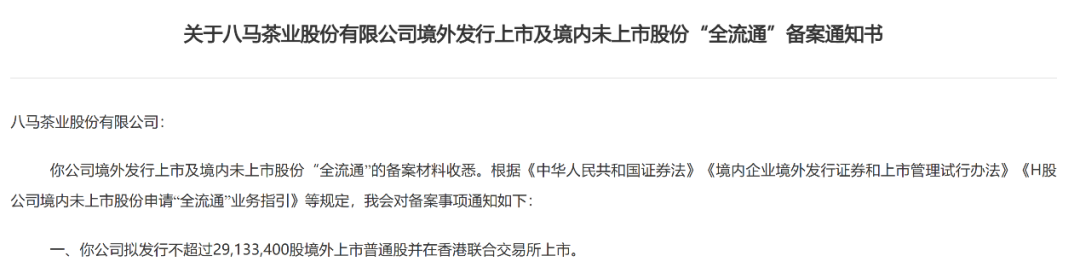
Core Viewpoint - Baima Tea's long-awaited IPO in Hong Kong faces challenges due to performance slowdown and governance issues, despite its historical significance in the tea industry and recent approval for overseas listing by the China Securities Regulatory Commission [1][2]. Financial Performance - Baima Tea's revenue for 2022 was RMB 1.82 billion, with a projected increase to RMB 2.12 billion in 2023, but the revenue for the first three quarters of 2024 shows only a slight increase to RMB 1.65 billion, indicating a growth slowdown [4]. - The company's net profit grew by 24.05% in 2023 but only by 5.87% in the first three quarters of 2024, reflecting a significant deceleration in performance [9]. Research and Development - The company's R&D expenditure is notably low, accounting for less than 1% of revenue, with figures of RMB 822,000, RMB 1.16 million, and RMB 1.01 million for 2022, 2023, and the first three quarters of 2024, respectively [3][4]. - Baima Tea has only 17 R&D personnel, representing 0.73% of its total workforce, raising concerns about its capacity for innovation [5]. Business Model and Growth Challenges - The company heavily relies on a franchise model, with 92.1% of its 3,498 stores being franchises. However, the growth rate of new franchise stores has significantly declined, with only 170 new stores added in the first three quarters of 2024 compared to 475 in 2023 [8][9]. - The average procurement amount per franchise store has decreased from RMB 35.36 million in 2022 to RMB 25.37 million in the first three quarters of 2024, impacting overall revenue from franchise sales [8]. Governance Issues - Baima Tea's governance structure is heavily family-controlled, with the Wang family holding 55.9% of voting rights and all non-independent board seats occupied by family members, raising concerns about decision-making independence and potential conflicts of interest [11][13]. - The family’s interconnected business relationships with other companies may complicate governance and increase operational risks [13]. Market Position and Investor Sentiment - The traditional tea industry faces a lack of brand recognition and core competitiveness, making it difficult for companies like Baima Tea to attract investor interest and achieve stable growth [16]. - The overall sentiment in the capital market towards traditional tea companies remains lukewarm, as evidenced by the poor performance of other tea companies listed in Hong Kong [16].

真假高端?增长乏力!八马茶业赴港IPO隐忧待解
中国基金报· 2025-07-24 15:28
Core Viewpoint - Baima Tea's long-standing ambition for an IPO has faced significant challenges, including a lack of investor interest in traditional tea companies and internal issues such as insufficient R&D investment and family governance concerns [2][3]. Group 1: Financial Performance - Baima Tea's revenue for 2022 was RMB 1.82 billion, with a gross profit of RMB 969.5 million, and in 2023, revenue increased to RMB 2.12 billion, with a gross profit of RMB 1.11 billion [6]. - The company's revenue growth has slowed, with a mere 0.95% increase in the first three quarters of 2024 compared to the previous year, while net profit grew by 5.87% [12]. - The average procurement amount per franchise store has declined from RMB 353,600 in 2022 to RMB 253,700 in the first three quarters of 2024 [10]. Group 2: R&D and Marketing Expenditure - Baima Tea's R&D expenditure was notably low, accounting for only 0.45% to 0.61% of revenue from 2022 to the first three quarters of 2024, with amounts of RMB 822,000, RMB 1.16 million, and RMB 1.01 million respectively [5][7]. - In contrast, marketing expenses were significantly higher, totaling RMB 617.6 million in 2022 and RMB 680.9 million in 2023, representing 33.9% and 32.1% of revenue respectively [7]. Group 3: Business Model and Growth Challenges - The company heavily relies on a franchise model, with 92.1% of its 3,498 stores being franchises, which has led to rapid expansion but is now facing growth fatigue [10]. - The number of new franchise stores added in 2024 is projected to be only 227, a significant drop from 475 in 2023 [10]. Group 4: Governance Issues - Baima Tea's governance structure is highly concentrated within the Wang family, controlling 55.9% of voting rights, raising concerns about decision-making independence and potential conflicts of interest [14][16]. - The family governance model, while efficient in early stages, poses risks for a company seeking to go public, as highlighted by the China Securities Regulatory Commission's extensive feedback on Baima Tea's IPO application [16][17].

20.07万吨、7.15亿美元,2025年上半年中国茶叶出口量额双增
Nan Fang Nong Cun Bao· 2025-07-24 10:31
Core Insights - In the first half of 2025, China's tea exports saw a significant increase, with a total export volume of 200,650 tons and an export value of 71.5233 million USD, marking a year-on-year increase of 16.6% in volume and 9.1% in value [2][3][4]. Export Performance - The total export volume of tea reached 200,650 tons, while the export value was 71.5233 million USD, reflecting a dual increase compared to the same period last year [2][4]. - Green tea dominated the export market, accounting for 87.9% of total exports with 176,302 tons, significantly outpacing black tea, which had an export volume of 12,489.7 tons [10][14]. - The top five export destinations for Chinese tea were Morocco, Senegal, Uzbekistan, Ghana, and Russia, with Morocco being the largest market, importing 45,300 tons, which is 27.3% of the total export volume [12][13]. Import Performance - In the first half of 2025, China's tea imports totaled 28,800 tons, with an import value of 8.5 million USD [15]. - Black tea led the import market with a total of 23,300 tons, representing 81.2% of total imports, followed by green tea with 4,669 tons [16]. - The top five countries supplying tea to China were Vietnam, Kenya, India, Sri Lanka, and Myanmar, with Vietnam and Kenya together accounting for 52.5% of total imports [19][20].

中国高端茶市场领导者八马茶业获备案通知书,冲刺港股IPO
Sou Hu Cai Jing· 2025-07-24 10:29
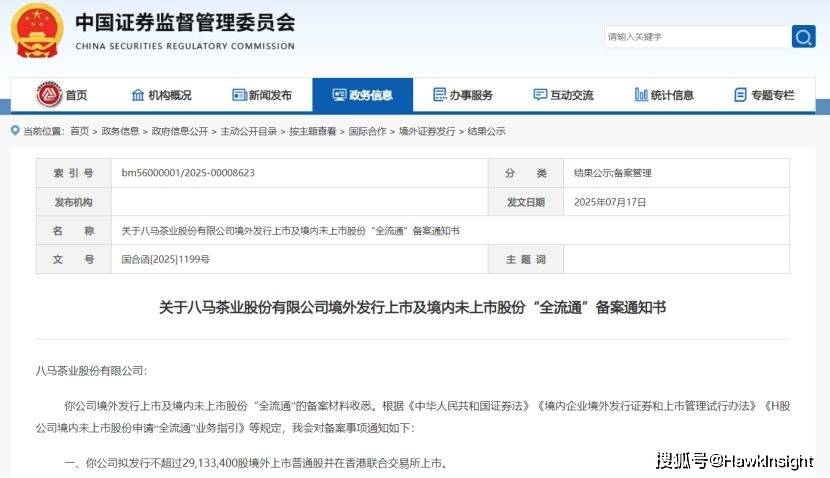
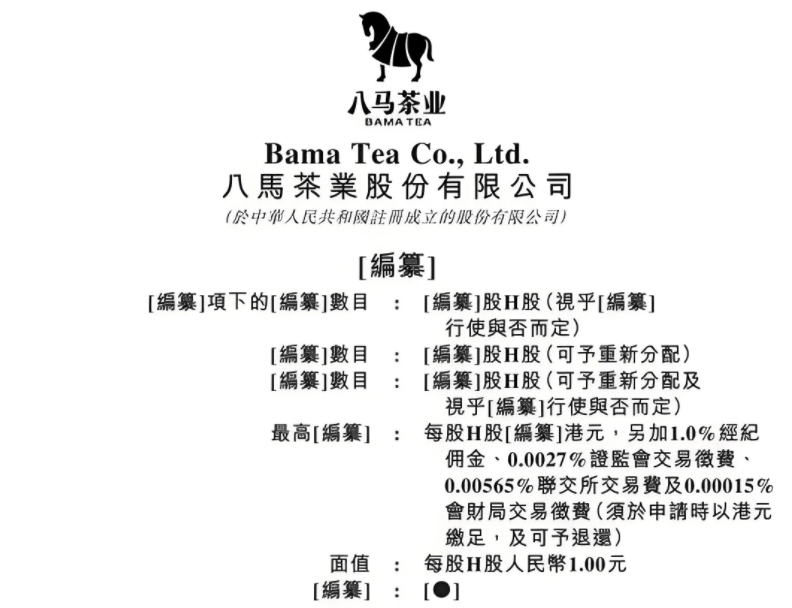
Group 1: Core Insights - Eight Horses Tea has submitted its prospectus for an IPO on the Hong Kong Stock Exchange, with a maximum issuance of 29,133,400 shares and a total of 43,987,000 shares from existing shareholders to be converted for trading [1][3] - The company ranks first in the Chinese tea market by the number of specialty tea stores and in the high-end tea market by sales revenue, showcasing its strong market position [1][2] Group 2: Financial Performance - During the reporting period from 2022 to the first three quarters of 2024, Eight Horses Tea achieved revenues of 1.818 billion, 2.122 billion, and 1.647 billion yuan, with net profits of 166 million, 206 million, and 208 million yuan, respectively [2] - The company maintains a stable gross margin of 52%-55% and a net asset return rate around 24%, significantly above industry averages [2] Group 3: IPO Details - The IPO will involve a total of 73,120,400 shares available for trading, representing 25.1% of the total share capital post-IPO [3] - The company must complete the issuance and listing by July 17, 2026, or it will need to reapply [3] Group 4: Historical Context - Eight Horses Tea has attempted to go public multiple times, including plans for the SME board in 2013, New Third Board in 2015, and A-share applications in 2021 and 2023, before shifting focus to the Hong Kong market [4][5]
福建卖茶三兄弟,冲刺港股IPO!披露与七匹狼、安踏、高力控股的姻亲关系
21世纪经济报道· 2025-07-23 13:39
Core Viewpoint - Baima Tea is making another attempt to go public, this time targeting the Hong Kong stock market after several unsuccessful attempts in the A-share market [2][10]. Group 1: Company Background and History - Baima Tea was founded in the 1990s by Wang Wenli and his brothers, initially starting as "Xiyuan Tea Factory" [5]. - The company has expanded significantly, with nearly 1,000 chain stores by 2012 and a focus on positioning itself as a "luxury tea" brand [6][8]. - As of October 2024, Baima Tea has over 3,500 chain stores and has been recognized as one of China's top 500 brand values, with a brand value of 31.36 billion yuan [13]. Group 2: Financial Performance - From 2021 to 2023, Baima Tea's revenue was 1.744 billion yuan, 1.818 billion yuan, and 2.122 billion yuan, with net profits of 163 million yuan, 166 million yuan, and 206 million yuan respectively [2]. - In the first three quarters of 2024, the company reported revenue of 1.647 billion yuan and a net profit of 208 million yuan [2]. - The number of franchisees increased from 106 to 169 between 2022 and 2023, but only 39 new franchisees were added in the first three quarters of 2024, indicating a downward trend [19]. Group 3: IPO Attempts and Challenges - Baima Tea has faced multiple challenges in its IPO journey, including failed attempts to list on the Shenzhen Stock Exchange and the New Third Board [9][10]. - The company submitted its application for an IPO in Hong Kong in January 2023, but faced issues with its prospectus becoming invalid after not passing hearings within six months [10]. - Concerns regarding the management structure, which is heavily family-oriented, have raised questions about governance and potential conflicts of interest [14][15]. Group 4: Market Position and Industry Context - Baima Tea ranks first in the Chinese tea market in terms of chain store numbers and sales revenue, particularly in the high-end tea segment [8]. - The tea industry in China is characterized by low concentration and many small players, making it difficult for traditional tea companies to attract capital [17]. - The rise of new tea brands favored by younger consumers poses a challenge to traditional tea companies like Baima Tea [18].
这家中国最大的茶叶公司又要IPO上市了,三战三败,这次能行吗?
Sou Hu Cai Jing· 2025-07-23 10:45
Core Viewpoint - The article discusses the challenges and potential of Baima Tea Industry's IPO in the context of the traditional tea market in China, highlighting its market leadership but also its historical failures in the A-share market. Industry Overview - The traditional tea beverage market in China has surpassed 350 billion yuan, yet no A-share listed companies exist in this sector [3] - In Hong Kong, only two companies, Tianfu and Lancang Ancient Tea, are listed, but they have struggled with low stock prices [3] Company Performance - Baima Tea Industry ranks first in the high-end tea market, Oolong tea market, and black tea market in China, with its flagship product, Tieguanyin, being the top seller for over ten years [1] - The company has faced three failed attempts to list on the A-share market [2] Challenges in the Industry - The tea industry in China is characterized by a "small, scattered, weak, and chaotic" structure, with over 90% of tea farms operated by smallholders [5] - The lack of mechanization in tea production leads to significant variability in quality and quantity, complicating the establishment of a stable quality control system [7] Governance Issues - Baima Tea's management is described as "family-run," with the controlling Wang family holding 62.8% of shares and deeply involved in core operations [10] - This governance structure raises concerns about related party transactions and financial irregularities, which have hindered the company's previous IPO attempts [10] Future Outlook - Despite the challenges, the ongoing efforts for Baima Tea's IPO represent a broader attempt to modernize the traditional tea industry in China, aiming for standardization, branding, and technological advancement [12]
八马茶叶转战港股:福建卖茶家族披露泉州富豪姻亲
2 1 Shi Ji Jing Ji Bao Dao· 2025-07-23 10:08
Core Viewpoint - Baima Tea Industry is attempting to go public in Hong Kong after multiple unsuccessful attempts to list in mainland China, highlighting the challenges faced by traditional tea companies in the capital market [2][6][8]. Company Overview - Baima Tea Industry has reported revenues of 17.44 billion CNY, 18.18 billion CNY, and 21.22 billion CNY from 2021 to 2023, with net profits of 1.63 billion CNY, 1.66 billion CNY, and 2.06 billion CNY respectively. In the first three quarters of 2024, the company achieved revenues of 16.47 billion CNY and a net profit of 2.08 billion CNY [2][11]. - The company has a total of 3,498 offline stores as of September 2024, with 3,224 being franchise stores, accounting for 92% of the total [7]. Market Position - According to a report by Frost & Sullivan, Baima Tea Industry ranks first in the Chinese tea market in terms of the number of chain stores and sales revenue in the high-end tea market as of the end of 2023 [4]. - The company has maintained the highest sales volume of Tieguanyin tea for over ten years and has ranked first in the sales of rock tea for five consecutive years [4]. IPO Attempts - Baima Tea Industry has made several attempts to go public, including plans for the Shenzhen Stock Exchange in 2013, listing on the New Third Board in 2015, and applying for the ChiNext in 2021, all of which were unsuccessful [2][5][6]. - The company submitted a new application for a main board listing in 2023, but this was also terminated by the Shenzhen Stock Exchange [5][6]. Family Management Structure - The management of Baima Tea Industry is characterized by a family-run structure, with major shareholders being family members who hold 55.9% of the voting rights [8][9]. - This family-centric governance model has raised concerns about potential conflicts of interest and the ability to maintain operational independence post-IPO [8][9]. Industry Challenges - The tea industry in China faces challenges such as low market concentration and a large number of small-scale enterprises, making it difficult for traditional tea companies to attract capital [9]. - The company has seen a significant decline in the net increase of franchisees, from 106 in 2022 to only 39 in the first three quarters of 2024, indicating a slowdown in growth [10][11]. - Franchise fee revenue dropped dramatically from 740,000 CNY in 2022 to 50,000 CNY in 2023, a decline of 93% [11].
2025年吉林省过度包装产品质量监督抽查结果发布
Zhong Guo Zhi Liang Xin Wen Wang· 2025-07-23 07:53
Summary of Key Points Core Viewpoint - The quality supervision sampling results for excessive packaging products in Jilin Province for the first and second quarters of 2025 indicate a 6% non-compliance rate, with 3 out of 48 batches failing to meet quality standards [1]. Group 1: Quality Supervision Results - Jilin Province's market supervision authority conducted quality checks on 48 batches of excessive packaging products, revealing a non-compliance rate of 6% [1]. - Three batches from three different producers were found to be non-compliant, leading to legal actions by local market regulatory departments [1]. Group 2: Product Details - The report includes a detailed table of products tested, specifying product names, specifications, production dates, brands, and compliance results [1]. - Notable compliant products include various tea gift boxes and zongzi (sticky rice dumplings) with different weights and packaging styles, all passing the quality checks [2][3][4].
清风为伴产业兴 | 茶产业“加速跑”
Zhong Yang Ji Wei Guo Jia Jian Wei Wang Zhan· 2025-07-23 00:16
Core Viewpoint - The tea industry in Enshi Prefecture is a key sector for local economic development, with strong oversight from local authorities to ensure compliance and support for farmers [1][2]. Group 1: Industry Development - The tea industry is characterized as a distinctive and poverty-alleviating industry in Enshi Prefecture, with a focus on enhancing the development of tea production through effective supervision [1]. - The total area of tea gardens in the region has reached 1.82 million acres, benefiting 830,000 tea farmers [2]. Group 2: Oversight and Regulation - The local disciplinary inspection and supervision authorities are actively monitoring the implementation of agricultural support policies, focusing on the tea industry to ensure proper use of subsidies and address issues such as corruption and misappropriation [2]. - A specific case was highlighted where a village official was penalized for misappropriating over 6,000 yuan in insurance compensation for damaged tea leaves, demonstrating the commitment to accountability [1]. Group 3: Support and Services - The local government is collaborating with agricultural departments to provide technical guidance and professional services to tea farmers, aiming to improve production quality and market access [2]. - Various trading markets, such as the Wuling Mountain Tea Trading Center and Enshi Selenium Tea Trading Market, are established to facilitate logistics and procurement for buyers nationwide, enhancing the competitiveness of the Enshi tea industry [2].
茉莉奶白回应“过期奶茶”事件:系顾客弃置+外卖员错拿
Guan Cha Zhe Wang· 2025-07-22 12:09
7月22日,茶咖日报的主要内容有: 茉莉奶白回应"售出过期奶茶":涉事产品由顾客弃置,清理货架并非店员负责 北京商报7月22日报道,针对"茉莉奶白售出过期5天奶茶"一事,茉莉奶白方面回应称,经品牌自查及商场监控证实,涉事产品来源系顾客自行弃置于商场公 共自提区超96小时,非茉莉奶白管理区域,该区域管理权属上海绿地缤纷城商业管理有限公司。 该店坐落于北京核心商圈,是喜茶进入北京的首批门店之一,曾作为喜茶的全国销冠门店,是不少北京消费者认识喜茶的第一站。在步入门店九周年之际, 喜茶从品牌灵感出发,融合城市茶事人文,对该店的空间设计进行了重新演绎。 喜茶北京朝阳大悦城店 据悉,今年以来,喜茶持续回归灵感空间体验创造,已批量重装多城门店。截至目前,迄今开业的喜茶门店均已在"灵感茶禅"的空间设计实验探索下完成空 间升级,陆续带来成都春熙路DP店、昆明顺城购物中心店、海口友谊阳光城店、石家庄万象城店、深圳ONE AVENUE卓悦中心店、厦门SM城市广场店、 济南恒隆广场店等多个城市高势能商圈门店的空间焕新。 与此同时,喜茶也持续开出新店,带来上海环球港店、南京金陵中环店、武汉大学工学部店等。 此前相关报道视频中店员回复" ...
