
核能

Search documents
核聚变板块走低 多股跌超7%
Mei Ri Jing Ji Xin Wen· 2025-10-16 02:15
Group 1 - The controllable nuclear fusion concept stocks experienced a significant decline in early trading on October 16, with companies such as Hezhong Intelligent, Zhongzhou Special Materials, China Nuclear Construction, and Haheng Huatuo dropping over 7% [1] - Other companies like China Electric Research, Jiusheng Electric, Changfu Co., and Aikesibo also saw declines exceeding 4% [1]


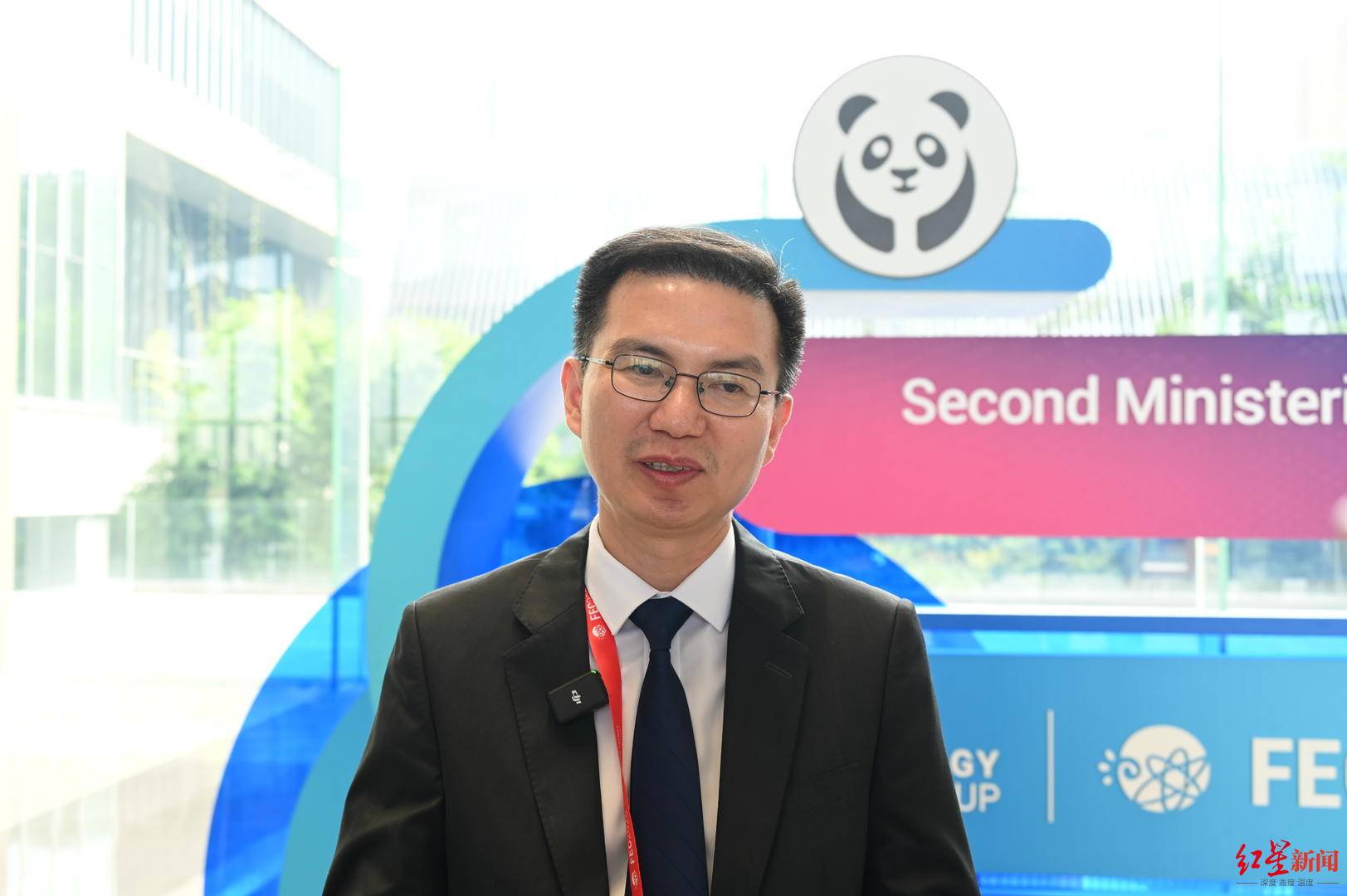
聚焦聚变能,IAEA这一协作中心为何落地成都?国家原子能机构秘书长黄平这样说
Sou Hu Cai Jing· 2025-10-15 15:14
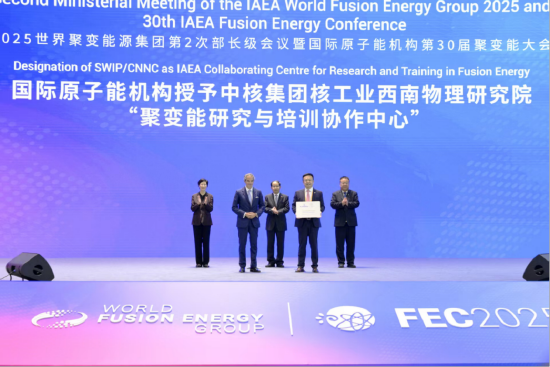
Core Insights - The 2nd Ministerial Meeting and the 30th International Conference on Fusion Energy opened in Chengdu, Sichuan, attracting nearly 2,000 experts and representatives from 61 countries and international organizations, highlighting the global significance of fusion energy research and engineering [1] Group 1: Domestic Fusion Energy Development - The Secretary-General of the National Atomic Energy Agency, Huang Ping, emphasized that China's nuclear industry has a solid foundation in materials, equipment, and technology after 70 years of development, which supports the advancement of fusion energy [3] - Huang noted that fusion energy is transitioning from scientific research to engineering practice and commercial application, making open innovation and cooperation essential [3] - The Chinese government is providing policy support for fusion energy commercialization, including integrating it into the "dual carbon" goals and promoting green low-carbon technologies [3] Group 2: International Atomic Energy Agency (IAEA) Collaboration - The IAEA designated the China National Nuclear Corporation's Southwest Institute of Physics as its first "Fusion Energy Research and Training Collaboration Center," marking a significant milestone for China's influence in the fusion energy sector [5] - This collaboration center aims to support developing countries by leveraging member states' capabilities, showcasing China's ability to provide services and technical support globally [5] Group 3: Regional Advantages in Sichuan - Sichuan is recognized as a major province for nuclear industry and technology application, housing key research institutions and numerous nuclear technology application enterprises, which provides a strong industrial foundation for fusion energy development [6] - The region has accumulated a pool of specialized talent in the field of fusion energy, further solidifying the foundation for the industry's growth in Chengdu and Sichuan [6]

埃塞俄比亚通过法规设立国家核能委员会
Xin Hua She· 2025-10-15 13:44
新华社亚的斯亚贝巴10月15日电(记者刘方强)埃塞俄比亚部长理事会14日通过一项法规,决定设 立埃塞俄比亚国家核能委员会,领导并协调该国在符合国际框架的前提下,以和平方式利用核技术的相 关工作。 埃塞俄比亚部长理事会当天发布声明说,推进核技术应用对于助力国家发展至关重要,这主要体现 在电力供应、工业发展、医疗保健以及科学研究等领域。 同日,埃塞俄比亚总理阿比任命桑多坎·德贝贝为国家核能委员会负责人,他此前为总理办公室主 任。 9月25日,俄罗斯国家原子能公司曾发布消息说,该公司已与埃塞俄比亚签署核能合作文件,计划 在该国进行核电站建设可行性研究。根据计划,双方将成立专门工作组,对在埃塞俄比亚建设核电站进 行可行性研究,并推动签署政府间合作协议。计划还提出,俄方将为埃塞俄比亚技术人员提供相关技术 培训。 目前,南非是非洲唯一拥有正在运行核电站的国家,埃及的核反应堆在建设中。加纳、阿尔及利 亚、肯尼亚、摩洛哥、尼日利亚、卢旺达和苏丹等国也已提出核电站建设计划。 ...
一年暴涨超1000%!零营收但估值超260亿美元?最严重的AI泡沫其实是核能股!
美股IPO· 2025-10-15 12:32
Core Viewpoint - The energy sector is experiencing a speculative bubble driven by AI demand, with several revenue-less energy companies seeing their total market value soar to over $45 billion, primarily based on investor bets that tech giants will purchase their yet-to-be-built power generation facilities [1][3]. Group 1: Market Dynamics - A notable example of this trend is Oklo, a nuclear startup supported by OpenAI's CEO Sam Altman, whose stock price has surged approximately eightfold this year, reaching a market value of $26 billion, making it the largest revenue-less publicly traded company in the U.S. over the past 12 months [3]. - Another revenue-less company, Fermi, had a valuation of around $19 billion on its listing day earlier this month, currently maintaining a market value exceeding $17 billion, with historical data indicating only two other revenue-less companies have surpassed this valuation on their listing day [5]. Group 2: Investor Sentiment and Risks - The speculative wave highlights extreme optimism regarding future energy demand driven by AI, contrasting sharply with established tech giants that have substantial profits and can withstand industry fluctuations; these energy startups have little room for error and face significant risks if the AI hype diminishes [7]. - The investment frenzy is not limited to nuclear energy; Fermi, backed by former U.S. Energy Secretary Rick Perry, plans to build 11 gigawatts (GW) of power capacity, equivalent to the total installed capacity of New Mexico, yet has only secured natural gas equipment to meet 5% of its target and lacks binding customer contracts [11]. Group 3: Valuation Concerns - The high valuations of these speculative energy companies may be driven by the already inflated valuations of profitable companies, such as Bloom Energy, which has seen its stock rise over 400% this year with a forward P/E ratio of 133, and Centrus Energy with a forward P/E ratio of 99 [12]. - Historical precedents, such as the 2020 IPOs of revenue-less electric vehicle startups like Nikola and Fisker, suggest that many similar companies may ultimately fail, raising concerns about the sustainability of current valuations in the energy sector [12].

零营收但估值超260亿美元?最严重的AI泡沫其实在能源股!
Hua Er Jie Jian Wen· 2025-10-15 11:59
Core Viewpoint - The article highlights a speculative frenzy in the energy sector driven by artificial intelligence (AI), with several energy companies, despite having no revenue, seeing their valuations soar to unprecedented levels, totaling over $45 billion [1][6]. Group 1: Energy Companies and Valuations - Oklo, a nuclear startup supported by OpenAI's CEO Sam Altman, has seen its stock price increase approximately eightfold this year, reaching a market capitalization of $26 billion, making it the largest U.S. public company without revenue in the past 12 months [1]. - Another zero-revenue company, Fermi, had an initial valuation of around $19 billion upon its listing and currently maintains a market cap exceeding $17 billion, with only two other zero-revenue companies historically surpassing this valuation on their listing day [3]. - Other companies in the nuclear sector, such as Nano Nuclear Energy and Terra Innovatum, have also experienced significant market cap increases, with Nano's stock rising over 100% this year and a valuation exceeding $2 billion [7]. Group 2: Market Sentiment and Risks - The speculative wave reflects extreme optimism regarding future energy demands driven by AI, but these energy startups have little room for error, as they lack actual revenue to support their high valuations [6]. - Companies like NuScale Power and Plug Power, which have seen stock price increases of 155% and 90% respectively, still face challenges in achieving profitability before 2030 [8]. - The high valuations of established profitable companies may be driving investors towards these speculative startups, reminiscent of the electric vehicle startups that faced significant downturns after their initial hype [10].
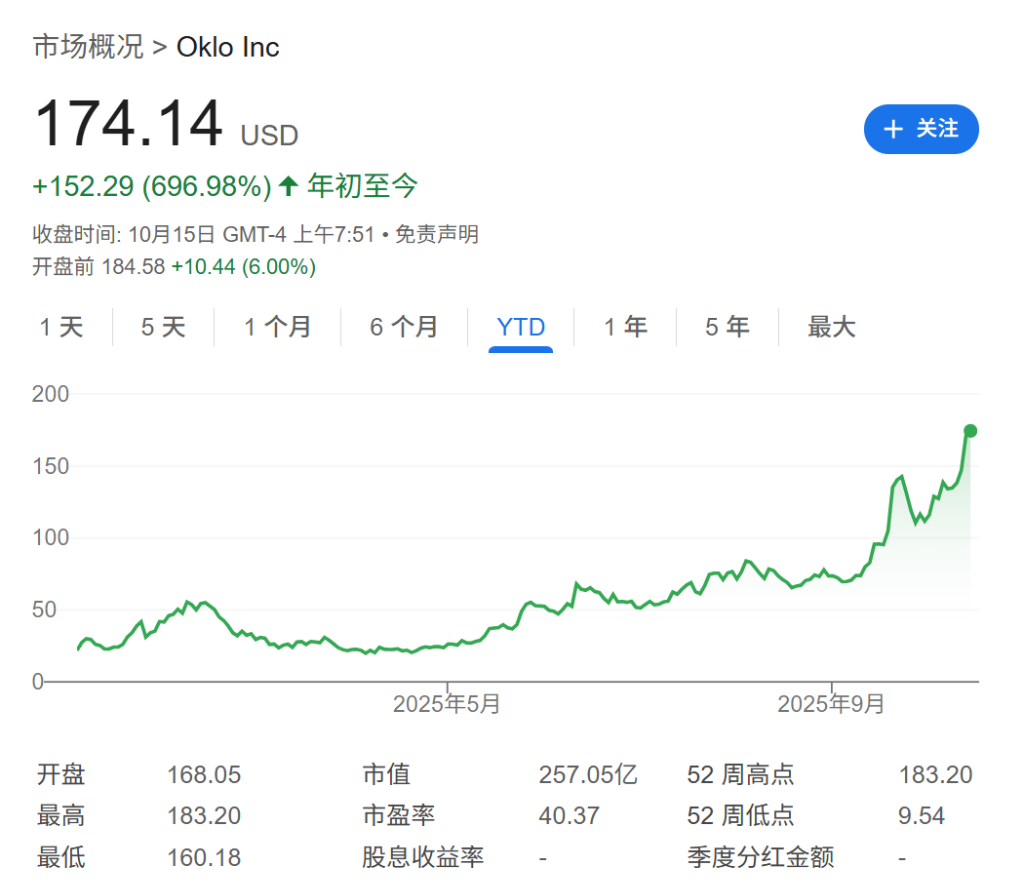
Oklo Stock: Can This Energy Innovator Keep Its 1,100% Run Going?
The Motley Fool· 2025-10-15 09:15
Core Insights - Oklo is positioning itself as a leader in the clean energy sector with its innovative Aurora Powerhouse reactors, which aim to provide scalable and carbon-free energy solutions [1] - The company faces significant regulatory and operational challenges that could impact its ability to achieve its ambitious goals [1] - The potential success or failure of Oklo could have a transformative effect on the nuclear energy landscape, influencing future investments and developments in the industry [1]

国际原子能机构首个聚变能研究与培训协作中心落地中国
Xin Lang Cai Jing· 2025-10-15 02:28
Core Points - The World Fusion Energy Group's second ministerial meeting and the 30th International Atomic Energy Agency (IAEA) Fusion Energy Conference opened in Chengdu, Sichuan Province, highlighting China's commitment to fusion energy development [1][3] - The IAEA designated the China National Nuclear Corporation's Southwest Institute of Physics as its first "Fusion Energy Research and Training Collaboration Center," emphasizing international collaboration in fusion energy [1][3] Group 1 - The theme of the ministerial meeting is "Fusion Energy: The Future of Clean Energy," with participation from approximately 150 representatives from 27 countries and 6 international organizations [4] - Discussions will focus on three main topics: "Current Status of Fusion Energy: Bridging the Gap," "Fusion Energy Regulation: Global Debate," and "Fusion Energy Supply Chain: From Research to Industrialization" [4] - The meeting will release the "Fusion Energy Outlook 2025" report and the "Chengdu Declaration of the World Fusion Energy Group" [4] Group 2 - The IAEA's 30th Fusion Energy Conference will last for five days, covering themes such as "Innovation and Future of Fusion Energy—Technology, Cooperation, and Sustainable Development" [4] - The conference will include keynote speeches, specialized meetings, and technical exhibitions, addressing various fields including magnetic confinement fusion experiments, theoretical simulations, and other innovative fusion concepts [4] - Side events like "Nuclear Future - Nuclear Energy 'Three-Step' Innovation Progress" will also be held during the conference [4]
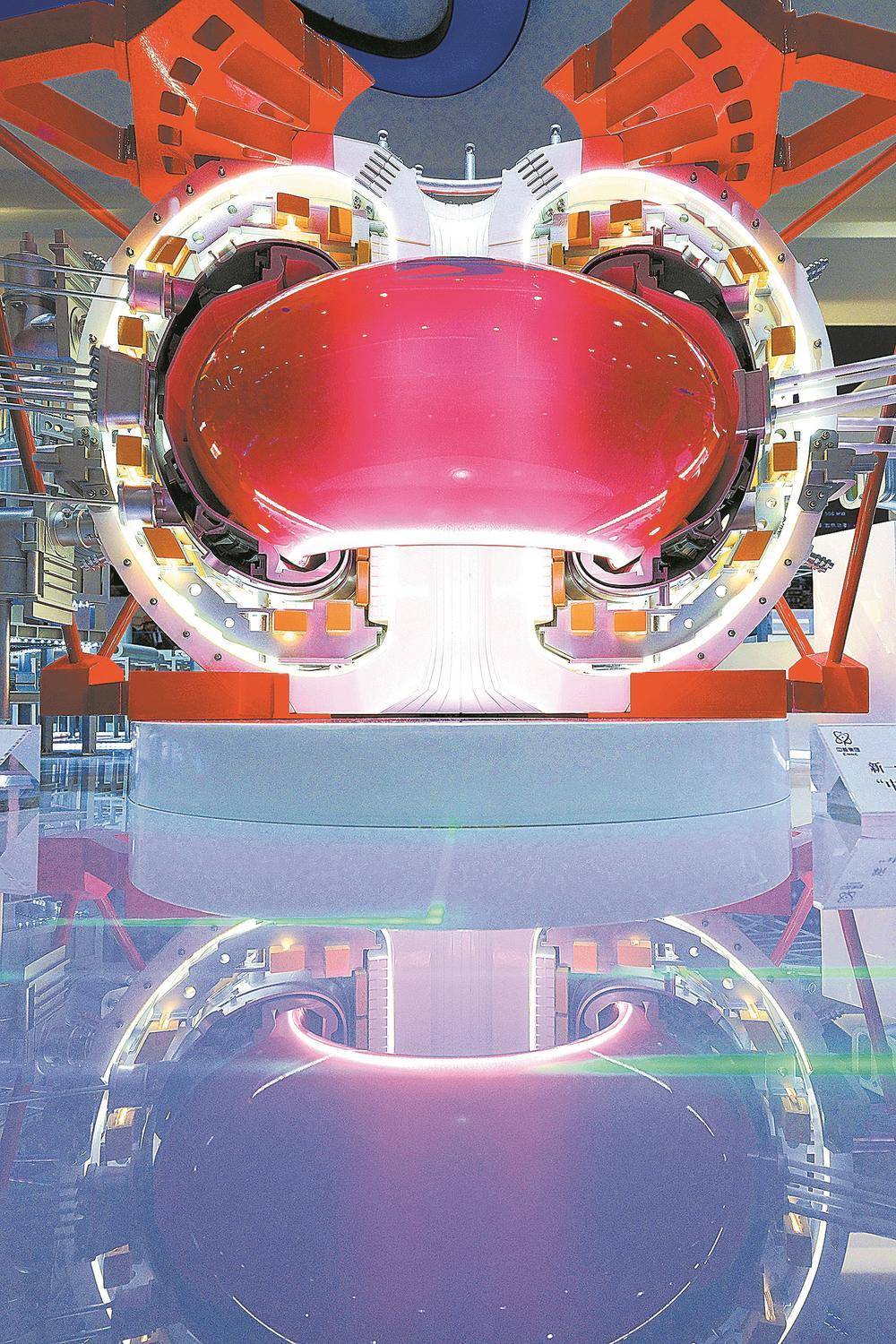
可控核聚变产业发展计划发布,聚变科创城启动,一批核能与核技术标志性成果亮相 展现硬“核”实力 四川打出“聚变”组合拳
Si Chuan Ri Bao· 2025-10-15 00:28
Core Insights - The "World Fusion Energy Group" held its second ministerial meeting and the 30th International Conference on Fusion Energy in Chengdu, highlighting advancements in controllable nuclear fusion and the launch of the Fusion Innovation City [1][4] Group 1: Nuclear Fusion Developments - Chengdu is positioning itself as a global hub for controllable nuclear fusion technology, with the launch of a development plan aimed at establishing a research and industrial cluster [4][5] - The plan includes the establishment of the Fusion Innovation City, which will focus on technology research, industrial development, and international collaboration in the fusion energy sector [4][5] - Key facilities and projects include the "Chinese Circulation No. 3" and the International Atomic Energy Agency's fusion research and training collaboration center [4] Group 2: Nuclear Technology Innovations - A range of innovative nuclear technologies were showcased, including a plasma high-temperature melting system capable of reaching temperatures above 5000 degrees Celsius for hazardous waste treatment [2] - The China Nuclear Power Research and Design Institute presented a modular small reactor design, which is easier to assemble and occupies one-third the space of traditional power plants, suitable for urban heating and seawater desalination [2] - The e-FLASH radiotherapy device developed by Zhongjiu Flash Medical Technology Co. is undergoing clinical trials, promising faster and more efficient cancer treatment [3] Group 3: Nuclear Medical Industry Growth - A new policy initiative titled "Further Promote High-Quality Development of the Nuclear Medical Industry" was introduced, featuring 24 measures to support industry upgrades and expand application demands [6] - Chengdu aims to establish three nuclear drug bases, while Luzhou focuses on nuclear diagnostic applications, and Deyang is developing a nuclear power equipment industrial park with a total investment of 40 billion yuan [6]
全球首个 聚变能研究与培训协作中心落地成都
Sou Hu Cai Jing· 2025-10-14 20:07
Core Insights - The establishment of the world's first IAEA Fusion Energy Research and Training Collaboration Center in Chengdu marks a significant elevation of China's international status and influence in the field of fusion energy [4][5][10] - The center aims to provide a "China demonstration" for global fusion energy research and training while accelerating China's fusion technology innovation and commercialization [5][9] Group 1: Center Overview - The IAEA Collaboration Center is a designated entity under the IAEA framework, focusing on research, development, and training to assist in achieving the United Nations' Sustainable Development Goals [4] - The center will operate under four core pillars: international cooperation, academic exchange, technological innovation, and industrial traction [5] Group 2: Chengdu's Strategic Advantages - Chengdu's strategic positioning aligns with the development of the fusion industry, as it is highlighted in the "Implementation Plan for Developing Emerging Industries in Sichuan Province (2025-2027)" [5][6] - The city has established a comprehensive ecosystem for fusion industry development, featuring a modern industrial system with trillion-level clusters in electronic information and equipment manufacturing [6][8] - Chengdu is home to key enterprises in the fusion energy sector, such as Guoguang Electric and Hanhai Fusion, and has achieved significant milestones in fusion technology [6][9] Group 3: Value Creation - The center will enhance international cooperation by strengthening communication with ITER participants, thereby increasing Chengdu's influence in the global fusion governance system [9][10] - It will facilitate the introduction of top-tier research talent and resources, enhancing Chengdu's position in the global fusion research network [9] - The center is expected to attract key enterprises in the fusion energy sector to Chengdu, supporting a comprehensive industrial layout covering superconducting materials and fusion equipment [9][10] Group 4: Chengdu Declaration - The "Chengdu Declaration" was released during the second ministerial meeting of the World Fusion Energy Group, advocating for international cooperation in fusion energy [10][11] - The declaration emphasizes the establishment of a joint research network for fusion energy technologies and the importance of ensuring that fusion energy development serves peaceful purposes [10][11]
中核集团在核聚变能量导出关键技术领域取得重大突破,核聚变产业化有望提速
Xuan Gu Bao· 2025-10-14 15:20
Group 1 - The successful establishment of the energy extraction thermal experimental platform reflects China's significant progress in the autonomy of key nuclear fusion equipment and technology [2] - This achievement enhances China's engineering verification capabilities and technical reserves in liquid metal and helium cooling systems, indicating a systematic mastery of core technologies including main fans and efficient heat exchangers [2] - The progress will strongly support the subsequent construction of China's fusion experimental reactor and facilitate the smooth implementation of the ITER project, laying a solid engineering and technical foundation for achieving fusion energy [2] Group 2 - Guoguang Electric is positioned to benefit from the trend of developing controllable nuclear fusion, as it can produce key components for the ITER project, including the divertor and blanket systems [3] - Hangyang Co. is strategically involved in emerging industries, including controllable nuclear fusion, and can provide high-quality low-temperature equipment for the construction of fusion reactors [3]