
电信运营

Search documents
推动5G-A与AI融合——中国移动助力广西打造面向东盟的低空经济创新高地
Huan Qiu Wang· 2025-12-17 10:33
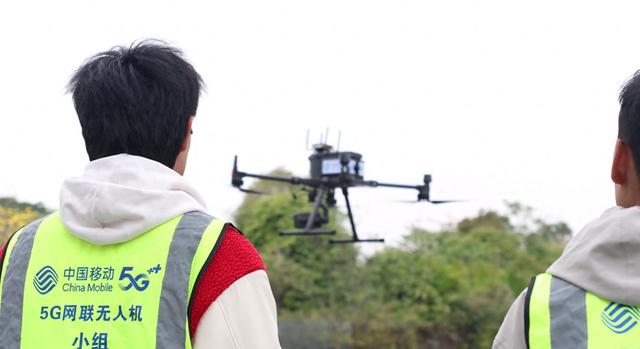
Core Viewpoint - 5G-A technology is a crucial transition from 5G to 6G, providing enhanced performance and integration for various industries, particularly in the context of digital economy growth and regional security in Guangxi, China [1] Group 1: Innovation in Security - China Mobile Guangxi has launched the first national border protection project based on 5G-A technology, showcasing the potential of "communication + perception + AI" integration [3] - The project achieved a low-altitude network edge rate exceeding 25 Mbps, significantly improving the efficiency and accuracy of border inspections through long-distance drone automated patrols and real-time high-definition video transmission [3] - The integration of 5G-A's inherent perception capabilities with the company's self-developed platform allows for precise monitoring and intelligent identification of drone flight statuses, enhancing control over low-altitude order and border security [3] Group 2: Activation of Low-altitude Economy - 5G-A technology supports the scalable and intelligent development of the low-altitude economy by providing high speed, low latency, and reliable integrated capabilities for various applications such as drone logistics and air traffic management [5] - The technology enables real-time processing and intelligent analysis of vast amounts of low-altitude data, facilitating the development of a comprehensive low-altitude regulatory and service system without the need for additional dedicated networks [5] Group 3: Future Development and Collaboration - China Mobile Guangxi plans to deepen collaboration with local governments and industries to promote innovation in the low-altitude economy, including trials of enhanced 5G-A technologies [7] - The company aims to create standardized end-to-end solutions and replicate successful experiences in similar scenarios, contributing to the establishment of a low-altitude economic innovation ecosystem [7] - By leveraging AI and 5G-A technology, the company seeks to foster new business models in low-altitude applications, supporting the construction of a digital Guangxi and high-quality regional economic development [7]


摩洛哥inwi公司接入地中海Medusa海底光缆
Shang Wu Bu Wang Zhan· 2025-12-17 06:27
根据合作协议,inwi将在Medusa系统中部署并运营专用光纤通路,将摩洛哥沿海城市纳多尔与法国马赛 等欧洲关键节点直连,以更好应对不断增长的固定通信和互联网流量需求,为个人和企业用户提供更加 多元、安全和高效的国际网络通道。 inwi表示,此举不仅增强了企业自身的国际通信能力,也契合摩洛哥国家数字化转型和网络主权战略。 通过持续布局关键数字基础设施,摩洛哥有望进一步巩固其作为连接非洲与欧洲的重要数字枢纽地位, 并为吸引科技投资、发展数字经济以及提升云服务和跨区域数据交换能力奠定基础。 摩洛哥《外交报》12月16日报道,摩洛哥电信运营商inwi近日正式接入地中海Medusa海底光缆系统,将 显著提升摩洛哥的国际数字互联能力。 Medusa是目前地中海地区规模最大的海底光纤通信系统之一,贯通大西洋、地中海和红海,连接葡萄 牙、西班牙、法国、意大利、希腊、塞浦路斯等欧洲国家,以及摩洛哥、阿尔及利亚、突尼斯、利比亚 和埃及等北非国家,是区域数据通信的重要战略基础设施。 ...
中国移动:适度超前、集约高效建强新型信息基础设施底座
Zheng Quan Ri Bao Wang· 2025-12-17 06:03
Group 1 - The meeting emphasized the importance of the Central Economic Work Conference as a key event at a historical juncture, summarizing major achievements during the 14th Five-Year Plan and outlining the overall requirements and policy directions for the upcoming year [1] - The company is committed to aligning its actions with the central government's scientific judgments and decisions regarding the economic situation, focusing on steady progress, quality improvement, and effective growth [1][2] - The company aims to strengthen its core business and contribute to building a strong network and digital China [1] Group 2 - The company plans to advance the construction of new information infrastructure, promote scenario cultivation, and enhance application services to unlock growth potential [2] - The company will implement state-owned enterprise reform requirements and optimize its organizational structure in key areas [2] - The company is focused on enhancing its capabilities for high-quality development, including strengthening safety measures in emerging fields such as networks, data, and artificial intelligence [2]
中国电信发布2026终端技术发展策略
Zhong Guo Chan Ye Jing Ji Xin Xi Wang· 2025-12-17 00:08
Group 1 - China Telecom announced multiple innovative achievements and a 2026 terminal technology development strategy at the "AI + Terminal Technology Standards and Innovation Cooperation Forum" [1] - Key technological breakthroughs in the AI terminal field include trusted interaction between end and network, mapping of perceived information to network performance requirements, and the establishment of an intelligent network capability verification platform [1] - In the eSIM sector, China Telecom is collaborating with the industry to develop eSIM industry standards for terminals and chips, and is conducting joint product R&D and key testing technology breakthroughs [1] Group 2 - China Telecom's Vice General Manager Huang Zhiyong proposed three major initiatives for the future: deepening technological innovation cooperation, expanding application scenarios, and building an open cooperation ecosystem [2] - The company aims to develop new terminal types such as 5G-A smart glasses and embodied intelligence, while promoting cross-layer intelligent communication architecture [2] - China Telecom plans to enhance the eSIM terminal variety, expand satellite communication services, and promote the Tianyi smart terminal products [2]

广东省政务智能联合创新工场启动运行
Zhong Guo Xin Wen Wang· 2025-12-16 14:41
据介绍,广东省政务智能联合创新工场以赋能政务服务提质增效、构建政务智能创新体系为核心目标, 充分发挥广东数字政府建设集约化优势,致力于通过政、产、学、研、用多方协同的合作机制,提供涵 盖发展规划、标准制订、场景创新、安全合规、产业带动、人才培养等全生命周期的服务能力。 日前,广东省政务智能联合创新工场第一次主任会议在广东全球通大厦召开,集体审议通过了《广东省 政务智能联合创新工场工作职责》《广东省政务智能联合创新工场运营方案》《广东省政务智能联合创 新工场安全管理工作要求》等主体制度文件,为创新工场规范化运行筑牢了制度根基。 广东省政务智能联合创新工场启动运行 编辑:姜莹 中新网广州12月16日电 (孙秋霞 黎颖欣)我国首家省级政务领域人工智能联合创新平台——广东省政务 智能联合创新工场近日在广州启动运行。这一创新载体的落地,标志着广东政务领域人工智能应用建设 全面提速,正式进入标准化、规模化发展的全新阶段,为全国政务人工智能应用提供了"湾区样板"。 值得一提的是,该会议同步审议通过的广东省第一批政务领域人工智能应用创新示范场景,涵盖智能办 公、智慧监管、消防应急、民生服务等多个关键领域,为推动人工智能在省级 ...
中国电信(728.HK):十五五或有政策鼓励政企应用AI云计算技术 集团有望受惠
Ge Long Hui· 2025-12-16 13:59
Core Viewpoint - The company is experiencing moderate growth in profitability for the third quarter of 2025, with a slight increase in revenue and EBITDA, but a slowdown in growth is noted due to macroeconomic factors [1] Group 1: Financial Performance - For the first three quarters of 2025, the company's revenue increased by 0.6% year-on-year, with service revenue growing by 0.9% [1] - EBITDA rose by 4.2% year-on-year, and profit attributable to shareholders increased by 5.0% [1] - In the third quarter alone, revenue decreased by 0.9% year-on-year, while service revenue grew by 0.5% [1] - EBITDA for the third quarter increased by 2.4% year-on-year, and profit attributable to shareholders rose by 3.6% [1] Group 2: Cloud Business and AI Integration - The company's cloud service, Tianyi Cloud, is in a transitional phase, with revenue growth slowing; it reported revenue of 57.3 billion RMB in the first half of 2025, a year-on-year increase of 3.8% [1] - Management indicated that the global cloud computing industry is undergoing a critical transition, with a significant decline in growth for traditional cloud services, while demand for AI-driven intelligent computing is strong [1] - The company's intelligent revenue, which includes AI and intelligent computing services, grew by 62.3% year-on-year in the first three quarters of 2025 [1] Group 3: Government Policies and Market Outlook - The "14th Five-Year Plan" emphasizes technological self-reliance and innovation, which may lead to government initiatives encouraging the application of AI-related cloud computing technologies [2] - The company has a significant proportion of enterprise clients from government-related units, which tend to be conservative in adopting AI technologies due to security concerns [2] - The outlook for Chinese government bond yields is limited, and the company is considered a high-quality dividend stock, supported by stable traditional services and healthy cash flow [2]
中国电信委任李惠光为独立非执行董事
Zhi Tong Cai Jing· 2025-12-16 12:59
Core Viewpoint - China Telecom has announced the approval of Mr. Li Huiguang as an independent non-executive director, effective from December 16, 2025, until the annual general meeting in 2026 [1] Group 1 - Mr. Li Huiguang will also serve as the chairman and member of the company's remuneration committee, as well as a member of the audit committee and nomination committee [1]
上移动爱购,中国移动邀您一站畅享品质生活
Sou Hu Cai Jing· 2025-12-16 11:51
Core Insights - The article highlights the launch of China Mobile's "Mobile Love Purchase" smart life mall, which aims to provide users with a seamless and value-driven digital lifestyle experience [1][6] Group 1: Innovative Features - The "AI Bean Reward System" allows users to earn AI beans through daily consumption and platform participation, which can be redeemed for discounts or exchanged for various rewards [2][6] - The "Lingxi Intelligent System" enhances the shopping experience by providing personalized recommendations, efficient order processing, and real-time customer service [2][4] Group 2: Comprehensive Service Offerings - The smart life mall covers eight core life scenarios, including clothing, food, housing, transportation, healthcare, education, entertainment, and elder care, making daily life simpler and more efficient [3][4] - Collaborations with major state-owned enterprises and leading internet platforms ensure quality and reliability in the services offered [4][6] Group 3: User-Centric Approach - The platform emphasizes a user-centered brand philosophy, aiming to make every consumer interaction more valuable and enjoyable [6] - China Mobile plans to continue enhancing smart life services based on user needs and technological advancements, contributing to the construction of a "Digital China" [6]

中国电信:2025年相关股东大会及类别股东会顺利召开
Xin Lang Cai Jing· 2025-12-16 11:13
中国电信公告称,2025年12月16日,公司召开2025年第一次临时股东大会、2025年第二次A股类别股东 会和2025年第二次H股类别股东会,会议由董事长柯瑞文主持。出席现场会议的股东及股东代理人中, 股东大会共4人,持股605.48亿股,占比66.17%;A股类别股东会共3人,持股584.77亿股,占比 75.33%;H股类别股东会共1人,持股20.72亿股,占比14.93%。会议审议多项议案,表决程序合法,结 果有效。 ...
“移”路畅通 山东移动威海环翠分公司护航城市新地标开业庆典
Qi Lu Wan Bao· 2025-12-16 10:10
Core Viewpoint - The successful communication support during the opening ceremony of the Weihei Smart Valley T16 Cultural and Creative Street highlights the effective network services provided by Shandong Mobile Weihai Huancui Branch, receiving widespread praise from organizers and users [1]. Group 1: Event Overview - The Weihei Smart Valley T16 Street officially opened on October 1 [1]. - Shandong Mobile Weihai Huancui Branch aimed for "zero major network failures, zero major security incidents, zero significant customer complaints, and zero negative focus events" during the event [1]. Group 2: Communication Support Measures - The company conducted multiple rounds of network testing and optimization around the T16 area, focusing on coverage, quality, and capacity [1]. - To handle potential peak visitor flows, the company implemented network expansion measures, adding one emergency communication vehicle and completing software upgrades for 31 cells, resulting in 59 4G cells and 28 5G cells [1]. Group 3: Monitoring and Performance - During the opening ceremony, dedicated personnel monitored key network elements in real-time to prevent congestion risks [1]. - The successful completion of communication support tasks was attributed to high-quality network services and meticulous attention to detail [1]. Group 4: Future Commitment - Shandong Mobile Weihai Huancui Branch will continue to uphold high standards in communication support, utilizing advanced technology and sincere service to ensure user network connectivity [2].