Smartphones

Search documents
散热黑科技,能稳住OPPO的价格吗?
Ge Long Hui· 2025-07-19 10:50
Core Viewpoint - OPPO is set to launch the K13 Turbo series on July 21, featuring an active cooling fan, which is a significant upgrade over the passive cooling systems commonly used in smartphones. This innovation aims to enhance performance stability during high-demand tasks [1]. Group 1: Market Expectations and Concerns - Many gaming enthusiasts are looking forward to the new release [2]. - However, there are concerns among potential buyers about the risk of significant price drops shortly after launch, similar to the experience with the Find X8 Ultra, which saw a price reduction of 1100 yuan within a month of its release [3][4]. Group 2: Historical Pricing Issues - OPPO has a longstanding issue with rapid price drops across its product lines, with the Find X6 dropping nearly 1000 yuan within six months and the Find X7 series experiencing over 600 yuan reductions shortly after launch [5]. - The Find X8 series, despite being popular, was labeled as the "annual price drop king" due to its quick depreciation [5]. Group 3: Brand Perception and Market Position - A store manager noted that OPPO products often see price drops within just a few days of launch, which could undermine the brand's high-end positioning [6]. - The lack of price stability may hinder OPPO's efforts to compete in the high-end market against brands like Apple and Huawei, which maintain higher resale values and brand prestige [6]. Group 4: Factors Contributing to Price Drops - The first factor is insufficient technological innovation, as OPPO's flagship products primarily focus on camera and display features, which are not high-value differentiators [7][8]. - The second factor is weak channel control, leading to price chaos in the market, especially with discounts offered by smaller retail outlets [11][13]. - The third factor is internal brand competition, particularly between OPPO and OnePlus, which has led to overlapping product offerings and diminished market differentiation [17][18]. Group 5: Market Performance and Challenges - OPPO's global shipment volume declined by 1.7 million units year-on-year in Q1 2025, resulting in a 6.8% drop in market share, making it the only brand among the top five to experience a decline [19]. - The company faces a strategic dilemma between maintaining a broad product range and pursuing a high-end market transformation [20]. Group 6: R&D and Innovation - Despite significant R&D investments, including over 10 billion yuan in chip development, OPPO has struggled to translate its technological advancements into commercial success [34]. - OPPO ranks eighth globally in 5G standard essential patents, yet this has not translated into a competitive advantage in the smartphone market [26]. - The company has faced challenges in brand perception, with consumers often associating OPPO with being "low-key" rather than innovative [28]. Group 7: Legal and Market Challenges - OPPO has been involved in multiple patent disputes, which have negatively impacted its market performance, particularly in Europe, where its foldable phone market share dropped by 63% [40]. - The company needs to balance its R&D efforts with effective commercialization strategies to enhance its market position and brand value [40].


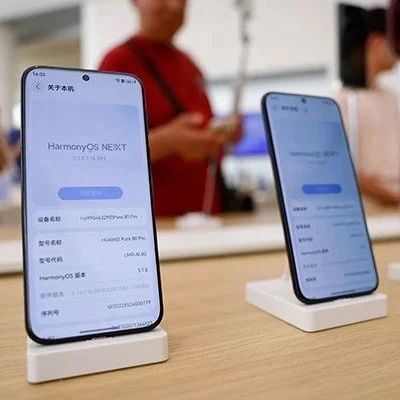
华为4年多来重回中国智能手机出货量榜首
日经中文网· 2025-07-17 03:31
Core Viewpoint - The Chinese smartphone market is experiencing a decline in shipments, with a total of 69 million units shipped in Q2 2023, marking a 4% year-on-year decrease, the first negative growth in six quarters [1][2]. Group 1: Market Overview - In Q2 2023, Huawei led the market with 12.5 million units shipped, reclaiming the top position for the first time in over four years due to the impact of U.S. sanctions on smartphone production and sales [1]. - Vivo and OPPO followed closely behind Huawei, while Xiaomi ranked fourth with a 3% increase in shipments, making it the only major brand to see growth during this period [1]. - Apple ranked fifth, facing continued pressure from Chinese competitors, and adjusted the prices of iPhone 16 and iPhone 16 Pro to fall within the range of government subsidies, which helped mitigate the decline in shipments [2]. Group 2: Government Policies and Market Dynamics - The Chinese government has been issuing subsidies for old-for-new exchanges, but the effectiveness of these measures is diminishing due to confusion in implementation at the local government level [1]. - Smartphone manufacturers are strategically reducing shipments and managing inventory levels, utilizing promotional events like the 6.18 sales to facilitate inventory clearance [1]. - IDC forecasts that the Chinese smartphone market will remain sluggish until the second half of 2025, citing a challenging economic environment and low consumer confidence as key factors [2].
摩根士丹利:小米集团-2025 年第二季度全球智能手机出货量有望超过 4200 万台1
摩根· 2025-07-16 00:55
Investment Rating - The report assigns an "Overweight" rating to Xiaomi Corp, indicating a positive outlook for the stock's performance relative to its industry peers [4][64]. Core Insights - Xiaomi's global smartphone shipment in 2Q25 is expected to exceed its performance in 1Q25, with preliminary data suggesting a slight year-over-year increase of 0.6% to 42.5 million units, securing a 14.4% global market share [1][2]. - The overall global smartphone shipment in 2Q25 is projected to be 295.2 million units, reflecting a modest increase of 1.0% year-over-year according to IDC [1]. - Samsung remains the market leader with 58 million units shipped, representing a 7.9% year-over-year increase and a 19.7% market share, while Apple follows with 46.4 million units and a 15.7% share [2]. Summary by Sections Shipment Performance - Xiaomi's shipment is anticipated to surpass its previous quarter's performance, with a total of 42.5 million units shipped in 2Q25, marking a 0.6% increase year-over-year [2]. - The global smartphone market is experiencing slight growth, with IDC reporting a total shipment of 295.2 million units in 2Q25, up 1.0% year-over-year [1]. Market Position - Xiaomi ranks third in the global smartphone market, holding a 14.4% share, while Samsung and Apple hold the first and second positions, respectively [2]. - Canalys data indicates a 1% year-over-year decline in global smartphone shipments, with Xiaomi's market share slightly lower at 15% compared to IDC's figures [3]. Financial Metrics - The report provides financial projections for Xiaomi, estimating revenue growth from RMB 365.9 billion in 2024 to RMB 687.1 billion by 2027, with corresponding EPS growth from RMB 1.07 to RMB 2.56 over the same period [4].

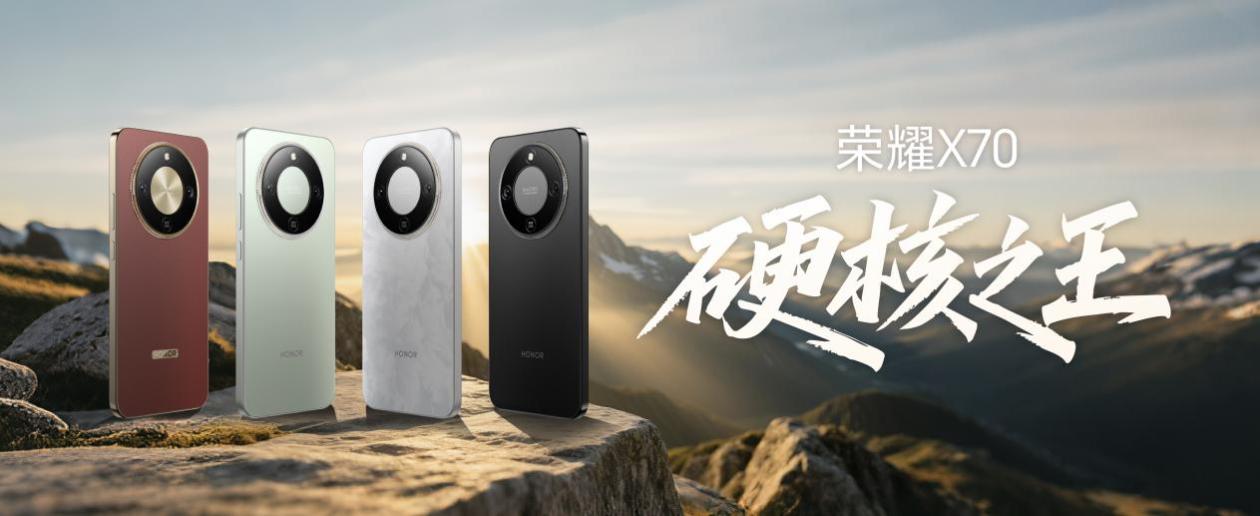
千元机为什么不能有旗舰配置?荣耀X70发布推动国民手机价值跃升
Huan Qiu Wang· 2025-07-15 11:50
Core Insights - The smartphone market is shifting from hardware specifications to user experience, with a growing emphasis on durability over performance, as indicated by a global replacement rate of 23.8% and an average replacement cycle of 51 months [1] Group 1: Market Trends - Consumers increasingly prioritize durability in smartphones, especially outdoor workers and families in rural areas, where device reliability directly impacts usage costs and safety [1] - Real-life examples highlight the challenges faced by users, such as smartphones shutting down in extreme cold or frequent screen replacements due to drops [1] Group 2: Product Innovation - Honor has targeted durability-focused consumers with the launch of the Honor X70, which emphasizes "drop resistance, waterproofing, and battery life," aiming to redefine the value of mid-range smartphones [3] - The Honor X70 features a unique bulletproof vest structure with eight patented technologies, significantly enhancing its drop protection capabilities [3][5] - The device utilizes aerospace-grade non-Newtonian fluid materials, improving drop cushioning by 300% and overall impact resistance by 112% [5] Group 3: Performance and Certification - The Honor X70 is the first mainstream smartphone to achieve the IP69K industrial waterproof standard, capable of withstanding extreme water pressure and temperature conditions [6] - It also meets multiple high-level waterproof certifications (IP66, IP68, IP69), comparable to professional outdoor rugged phones [6] Group 4: Battery and Charging - The device is equipped with an 8300mAh battery, featuring a silicon content breakthrough of over 10%, and supports 80W wired and wireless fast charging, allowing for a 50% charge in just 15 minutes [8] Group 5: User Experience - The Honor X70 offers flagship-level features at an accessible price, including a 6.79-inch 1.5K eye-care display with a 120Hz adaptive refresh rate and various practical functionalities like NFC and infrared remote control [10] - The launch price starts at 1399 yuan, showcasing that high-end technology can be made available to a broader audience [11]
Omdia 特别报告 : 如何通过渠道激励撬动智能手机销售增长
Canalys· 2025-07-15 06:01
Core Insights - Channel incentives are becoming a key strategy in the smartphone industry, helping brands enhance sales and brand influence in a sluggish market [2][5] - The report provides an in-depth analysis of how to leverage a scientific channel incentive system to drive sales growth, covering best practices from strategy design to operational implementation [2][5] - It gathers insights from various participants in the smartphone channel ecosystem, including brands, distributors, retailers, supply chain partners, and regional market experts, to explore the evolution and innovation of incentive models [2][5] Summary by Sections - **Main Incentive Models**: The report showcases three mainstream incentive models and their application cases, revealing practical experiences from leading brands like Xiaomi, Samsung, and Vivo globally [5] - **Participants Involved**: Key participants include smartphone manufacturers and brands (e.g., Xiaomi, Samsung, Vivo), channel distributors, retail networks, and service providers for operational and financial system construction [6] - **Operational Framework**: The report serves as a practical guide detailing how manufacturers can establish a reliable and scalable backend system to ensure the accurate, transparent, and large-scale implementation of incentive measures [5]

2025年第二季度,全球智能手机出货量下降1%,TOP5厂商份额揭晓
Canalys· 2025-07-15 05:57
Core Insights - The global smartphone market is projected to decline by 1% year-on-year in Q2 2025, marking the first drop in six consecutive quarters, reflecting cautious consumer sentiment and macroeconomic uncertainties [1][2][4] - Samsung maintained its market leadership with a 19% share, followed by Apple at 16% and Xiaomi at 15%, while Transsion and OPPO each held 9% [1][5] Market Performance - Despite a slight decrease in shipments, major manufacturers demonstrated stability and resilience amid a slowing market due to the waning replacement demand from the pandemic and ongoing weak consumer demand [2][4] - The U.S. market is an exception, where manufacturers like Apple, Samsung, and Motorola maintained high inventory levels in response to geopolitical and regulatory uncertainties [2] Consumer Behavior - Many consumers who delayed upgrades in early 2025 are expected to make purchases during year-end shopping festivals and promotional events, with effective pricing strategies and promotions being crucial for success [4] - Price-sensitive consumers remain the primary drivers of upgrade demand, preferring to replace old devices at reasonable prices [4] Market Share Data - The preliminary market share data for Q2 2025 shows: - Samsung: 19% - Apple: 16% - Xiaomi: 15% - Transsion: 9% - OPPO: 9% - Others: 33% [5] Industry Outlook - The smartphone industry is anticipated to stabilize in 2025, with manufacturers prepared to address the expected flat market, leveraging new product launches that emphasize design, ecosystem innovation, and privacy features [4][6]



Samsung unveils 3 new foldable smartphones #tech
Bloomberg Television· 2025-07-11 17:06
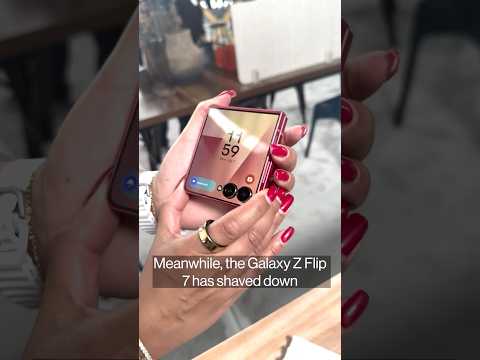
Product Launches & Pricing - Samsung introduced three new foldable smartphones aimed at a broader audience [1] - The Galaxy Z Flip 7 FE is Samsung's most affordable folding phone at $900 [1] - The Galaxy Watch 8 starts at $350 (40mm), a $50 increase from the Galaxy Watch 7 [5] - The Galaxy Watch 8 Classic starts at $450 (46mm) [5] - The updated Galaxy Watch Ultra with 64 GB storage starts at $650 [6] Design & Features - The Fold 7's thickness is reduced to 8.9% mm when closed, compared to 14.9% mm on the Galaxy Z Fold 6 [2] - The Galaxy Z Flip 7 features slimmer bezels for an all-screen look [2] - The outer display (Flex Window) on the Flip 7 is now 4.1% inches, up from 3.4% inches on the Flip 6 [3] - The Galaxy Watch 8 series includes Google Wear OS 6 with Gemini AI chatbot [4] - The Galaxy Watch 8 series features improved battery life, brighter display, slimmer body, and advanced health features [4] Processor - Samsung is using its own Exynos processor for the Flip 7, marking the first time it's used its own processor on a foldable device [3] - The Fold 7 uses Qualcomm's Snapdragon 8 Elite chip [3]
X @Bloomberg
Bloomberg· 2025-07-11 11:33
Chinese smartphone maker Xiaomi has pulled off something Apple failed to do despite a decade-long attempt, and that’s to make a car.@Lindadalew looks at what helped Xiaomi overtake Apple’s EV ambitions https://t.co/kteGLsksYg https://t.co/CcnyZStONT ...
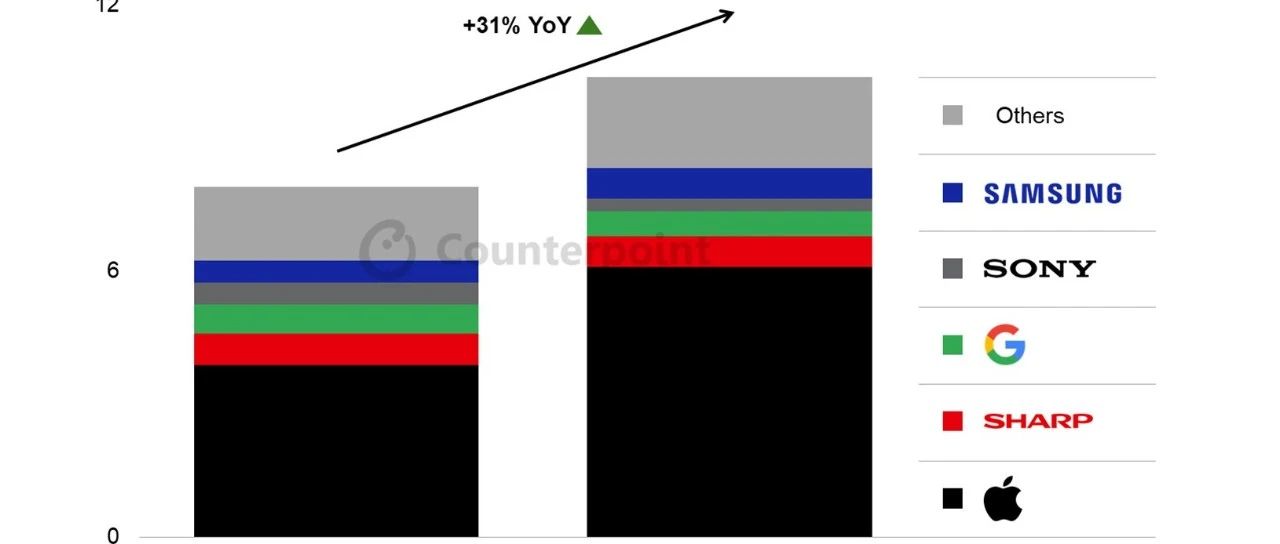
Counterpoint Research:Apple推动2025年一季度日本智能手机销量同比增长31%
智通财经网· 2025-07-11 08:03
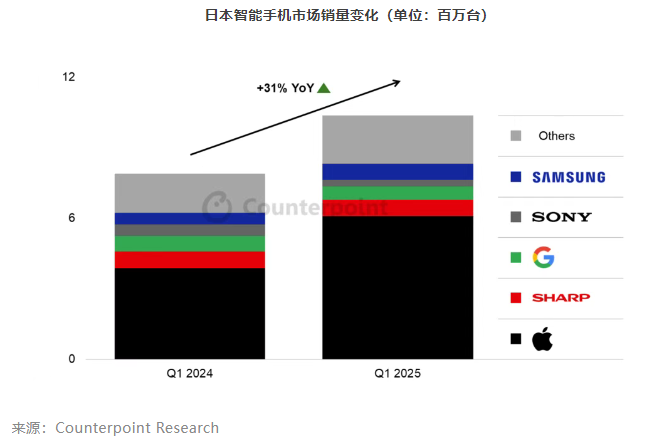
Core Insights - The Japanese smartphone market experienced a significant year-on-year growth of 31% in Q1 2025, primarily driven by strong sales from Apple, which saw a 57% increase in shipments due to the successful launch of the iPhone 16e and continued demand for the iPhone 16 series [1][6] - Apple's dominance in the Japanese market is notable, contributing nearly 90% of the total market growth, with no other brand exceeding an increase of 500,000 units during the same period [1][4] Group 1: Market Dynamics - The growth in the Japanese smartphone market is also supported by aggressive promotional activities from carriers, retailers, and OEMs, including device discounts, point rewards, data boosts, service bundling, and mobile number portability incentives [3] - Device return programs are becoming increasingly popular among Japanese consumers, further stimulating new purchases and upgrades [3] Group 2: Apple's Market Position - Apple's market share in Japan is significantly higher than in other major Asian and global markets, attributed to the evolution of telecom policies, historical channel inertia, and unique cultural factors [4] Group 3: Market Outlook - The strong growth is expected to continue into Q2 2025, but a decline is anticipated starting in Q3 as sales of the iPhone 16e have already begun to decrease since June [6] - The upcoming iPhone 17, set to launch later in 2025, may spark new competition in the high-end market, although its high pricing could limit some sales potential [6] - Competing Android brands like Samsung and Google are introducing more cost-effective flagship products to capture market share amid inflation, yen depreciation, and potential tariff increases [6]
Apple 推动2025年Q1日本智能手机销量同比增长31%
Counterpoint Research· 2025-07-11 07:48
Core Insights - The Japanese smartphone market experienced a significant year-on-year growth of 31% in Q1 2025, primarily driven by strong sales from Apple, which saw a 57% increase in shipments due to the successful launch of the iPhone 16e and the continued success of the iPhone 16 series [2][6]. Group 1: Market Performance - The growth in Japan's smartphone market is notable as it has been perceived as mature with stagnant growth for years, making this performance a significant breakthrough [2]. - Apple contributed nearly 90% of the total market growth, with no other brand exceeding an increase of 500,000 units during the same period, highlighting Apple's dominant position [2]. Group 2: Promotional Activities - The strong growth in the Japanese smartphone market was also fueled by aggressive promotional activities from carriers, retailers, and OEMs, including device discounts, point returns, data plan enhancements, service bundling, and mobile number portability rewards [3]. - Device return programs have quickly gained popularity among Japanese consumers, further stimulating new purchases and device upgrades [3]. Group 3: Apple's Market Dominance - Apple maintains a significantly higher market share in Japan compared to other major countries in Asia and globally, attributed to the evolution of telecom policies, historical channel inertia, and unique cultural factors [4]. Group 4: Market Outlook - The strong growth is expected to continue into Q2 2025, driven by the iPhone 16e and extensive promotional activities [6]. - However, a decline in sales of the iPhone 16e has been noted since June, and a potential market pullback is anticipated starting in Q3 2025 [6]. - The upcoming iPhone 17, set to launch later in 2025, may spark new competition in the high-end market, although its high pricing could limit some sales potential [6]. - Competing Android brands like Samsung and Google are introducing more cost-effective flagship products to capture market share amid inflation, yen depreciation, and potential tariff increases [6].